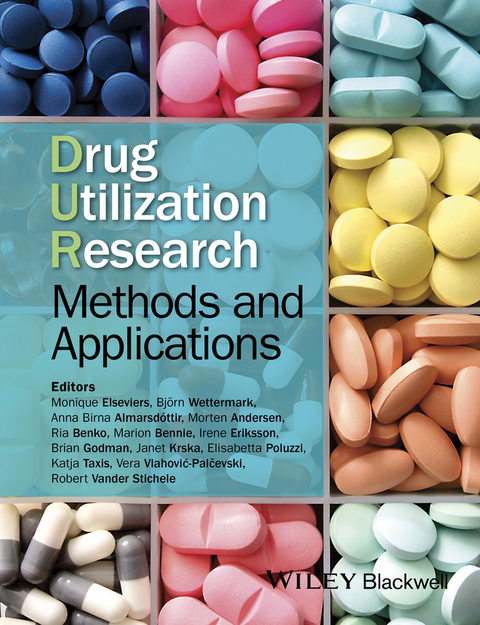
Drug Utilization Research (eBook)
John Wiley & Sons (Verlag)
978-1-118-94976-4 (ISBN)
Drug Utilization Research (DUR) is an eclectic scientific discipline, integrating descriptive and analytical methods for the quantification, understanding and evaluation of the processes of prescribing, dispensing and consumption of medicines and for the testing of interventions to enhance the quality of these processes. The discipline is closely related and linked mainly to the broader field of pharmacoepidemiology, but also to health outcomes research, pharmacovigilance and health economics.
Drug Utilization Research is a unique, practical guide to the assessment and evaluation of prescribing practices and to interventions to improve the use of medicines in populations. Edited by an international expert team from the International Society for Pharmacoepidemiology (ISPE), DUR is the only title to cover both the methodology and applications of drug utilization research and covers areas such as health policy, specific populations, therapeutics and adherence.
Monique Elseviers, Centre for Research and Innovation in Care, University of Antwerp, Belgium.
Björn Wettermark, Associate Professor in Pharmacoepidemiology, Karolinska Institutet, Stockholm, Sweden.
Morten Andersen, Visiting Professor, Centre for Pharmacoepidemiology, Karolinska Institutet, Stockholm, Sweden; Senior Physician at the Department of Clinical Pharmacology, Karolinska University Hospital, Stockholm, Sweden; Senior Researcher at the Research Unit for General Practice, University of Southern Denmark, Denmark.
Ria Benko, Associate Professor, Department of Clinical Pharmacy at the University of Szeged, Hungary.
Marion Bennie, Professor of Pharmacy Practice, University of Strathclyde, UK; Chief Pharmaceutical Adviser, NHS National Services Scotland, UK.
Brian Godman, Research Scientist, Karolinska Institutet, Stockholm, Sweden.
Janet Krska, Professor of Clinical and Professional Pharmacy, Medway School of Pharmacy, Universities of Greenwich and Kent, UK.
Elisabetta Poluzzi, Assistant Professor of Pharmacology, Department of Pharmacology, Faculty of Medicine, University of Bologna, Italy.
Katja Taxis, Associate Professor of Pharmacotherapy and Clinical Pharmacy, University of Groningen, Netherlands.
Vera Vlahovic-Palcevski, Professor, Department of Pharmacology, University of Rijeka Medical School, Croatia; Specialist in Clinical Pharmacology, University Hospital Rijeka, Croatia.
Robert Vander Stichele, practicing family physician in Ghent, Belgium.
Drug Utilization Research (DUR) is an eclectic scientific discipline, integrating descriptive and analytical methods for the quantification, understanding and evaluation of the processes of prescribing, dispensing and consumption of medicines and for the testing of interventions to enhance the quality of these processes. The discipline is closely related and linked mainly to the broader field of pharmacoepidemiology, but also to health outcomes research, pharmacovigilance and health economics. Drug Utilization Research is a unique, practical guide to the assessment and evaluation of prescribing practices and to interventions to improve the use of medicines in populations. Edited by an international expert team from the International Society for Pharmacoepidemiology (ISPE), DUR is the only title to cover both the methodology and applications of drug utilization research and covers areas such as health policy, specific populations, therapeutics and adherence.
Monique Elseviers, Centre for Research and Innovation in Care, University of Antwerp, Belgium. Björn Wettermark, Associate Professor in Pharmacoepidemiology, Karolinska Institutet, Stockholm, Sweden. Morten Andersen, Visiting Professor, Centre for Pharmacoepidemiology, Karolinska Institutet, Stockholm, Sweden; Senior Physician at the Department of Clinical Pharmacology, Karolinska University Hospital, Stockholm, Sweden; Senior Researcher at the Research Unit for General Practice, University of Southern Denmark, Denmark. Ria Benko, Associate Professor, Department of Clinical Pharmacy at the University of Szeged, Hungary. Marion Bennie, Professor of Pharmacy Practice, University of Strathclyde, UK; Chief Pharmaceutical Adviser, NHS National Services Scotland, UK. Brian Godman, Research Scientist, Karolinska Institutet, Stockholm, Sweden. Janet Krska, Professor of Clinical and Professional Pharmacy, Medway School of Pharmacy, Universities of Greenwich and Kent, UK. Elisabetta Poluzzi, Assistant Professor of Pharmacology, Department of Pharmacology, Faculty of Medicine, University of Bologna, Italy. Katja Taxis, Associate Professor of Pharmacotherapy and Clinical Pharmacy, University of Groningen, Netherlands. Vera Vlahovic-Palcevski, Professor, Department of Pharmacology, University of Rijeka Medical School, Croatia; Specialist in Clinical Pharmacology, University Hospital Rijeka, Croatia. Robert Vander Stichele, practicing family physician in Ghent, Belgium.
Drug Utilization Research 3
Contents 7
List of contributors 10
Acknowledgements 16
About the companion website 21
Part 1 Introduction 23
Chapter 1 Introduction to drug utilization research 25
Room for improvement in drugutilization 25
The history of drug utilization research 26
Definition and delineation 29
Skills needed to be a drug utilization researcher 32
Areas of inquiry in drug utilization research reflected in this book 32
Part 2 Methodology 35
Chapter 2 Study designs in drug utilization research 37
Introduction 37
Quantitative and qualitative research 37
Observational studies: from descriptive to analytical approaches 38
Study designs for descriptive drug utilization studies 39
Study designs for analytical drug utilization studies 41
Experimental and quasiexperimental study designs in drug utilization research 43
Other study designs for drug utilization research 46
Reporting drug utilization studies 50
Chapter 3 Primary data collection for drug utilization research 51
Introduction 51
Identifying primary data sources for drug utilization research 52
Patient?reported data 52
Health care providers?reported data 52
Prescriptions, medical records and dispensing records 53
Collecting valuable primary data in drug utilization research 53
Instruments and forms for primary data collection in drug utilization research 55
Data extraction and abstraction 55
Structured questionnaires 55
Modes of primary data collection for drug utilization research 59
Ethical considerations 60
Conclusion 60
Chapter 4 Secondary data sources for drug utilization research 61
Introduction 61
Sales data 62
Electronic health records 63
Pharmacy dispensing data 65
Reimbursement data 66
Patient registries 67
Secondary analysis of population health survey data 68
Record linkage in drug utilization research 68
Privacy, confidentiality and security 69
Data quality 70
Chapter 5 Classification systems for drugs and diseases 71
Introduction 71
ATC 71
Brief history: caretakers and decision-makers 71
Structure 72
Classification principles and challenges 72
Use and misuse of the AT C/DDD classification 74
Implementation and maintenance of the AT C/DDD system 74
ATCvet 74
Other drug classification systems 74
EphMRA 74
AHFS Pharmacologic?Therapeutic Classification System 75
BNF codes 77
Drug nomenclature/substance names 77
Other classification systems relevant for drug utilization research 77
ICD codes 77
SNOMED 78
Read codes 78
Linkage of classification systems 79
Chapter 6 Measurement units of drug utilization 80
Introduction 80
DDD: definition and general considerations 80
Principles of DDD assignment 81
Plain products 81
Combination products 81
Alterations and misuse of DDDs 83
Other aggregate measures for prescribing 83
Prescribed daily dose 84
Other drug utilization metrics 84
Use of drugs in animals 85
How to report aggregated drug use 86
Total use and ambulatory care 86
Hospitals 87
Long?term care institutions 88
DDDs for special population groups 89
Chapter 7 Individual?level drug utilization analyses 90
Introduction 90
General principles 90
Epidemiological measures 91
Prevalence proportion 91
Period prevalence 92
Incidence rate 92
Duration 93
Other measures 96
Lorenz curves 96
Average daily dose 96
Strengths and limitations of individual?level statistics 97
Chapter 8 Measurement of drug expenditure 99
Introduction 99
Definitions and perspectives 102
Price?related units of pharmaceutical expenditure 103
Outpatient sector 103
Inpatient sector 107
Price data sources 107
Volume?related units of pharmaceutical expenditure 108
Methodological challenges related to pharmaceutical expenditure 108
Overall challenges of pharmaceutical expenditure analyses and comparisons 108
Challenges related to cross?national price comparisons 109
Chapter 9 Basic statistical methods in drug utilization research 110
Introduction 110
Why we need statistical methods in drug utilization and health services research 110
Use of population data versus sample data 110
Population data 110
Sample data 111
Sampling and selection bias 111
Sample size 112
Confidence interval 112
Types of variables 112
Describing data with descriptive statistics 112
Description of numerical variables 112
Description of categorical variables 113
Investigating the difference between the means and medians of numerical variables 113
Two?sample t?test for the difference between two independent groups 113
Paired sample t?tests for differences between paired data 114
ANOVA test for the difference between three or more independent groups 114
Nonparametric tests as an alternative for assessing the difference between numerical variables 114
Investigating the difference between proportions of categorical variables 115
Understanding the notion of a risk calculation 116
Describing the relationship between two numerical variables using regression analysis 116
Assessing the combined effect of explanatory variables in multivariate statistical analysis 118
Multiple regression analysis with a continuous outcome variable 118
Logistic regression analysis with a dichotomous outcome variable 119
Summarizing the results of different studies in a meta?analysis 120
Conclusion 120
Chapter 10 Visualization of drug utilization data 121
Introduction 121
Basic principles of visualization 121
Basic (static) graphical display of findings 122
Variable types in drug utilization research 122
Graphics for categorical variables 123
Graphics for numerical variables 124
Which graphic should be used to compare numerical data between different groups? 128
Special diagrams used in drug utilization research 129
Analysis of trends 131
Practical hints for static graphs 132
Interactive visualization – including time and geospatial visualization 132
Why and when? 133
When not? 134
Practical hints and tools 135
Gapminder/Google Motion Charts 135
Linked highlighting 135
Brushing and filtering 136
Storytelling 136
Distributing and publishing on the Internet 136
Conclusion 137
Chapter 11 Multilevel analyses in drug utilization research 138
Introduction 138
Multilevel structures 139
Why are MLRA techniques necessary? 139
Statistical reasons 139
Substantive reasons 141
Basic concepts in MLRA: a didactic example 142
How can we apply the results of our analysis in public health practice? 145
A real empirical example 145
Conclusion 147
Acknowledgements 147
Chapter 12 Defining and developing quality indicators for drug utilization 148
Introduction 148
Definition of a quality indicator 149
Dimensions and classifications 149
Structure, process and outcomes indicators 150
Drug?, disease? and patient?oriented indicators 150
Data sources 152
Drug?oriented prescribing quality indicators 153
Aggregate data 153
Drug utilization 90% 154
Patient?level data 154
Disease?oriented prescribing quality indicators 155
Other types of indicator 157
Cross?sectional and sequential indicators 157
Indicator sets and combinations of indicators 157
Development and validation of prescribing quality indicators 158
Conclusion 160
Chapter 13 Qualitative methods in drug utilization research 161
Reasons for using qualitative methods in drug utilization research 161
The role of qualitative research methods in drug utilization research 162
Research questions within drug utilization research that require qualitative research methods 164
Common qualitative data collection methods that could benefit drug utilization research 165
Interviews in qualitative research 165
Focus groups 167
Observation methods 168
Sampling strategies in qualitative research 168
Analysis of data gathered in qualitative research 169
Validity concepts in qualitative research 169
Conclusion 171
Part 3 Applied drug utilization research 173
Section A Comparative drug utilization research 175
Chapter 14 Comparison of drug utilization across different geographical areas 175
Introduction to comparative studies 175
Practical guide to geographical comparisons of drug utilization 176
Regional drug utilization comparisons 176
Cross?national drug utilization comparisons 177
Data collection for CNCs 179
Methodological challenges in CNCs 180
National activities that can facilitate CNCs 181
Conclusion 181
Chapter 15 Comparison of drug utilization in different health care settings 182
Introduction 182
Health care settings 183
The relevance of drug utilization research in the hospital and ambulatory care settings 184
Comparative drug utilization studies provide transparency and input for other areas of research 194
Conclusion 194
Chapter 16 Time?dependent and seasonal variations in drug utilization 195
Introduction 195
Life cycle of a drug 195
Examples of factors influencing the natural life cycles of drugs 196
Improved knowledge about drugs 196
Safety issues 198
Reimbursement restriction and incentives 199
Educational campaigns/academic detailing 199
Environmental factors 200
Economic context 200
Societal factors 200
Utility of variation in drug utilization over time in the surveillance of health care issues 201
Surveillance of diseases/health?related environmental issues 201
Surveillance of drug abuse/misuse 202
Examples of seasonal drug use variability 203
Antibiotics 203
Antifungi 205
Conclusion 205
Chapter 17 Comparative studies of patient and prescriber characteristics 206
Introduction 206
Patient characteristics and drug use 206
Age 206
Sex and gender 208
Other sociodemographic factors 209
Prescriber characteristics and drug use 212
Concordance of patient and prescriber characteristics 215
Conclusion 215
Chapter 18 Comparative studies of health systems 216
Introduction 216
The role of medicines in healthcare systems 218
Drug utilization studies and healthcare systems 219
Comparative drug utilization studies of health care systems 220
Pharmaceutical market 220
Pharmaceutical policy and regulation 221
Public reimbursement systems and procurement 222
Service delivery and logistics 222
Out?of?pocket spending on drugs 222
Rational use of medicines 223
Drug utilization studies of self?medication and nonprescription drugs 223
Conclusion 224
Section B Drug utilization and health policy 225
Chapter 19 Drug utilization and health policy 225
Introduction 225
Defining pharmaceutical policy 226
Forming pharmaceutical policy across the globe 226
Legal and institutional framework 228
Influencing pharmaceutical expenditure 228
Pricing and reimbursement of medicines 228
Demand?side measures to enhance the rational use of medicines 231
Conclusion 231
Chapter 20 Managed introduction of new drugs 232
Introduction 232
New models to improve the rational use of new medicines 234
Prelaunch activities 234
Perilaunch activities 238
Post?launch activities 240
Conclusion 243
Chapter 21 Management of drugs in a health care system 244
Introduction 244
Supply?side measures 245
Demand?side measures 245
Policy case histories 247
Supply?side measures: South Korea 247
Demand?side measures 247
Conclusion 252
Chapter 22 The pharmaceutical industry and health policy 253
Introduction 253
Ensuring value for money when financing future health needs 254
Health technology assessment of the value of medicines 255
Framework agreements 256
Priority medicines development 256
Outcomes?focused health system reform 256
Application of drug utilization methods throughout the product life cycle 256
Disease and population characteristics shaping medicine development 256
Assessment of medicines peri? and post?launch 259
Communication of drug utilization studies 260
Conclusion 261
Section C?Drug utilization in specific populations 262
Chapter 23 Drug utilization in pregnant women 262
Background 262
Risk factors for medication use inpregnancy 265
Prescription patterns in relation to national guidelines 265
Patterns of harmful drug use in pregnancy 265
Secular trends in drug use in pregnancy 266
Patterns of medication adherence and discontinuation in pregnancy 266
Herbal drug utilization in pregnancy 266
Paternal medication use 267
Sources used in drug utilization studies in pregnancy 267
Patient interviews 267
Drug registries and administrative healthcare databases 267
Methodological considerations in drug utilization studies in pregnancy 268
Conclusion 269
Chapter 24 Drug utilization in the paediatric population 270
Introduction 270
The need for paediatric drug utilization studies 271
Age categories and sample size issues 271
Data sources 272
Measurement units 273
Off?label use 273
Examples of paediatric drug utilization studies 274
Ambulatory studies 274
Inpatient studies 278
Conclusion 280
Chapter 25 Drug utilization in older people 281
Introduction 281
Population ageing 281
Disease burden in older people 281
Prescribing patterns in older people 282
Polypharmacy 282
Prescribing patterns in community-dwelling older people 282
Prescribing patterns in hospitalized older people 284
Prescribing patterns in nursing home residents 284
Data sources 285
Assessing prescribing quality 285
Inappropriate prescribing 285
Prevalence of PIP 290
Determinants of PIP and PPO 290
Deprescribing 290
Conclusion 291
Section D Drug utilization in specific therapeutic areas 292
Chapter 26 Drug utilization research in the area of antibiotics 292
Introduction 292
Antibiotic use in relation to antibiotic resistance 293
Antibiotic use in ambulatory care 293
Data reporting for antibiotic use in ambulatory care 293
Antibiotic exposure in ambulatory care: consumption level, pattern and trends 294
Therapeutic indications for outpatient antibiotic use 295
Quality indicators of outpatient antibiotic use 296
Ambulatory antibiotic use in special groups: paediatrics and the elderly 297
Determinants of antibiotic use in ambulatory care 300
Interventions to improve antibiotic use in ambulatory care: antimicrobial stewardship 301
Antibiotic use in hospital care 301
Data reporting for antibiotic use in hospital care 301
Antibiotic exposure in hospital care: level, trends and patterns 302
Antibiotic exposure in hospital care: indication and quality problems 302
Hospital antibiotic use in special groups: surgical prophylaxis and the intensive care unit 304
Determinants of hospital antibacterial use 305
Interventions to improve antibiotic use in hospital care: antimicrobial stewardship 305
Conclusion 305
Chapter 27 Drug utilization research in the area of cardiovascular medicines 306
Introduction 306
Trends in utilization of cardiovascular drugs 307
Antihypertensive drugs 307
Population coverage and agreement with recommendations 307
Challenges in researching the use of antihypertensive drugs 308
Lipid?lowering therapy 309
Agreement with recommendations 311
Challenges in researching the use of lipid?lowering therapy 312
Antithrombotic drug therapy: oral anticoagulants 312
Agreement with recommendations 313
Antithrombotic drug therapy: acetylsalicylic acid 313
Agreement with recommendations 314
Patient adherence to cardiovascular drugs 314
Cardiovascular polypharmacy 314
Conclusion 315
Chapter 28 Drug utilization research in the area of analgesics and psychotropics 316
Introduction 316
Pain medications 316
Characteristics of patients using pain medication 317
Drug utilization of pain medication 317
Psycholeptics: antipsychotics, anxiolytics and hypnotics/sedatives 318
Characteristics of patients using psycholeptics 320
Drug utilization of psycholeptics 320
Psychoanaleptics: antidepressants and psychostimulants 321
Characteristics of patients using psychoanaleptics 322
Drug utilization of psychoanaleptics 322
Conclusion 323
Chapter 29 Drug utilization research in the area of biologicals 324
Introduction 324
Multiple sclerosis 326
Patient registries and related drug utilization research 326
Rheumatoid arthritis 329
Patient registries and related drug utilization research 330
Psoriasis 332
Patient registries and related drug utilization research 333
Potentials and pitfalls of using registries in drug utilization research 335
Registry coverage 335
Scope of data collection 336
Registry linkage possibilities 336
Conclusion 336
Chapter 30 Drug utilization research in the area of cancer drugs 337
Background 337
Cancer epidemiology and development of cancer drug usage 337
Availability of new cancer drugs 339
Cost of cancer 340
Costs of cancer drugs 340
Drug utilization studies in oncology 342
Patient adherence with treatment 342
Physician adherence to guidelines 344
Effectiveness and safety (outcomes research) 344
Access (market uptake) 345
Methodological aspects 346
Classification of cancer drugs 346
Value versus volume 346
Choice of standardization unit 348
Other issues in international comparisons 348
Conclusion 349
Section E?Determinants of drug utilization 350
Chapter 31 Health system perspectives 350
Introduction 350
Access to medicines 350
Finance and affordability 351
Health financing and health insurance schemes 352
Health policies affecting affordability 352
Supply and availability 354
Health policies affecting availability 354
Policies on regulation 355
International influences 356
Conclusion 357
Chapter 32 Prescriber perspectives 358
Introduction 358
Education of prescribers 360
Medical prescribers 360
Nonmedical prescribers 360
Making prescribing decisions 361
Evidence?based medicine 361
Prescribing processes 362
Computerized prescribing (computerized provider order entry) systems 362
Repeat prescribing systems 362
Review of prescriptions 363
Influences on prescribers 363
Patients 364
Workload 364
Peers 364
Pharmaceutical manufacturers 364
Payers 365
Organization of health care 366
Additional issues in low?income countries 366
Conclusion 368
Chapter 33 Patient perspectives 369
Introduction 369
Importance of the patient perspective 369
Patient perceptions of medicines 370
Patient attitudes towards medicine use 371
Key issues in medicine use 371
Self?medication 371
Generics 371
Cultural influences 372
Actual use of medicines 372
Use of information about medicines 374
Determining the patient perspectiveon medicines 375
Involving patients in drug development and monitoring 376
Conclusion 376
Section F Adherence and drug utilization research 377
Chapter 34 An introduction to adherence research 377
Definition and taxonomy 377
The importance of patient adherence to medications 378
Measurement of adherence 378
Considerations for future research 381
Chapter 35 Assessment of medication adherence in field research 383
Introduction 383
Assessment of adherence 383
Reporting adherence estimates 384
Measuring adherence using electronic monitoring 384
Measuring adherence using questionnaires 386
Other as measures of adherence in field research 388
Advantages and disadvantages of different adherence assessment tools 389
Conclusion 390
Chapter 36 Assessment of adherence to drug treatment in database research 391
Introduction 391
Measuring adherence: prescription versus dispensing administrative data 392
Measurement selection 393
Measuring initiation 393
New versus repeat prescription or dispensing 393
Time window between prescription and dispensing 394
Measuring persistence/discontinuation 395
Refill?gap method 395
Treatment anniversary method 396
Persistence with initial drug versus persistence with therapy 398
Measuring compliance (implementation) 399
Limitations of administrative data 401
Conclusion 402
Chapter 37 Interventions to improve adherence to drug treatment 403
Introduction 403
Determinants of medication adherence 404
Research on medication adherence?enhancing interventions 405
From simple to multifaceted interventions 405
Behavioural skills, knowledge and social support 408
Electronic monitoring and new technologies 408
Tailored medication adherence interventions and patient?centred care 408
Future directions for research 408
Transfer of intervention programmes in routine care 409
Patient?level interventions 410
Health care professional?level interventions 410
Health care institution?level interventions 410
Health care system?level interventions 410
Interdisciplinary approaches 410
Collaboration from diagnosis to long?term follow?up 410
Harmonizing the expertise of different health care providers 412
Conclusion 413
Section G The role of drug utilization within the field of pharmacoepidemiology 414
Chapter 38 Drug utilization research and risk management 414
Introduction 414
Drug utilization research and risk assessment 415
Risk identification and characterization 415
Off?label use 416
Drug utilization research and risk minimization 417
Rationale 417
Methodological issues 417
Conclusion 420
Disclaimer 420
Chapter 39 Drug utilization research and pharmacovigilance 421
The new era of pharmacovigilance in Europe 421
Getting the most out of current SRSs 424
Combining drug utilization data with spontaneous reports 424
Conclusion 429
Acknowledgements 429
Chapter 40 Drug utilization research and the regulator’s perspective in pharmacovigilance 430
Introduction 430
Specific objectives of drug utilization studies in pharmacovigilance 431
Experience of drug utilization studies in the EU PAS Register 432
Measurement of the effectiveness of risk minimization 433
Variability in study design 436
New?user design 436
Measurement of the public health impact of adverse drug reactions 436
Conclusion 438
Disclaimer 438
Chapter 41 Drug utilization research and outcomes research 439
Introduction 439
Multiple roles of drug utilization in outcome research 439
Drug as exposure 440
Drug use as potential confounder 440
Drug use as indicator of morbidity 441
Advantages and limitations of different sources of drug utilization data in outcomes research studies 441
Patient registries 442
Claims databases 443
General practice databases 444
Networks of multiple health care databases 444
Patient?reported outcomes measures and patient?reported experience measures 445
Conclusion 446
Acknowledgment 446
Chapter 42 Drug utilization research and pharmacoeconomics 447
Introduction 447
Challenges in health caredecision?making 448
Frameworks of economic evaluation 448
Choice of comparator drug 449
Identifying the incidence/prevalence of disease (morbidity data) 450
Describing current treatment pathways or disease management patterns and contributing to cost?of-illness studies 450
Comparative effectiveness and safety 451
Medication adherence 451
Costs of drugs 451
Budget impact analysis 452
Performance?based risk sharing 453
Developing local formulary/clinical practice guidelines 453
Communicating to prescribers 453
Assessing the impact of health policy initiatives 454
Section H Assessment and improvement of the quality of medicine use 455
Chapter 43 Assessment of quality of prescribing using quality indicators 455
Introduction 455
Conceptual framework 456
Diabetes and cardiovascular risk management 459
Decision to prescribe 459
Medication choice 460
Monitor and (dis)continue treatment 461
Medication safety in the elderly 461
Potentially inappropriate medication lists 461
Quality?of?care indicators 462
General sets that include safety indicators for the elderly 462
Drug burden scales 462
Polypharmacy 463
Prescribing quality indicators in practice 463
Conclusion 464
Chapter 44 Quality indicators for patient care in pharmacy practice 465
Introduction 465
Dimensions of quality in pharmacy practice 465
Pharmacy interventions and intervention studies 466
Dispensing 467
Self?medication 469
Medication therapy management and pharmaceutical care 469
Review of existing and validated quality indicators 476
Indicators used in pharmaceutical care intervention research 476
Validated indicators for patient care in pharmacy practice 478
Application of quality indicators in pharmacy practice 480
Chapter 45 Interventions that influence prescribing decisions and drug utilization 482
Introduction 482
Classification of interventions 483
Educational/professional interventions 484
Printed educational material 484
Audit and feedback 484
Reminders, alerts and computerized decision support systems 486
Academic detailing 486
Developing an intervention strategy 488
Defining the problem 488
Understanding motivating factors for current behaviour 488
Conclusion 489
Chapter 46 Development, delivery and evaluation of implementation programmes 490
Introduction 490
Theoretical models of behavioural and organizational change 491
Theoretical models supporting successful implementation programmes 491
PRECEDE?PROCEED 491
Theory of reasoned action and planned behaviour 492
Bandura’s social cognitive theory 492
Application of these theoretical models to the three stages of implementation programmes: development, implementation and evaluation 493
Stage 1: developing an implementation programme 493
Stage 2: programme delivery 493
Stage 3: evaluation stage 497
Conclusion 498
Chapter 47 Towards a better understanding of prescribing-enhancement interventions 499
Introduction 499
The context of prescribing 499
The indeterminate nature of pharmacotherapeutics 500
Classification of interventions which influence prescribing 501
Definitions, boundary delineations and outcome and context problems 501
Complex interventions 504
Evolution of methods of evaluating complex interventions 505
Conclusion 506
Part 4 Epilogue 509
Chapter 48 The many futures of drug utilization research 511
Introduction 511
Drivers of the future 511
Promises for the future 511
Caveats for the future 512
The role of patients 512
Conclusion 513
Acknowledgements 513
Glossary 514
Index 519
EULA 532
"Overall, this is a great resource for healthcare providers and a great learning tool for students. It is well written and includes many helpful figures and tables. The references to specific pages for more in-depth explanations of certain topics make this book very user friendly." (Doody Enterprises, 2016)
| Erscheint lt. Verlag | 29.3.2016 |
|---|---|
| Sprache | englisch |
| Themenwelt | Medizin / Pharmazie ► Medizinische Fachgebiete ► Pharmakologie / Pharmakotherapie |
| Schlagworte | Clinical Pharmacology & Therapeutics • drug utilization research methods medicine population International Society of Pharmacoepidemiology ISPE research • Klinische Pharmakologie u. Therapie • Medical Science • Medical Statistics & Epidemiology • Medizin • Medizinische Statistik u. Epidemiologie • Pharmacology & Pharmaceutical Medicine • pharmacovigilance health economics policy therapeutics • Pharmakologie u. Pharmazeutische Medizin |
| ISBN-10 | 1-118-94976-5 / 1118949765 |
| ISBN-13 | 978-1-118-94976-4 / 9781118949764 |
| Informationen gemäß Produktsicherheitsverordnung (GPSR) | |
| Haben Sie eine Frage zum Produkt? |
 PDF (Adobe DRM)
Kopierschutz: Adobe-DRM
Adobe-DRM ist ein Kopierschutz, der das eBook vor Mißbrauch schützen soll. Dabei wird das eBook bereits beim Download auf Ihre persönliche Adobe-ID autorisiert. Lesen können Sie das eBook dann nur auf den Geräten, welche ebenfalls auf Ihre Adobe-ID registriert sind.
Details zum Adobe-DRM
Dateiformat: PDF (Portable Document Format)
Mit einem festen Seitenlayout eignet sich die PDF besonders für Fachbücher mit Spalten, Tabellen und Abbildungen. Eine PDF kann auf fast allen Geräten angezeigt werden, ist aber für kleine Displays (Smartphone, eReader) nur eingeschränkt geeignet.
Systemvoraussetzungen:
PC/Mac: Mit einem PC oder Mac können Sie dieses eBook lesen. Sie benötigen eine
eReader: Dieses eBook kann mit (fast) allen eBook-Readern gelesen werden. Mit dem amazon-Kindle ist es aber nicht kompatibel.
Smartphone/Tablet: Egal ob Apple oder Android, dieses eBook können Sie lesen. Sie benötigen eine
Geräteliste und zusätzliche Hinweise
Buying eBooks from abroad
For tax law reasons we can sell eBooks just within Germany and Switzerland. Regrettably we cannot fulfill eBook-orders from other countries.
aus dem Bereich