An Introduction to Pain and its relation to Nervous System Disorders (eBook)
John Wiley & Sons (Verlag)
978-1-118-45593-7 (ISBN)
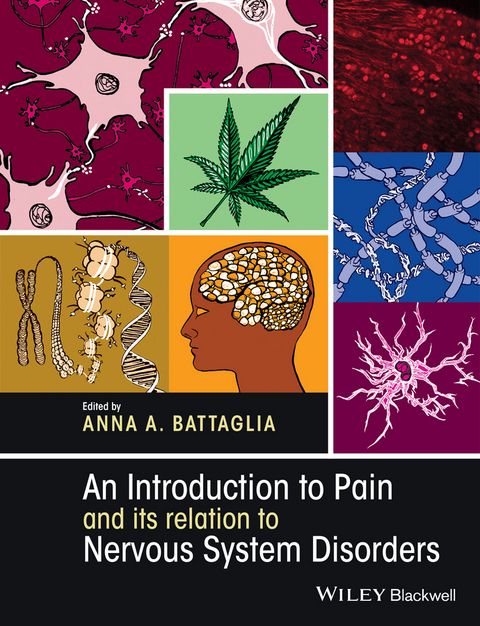
Introduction to Pain and its relation to Nervous System Disorders provides an accessible overview of the latest developments in the science underpinning pain research, including, but not limited to, the physiological, pathological and psychological aspects. This unique book fills a gap in current literature by focussing on the intricate relationship between pain and human nervous system disorders such as Autism, Alzheimer Disease, Parkinson's Disease, Depression and Multiple Sclerosis. This fully illustrated, colour handbook will help non-experts, including advanced undergraduate and new postgraduate students, become familiar with the current, wide-ranging areas of research that cover every aspect of the field from chronic and inflammatory pain to neuropathic pain and biopsychosocial models of pain, functional imaging and genetics.
Contributions from leading experts in neuroscience and psychiatry provide both factual information and critical points of view on their approach and the theoretical framework behind their choices. An appreciation of the strengths and weaknesses of brain imaging technology applied to pain research in humans provides the tools required to understand current cutting edge literature on the topic. Chapters covering placebo effects in analgesia and the psychology of pain give a thorough overview of cognitive, psychological and social influences on pain perception. Sections exploring pain in the lifecycle and in relation to nervous system disorders take particular relevance from a clinical point of view. Furthermore, an intellectually stimulating chapter analysing the co-morbidity of pain and depression provides a philosophical angle rarely presented in related handbooks. The references to external research databases and relevant websites aim to prompt readers to become critical and independent thinkers, and motivate them to carry out further reading on these topics.
Introduction to Pain and its relation to Nervous System Disorders is essential reading for advanced undergraduate and postgraduate students in neuroscience, medical and biomedical sciences, as well as for clinical and medical healthcare professionals involved in pain management.
Introduction to Pain and its relation to Nervous System Disorders provides an accessible overview of the latest developments in the science underpinning pain research, including, but not limited to, the physiological, pathological and psychological aspects. This unique book fills a gap in current literature by focussing on the intricate relationship between pain and human nervous system disorders such as Autism, Alzheimer Disease, Parkinson s Disease, Depression and Multiple Sclerosis. This fully illustrated, colour handbook will help non-experts, including advanced undergraduate and new postgraduate students, become familiar with the current, wide-ranging areas of research that cover every aspect of the field from chronic and inflammatory pain to neuropathic pain and biopsychosocial models of pain, functional imaging and genetics. Contributions from leading experts in neuroscience and psychiatry provide both factual information and critical points of view on their approach and the theoretical framework behind their choices. An appreciation of the strengths and weaknesses of brain imaging technology applied to pain research in humans provides the tools required to understand current cutting edge literature on the topic. Chapters covering placebo effects in analgesia and the psychology of pain give a thorough overview of cognitive, psychological and social influences on pain perception. Sections exploring pain in the lifecycle and in relation to nervous system disorders take particular relevance from a clinical point of view. Furthermore, an intellectually stimulating chapter analysing the co-morbidity of pain and depression provides a philosophical angle rarely presented in related handbooks. The references to external research databases and relevant websites aim to prompt readers to become critical and independent thinkers, and motivate them to carry out further reading on these topics. Introduction to Pain and its relation to Nervous System Disorders is essential reading for advanced undergraduate and postgraduate students in neuroscience, medical and biomedical sciences, as well as for clinical and medical healthcare professionals involved in pain management.
Dr Anna A. Battaglia, School of Biomedical Sciences, King's College London, Currently a Lecturer in the Department of Anatomy & Human Sciences at King's College London. Research interests include: Chronic pain; Eph Receptors and ephrins; Biopsychosocial models of chronic pain. Her research experience has led her to developing new ideas in the pedagogy of Neuroscience and of scientific disciplines in general. She runs a third year undergraduate module called: Perspectives on Nervous System disorders. I am also setting up a "Pain Scenario" for MBBS2 students on the Neurobiology of Pain and on the interdisciplinary management of chronic pain syndromes, with the aim to fill a gap in the undergraduate medical education.
List of contributors ix
Foreword xiii
Acknowledgements xv
Notes on authors xvii
Introduction 1
Anna A. Battaglia
Section I: Neurobiology of pain: Recent advances 11
1 Anatomy of pain pathways 13
Andrew J. Todd
2 Spinal plasticity of the nociceptive system: The role of central sensitisation in chronic pain states 35
Alban Latrémolière
3 Symptoms and pathology in neuropathic pain 89
Matthew Thakur and Stephen B. McMahon
4 Recent advances in neuroimmune interactions in neuropathic pain: The role of microglia 123
Elizabeth A. Old, Louise S. C. Nicol and Marzia Malcangio
5 Genetics and epigenetics of pain 149
Franziska Denk and Stephen B. McMahon
6 The cannabinoid system and its role in nociception 169
Massimiliano Beltramo
7 EphB receptors and persistent pain 201
Isabella Gavazzi
Section II: Pain in the brain 225
8 Brain imaging in experimental pain 227
Massieh Moayedi and Tim V. Salomons
9 Placebo effects in pain 249
Luana Colloca, Adam P. Horin and Damien Finniss
10 Psychology and pain 267
Lance M. McCracken
Section III: Pain in the lifecycle and in nervous system disorders 281
11 Pain in neonates and infants 283
Fiona Moultrie, Segzi Goksan, Ravi Poorun and Rebeccah Slater
12 How do people with autism spectrum disorders (ASD) experience pain? 295
Cecile Rattaz, Amandine Dubois and Amaria Baghdadli
13 Pain and depression: The janus factor of human suffering 317
Angela Iannitelli and Paola Tirassa
14 Pain in multiple sclerosis: From classification to treatment 345
Claudio Solaro and Michele Messmer Uccelli
15 Pain perception in dementia 361
Miriam Kunz and Stefan Lautenbacher
16 The role of cognitive impairment in the placebo and nocebo effects 373
Martina Amanzio
17 An overview of pain in Parkinson's disease 387
Panagiotis Zis, Elisaveta Sokolov and Kallol Ray Chaudhuri
Appendix: Interviews with chronic pain patients 409
Index 413
Introduction
Anna A. Battaglia
The worst pain a man can suffer: to have insight into much and power over nothing.
Herodotus (5th century BC)
Why pain? Pain is fascinating, it is about our physical and mental existence; it is about the subjectivity of our sensory experiences and the impossibility to fully share them with our fellow human beings, so it is also about the loneliness and the silence we feel when intractable chronic pain syndromes grip us.
What is pain?
Defining pain is elusive; philosophers and scientists have endlessly tried to produce a satisfactory definition. Plato (428/7–348/7 BC) thought that pain is a sensation and corresponds to the illness itself, while one of the authors of the Hippocratic corpus (roughly contemporary with Plato) acknowledged that pain happens to the body, while suffering happens to the whole person. The famous ancient doctor Galen (AD 129–c. 216) and the medieval philosopher Ibn Sina, known as Avicenna (980–1038), in contrast with Aristotle (384–322 BC), both believed that the brain was the main organ for the perception of pain, which was considered a sensation opposite to pleasure. Galen was cogently aware that pain is useless to the person in pain, while Ibn Sina, in defining and describing the nature of pain in five pages of his medical treatise The Canon, was ahead of his times when he suggested that ‘the true cause of pain was a change of the physical condition of an organ whether there was an injury present or not’ (quoted in Tashani and Johnson, 2010: 00). In this he anticipated the International Association of Pain (IASP)’s modern definition, according to which pain is an ‘unpleasant sensory and emotional experience associated with actual or potential tissue damage, or described in terms of such damage’ (Merskey and Bogduk, 1994: III, 3). It has been argued that it is time for a review of this definition. In 2011 A. Wright has written a paper criticising the IASP’s definition of pain and highlighting the difficulty of the task, which involves giving ‘an objective grounding for the definition of a subjective experience’ (Wright, 2011: 00). Wright notes how the subjectivity of the phenomenal experience we humans call pain is shown by the huge number of the pain descriptors used in attempting to communicate the quality or character of an individual’s perception of his/her pain; and he acknowledges at the same time that it is impossible to appreciate someone else’s particular painful experience. He then argues that, given this impossibility, the only way to define pain in a satisfactory manner is to refer to its evolutionary role and to see pain ‘as an unpleasant sensation that has evolved to motivate behaviour which avoids or minimises tissue damage, or promotes recovery’ (Wright, 2011: 00). Wright also recalls the older debate about the IASP’s pain definition (Anand and Craig, 1996); this relying on self-report seems to exclude many categories of people who do not posses the ability to communicate effectively – such as infants, people with learning disabilities, people with forms of dementia. Many chapters in this book address these issues.
In the Stanford Encyclopedia of Philosophy, Murat (2013) argues that there is an ambiguity in the conception of pain: we seem to be able to ascribe a sort of objectivity when we report feeling pain in a specific body location and we treat pains like physical objects; on the other hand, pain is also defined as being a subjective experience, which seems to exist only if there is someone to feel it. Again, this double character makes the distinction between objective and subjective quite fuzzy.
Will the new imaging techniques be able to solve this apparent incongruence? In an intellectually stimulating issue of the Journal of Consciousness Studies that is all dedicated to pain, Camporesi et al. (2011) discuss the topic. They ask whether it is really the case that the new techniques do really allow us to ‘see’ the pain in others or to ‘know’ whether others are in pain; the legal implications of these possibilities are also discussed. In the present book, Chapter 8 (‘Brain Imaging in Experimental Pain’) presents the state of the art in this field.
This book is about this phenomenal experience that we call pain. Pain accompanies us when we are young, both in health and in disease; we can find it hard to communicate to others if we are affected by neurodevelopmental disorders; pain is also inextricably linked to our mental health, as adults experiencing depression are aware of the very complicated interplay between the two forms of suffering; and, finally, when we became old and are possibly affected by forms of dementia or other disorders of the nervous system, pain will also inevitably be part of our life.
Aims
This book does not want to be a comprehensive textbook on pain: there are already plenty of incredibly good resources in the literature – one for each of the themes in Wall and Melzack’s Textbook on Pain (McMahon et al., 2014).
The idea behind this publication stems from the perceived need to give health professionals, neuroscience undergraduates and medical students in their preclinical years an easily accessible resource that should take them through the most recent advances in pain research, giving them examples from different areas of enquiry; this is in order to foster an appreciation of the importance of a multimodal approach to studying and possibly treating complex pain syndromes in humans.
Research advances have been chosen so as to focus mostly on chronic pain; this is due to unmet clinical needs in the treatment of persistent pain states, for which there are not many successful pharmacological remedies regardless of the wealth of knowledge in the basic neurobiology of pain pathways and mechanisms. It is suggested that 20 per cent of the adult population worldwide suffers from pain and 10 per cent are newly diagnosed with chronic pain each year (Goldberg and McGee, 2011). This is a huge social and economic problem: the cost per annum is €200 billion in Europe and $150 billion in the United States (Tracey and Bushnell, 2009). The fact that it is not possible to measure objectively the level of pain is a hindrance to effective clinical trials designed to test for new drugs. Another area of interest in the book is the study of placebo effects, which goes beyond their role in clinical trials and has opened an area of research that has the potential to revolutionise the way we understand pharmacological treatments. Moreover, J. Mogil has recently published a study that highlights recent failures of clinical trials of novel analgesics to treat neuropathic pain (Tuttle et al., 2015); analysing data from 84 clinical trials conducted from 1990 to 2013, his group found out that in the United States placebo responses are steadily increasing. This makes it harder to prove that a drug has an advantage over placebo.
Other sections in the book address pain both in relation to the lifecycle (e.g., pain in neonates and infants) and in relation to nervous system disorders. This field is huge and the book by no means aims to cover all the available knowledge. Only a few examples of pain in nervous system disorders will be offered – in particular, pain in autism, in Alzheimer’s disease, in Parkinson’s and in multiple sclerosis is addressed; the psychology of pain and the co-morbidity of pain with depression are also extensively reviewed. Overall, these areas of research into pain are given less prominence in textbooks and other publications on pain, and we wanted to fill the gap in the educational resources available to students and practitioners in the health professions.
The book should prompt readers to become critical and independent thinkers and should motivate them to do further reading on the topics discussed. As in any other scientific publication, the researchers’ approach and their critical point of view to the subject matter will be evidently based on the theoretical framework that guides their research. Each researcher, clinician, psychologist and psychoanalyst contributing to the book has a different cultural and scientific background and a different goal in her/his investigation of pain. Seemingly working in parallel worlds with no apparent connection with one another, nonetheless they all pursue the same overarching aim, which is to better understand human pain and humans in pain and, in the end, to relieve human beings from their suffering.
There is considerable expertise at King’s College London – including at the Institute of Psychiatry, Psychology and Neuroscience (IoPPN – in research both on pain and on a number of neurological and psychiatric disorders; hence many of the present contributors belong to this academic community in the United Kingdom. Other valued contributions are from Italy, France, Germany and the United States; they all give an international flavour to the book.
The next part of this Introduction will summarise each individual contribution so as to give an overview of the book’s general aims – which are to provide an account of recent advances in the neurobiology of pain, to discuss what it is currently possible to know about the role of our brain in the perception of pain and, finally, to review pain in the lifecycle and in some very common nervous system disorders.
Summary of...
| Erscheint lt. Verlag | 2.3.2016 |
|---|---|
| Sprache | englisch |
| Themenwelt | Medizin / Pharmazie ► Medizinische Fachgebiete ► Neurologie |
| Medizin / Pharmazie ► Medizinische Fachgebiete ► Schmerztherapie | |
| Naturwissenschaften ► Biologie | |
| Technik | |
| Schlagworte | Alzheimer disease • Autism • Biopsychosocial • Biowissenschaften • clinical neuropsychology • Depression • Genetics • Inflammatory pain • Klinische Neuropsychologie • Life Sciences • Medical Science • Medizin • Multiple Sclerosis • Nervous system disorders • Neurologie • Neurology • Neuropathic pain • Neuroscience • Neurowissenschaften • Pain • pain imaging • Parkinson's Disease • Placebo • Psychiatry • Psychologie • Psychology • Schmerz |
| ISBN-10 | 1-118-45593-2 / 1118455932 |
| ISBN-13 | 978-1-118-45593-7 / 9781118455937 |
| Informationen gemäß Produktsicherheitsverordnung (GPSR) | |
| Haben Sie eine Frage zum Produkt? |
 EPUB (Adobe DRM)
Kopierschutz: Adobe-DRM
Adobe-DRM ist ein Kopierschutz, der das eBook vor Mißbrauch schützen soll. Dabei wird das eBook bereits beim Download auf Ihre persönliche Adobe-ID autorisiert. Lesen können Sie das eBook dann nur auf den Geräten, welche ebenfalls auf Ihre Adobe-ID registriert sind.
Details zum Adobe-DRM
Dateiformat: EPUB (Electronic Publication)
EPUB ist ein offener Standard für eBooks und eignet sich besonders zur Darstellung von Belletristik und Sachbüchern. Der Fließtext wird dynamisch an die Display- und Schriftgröße angepasst. Auch für mobile Lesegeräte ist EPUB daher gut geeignet.
Systemvoraussetzungen:
PC/Mac: Mit einem PC oder Mac können Sie dieses eBook lesen. Sie benötigen eine
eReader: Dieses eBook kann mit (fast) allen eBook-Readern gelesen werden. Mit dem amazon-Kindle ist es aber nicht kompatibel.
Smartphone/Tablet: Egal ob Apple oder Android, dieses eBook können Sie lesen. Sie benötigen eine
Geräteliste und zusätzliche Hinweise
Buying eBooks from abroad
For tax law reasons we can sell eBooks just within Germany and Switzerland. Regrettably we cannot fulfill eBook-orders from other countries.
aus dem Bereich