Why Don't We Go into the Garden?
Step Change Design Ltd
978-0-9935737-0-5 (ISBN)
- Titel nicht im Sortiment
- Artikel merken
home gardens through person-centred care and cost-effective
garden design where needed. This evidence-based package explores what hinders
engagement outside, identifies the changes needed to care practices and supports
implementing these over time.
Imagine moving into a care home and finding out that simply stepping
outside, even into a secure garden, is not possible. Sadly, this is all too
common a story and one that led the authors to undertake their research into what makes
care home gardens, particularly for dementia, more actively used. This in-depth
evidence based publication explores the role of care practices, the organisation's
culture, on engagement levels outside and guides the care settings on a culture
change journey towards person-centred care and, as a result, more active
engagement outside.
Their study found a correlation between the care culture of the
organisation and how actively a garden was used. Those care homes practicing person-centred
care engaged more often, and more naturally, outside in supporting their
residents to live meaningful and enjoyable lives. They help to define
person-centred care as seen through the eyes of engagement with the garden,
which frequently reflects the wider culture of the organisation inside too.
The easy to use 'Care Culture Map' is a culture change tool that makes makes this complex topic visually accessible to all. This enables detailed and open
conversations with the whole team leading to the actions needed to improve care
practices and benefit residents lives. A range of common themes are
explored, overcoming frequently cited obstacles to stepping into the
garden, enabling residents to gain the proven health and well-being benefits to
be had there.
Where physical changes, or a full garden design, is needed it supports
the care setting to be more articulate of what is really needed, ensuring the
long term, cost effective, use of gardens beyond the initial novelty period. This framework for working with other
professionals such as landscape architects and garden designers is an approach
the authors call 'Relationship-Centred Design'.
Creating sensory, well-being and dementia friendly gardens in care
homes, and other organisational settings, is explored from the Author's unique evidence-based
study into 'Why aren't care home gardens more actively used even when designed
to the latest design guidance'. Their extensive research, and findings, are
revealed in this book and their deliberately paper based diagnostic tool the
'Care Culture Map' supports Care Home managers in involving the team directly in
the changes to the organisation and garden that will benefit the lives of the
residents for the long term.
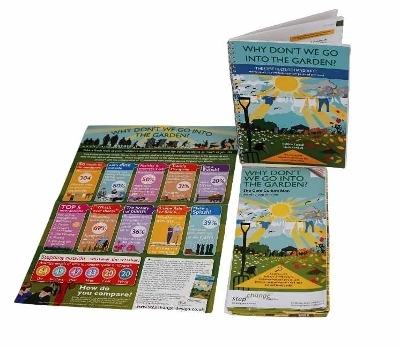
This strategic care home management resource includes the following, helping to reveal the often subtle practices that may be preventing engagement outside.
'Care Culture Map'
diagnostic poster tool, folded like an OS Map
'Care Culture Handbook' Spiral
bound, 48pp,
'Infographic poster', A3 folded
to A4.
The reader is led through investigations into several common themes that
are sited as hindering engagement outside including: Health and safety, Open
Door Policies, the Weather, and the role of care home Activities. While
the infographic poster shares some key statistical quick win findings to get
the conversation started with staff.
The aim of this self-help publication is to support the organisational
culture change often needed to enable residents living in care settings, and
particularly those living with dementia, to be able to enjoy time in the
garden, gaining the proven health benefits of getting outside, and to continue
to do the meaningful activities they wish to do there.
Debbie Carroll and Mark Rendell are both Garden Designers who teamed up to find the answer to a deceptively simple question they had "Why aren't care gardens more actively used?" This is the subject of their series of books and tools in the 'Why don't we go into the garden?' series. Their research project grew to be one of the largest of its kind in the UK and took them into new territory (for garden designers) deep inside care settings. During this process, they drew on many diverse and complementary skills from their earlier careers to form a unique collaboration that enabled them to articulate creatively and sensitively their often challenging findings, and what this means for both designers and carers. They founded Step Change Design to share their findings and promote their new design approach, 'Relationship-Centred Design', with both the care and design sectors. Debbie Carroll is an Accredited Garden Designer with the British Association of Landscape Industries based in Southern England. She has 20 years' experience through her design business, Debbie Carroll Garden Designs, and has a passion for creating gardens that are well used and well loved, whether within a domestic or care setting. Her experiences designing dementia care home gardens was a major influence on the research project that followed. While her background in the Armed Forces, and a Retail Manager within John Lewis Partnership, honed her people development skills it was her inquiring mind, and tenacity to implement changes to create improvements both at an individual and organisational level that adds a depth to the insights shared in this book. Debbie continues to run Step Change Design into its 2nd decade sharing their research through this book within a wide range of workshops, webinars and other speaking opportunities. Mark Rendell is a project manager, coach, gardener and garden designer based in North Wales. He set up 'The Growing Company' in 2000, primarily to raise awareness of the importance of the outdoors in aiding healing, recovery and respite in health and care settings. With a background in Health (he worked in the NHS on HIV/AIDS related issues in the 90s) and in Environmental Projects (he set up the UK's telephone directory recycling schemes on behalf of BT and Yellow Pages in 1998), he is also a trainer and project manager specialising in behaviour change, team dynamics and project management. Mark left Step Change Design in December 2021 after writing the Designer Handbook with Debbie in order to pursue his many other projects, consolidate his diverse work experiences and to (finally) complete the renovation of his 200 year old property in Snowdonia.
This Handbook is divided into five sections. Each section builds on the previous one and takes you
deeper into the use of the Care Culture Map and its functionality.
Our Journey
Dandelions, daisies and designers
Our key findings
The Care Culture Map
The Care Culture Spectrum
It's the focus on the resident that drives culture change
Its not just what you do but how....
The Care-Culture Spectrum
Task-oriented practices
Person-centred care
Relationship-centred care
What happened to Scotty Dog?
Our invitation to the Care Sector...
Our invitation to Garden Designers and Other Outside Specialists...
Looking at the Care Culture map
What does a map do?
Why create a map of care culture?
What is the care culture map?
Positive images
The columns
The boxes
Reading the Map: vertically and horizontally
THEME: The 'Anatomy' of The Map
Getting Started
Why is it important to identify your current care-culture position?
Involve everyone in this activity
Keeping notes
The journey starts with honesty
Valuing your outside space
Locating your current care-culture position
The limits of your current care practices
A horizontal band
'Spikes'
Planning your route ahead
It's your journey
Don't be tempted...
TOOL: The Four-Point Checklist
TOOL: The Activity Audit
Moving Forward
Where are you starting from?
Where do you wish to go?
Focus on the lowest boxes
Reaching the peaks
What does progress look like?
Working on a theme
Changing culture is hard work
Controlling the pace of change
Garden Designers and Specialists
Investing wisely in your outside space
Relationship-centred design
Care setting and outside specialists - a working relationship
Map Themes
The choice is yours
Don't leap too far ahead
THEME: Key Principles
THEME: The Health and Safety Column
THEME: Open Door Policy
THEME: Subtle Steps
THEME: Weather Aware and Weather Ready
THEME: Activity is Everyone's Job
The Hidden Dangers
The Hidden Dangers Centred around Person-Centred Care
The 'Reverse' Hidden Danger - The Influence of Garden Designers and Specialists
Conclusions and Findings
About the authors
Index and Acknowledgements
| Erscheint lt. Verlag | 1.3.2016 |
|---|---|
| Reihe/Serie | Why Don't We Go into the Garden? |
| Illustrationen | Paul Weston, Dawn Terrey |
| Zusatzinfo | 30 full colour illustrations |
| Verlagsort | Southampton |
| Sprache | englisch |
| Maße | 180 x 255 mm |
| Themenwelt | Sachbuch/Ratgeber ► Natur / Technik ► Garten |
| Medizin / Pharmazie ► Gesundheitswesen | |
| Medizin / Pharmazie ► Physiotherapie / Ergotherapie ► Ergotherapie | |
| Sozialwissenschaften ► Pädagogik ► Sozialpädagogik | |
| Sozialwissenschaften ► Soziologie | |
| Wirtschaft ► Betriebswirtschaft / Management | |
| ISBN-10 | 0-9935737-0-3 / 0993573703 |
| ISBN-13 | 978-0-9935737-0-5 / 9780993573705 |
| Zustand | Neuware |
| Informationen gemäß Produktsicherheitsverordnung (GPSR) | |
| Haben Sie eine Frage zum Produkt? |
aus dem Bereich