Part 2 MRCOG: Single Best Answer Questions (eBook)
John Wiley & Sons (Verlag)
978-1-119-16064-9 (ISBN)
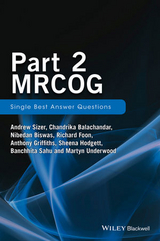
Part 2 MRCOG: SBA Questions contains invaluable preparation and practice for candidates undertaking the Royal College of Obstetricians and Gynaecologists Part 2 MRCOG examination. It contains 400 practice questions written by a highly experienced team of MRCOG question writers, alongside detailed answers referencing each question to either an RCOG, NICE or WHO guideline, or an article in the professional journal 'The Obstetrician & Gynaecologist'. This will enable candidates to understand the reasoning and knowledge base behind the question, as well as giving them a clear reference should they wish to read further around the subject.
The first part of the book introduces and explains the new format of the Part 2 MRCOG exam, giving insightful advice on the skills required to write a good SBA question. The second part of the book contains chapters matched to the 15 of the 19 modules of the core curriculum, giving a comprehensive range of questions and answers with detailed explanations and references. For anyone preparing for the Part 2 MRCOG exam, this book will provide extensive and comprehensive practice and guidance from an expert author team.
Part 2 MRCOG: SBA Questions contains invaluable preparation and practice for candidates undertaking the Royal College of Obstetricians and Gynaecologists Part 2 MRCOG examination. It contains 400 practice questions written by a highly experienced team of MRCOG question writers, alongside detailed answers referencing each question to either an RCOG, NICE or WHO guideline, or an article in the professional journal The Obstetrician & Gynaecologist . This will enable candidates to understand the reasoning and knowledge base behind the question, as well as giving them a clear reference should they wish to read further around the subject. The first part of the book introduces and explains the new format of the Part 2 MRCOG exam, giving insightful advice on the skills required to write a good SBA question. The second part of the book contains chapters matched to the 15 of the 19 modules of the core curriculum, giving a comprehensive range of questions and answers with detailed explanations and references. For anyone preparing for the Part 2 MRCOG exam, this book will provide extensive and comprehensive practice and guidance from an expert author team.
Andrew Sizer, Consultant Obstetrician & Gynaecologist, Shrewsbury & Telford Hospital NHS Trust, Senior Lecturer, Keele University School of Medicine, UK Chandrika Balachandar, Consultant Obstetrician & Gynaecologist / Director of Postgraduate Medical Education, Walsall Healthcare NHS Trust, UK Nibedan Biswas, Consultant Obstetrician & Gynaecologist, Shrewsbury & Telford Hospital NHS Trust, UK Richard Foon, Consultant Obstetrician & Gynaecologist, Shrewsbury & Telford Hospital NHS Trust, UK Anthony Griffiths, Consultant Obstetrician & Gynaecologist, University Hospital of Wales, UK Sheena Hodgett, Consultant Obstetrician & Gynaecologist, Shrewsbury & Telford Hospital NHS Trust, UK Banchhita Sahu, Consultant Obstetrician & Gynaecologist, Shrewsbury & Telford Hospital NHS Trust, UK Martyn Underwood, Consultant Obstetrician & Gynaecologist, Shrewsbury & Telford Hospital NHS Trust, UK
Notes on Authors, vii
Foreword, xi
Preface, xiii
Acknowledgments, xv
List of Abbreviations, xvii
Introduction, 1
Questions, 5
Module 3 IT, Governance and Research, 7
Module 5 Core Surgical Skills, 10
Module 6 Postoperative Care, 13
Module 7 Surgical Procedures, 16
Module 8 Antenatal Care, 24
Module 9 Maternal Medicine, 43
Module 10 Management of Labour, 55
Module 11 Management of Delivery, 63
Module 12 Postnatal Care, 68
Module 13 Gynaecological Problems, 74
Module 14 Subfertility, 88
Module 15 Sexual and Reproductive Health, 93
Module 16 Early Pregnancy Problems, 98
Module 17 Gynaecological Oncology, 107
Module 18 Urogynaecology and Pelvic Floor Problems, 116
Explanations, 123
Module 3 IT, Governance and Research, 125
Module 5 Core Surgical Skills, 131
Module 6 Postoperative Care, 136
Module 7 Surgical Procedures, 142
Module 8 Antenatal Care, 157
Module 9 Maternal Medicine, 192
Module 10 Management of Labour, 213
Module 11 Management of Delivery, 226
Module 12 Postnatal Care, 234
Module 13 Gynaecological Problems, 245
Module 14 Subfertility, 269
Module 15 Sexual and Reproductive Health, 278
Module 16 Early Pregnancy Problems, 288
Module 17 Gynaecological Oncology, 303
Module 18 Urogynaecology and Pelvic Floor Problems, 319
Module 8
Antenatal Care
- 61 A nulliparous woman with a dichorionic diamniotic twin pregnancy presents at 32 weeks gestation with severe pruritis and an erythematous papular rash on her abdomen with periumbilical sparing. The most likely diagnosis is:
- A. Atopic eruption of pregnancy
- B. Eczema
- C. Obstetric cholestatsis
- D. Pemphigoid gestationis
- E. Polymorphic eruption of pregnancy
- 62 A woman presents at 34 weeks gestation with a sudden onset of severe headache and altered consciousness following an episode of vomiting and diarrhoea. What is the most appropriate imaging technique?
- A. Cerebral angiography
- B. Computerised tomography (CT scan)
- C. Magnetic resonance imaging (MRI scan)
- D. Magnetic resonance venography (MRV scan)
- E. Skull X-ray
- 63 A woman attends for a dating ultrasound scan at 12 weeks gestation. Doppler ultrasound identifies tricuspid regurgitation and a reversed A-wave in the ductus venosus (DV). She is at increased risk of which condition?
- A. Early onset fetal growth restriction (FGR)
- B. Early onset pre-eclampsia
- C. Fetal anaemia
- D. Fetal aneuploidy
- E. Late onset pre-eclampsia
- 64 A woman is referred by the community midwife with suspected small for dates pregnancy at 33 weeks gestation. Ultrasound assessment confirms a small for gestation (SGA) fetus with reduced liquor volume and reversed end diastolic flow on umbilical artery (UA) Doppler. Cardiotocograph (CTG) is normal. What is the most appropriate management?
- A. Antenatal steroids and delivery within 1 week
- B. Elective delivery at 37 weeks gestation
- C. Immediate delivery by caesarean section
- D. Repeat Doppler ultrasound in 1 week
- E. Repeat ultrasound growth assessment in 2 weeks
- 65 What proportion of pre-eclampsia can be predicted by risk assessment from maternal history alone in the first trimester of pregnancy?
- A. 10–20%
- B. 20–30%
- C. 30–40%
- D. 40–50%
- E. 50–60%
- 66 When aspirin is used to reduce risk of pre-eclampsia in woman at high risk, at what gestation should it be commenced for maximum efficacy?
- A. Before 12 weeks
- B. Before 16 weeks
- C. Before 20 weeks
- D. Before 24 weeks
- E. Before 28 weeks
- 67 When calcium supplementation is used to reduce the risk of pre-eclampsia in women at high risk, at what gestation should it be commenced?
- A. 12 weeks
- B. 16 weeks
- C. 20 weeks
- D. 24 weeks
- E. 28 weeks
- 68 What proportion of pregnant women in the United Kingdom is estimated to take the recommended dose of periconceptual folic acid supplementation?
- A. less than 5%
- B. 5–10%
- C. 10–20%
- D. 20–50%
- E. 50–70%
- 69 What is the incidence of red cell antibodies in pregnancy?
- A. 1 in 500
- B. 1 in 300
- C. 1 in 160
- D. 1 in 80
- E. 1 in 40
- 70 In the presence of anti-c red cell antibodies in pregnancy, which additional red cell antibody increases the risk of fetal anaemia?
- A. Anti-D
- B. Anti-e
- C. Anti-E
- D. Anti-Fya
- E. Anti-K
- 71 A woman attends the antenatal clinic following a scan at 36 weeks gestation in her fourth pregnancy, which identifies an anterior placenta previa. She has had three previous caesarean births. What is the risk of placenta accreta?
- A. 3%
- B. 11%
- C. 40%
- D. 61%
- E. 67%
- 72 What proportion of pregnant women in paid employment require time off work due to nausea and vomiting of pregnancy (NVP)?
- A. 10%
- B. 20%
- C. 30%
- D. 40%
- E. 50%
- 73 What is the incidence of acute appendicitis in pregnancy?
- A. 1 in 400 to 1 in 800
- B. 1 in 800 to 1 in 1500
- C. 1 in 1500 to 1 in 2000
- D. 1 in 2000 to 1 in 2500
- E. 1 in 3000
- 74 A 21-year-old woman is admitted at 22 weeks gestation in her first pregnancy with suspected appendicitis. She has a low grade pyrexia with a leucocytosis and a mildly elevated C reactive protein level. Abdominal ultrasound is inconclusive. What imaging technique is the most appropriate subsequent investigation?
- A. Abdominal X-ray
- B. Computed tomography (CT) scan of the abdomen
- C. Magnetic resonance imaging (MRI) scan of the abdomen
- D. Repeat abdominal ultrasound in 24 hours
- E. Transvaginal ultrasound scan of the pelvis
- 75 What is the risk of serious neonatal infection associated with prelabour rupture of membranes (PROM) at term?
- A. 0.5%
- B. 1%
- C. 1.5%
- D. 2%
- E. 2.5%
- 76 A women in her first trimester scores more than 3 in the 2-item Generalized Anxiety Disorder scale (GAD-2) used to identify anxiety disorders in pregnancy.
What is the best plan of care?
- A. Further assess using the GAD-10 scale
- B. Further assess using the GAD-7 scale
- C. Reassure
- D. Repeat the GAD-2 scale in 4 weeks
- E. Repeat the GAD-2 scale in second trimester
- 77 Women suffer from various anxieties in pregnancy.
What is tokophobia?
- A. Fear of baby dying in utero
- B. Fear of extreme pain
- C. Extreme fear of childbirth
- D. Fear of heights
- E. Fear of spiders
- 78 What vitamin should women be advised to be taken throughout pregnancy and also while breastfeeding?
- A. Folic acid
- B. Vitamin A
- C. Vitamin C
- D. Vitamin D
- E. Vitamin K
- 79 An 18-year-old woman books into the antenatal clinic at 12 weeks of gestation. She is fit and well but is noted to have an increased body mass index (BMI) but no other risk factors for diabetes.
What BMI and above should she be offered screening for diabetes?
- A. 25
- B. 30
- C. 35
- D. 38
- E. 40
- 80 An anxious woman attends the antenatal clinic. She is planning an afternoon picnic and has a list of her favourite foods including UHT milk, cottage cheese sandwiches, vegetable pate, lambs kidneys and baked oily fish.
Which of these food products is not recommended in pregnancy due to the risk of listeriosis?
- A. Cottage cheese
- B. Lamb's kidneys
- C. Oily fish
- D. UHT milk
- E. Vegetable pate
- 81 A woman is advised to avoid drinking all alcohol in pregnancy but she declines. She enjoys wine but no more than 250 ml per week. She is keen to understand the safe limits of alcohol intake.
What is acceptable with regard to alcohol intake during pregnancy?
- A. 1–2 UK Units per week
- B. 3–4 UK Units per week
- C. 5–6 UK Units per week
- D. 7–8 UK Units per week
- E. 9–10 UK Units per week
- 82 A women presents with vaginal candidiasis at 23 week pregnancy.
What treatment should you offer her?
- A. One stat treatment of live yogurt
- B. One stat treatment of topical imidazole
- C. One week course of oral Ketoconazole
- D. One week course of oral nystatin
- E. One week course of topical imidazole
- 83 You have been asked to review a full blood test results of a woman at 28 weeks of gestation. At what threshold level of haemoglobin concentration would you define anaemia at this gestation?
- A. 90 g/l
- B. 95 g/l
- C. 100 g/l
- D. 105 g/l
- E. 110 g/l
- 84 A pregnant woman undergoes a routine anomaly ultrasound scan at 18 weeks of gestation. No ultrasound soft markers are present.
At what nuchal translucency measurement is it recommended to refer the woman to fetal medicine services?
- A. 2 mm+
- B. 3 mm+
- C. 4 mm+
- D. 5 mm+
- E. 6 mm+
- 85 A woman is noted to have a low-lying placenta at her 20-week anomaly scan. At what gestational age should you arrange the next scan to assess placental localisation?
- A. 28 weeks
- B. 30 weeks
- C. 32 weeks
- D. 34 weeks
- E. 36 weeks
- 86 A woman declines an induction of labour at 42...
| Erscheint lt. Verlag | 8.2.2016 |
|---|---|
| Sprache | englisch |
| Themenwelt | Medizin / Pharmazie ► Medizinische Fachgebiete ► Gynäkologie / Geburtshilfe |
| Medizin / Pharmazie ► Studium | |
| Schlagworte | Exam • Geburtshilfe • Gynäkologie • Gynäkologie u. Geburtshilfe • Gynaecology • Gynäkologie • Gynäkologie u. Geburtshilfe • gynecology • Medical Science • Medizin • MRCOG • Obstetrics • Obstetrics & Gynecology • part 2 • RCOG • SBA • single best answer |
| ISBN-10 | 1-119-16064-2 / 1119160642 |
| ISBN-13 | 978-1-119-16064-9 / 9781119160649 |
| Informationen gemäß Produktsicherheitsverordnung (GPSR) | |
| Haben Sie eine Frage zum Produkt? |
 EPUB (Adobe DRM)
Kopierschutz: Adobe-DRM
Adobe-DRM ist ein Kopierschutz, der das eBook vor Mißbrauch schützen soll. Dabei wird das eBook bereits beim Download auf Ihre persönliche Adobe-ID autorisiert. Lesen können Sie das eBook dann nur auf den Geräten, welche ebenfalls auf Ihre Adobe-ID registriert sind.
Details zum Adobe-DRM
Dateiformat: EPUB (Electronic Publication)
EPUB ist ein offener Standard für eBooks und eignet sich besonders zur Darstellung von Belletristik und Sachbüchern. Der Fließtext wird dynamisch an die Display- und Schriftgröße angepasst. Auch für mobile Lesegeräte ist EPUB daher gut geeignet.
Systemvoraussetzungen:
PC/Mac: Mit einem PC oder Mac können Sie dieses eBook lesen. Sie benötigen eine
eReader: Dieses eBook kann mit (fast) allen eBook-Readern gelesen werden. Mit dem amazon-Kindle ist es aber nicht kompatibel.
Smartphone/Tablet: Egal ob Apple oder Android, dieses eBook können Sie lesen. Sie benötigen eine
Geräteliste und zusätzliche Hinweise
Buying eBooks from abroad
For tax law reasons we can sell eBooks just within Germany and Switzerland. Regrettably we cannot fulfill eBook-orders from other countries.
aus dem Bereich