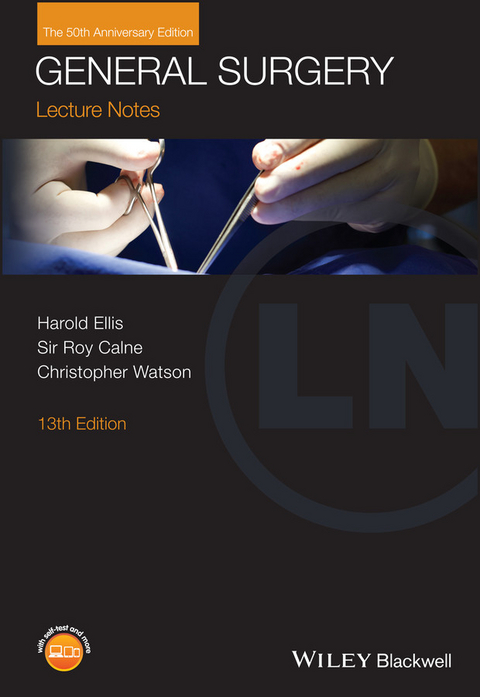
General Surgery (eBook)
John Wiley & Sons (Verlag)
978-1-118-74203-7 (ISBN)
THE 'GOLDEN JUBILEE' EDITION OF A CLASSIC TEXTBOOK, FIRST PUBLISHED IN 1965
Highly Commended at the British Medical Association Book Awards 2016
General Surgery Lecture Notes continues to be an invaluable, appealing and approachable resource for thousands of medical students and surgical trainees throughout the world. This comprehensive guide focuses on the fundamentals of general surgery, and systematically covers all the clinical surgical problems that a student may encounter and about which they need to know.
Fully revised and updated to reflect the rapid changes which are taking place in surgical practice, this 50th anniversary edition:
- Includes principles of treatment written at student level to aid understanding
- Features full colour illustrations throughout
- Includes electronic access to a range of extra material including case studies, images and photographs, and biographies
- Includes free access to the Wiley E-Text
- Is a perfect review text for medical students as well as junior surgeons taking the MRCS examination and other postgraduate surgical examinations
Trusted by generations of medical students, the clinical emphasis of General Surgery Lecture Notes makes this an essential purchase for all those wishing to learn more about general surgery.
Harold Ellis, CBE DM MCh FRCS
Emeritus Professor of Surgery, Guy's Hospital, London
Sir Roy Calne, MS FRCS FRS
Emeritus Professor of Surgery, Addenbrooke's Hospital, Cambridge
Christopher Watson, MD BChir FRCS
Professor of Transplantation and Honorary Consultant, Addenbrooke's Hospital, Cambridge
THE 'GOLDEN JUBILEE' EDITION OF A CLASSIC TEXTBOOK, FIRST PUBLISHED IN 1965Highly Commended at the British Medical Association Book Awards 2016 General Surgery Lecture Notes continues to be an invaluable, appealing and approachable resource for thousands of medical students and surgical trainees throughout the world. This comprehensive guide focuses on the fundamentals of general surgery, and systematically covers all the clinical surgical problems that a student may encounter and about which they need to know. Fully revised and updated to reflect the rapid changes which are taking place in surgical practice, this 50th anniversary edition: Includes principles of treatment written at student level to aid understanding Features full colour illustrations throughout Includes electronic access to a range of extra material including case studies, images and photographs, and biographies Includes free access to the Wiley E-Text Is a perfect review text for medical students as well as junior surgeons taking the MRCS examination and other postgraduate surgical examinations Trusted by generations of medical students, the clinical emphasis of General Surgery Lecture Notes makes this an essential purchase for all those wishing to learn more about general surgery.
Harold Ellis, CBE DM MCh FRCS Emeritus Professor of Surgery, Guy's Hospital, London Sir Roy Calne, MS FRCS FRS Emeritus Professor of Surgery, Addenbrooke's Hospital, Cambridge Christopher Watson, MD BChir FRCS Professor of Transplantation and Honorary Consultant, Addenbrooke's Hospital, Cambridge
General Surgery: Lecture Notes 3
Contents 5
Preface 6
Acknowledgements 7
Abbreviations 8
The anytime, anywhere textbook 10
About the companion website 12
1 Surgical strategy 13
History and examination 13
The history 13
The examination 14
Writing your notes 15
Case presentation 16
2 Fluid and nutrition management 17
Body fluid compartments 17
Fluid and electrolyte losses 18
Normal fluid losses (Table 2.1) 18
The kidney 18
The gastrointestinal tract 19
Insensible losses 19
Abnormal fluid losses 19
The kidney 19
The gastrointestinal tract 19
Insensible losses 19
Effects of surgery 19
Prescribing fluids for the surgical patient 20
Preoperative fluid management 20
Replacement of normal losses 20
Replacement of special losses 20
Resuscitation 20
Nutrition 21
Malnutrition 21
Enteral feeding 22
Parenteral feeding 22
Refeeding syndrome 22
Enhanced recovery 22
3 Preoperative assessment 23
Patient assessment 23
History of presenting complaint 23
Past medical history 23
Past surgical history 23
Past anaesthetic history 24
‘Social’ habits 24
Drugs 24
Allergies 24
Management of pre-existing medical conditions 25
Diabetes 25
Respiratory disease 25
Cardiac disease 25
Other problems 25
Operative factors influencing preoperative management 26
Objective operative risk assessment 26
4 Postoperative complications 28
Classification 28
Wound infection 28
Preoperative factors 29
Operative factors 29
Postoperative factors 29
Clinical features 30
Treatment 30
Antimicrobial prophylaxis 30
Principles of antimicrobial prophylaxis 30
Specific examples 30
Antibiotic-associated enterocolitis: Clostridium difficile 30
Clinical features 31
Treatment 31
Meticillin-resistant Staphylococcus aureus 31
Pathology 31
Clinical features 31
Treatment 31
Other multiresistant organisms of significance 32
Extended spectrum ?-lactamases 32
Vancomycin-resistant enterococci 32
Carbopenem-resistant enterobacteriaceae 32
Pulmonary collapse and infection 32
Aetiology 32
Clinical features 33
Treatment 33
Deep vein thrombosis in the lower limb 33
Clinical features 34
Special investigations 34
Management 34
Treatment 35
Pulmonary embolus 35
Clinical features 35
Examination 35
Special investigations 35
Treatment 36
Burst abdomen 36
Aetiology 36
Clinical features 36
Treatment 36
Postoperative fistula 37
Definition 37
Aetiology 37
Clinical features 37
Treatment 37
Postoperative pyrexia 38
Complications of minimally invasive surgery 38
Radiological intervention 38
Endoluminal surgery 38
Laparoscopic surgery 38
Additional resources 38
5 Acute infections 39
Cellulitis 39
Treatment 39
Abscess 39
Treatment 39
Boil 40
Differential diagnosis 40
Treatment 40
Carbuncle 40
Treatment 40
Specific infections 40
Tetanus 40
Gas gangrene 41
Necrotizing soft tissue infections 42
Surgical infections and bioterrorism 43
Additional resources 43
6 Tumours 44
Pathology 44
Clinical features and diagnosis 44
History 45
Examination 45
Special investigations 45
Tumour markers 46
Treatment 46
Curative treatment 47
Palliative treatment 47
Prognosis 47
Extent of spread (staging) 47
Microscopic appearance (histological differentiation) 48
Anatomical situation 48
General condition of the patient 48
Screening 48
Population screening 48
Screening for high-risk individuals 49
7 Shock 50
Aetiology 50
Normal regulation of tissue perfusion 50
Abnormal regulation of tissue perfusion 50
Special causes of shock 51
Adrenocortical failure 51
Sympathetic interruption 51
The vasovagal syndrome (faint) 51
Septic shock 52
Sequelae of shock 52
Principles in the management of patients in shock 52
Assessment 52
Immediate measures 52
Monitoring and subsequent management 53
Pharmacological agents 54
8 Burns 55
Causes 55
Severity 55
Depth of burn 55
Size of burn 55
Clinical features 56
Airway 56
Plasma loss 56
Hypovolaemic shock 56
Pain 57
Anaemia 57
Stress reaction 57
Toxaemia 57
Treatment 58
Local treatment 58
General treatment 59
Complications 59
Local 59
General 60
Prognosis 60
Additional resources 60
9 The skin and its adnexae 61
Sebaceous cyst 61
Complications 61
Treatment 61
Dermoid cyst 61
Implantation dermoid 61
Sequestration dermoid 61
Verruca vulgaris (wart) 62
Treatment 62
Plantar warts 62
Keratoacanthoma (molluscum sebaceum) 62
Treatment 62
Ganglion 62
Treatment 62
Pilonidal sinus 62
Aetiology 63
Clinical features 63
Treatment 63
The nails 63
Paronychia 63
Ingrowing toenail 63
Onychogryphosis 64
Lesions of the nail bed 64
Tumours of the skin and subcutaneous tissues 64
Classification 64
Epidermal tumours 64
Melanoma 66
Tumours of sweat glands and sebaceous glands 69
Blood vessel tumours 69
Telangiectasia 71
Lymph vessel tumours 71
Cystic hygroma 71
Nerve tumours 71
Fatty tumours 72
Additional resources 72
10 The chest and lungs 73
Injury to the chest 73
Fractures of the ribs 73
Clinical features 73
Special investigations 73
Complications 73
Treatment 75
Lung abscess 77
Aetiology 77
Clinical features 77
Complications 77
Special investigations 77
Treatment 77
Empyema 77
Aetiology 77
Complications 78
Clinical features 78
Special investigations 78
Treatment 78
Lung tumours 78
Classification 78
Carcinoid tumours 78
Carcinoma 78
Secondary tumours 81
Additional resources 81
11 The heart and thoracic aorta 82
Cardiopulmonary bypass 82
Background 82
Technique (Figure 11.1) 82
Complications 82
Valvular disease 83
Valve repair and replacement 83
Aortic stenosis 84
Clinical features 84
Treatment 84
Mitral regurgitation 84
Pathology 84
Clinical features 84
Treatment 84
Mitral stenosis 85
Ischaemic heart disease 85
Aetiology 85
Special investigations 85
Treatment 85
Thoracic aortic disease 86
Persistent ductus arteriosus (Figure 11.3) 86
Coarctation of the aorta 87
Thoracic aortic aneurysms 88
Aortic dissection (Figure 11.5) 89
12 Arterial disease 91
Arterial trauma 91
Closed injuries 91
Penetrating injuries 91
Types of arterial injury 91
Consequences of injury 91
Clinical features 91
Treatment 92
Aneurysm 92
Aneurysm types (Figure 12.1) 92
Aetiology 93
Clinical features of true aneurysms 94
Differential diagnosis 94
Complications 94
Special investigations 94
Treatment 94
Abdominal aortic aneurysm 95
Management 95
Ruptured abdominal aortic aneurysm 95
Acute aortic expansion 96
Special investigations 96
Treatment 96
Popliteal aneurysm 96
Clinical features 96
Special investigations 96
Treatment 96
Assessing the patient with arterial disease 96
Clinical features 97
Special investigations 98
Principles of treatment 100
Atherosclerotic arterial disease 100
Aetiology 100
Atherosclerotic occlusive arterial disease 101
Coronary occlusive disease 101
Mesenteric occlusive disease 101
Cerebral occlusive disease 101
Intermittent claudication 101
Management (Box 12.3) 101
Special investigations 102
Treatment choices (Box 12.3) 102
Critical ischaemia 102
Rest pain 102
Gangrene 102
Investigations 103
Treatment 103
Carotid artery disease (Figure 12.3) 103
Clinical features 103
Differential diagnosis 104
Special investigations 104
Treatment 105
Complications of carotid endarterectomy 105
Raynaud’s disease and Raynaud’s phenomenon 105
Aetiology 105
Clinical features 105
Treatment 105
Buerger’s disease 106
Embolism (Figure 12.4) 106
Clinical features 106
Treatment 107
Cold injury 108
Additional resources 108
13 Venous disorders of the lower limb 109
Anatomy of the venous drainage of the lower limb 109
The deep venous system 109
The superficial venous system 109
Perforating veins 109
The calf pump 109
Pathology of venous disease 110
Varicose veins 110
Definition 110
Classification 110
Clinical features 111
Special investigations 112
Treatment 112
Complications of varicose veins 113
Haemorrhage 113
Phlebitis 113
Deep venous insufficiency 113
Aetiology 113
Features of venous hypertension in the leg 113
Special investigations 114
Treatment 114
Venous ulceration 114
Special investigations 114
Treatment 115
Deep vein thrombosis 115
Additional resources 115
14 The brain and meninges 116
Space-occupy ingintracranial lesions 116
Clinical features 116
Special investigations 117
Intracranial tumours 117
Classification 117
Gliomas 117
Medulloblastomas 118
Cerebral lymphoma 118
Meningioma 118
Acoustic neuroma 119
Pituitary tumours 119
Secondary tumours 120
Intracranial abscess 120
Aetiology 120
Clinical features 120
Special investigations 120
Treatment 121
Intracranial vascular lesions 121
Intracranial aneurysms 121
Pathology 121
Arteriovenous malformations 123
Hydrocephalus 123
The circulation of CSF 123
Non-communicating or obstructive hydrocephalus 124
Communicating hydrocephalus 124
Clinical features 124
Special investigations 124
Treatment 124
Normal pressure hydrocephalus 124
Additional resources 124
15 Head injury 125
Types of injury 125
Scalp injuries 125
Skull injuries 125
Orbital haematoma 127
Brain injuries 127
Diffuse brain injury 127
Localized brain injury 127
Coup and contre-coup (Figure 15.1) 127
Laceration within the skull 127
Cerebral perfusion 127
Systemic arterial pressure 127
Intracranial pressure 128
Management of the patient with a head injury 128
Initial assessment 128
Special investigations 131
Immediate management 131
Delayed management 132
Indications for surgery in head injuries 133
Early 133
Delayed 133
Traumatic intracranial bleeding 134
Classification 134
Extradural haemorrhage 134
Subdural haematoma 135
Subarachnoid haemorrhage 135
Intracerebral haemorrhage 135
Intraventricular haemorrhage 135
Other complications 136
Meningitis 136
Hyperpyrexia 136
Late complications 136
Brain death 136
Additional resources 137
16 The spine 138
Spina bifida (Figure 16.1) 138
Clinical features 138
Treatment 138
Spinal injuries 139
The bony injury 139
The neurological injury 142
Treatment of spinal injuries 143
Degenerative spinaldisorders 145
Neurological sequelae of spinal degeneration 145
Prolapsed intervertebral disc 145
Lumbar disc herniation 145
Spinal stenosis 146
Cervical spondylosis 146
Clinical features 146
Differential diagnosis 146
Treatment 146
Epidural spinal abscess 146
Clinical features 146
Treatment 146
Spinal tumours 147
Clinical features 147
Differential diagnosis 147
Special investigations 147
Treatment 148
Additional resources 148
17 Peripheral nerve injuries 149
Classification 149
Special investigation 150
Treatment 150
Neurapraxia and axonotmesis 150
Neurotmesis 150
Nerve grafts 150
Tendon transfers 150
Brachial plexus injuries 150
Upper trunk lesions (Erb’s paralysis) 150
T1 injury (Klumpke’s paralysis) 150
Radial nerve injuries (Figure 17.1a) 150
Median nerve injuries (Figure 17.1b) 151
Median nerve compression at the wrist (carpal tunnel syndrome) 151
Ulnar nerve injuries (Figure 17.2) 152
Ulnar nerve compression at the elbow (cubital tunnel syndrome) 152
Differential diagnosis of flexion deformities of the fingers 153
Ulnar nerve lesion 153
Dupuytren’s contracture 153
Volkmann’s contracture due to ischaemic fibrosis of flexors of the fingers (see Chapter 12) 153
Congenital contracture 153
Mallet finger 153
Trauma 153
Sciatic nerve injuries 153
Common peroneal nerve injuries 153
Lateral cutaneous nerve of the thigh compression: meralgia paraesthetica 154
Cervical sympathetic nerve injuries: Horner’s syndrome 154
Additional resources 154
18 The oral cavity 155
The lips 155
Cleft lip and palate 155
Lesions on the lip 157
Ulcers in the mouth 158
Traumatic 158
Aphthous ulcer 158
Herpes simplex 158
Carcinoma 158
Syphilitic ulcers 158
Other causes of ulceration 158
Other lesions within the mouth 158
Leucoplakia 158
Mucous retention cysts 159
Ranula 159
Midline dermoid 159
Epulis 159
Malignant disease of the mouth and pharynx 159
General features 159
Pathology 159
Special investigations 160
Principles of treatment 161
Management of the primary tumour 161
Management of the regional lymph nodes 161
Prognosis 161
Specific features 161
Carcinoma of the lip 161
Clinical features 161
Differential diagnosis 161
Carcinoma of the tongue 162
Clinical features 162
Differential diagnosis 162
Carcinoma of the soft palate and fauces 162
Carcinoma of the hardpalate 162
Carcinoma of the floor of the mouth, alveolus and cheek 162
Carcinoma of the tonsil 162
Carcinoma of the nasopharynx 163
Carcinoma of the oroand laryngopharynx 163
Tumours of the jaw 163
Tumours of the bone 163
Ameloblastoma (adamantinoma) 163
Surface tumours 163
Antral tumours 163
Clinical features 163
Special investigations 164
Treatment 164
Additional resources 164
19 The salivary glands 165
Inflammation 165
Aetiology 165
Mumps 165
Acute bacterial parotitis 166
Clinical features 166
Treatment 166
Chronic recurrent parotid sialadenitis 166
Treatment 166
Mikulicz’s syndrome 166
Calculi 167
Clinical features 167
Special investigations 167
Treatment 167
Salivary tumours 167
Classification 167
Pleomorphic adenoma 167
Pathology 167
Surgical considerations 167
Clinical features 168
Treatment 168
Prognosis 168
Adenolymphoma 168
Carcinoma 168
Clinical features 168
Treatment 168
Additional resources 168
20 The oesophagus 169
Dysphagia 169
Local causes 169
General causes 169
Investigations 169
Special investigations 170
Swallowed foreign bodies 170
Treatment 171
Perforations of the oesophagus 171
Classification 171
Clinical features 171
Special investigations 171
Treatment 172
Caustic stricture of the oesophagus 172
Treatment 172
Achalasia of the cardia 172
Clinical features 172
Special investigations 172
Treatment 172
Plummer–Vinson syndrome 173
Treatment 173
Oesophageal diverticula 173
Other oesophageal diverticula 173
Pharyngeal pouch 173
Clinical features 173
Treatment 173
Reflux oesophagitis 174
Special investigations 175
Differential diagnosis 175
Treatment 175
Tumours of the oesophagus 175
Classification 175
Carcinoma 175
Pathology 175
Spread 176
Clinical features 176
Special investigations 176
Differential diagnosis 176
Treatment 176
Curative resection 176
Palliation 176
Barrett’s oesophagus and adenocarcinoma 176
Additional resources 177
21 The stomach and duodenum 178
Congenital hypertrophic pyloric stenosis 178
Aetiology 178
Clinical features 178
Differential diagnosis 178
Special investigations 179
Treatment 179
Duodenal atresia 179
Clinical features 180
Differential diagnosis 180
Treatment 180
Peptic ulcer 180
Pathology 180
Aetiology 180
The acute peptic ulcer 181
The chronic peptic ulcer 181
Clinical features 181
Special investigations 181
Treatment 182
Complications of peptic ulceration 184
Perforated peptic ulcer 184
Pathology 184
Clinical features 184
Special investigations 185
Differential diagnosis 185
Treatment 185
Prognosis 185
Pyloric stenosis 185
Pathology 185
Clinical features 185
Special investigations 185
Biochemical disturbances 186
Differential diagnosis 186
Treatment 186
Gastrointestinal haemorrhage 186
Management 186
Assessment of the patient 187
Aetiology 187
History 188
Clinical examination 188
Special investigations 188
Treatment 188
Indications for surgery 189
The management of haemorrhage from oesophageal varices 189
Tumours of the stomach 189
Classification 189
Gastrointestinal stromal tumours 190
Pathology 190
Aetiology 190
Special investigations 190
Treatment 190
Carcinoma 190
Pathology 190
Risk factors 191
Macroscopic pathology 191
Microscopic appearances 191
Spread 191
Clinical features 191
Special investigations 192
Differential diagnosis 192
Treatment 192
Prognosis 192
Bariatric surgery 193
Indications for bariatric surgery 193
Surgical procedures 193
Additional resources 194
22 Mechanical intestinal obstruction 195
Mechanical obstruction 195
Classification 195
Pathology 196
Clinical features 196
Clinical examination 197
Simple obstruction versus strangulating obstruction 197
Special investigations 197
Treatment 198
Preoperative preparation in acute obstruction 198
Operative treatment 198
Conservative treatment 198
Closed loop obstruction 199
Adhesive obstruction 199
Volvulus 199
Definition 199
Aetiology 199
Sigmoid volvulus 199
Caecal volvulus 200
Small intestine volvulus in adults 200
Volvulus neonatorum 200
Mesenteric vascular occlusions 200
Aetiology 200
Pathology 201
Clinical features 201
Treatment 201
Neonatal intestinal obstruction 201
Classification 201
Intestinal atresia 201
Volvulus neonatorum 201
Meconium ileus 202
Necrotizing enterocolitis 202
Hirschsprung’s disease 202
Anorectal atresias 203
Intussusception 204
Definition 204
Terminology 204
Aetiology 204
Clinical features in infants 204
Treatment in infants 204
Additional resources 204
23 Paralytic ileus 205
Aetiology 205
Peritonitis 205
Metabolic factors 205
Drugs 205
Postoperative 205
Pathology 205
Clinical features 206
Differential diagnosis 206
Treatment 206
Pseudo-obstruction 206
Treatment 207
24 The small intestine 208
Meckel’s diverticulum 208
Clinical features 208
Special investigations 208
Crohn’s disease 208
Aetiology 209
Pathology 209
Clinical features 209
Special investigations 209
Complications outside the gastrointestinal tract 210
Treatment 210
Prognosis 210
Tumours of the small intestine 210
Classification 210
Clinical features 211
Carcinoid syndrome 211
Pathology 211
Clinical features 211
Special investigations 211
Treatment 212
Additional resources 212
25 Acute appendicitis 213
Pathology 213
Pathological course 213
Clinical features 213
History 213
Examination 214
Special investigations 214
Differential diagnosis 214
Treatment 215
The appendix mass (Box 25.1) 216
Treatment 216
Appendicitis in pregnancy 217
Additional resources 217
26 The colon 218
Constipation and diarrhoea 218
Constipation 218
Diarrhoea 218
Diverticulosis and diverticulitis 219
Background (Table 26.1) 219
Pathogenesis 219
Complications of diverticula 220
Clinical features 220
Special investigations 220
Differential diagnosis 221
Treatment 221
Angiodysplasia 221
Clinical features 224
Special investigations 224
Treatment 224
Colitis 224
Ulcerative colitis 224
Crohn’s colitis 227
Tumours 227
Classification 227
Carcinoma 227
Colostomy 230
Indications for colostomy formation 230
Types of colostomy 230
Complications of colostomy formation 231
Stoma appliances: principles 231
Management of a colostomy 231
Additional resources 231
27 The rectum and anal canal 232
Bright red rectal bleeding (Table 27.1) 232
General causes 232
Local causes 232
Haemorrhoids (piles) 232
Functional anatomy 232
Classification 232
Pathology 234
Grading haemorrhoids 234
Predisposing factors 234
Clinical features 234
Complications 234
Treatment 235
Thrombosed strangulated piles 235
Specific complications of haemorrhoidectomy 235
Perianal haematoma 236
Treatment 236
Fissure in ano 236
Clinical features 236
Treatment 236
Anorectal abscesses 236
Classification (Figure 27.2) 236
Treatment 237
Fistula in ano 237
Definitions 237
Aetiology 237
Anatomical classification (Figure 27.3) 237
Clinical features 238
Treatment 238
Stricture of the anal canal 238
Classification 238
Treatment 239
Prolapse of the rectum 239
Treatment 239
Pruritus ani 239
Treatment 239
Tumours 239
Pathology 239
Rectal polyps 240
Carcinoma of the rectum 240
Pathology 240
Spread 240
Staging 241
Prognosis 241
Clinical features 241
Local symptoms 241
Examination 241
Special investigations 242
Differential diagnosis of a rectal tumour 242
Treatment 242
Anal cancer 242
Pathology 242
Clinical features 243
Special investigations 243
Treatment 243
Additional resources 244
28 Peritonitis 245
General characteristics of peritonitis 245
Aetiology 245
Pathology 245
Clinical features 245
Special investigations 246
Differential diagnosis 246
Principles of treatment 246
Peritoneal dialysis peritonitis 246
Non-specific bacterial peritonitis 247
Pneumococcal peritonitis 247
Treatment 247
Haemolytic streptococcal peritonitis 247
Staphylococcal peritonitis 247
Tuberculous peritonitis 247
Pathology 247
Clinical features 247
Treatment 247
Bile peritonitis 247
Localized intraperitoneal collections of pus 248
Subphrenic abscess 248
Anatomy (Figure 28.1) 248
Aetiology 249
Clinical features 249
Special investigations 249
Treatment 250
Pelvic abscess 250
Clinical features 250
Treatment 250
29 Hernia 251
Definition 251
Abdominal wall hernias 251
Aetiology 251
Varieties 251
Clinical features 252
Inguinal hernia 253
Anatomy (Figure 29.2) 253
Indirect inguinal hernia 254
Direct inguinal hernia 255
Treatment 255
Femoral hernia 256
Anatomy 256
Clinical features 256
Richter’s hernia 256
Treatment 257
Umbilical hernia 257
Exomphalos 257
Treatment 257
Congenital umbilical hernia 257
Treatment 257
Paraumbilical hernia 257
Treatment 258
Divarication of the recti 258
Epigastric hernia 258
Treatment 258
Incisional hernia 258
Treatment 258
Unusual hernias 258
Obturator hernia 258
Spigelian hernia 258
Gluteal hernia 258
Sciatic hernia 259
Lumbar hernia 259
Parastomal hernia 259
Diaphragmatic hernias 259
Congenital diaphragmatic hernia 259
Traumatic diaphragmatic hernias 260
Acquired hiatal hernias 260
Reflux oesophagitis 261
Additional resources 261
30 The liver 262
Liver enlargement 262
Physical signs 262
Causes of hepatomegaly 262
Jaundice 262
Bilirubin metabolism (Figure 30.1) 263
Classification and pathogenesis 264
Causes 264
Diagnosis 264
Congenital abnormalities 267
Riedel’s lobe 267
Polycystic liver 267
Liver trauma 267
Clinical features 268
Treatment 268
Acute infections of the liver 268
Pyogenic liver abscess 268
Amoebic liver abscess 269
Hydatid disease of the liver 269
Pathology 269
Clinical features 269
Special investigations 269
Treatment 269
Cirrhosis 269
Definition 269
Aetiology 270
Consequences of cirrhosis 270
Clinical features of cirrhosis 270
The effects of liver failure 271
Clinical features 271
Special investigations 273
Treatment 273
Hepatorenal syndrome 274
Liver neoplasms 275
Classification 275
Hepatocellular carcinoma 275
Cholangiocarcinoma 276
Secondaries 277
Liver surgery 277
Anatomical considerations 277
Surgical resections 277
Additional resources 277
31 The gallbladder and bile ducts 278
Congenital anomalies 278
Cholelithiasis (gallstones) 278
Bile composition and function 279
Gallbladder physiology 279
Gallstone types 279
Cholesterol stones 280
Pigment stones 280
Mixed stones 281
The pathological effects of gallstones 281
Clinical manifestations of gallstones 281
Biliary colic 281
Acute cholecystitis 281
Chronic cholecystitis 282
Stones in the common bile duct (choledocholithiasis) 282
Ascending cholangitis 282
Courvoisier’s law (Figure 31.3) 283
Special investigations 284
Treatment 284
Complications of cholecystectomy 285
Gallbladder polyps 286
Pathology 286
Clinical features 286
Treatment 286
Carcinoma of the gallbladder 286
Pathology 286
Clinical features 286
Treatment 286
Cholangiocarcinoma 287
Pathology 287
Clinical features 287
Treatment 287
Additional resources 287
32 The pancreas 288
Congenital anomalies 288
Annular pancreas 288
Heterotopic pancreas 288
Acute pancreatitis 288
Aetiology 288
Pathology 290
Macroscopic pathology 290
Clinical features 290
Differential diagnosis 290
Special investigations 290
Management 291
Severe acute pancreatitis 291
Supportive treatment 292
Surgery 292
Prognosis 292
Complications 292
Chronic pancreatitis 293
Aetiology 293
Clinical features 293
Special investigations 293
Treatment 293
Pancreatic cysts 294
Classification 294
Clinical features 294
Treatment 294
Pancreatic tumours 294
Classification 294
Pancreatic neuroendocrine tumours 295
Types of tumours 295
Insulinoma (?-celltumour) 295
Diagnosis: Whipple’s triad 295
Special investigations 295
Treatment 296
Gastrinoma (Zollinger–Ellison syndrome, non-?-cell islet tumour) 296
Special investigations 296
Treatment 296
Pancreatic carcinoma 296
Pathology 296
Spread 296
Clinical features 297
Examination 297
Special investigations 297
Differential diagnosis 297
Treatment 297
Prognosis 299
Additional resources 300
33 The spleen 301
Splenomegaly 301
Physical signs 301
Classification 301
Splenectomy 302
Complications of splenectomy 302
Ruptured spleen 302
Clinical features 302
Special investigations 303
Treatment 303
Additional resources 303
34 The lymph nodes and lymphatics 304
The lymphadenopathies 304
Classification 304
Clinical examination 304
Special investigations 305
Lymphoedema 305
Inherited lymphoedema 305
Acquired lymphoedema 306
Special investigations 306
Differential diagnosis 306
Treatment of congenital lymphoedema 306
Additional resources 306
35 The breast 307
Development alanomalies 307
Accessory nipples and breasts 307
Hypoplasia or absence of the breast 307
Nipple inversion 307
Symptoms of breast disease 307
A lump in the breast 307
Discharge from the nipple 309
Pain in the breast (mastalgia) 309
Traumatic fat necrosis 310
Aetiology 310
Clinical features 310
Treatment 310
Acute inflammation of the breast (mastitis) 310
Acute bacterial mastitis 310
Periductal mastitis 310
Duct ectasia 311
Chronic inflammatory conditions of the breast 311
Benign breast disease 311
Cystic disease 311
Sclerosing adenosis 312
Radial scars 312
Fibroadenoma 312
Hamartoma 312
Gynaecomastia 312
Tumours 313
Classification 313
Intraduct papilloma 313
Phyllodes tumour 313
Carcinoma of the breast 313
Aetiology 313
Pathology 314
Spread 315
Prognostic factors 316
Clinical features 317
Special investigations 317
Treatment 317
Survival 319
Prophylactic mastectomy 320
Inflammatory breast cancer 320
Patients unfit for surgery 320
Metastatic disease 320
Carcinoma of the male breast 320
Paget’s disease of the nipple 320
Presentation 320
Treatment 321
Breast screening 321
Additional resources 321
36 The neck 322
Branchial cyst and sinus 322
Anatomy 322
Aetiology 322
Clinical features 322
Treatment 322
Tuberculous cervical adenitis 323
Clinical features 323
Differential diagnosis 323
Treatment 323
Carotid body tumour (chemodectoma) 323
Pathology 323
Clinical features 324
Special investigations 324
Treatment 324
Additional resources 324
37 The thyroid 325
Congenital anomalies 325
Embryology 325
Lingual thyroid 325
Thyroglossal cyst 325
Treatment 325
Thyroglossal fistula 325
Treatment 325
Thyroid physiology 326
Physiological control of secretion 326
Pharmacological control of secretion 327
Pathology of goitre 327
Multinodular goitre 327
Colloid goitre (endemic goitre) 328
Hyperplasia 328
Clinical features in thyroid disease 328
The thyroid swelling 328
Retrosternal goitre 328
Tracheal displacement 328
Vocal cord integrity 328
Regional nodes 328
The physiological state of the patient 328
Hyperthyroidism 328
History 328
Examination 329
Aetiology 329
Hypothyroidism 329
Congenital hypothyroidism 329
Adult hypothyroidism 330
Investigations in thyroid disease 330
Clinical classification of thyroid swellings 330
Outline of treatment of goitre 331
Euthyroid nodular enlargement 331
Hyperthyroidism 331
Complications of thyroidectomy 332
Hypoparathyroidism 332
Thyroid crisis 332
Recurrent laryngeal nerve injury 333
Haemorrhage 333
Thyroid tumours 333
Classification 333
Benign adenoma 333
Thyroid carcinoma 333
Hashimoto’s disease 335
Treatment 335
Riedel’s thyroiditis 335
De Quervain’s thyroiditis 335
Additional resources 336
38 The parathyroids 337
Anatomy and development 337
Physiology 337
Effects of increased PTH production 337
Hypoparathyroidism 337
Clinical features 338
Hyperparathyroidism 338
Primary hyperparathyroidism 338
Secondary hyperparathyroidism 339
Tertiary hyperparathyroidism 339
Ectopic PTH production 339
Clinical features of hyperparathyroidism 339
Special investigations 340
Indications for surgery 340
Complications of parathyroid surgery 340
Management of persistent or recurrent primary hyperparathyroidism 341
Additional resources 341
39 The thymus 342
Tumours 342
Clinical features 342
Treatment 342
Myasthenia gravis 342
Clinical features 342
Treatment 343
40 The adrenal glands 344
Physiology 344
Adrenal cortex 344
Adrenal medulla 344
Pathology 344
Enzyme disorders 345
Cushing’s syndrome 345
Clinical features 345
Special investigations 345
Treatment 345
Primary hyperaldosteronism (Conn’s syndrome) 345
Special investigations 346
Treatment 346
The adrenogenital syndromes 346
Congenital adrenogenital syndrome 346
Acquired adrenogenital syndrome 346
Clinical features 346
Differential diagnosis 346
Treatment 346
Non-functioning tumours of the adrenal cortex 347
Adrenomedullary tumours 347
Classification 347
Neuroblastoma 347
Phaeochromocytoma 347
Ganglioneuroma 348
Hypertension 348
Classification 348
Renovascular hypertension 349
Unilateral renal diseases producing hypertension 350
Additional resources 350
41 The kidney and ureter 351
Congenital anomalies 351
Embryology (Figure 41.1) 351
Common renal anomalies 351
Horseshoe kidney 352
Duplex system 352
Polycystic disease 353
Pathology 353
Presentation of adult polycystic kidney disease 353
Special investigations 353
Treatment 353
Renal cysts 353
Clinical features 353
Special investigations 353
Treatment 354
Haematuria 354
Classification 354
Management 354
Injury to the kidney 354
Clinical features 355
Special investigations 355
Treatment 355
Hydronephrosis 356
Pathology 356
Clinical features 356
Complications 356
Special investigations 356
Treatment 356
Urinary tract calculi 357
Aetiology 357
Composition of urinary calculi 357
Clinical features (Figure 41.3) 358
Special investigations 358
Complications 359
Treatment 359
Treatment of the cause 359
Urinary tract infections 360
Cystitis 360
Special investigations 360
Treatment 360
Reflux nephropathy 360
Vesicoureteric reflux 360
Intrarenal reflux 360
Clinical features 361
Special investigations 361
Treatment 361
Pyonephrosis 361
Special investigations 361
Treatment 361
Renal abscess 361
Clinical features 361
Special investigations 361
Treatment 361
Renal tuberculosis 361
Pathology 361
Clinical features 362
Special investigations 362
Treatment 362
Renal failure 362
Acute kidney injury 362
Aetiology 362
Clinical features 363
Special investigations 363
Management 363
Acute tubular necrosis 364
Pathology 364
Clinical features 364
Treatment 364
Chronic renal failure 365
Renal tumours 365
Classification 365
Nephroblastoma (Wilms’ tumour) 365
Pathology 365
Clinical features 365
Special investigations 366
Treatment 366
Renal cell carcinoma 366
Pathology 366
Spread 366
Clinical features 366
Special investigations 367
Treatment 367
Tumours of the renal pelvis and ureter 367
Clinical features 367
Treatment 367
Additional resources 367
42 The bladder 368
Urachal anomalies 368
Treatment 368
Bladder exstrophy (ectopia vesicae) 368
Treatment 368
Rupture of the bladder 368
Intraperitoneal rupture 368
Extraperitoneal rupture 369
Clinical features 369
Special investigations 369
Treatment 369
Diverticulum of the bladder 369
Complications 369
Clinical features 369
Special investigations 369
Treatment 369
Bladder stone 370
Aetiology 370
Clinical features 370
Special investigations 370
Treatment 370
Bladder tumours 370
Pathology 370
Urothelial carcinoma 370
Low-risk non-muscle-invasive cancers 371
High-risk non-muscle-invasive cancers 371
Muscle-invasive cancers 372
Additional resources 372
43 The prostate 373
Benign enlargement 373
Pathology 373
Clinical features 373
Special investigations 374
Complications of benign prostatic hyperplasia 374
Treatment 375
Prostate cancer 375
Pathology 375
Clinical features 376
Special investigations 376
Treatment 376
Prostatitis 377
Clinical features 378
Bladder neck obstruction 378
Posterior urethral valves 378
Failure of bladder neck relaxation 378
Urinary retention 378
Diagnosis of the cause 379
Assessment of the degree of renal damage 379
Assessment of the general condition of the patient 379
Scheme of management of acute urinary retention 379
Chronic urinary retention 381
Additional resources 381
44 The male urethra 382
Congenital anomalies 382
Hypospadias 382
Epispadias 382
Posterior urethral valves 382
Injury to the urethra 382
The bulbar urethra 382
The membranous urethra 382
Management 383
Complications 383
Urethral stricture 383
Aetiology 383
Clinical features 383
Special investigations 384
Treatment 384
45 The penis 385
Phimosis 385
Clinical features 385
Treatment 385
Paraphimosis 385
Treatment 385
Non-retractile prepuce 385
Circumcision 386
Ammoniacal dermatitis 386
Treatment 386
Balanitis 386
Treatment 386
Carcinoma 386
Pathology 386
Spread 386
Clinical features 387
Treatment 387
Impotence 387
Aetiology 387
Special investigations 387
Treatment 388
Additional resources 388
46 The testis and scrotum 389
Abnormalities of testicular descent 389
Embryology 389
Classification of maldescent 389
Differential diagnosis: the retractile testis 390
Treatment 390
Complications of maldescent 390
Scrotal swelling 390
Examination 390
Special investigation 390
Epididymal cysts 390
Hydrocele 391
Primary or idiopathic hydrocele (Figure 46.2) 391
Secondary hydrocele 392
Treatment 392
Acute infections of the testis and epididymis 392
Blood-borne infection 393
Ascending infection 393
Differential diagnosis 393
Chronic infections of the testis 393
Gumma 393
Tuberculosis 393
Torsion of the testis 394
Aetiology 394
Clinical features 394
Differential diagnosis 394
Treatment 394
Varicocele 394
Clinical features 394
Treatment 395
Disorders of the scrotal skin 395
Idiopathic scrotal oedema 395
Fournier’s gangrene 395
Carcinoma of the scrotum 395
Tumours of the testis 395
Aetiology 395
Pathology 395
Seminoma 396
Teratoma 396
Spread 396
Clinical presentation 396
Special investigations 396
Treatment 396
Prognosis 397
Male infertility 397
Aetiology 397
Clinical features 397
Special investigations 397
Treatment 397
Additional resources 398
47 Transplantation surgery 399
Historical background 399
Classification of grafts 399
Organ donors 399
Living donors 400
Deceased donors 400
Exclusions to organ donation 400
Organ preservation 401
Organ recipients 401
The immunology of organ transplantation 401
The major histocompatibility complex 401
The human leucocyte antigen system 401
Organ matching 402
ABO matching 402
Lymphocytotoxic cross-match 402
MHC matching 402
Rejection 402
Hyperacute rejection 402
Acute rejection 403
Chronic rejection 403
Principles of immunosuppressive therapy 403
Complications of transplantation 403
Early complications 403
Late complications 404
Results in clinical organ transplantation 404
Kidney transplantation 404
Pancreas transplantation 404
Liver transplantation 405
Heart, lung and combined heart–lung transplantation 405
Additional resources 405
Index 406
Eponyms 427
Biographies 433
EULA 448
| Erscheint lt. Verlag | 26.2.2016 |
|---|---|
| Reihe/Serie | Lecture Notes |
| Lecture Notes | Lecture Notes |
| Sprache | englisch |
| Themenwelt | Medizin / Pharmazie ► Medizinische Fachgebiete ► Chirurgie |
| Medizin / Pharmazie ► Studium | |
| Schlagworte | Chirurgie • Chirurgie u. chirurgische Spezialgebiete • medical education • Medical Science • Medizin • Medizinstudium • Surgery & Surgical Specialities • Surgery surgical student textbook operations interventions operating MRCS techniques procedures |
| ISBN-10 | 1-118-74203-6 / 1118742036 |
| ISBN-13 | 978-1-118-74203-7 / 9781118742037 |
| Informationen gemäß Produktsicherheitsverordnung (GPSR) | |
| Haben Sie eine Frage zum Produkt? |
 PDF (Adobe DRM)
Kopierschutz: Adobe-DRM
Adobe-DRM ist ein Kopierschutz, der das eBook vor Mißbrauch schützen soll. Dabei wird das eBook bereits beim Download auf Ihre persönliche Adobe-ID autorisiert. Lesen können Sie das eBook dann nur auf den Geräten, welche ebenfalls auf Ihre Adobe-ID registriert sind.
Details zum Adobe-DRM
Dateiformat: PDF (Portable Document Format)
Mit einem festen Seitenlayout eignet sich die PDF besonders für Fachbücher mit Spalten, Tabellen und Abbildungen. Eine PDF kann auf fast allen Geräten angezeigt werden, ist aber für kleine Displays (Smartphone, eReader) nur eingeschränkt geeignet.
Systemvoraussetzungen:
PC/Mac: Mit einem PC oder Mac können Sie dieses eBook lesen. Sie benötigen eine
eReader: Dieses eBook kann mit (fast) allen eBook-Readern gelesen werden. Mit dem amazon-Kindle ist es aber nicht kompatibel.
Smartphone/Tablet: Egal ob Apple oder Android, dieses eBook können Sie lesen. Sie benötigen eine
Geräteliste und zusätzliche Hinweise
Buying eBooks from abroad
For tax law reasons we can sell eBooks just within Germany and Switzerland. Regrettably we cannot fulfill eBook-orders from other countries.
aus dem Bereich