


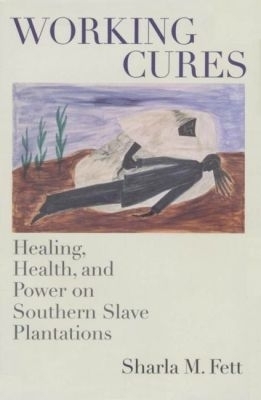
Working Cures
Healing, Health, and Power on Southern Slave Plantations
Seiten
2002
|
New edition
The University of North Carolina Press (Verlag)
978-0-8078-5378-8 (ISBN)
The University of North Carolina Press (Verlag)
978-0-8078-5378-8 (ISBN)
An exploration of black health under slavery showing how herbalism, conjuring, midwifery and other African American healing practices became arts of resistance in the antebellum South and invoked conflicts between the slave doctors and the whites who attempted to supervise their work.
Exploring the charged topic of black health under slavery, Sharla Fett reveals how herbalism, conjuring, midwifery, and other African American healing practices became arts of resistance in the antebellum South. Fett shows how enslaved men and women drew on African and Caribbean precedents to develop a view of health and healing that was distinctly at odds with slaveholders' property concerns. While white slaveowners narrowly defined slave health in terms of ""soundness"" for labor, slaves embraced a relational view of health that was intimately tied to religion and community. African American healing practices thus not only restored the body but also provided a formidable weapon against white objectification of black health. Enslaved women played a particularly important role in plantation health culture: they made medicines, cared for the sick, and served as midwives in both black and white households. Their labor as health workers not only proved essential to plantation production but also gave them a basis of authority within enslaved communities. Not surprisingly, conflicts frequently arose between slave doctoring women and the whites who attempted to supervise their work, as did conflicts related to feigned illness, poisoning threats, and African-based religious practices. By examining the deeply contentious dynamics of plantation healing, Fett sheds new light on the broader power relations of antebellum American slavery.
Exploring the charged topic of black health under slavery, Sharla Fett reveals how herbalism, conjuring, midwifery, and other African American healing practices became arts of resistance in the antebellum South. Fett shows how enslaved men and women drew on African and Caribbean precedents to develop a view of health and healing that was distinctly at odds with slaveholders' property concerns. While white slaveowners narrowly defined slave health in terms of ""soundness"" for labor, slaves embraced a relational view of health that was intimately tied to religion and community. African American healing practices thus not only restored the body but also provided a formidable weapon against white objectification of black health. Enslaved women played a particularly important role in plantation health culture: they made medicines, cared for the sick, and served as midwives in both black and white households. Their labor as health workers not only proved essential to plantation production but also gave them a basis of authority within enslaved communities. Not surprisingly, conflicts frequently arose between slave doctoring women and the whites who attempted to supervise their work, as did conflicts related to feigned illness, poisoning threats, and African-based religious practices. By examining the deeply contentious dynamics of plantation healing, Fett sheds new light on the broader power relations of antebellum American slavery.
Sharla M. Fett teaches history at Occidental College.
| Erscheint lt. Verlag | 31.5.2002 |
|---|---|
| Reihe/Serie | Gender and American Culture |
| Verlagsort | Chapel Hill |
| Sprache | englisch |
| Maße | 154 x 240 mm |
| Gewicht | 441 g |
| Themenwelt | Geschichte ► Teilgebiete der Geschichte ► Kulturgeschichte |
| Medizin / Pharmazie ► Naturheilkunde | |
| Studium ► Querschnittsbereiche ► Geschichte / Ethik der Medizin | |
| ISBN-10 | 0-8078-5378-X / 080785378X |
| ISBN-13 | 978-0-8078-5378-8 / 9780807853788 |
| Zustand | Neuware |
| Informationen gemäß Produktsicherheitsverordnung (GPSR) | |
| Haben Sie eine Frage zum Produkt? |
Mehr entdecken
aus dem Bereich



aus dem Bereich
Die Revolution des Gemeinen Mannes
Buch | Softcover (2024)
C.H.Beck (Verlag)
CHF 16,80
Eine Geschichte des Geschmacks
Buch | Hardcover (2025)
C.H.Beck (Verlag)
CHF 49,95
vom Mittelalter bis zur Gegenwart
Buch | Softcover (2024)
C.H.Beck (Verlag)
CHF 16,80


