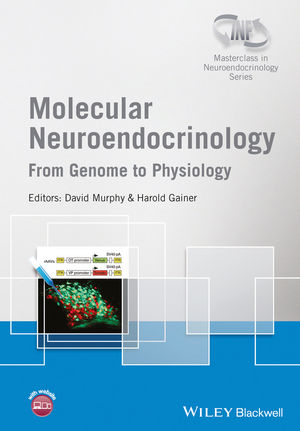
Molecular Neuroendocrinology (eBook)
John Wiley & Sons (Verlag)
978-1-118-76033-8 (ISBN)
Molecular Neuroendocrinology: From Genome to Physiology, provides researchers and students with a critical examination of the steps being taken to decipher genome complexity in the context of the expression, regulation and physiological functions of genes in neuroendocrine systems.
The 19 chapters are divided into four sectors: A) describes and explores the genome, its evolution, expression and the mechanisms that contribute to protein, and hence biological, diversity. B) discusses the mechanisms that enhance peptide and protein diversity beyond what is encoded in the genome through post-translational modification. C) considers the molecular tools that today's neuroendocrinologists can use to study the regulation and function of neuroendocrine genes within the context of the intact organism. D) presents a range of case studies that exemplify the state-of-the-art application of genomic technologies in physiological and behavioural experiments that seek to better understand complex biological processes.
• Written by a team of internationally renowned researchers
• Both print and enhanced e-book versions are available
• Illustrated in full colour throughout
This is the third volume in a new Series 'Masterclass in Neuroendocrinology' , a co- publication between Wiley and the INF (International Neuroendocrine Federation) that aims to illustrate highest standards and encourage the use of the latest technologies in basic and clinical research and hopes to provide inspiration for further exploration into the exciting field of neuroendocrinology.
Series Editors: John A. Russell, University of Edinburgh, UK and William E. Armstrong, The University of Tennessee, USA
Molecular Neuroendocrinology: From Genome to Physiology, provides researchers and students with a critical examination of the steps being taken to decipher genome complexity in the context of the expression, regulation and physiological functions of genes in neuroendocrine systems. The 19 chapters are divided into four sectors: A) describes and explores the genome, its evolution, expression and the mechanisms that contribute to protein, and hence biological, diversity. B) discusses the mechanisms that enhance peptide and protein diversity beyond what is encoded in the genome through post-translational modification. C) considers the molecular tools that today s neuroendocrinologists can use to study the regulation and function of neuroendocrine genes within the context of the intact organism. D) presents a range of case studies that exemplify the state-of-the-art application of genomic technologies in physiological and behavioural experiments that seek to better understand complex biological processes. Written by a team of internationally renowned researchers Both print and enhanced e-book versions are available Illustrated in full colour throughout This is the third volume in a new Series Masterclass in Neuroendocrinology , a co- publication between Wiley and the INF (International Neuroendocrine Federation) that aims to illustrate highest standards and encourage the use of the latest technologies in basic and clinical research and hopes to provide inspiration for further exploration into the exciting field of neuroendocrinology. Series Editors: John A. Russell, University of Edinburgh, UK and William E. Armstrong, The University of Tennessee, USA
Professor David Murphy, University of Bristol, UK As part of The Molecular Neueroendocrinology Research Group, Professor Murphy uses gene discovery and transfer techniques to study the neuronal regulation of the cardiovascular system in health and disease. Dr Harold Gainer, National Institute of Neurological Disorders and Stroke (NINDS), USA Dr Gainer's research focuses on the mechanisms involved in the establishment and maintenance of specific peptidergic neuronal phenotypes in the central nervous system.
List of Contributors, vii
Series Preface, xi
About the Companion Website, xiii
Introduction 1
David Murphy and Harold Gainer
Part A Genome and Genome Expression
1 Evolutionary Aspects of Physiological Function and Molecular Diversity of the Oxytocin/Vasopressin Signaling System 5
Zita Liutkevici^u¯te and Christian W. Gruber
2 The Neuroendocrine Genome: Neuropeptides and Related Signaling Peptides 25
J. Peter H. Burbach
3 Transcriptome Dynamics 57
David A. Carter, Steven L. Coon, Yoav Gothilf , Charles K. Hwang, Leming Shi, P. Michael Iuvone, Stephen Hartley, James C. Mullikin, Peter Munson, Cong Fu, Samuel J. Clokie, and David C. Klein
4 New Players in the Neuroendocrine System: A Journey Through the Non-coding RNA World 75
Yongping Wang, Edward A. Mead, Austin P. Thekkumthala, and Andrzej Z. Pietrzykowski
5 Transcription Factors Regulating Neuroendocrine Development, Function, and Oncogenesis 97
Judy M. Coulson and Matthew Concannon
6 Epigenetics 121
Chris Murgatroyd
Part B Proteins, Posttranslational Mechanisms, and Receptors
7 Proteome and Peptidome Dynamics 141
Lloyd D. Fricker
8 Neuropeptidomics: The Characterization of Neuropeptides and Hormones in the Nervous and Neuroendocrine Systems 155
Ning Yang, Samuel J. Irving, Elena V. Romanova, Jennifer W. Mitchell, Martha U. Gillette, and Jonathan V. Sweedler
9 Posttranslational Processing of Secretory Proteins 171
Nabil G. Seidah and Johann Guillemot
10 Neuropeptide Receptors 195
Stephen J. Lolait, James A. Roper, Georgina G.J. Hazell, Yunfei Li, Fiona J. Thomson, and Anne-Marie O'Carroll
Part C The Tool Kit
11 Germline Transgenesis 219
Jim Pickel
12 Somatic Transgenesis (Viral Vectors) 243
Valery Grinevich, H. Sophie Knobloch-Bollmann, Lena C. Roth, Ferdinand Althammer,
Andrii Domanskyi, Ilya A. Vinnikov, Marina Eliava, Megan Stanifer, and Steeve Boulant
13 Optogenetics Enables Selective Control of Cellular Electrical Activity 275
Ryuichi Nakajima, Sachiko Tsuda, Jinsook Kim, and George J. Augustine
14 Non-Mammalian Models for Neurohypophysial Peptides 301
Einav Wircer, Shifra Ben-Dor, and Gil Levkowitz
Part D Case Studies - Integration and Translation
15 Osmoregulation 331
David Murphy, Jose Antunes-Rodrigues, and Harold Gainer
16 Food Intake, Circuitry, and Energy Metabolism 355
Giles S.H. Yeo
17 Stress Adaptation and the Hypothalamic-Pituitary-Adrenal Axis 375
Greti Aguilera
18 Neuroendocrine Control of Female Puberty: Genetic and Epigenetic Regulation 405
Alejandro Lomniczi and Sergio R. Ojeda
19 Oxytocin, Vasopressin, and Diversity in Social Behavior 423
Lanikea B. King and Larry J. Young
Glossary 443
Index 459
CHAPTER 1
Evolutionary Aspects of Physiological Function and Molecular Diversity of the Oxytocin/Vasopressin Signaling System
Zita Liutkevičiūtė and Christian W. Gruber
Center for Physiology and Pharmacology, Medical University of Vienna, Vienna, Austria
1.1 Evolution of peptidergic signaling
One of the major eukaryotic signal transduction machineries is composed of G protein-coupled receptors (GPCRs) and their associated signaling molecules (see Chapter 10). GPCRs share a seven α-helical transmembrane architecture with an extracellular N-terminus and an intracellular C-terminus, and are able to sense a diverse set of ligand molecules, including proteins, peptides, amino acids, nucleosides, nucleotides, ions, and photons. GPCRs are involved in many processes such as cell growth, migration, density sensing or neurotransmission (Gruber et al., 2010).
Proteins comprising a seven-transmembrane topology have been identified as far back in the evolutionary timeline as prokaryotes; these are, for instance, light-sensitive proteo-, bacterio- and halorhodopsin proteins that are involved in non-photosynthetic energy harvesting in Archaea and bacteria. Structurally similar sensory rhodopsin proteins can also be found in eukaryotes, but to determine the phylogenetic relationship between prokaryotic and eukaryotic GPCRs is rather difficult, since (i) the prokaryotic and eukaryotic proteins have evolved independently for approximately 1.2 billion years, which resulted in low sequence conservation, and (ii) the occurrence of lateral gene transfer between prokaryotes and eukaryotes has been reported for certain microbial rhodopsins, which further complicates the analysis of phylogenic relations (Strotmann et al., 2011).
Recent studies on the evolution of GPCR signaling systems in eukaryotes – covering not only the receptors and their cognate G proteins, but also upstream and downstream regulators of the system – concluded that the last eukaryotic common ancestor must have already expressed a complex repertoire of GPCRs. Furthermore, it has been suggested that different parts of the GPCR signaling system evolved independently, and that some of them have been lost or became simplified without disrupting overall signaling functionality. For instance, most organisms contain most of the known GPCR signaling components, but certain species have retained only a subset of those, whereas others are completely reduced. These findings suggest that the GPCR signaling system is modular and that during evolution, drastic rearrangements can occur without complete loss of functionality. Analyses of protein domain architectures additionally suggest that domain shuffling is a major mechanism of signaling system evolution (de Mendoza et al., 2014).
Gene families and protein domain architectures of cytoplasmic transduction elements (for example, G proteins, arrestins, regulators of G protein signaling, guanine nucleotide exchange factors) are largely conserved between unicellular holozoans and metazoans. In contrast, receptors underwent a dramatic expansion in metazoans compared to their closest unicellular relatives. For instance, the human and mouse genomes code for more than 800 and 1300 GPCRs, respectively, which equals more than 1% of the total predicted genes, while yeast has as little as 10 GPCR genes, less than 0.2% of the total predicted genes (de Mendoza et al., 2014; Fredriksson and Schioth, 2005). This could be due to adaptation of GPCR signaling systems for new functions, such as cell–cell communication, developmental control, and complex environmental sensing, from light to odor and taste (de Mendoza et al., 2014). However, most GPCRs do not play a primary vital role in these organisms. Only 8% of GPCR genes in mice responded to gene disruption by embryonic or perinatal lethality; about 41% exhibited an obvious phenotype and more than 50% of knockout mice of individual GPCRs display no obvious phenotypical change (Schoneberg et al., 2004). However, in humans, mutations in genes encoding GPCRs and G proteins result in pathological conditions, for instance severe vision impairment and blindness, and many other retinal, endocrine, metabolic or developmental disorders (Schoneberg et al., 2004).
1.1.1 Evolution and diversity of peptide G protein-coupled receptors and their endogenous ligands
Of particular interest for this chapter are peptidergic systems, which are generally defined as a functional complex consisting of a cell that synthesizes and releases a peptide mediator, a cell that responds to that peptide by a certain physiological change, and the process of transferring the peptide from the site of synthesis to the site of action. In particular, we use the term peptidergic signaling for pathways that are mediated by peptides, their endogenous receptors and associated signaling molecules, which commonly belong to the family of G protein-coupled receptors. Many signaling peptides are released by the central nervous system and these neuropeptides are closely associated with the emergence of the first nervous system. Neuropeptides and the nervous system probably evolved in the common ancestor of cnidarians since sponges (the evolutionary older animal group) do not exhibit any physiological or anatomical signs of a nervous system. Neuropeptides are expressed in brains and are involved in the complex regulation of homeostatic processes and neuronal activity in metazoans. They may act as neurotransmitters, if released within synapses, or as neurohormones to activate receptors distal from the site of release. Neuropeptides are short (<50 amino acids) secreted polypeptides derived from larger precursor proteins which share defining features at the level of their primary sequence, which is useful for evolutionary studies, because short peptides sometimes lack sequence similarities (Mirabeau and Joly, 2013).
Recently, the evolutionary history of bilaterian neuropeptides and receptors was reconstructed to clarify the relationships between protostomian and deuterostomian peptidergic systems (Mirabeau and Joly, 2013). The results clearly indicated that the majority of peptidergic systems were present in the last common ancestor of bilaterians (the urbilaterian) (Table 1.1). This further supports the theory that the urbilaterian was an animal with a sophisticated physiology and a complex nervous system, capable of integrating sensory information. Another conclusion of this study was the existence of co-evolution between the majority of receptors and their ligands, although previously it has been suggested that, during evolution, novel ligands may outcompete existing ones for a given receptor (Mirabeau and Joly, 2013).
Table 1.1 Inferred evolutionary relationships between the different ancestral bilaterian peptidergic systems.
Mirabeau and Joly suggested that 29 peptidergic systems (here shown as different families from 1 to 29) were present in the last common ancestor of bilaterians (the urbilaterian). A dark gray square denotes the presence of both peptides and receptors from a given peptidergic system, a light gray square denotes the presence of receptor or peptide and the white square shows that both peptides and receptors are absent for a given peptidergic system in the phylogenetic group. Subphylum Vertebrata (V) is composed of Homo sapiens and Takifugu rubripes, phylum Tunicata (T) of Ciona intestinalis and Ciona savignyi, superphylum Ambulacraria (A) of Strongylocentrotus purpuratus and Saccoglossus kowalevskii, Lophotrochozoa (L) of Capitella teleta and Lottia gigantea, class Insecta (I) of Drosophila melanogaster, Tribolium castaneum, and Acyrthosiphon pisum, phylum Nematoda (N) of Caenorhabditis elegans and Pristionchus pacificus, Branchiostoma (B) of Branchiostoma floridae, and Daphnia (D) of Daphnia pulex (Mirabeau and Joly, 2013).
1.1.2 Origin of the oxytocin (OXT)/arginine vasopressin (AVP) signaling system
One of the best known peptidergic systems is OXT/AVP signaling. Homologs of OXT/AVP receptors and ligands have been identified in diverse organisms such as hydra, worms, insects, and vertebrates. Across evolutionary lineages, the OXT/AVP neuropeptide signaling system shows conserved functions in water homeostasis, reproductive behavior, learning, and memory (see section 1.4 later in this chapter) (Gruber, 2014).
Phylogenetic grouping indicated that invertebrate crustacean cardioactive peptide (CCAP) receptor, neuropeptide S (NPS) receptor, and AVP-like receptors form a monophyletic family which is phylogenetically the closest to the gonadotropin-releasing hormone (GnRH) receptor superfamily (Figure 1.1). Although CCAP, NPS, and AVP-like peptides are not similar in sequences, analyses of precursors encoding those peptides showed the presence of neurophysin domains in some of the genes, which consolidates the common origin of the peptides. Furthermore, AVP and neuropeptide S are found in neighboring tandem position in the amphioxus (Branchiostoma floridae) genome, indicating that they are the product of ancient duplication. Accordingly, in an ancestor of bilaterians, the duplication of a single gene (AVP/NPS/CCAP-like) must have occurred, which...
| Erscheint lt. Verlag | 24.12.2015 |
|---|---|
| Reihe/Serie | Wiley-INF Masterclass in Neuroendocrinology Series |
| Wiley-INF Neuroendocrinology Series | Wiley-INF Neuroendocrinology Series |
| Sprache | englisch |
| Themenwelt | Medizinische Fachgebiete ► Innere Medizin ► Endokrinologie |
| Medizin / Pharmazie ► Medizinische Fachgebiete ► Neurologie | |
| Studium ► 2. Studienabschnitt (Klinik) ► Humangenetik | |
| Naturwissenschaften ► Biologie | |
| Technik | |
| Schlagworte | Biowissenschaften • endocrinology • Endokrinologie • Genome • Life Sciences • Medical Science • Medizin • molecular neuroendocrinology • Neuroendocrinology • Neuroendokrinologie • neuropeptidomics • Neuroscience • Neurowissenschaften • Physiology |
| ISBN-10 | 1-118-76033-6 / 1118760336 |
| ISBN-13 | 978-1-118-76033-8 / 9781118760338 |
| Informationen gemäß Produktsicherheitsverordnung (GPSR) | |
| Haben Sie eine Frage zum Produkt? |
 EPUB (Adobe DRM)
Kopierschutz: Adobe-DRM
Adobe-DRM ist ein Kopierschutz, der das eBook vor Mißbrauch schützen soll. Dabei wird das eBook bereits beim Download auf Ihre persönliche Adobe-ID autorisiert. Lesen können Sie das eBook dann nur auf den Geräten, welche ebenfalls auf Ihre Adobe-ID registriert sind.
Details zum Adobe-DRM
Dateiformat: EPUB (Electronic Publication)
EPUB ist ein offener Standard für eBooks und eignet sich besonders zur Darstellung von Belletristik und Sachbüchern. Der Fließtext wird dynamisch an die Display- und Schriftgröße angepasst. Auch für mobile Lesegeräte ist EPUB daher gut geeignet.
Systemvoraussetzungen:
PC/Mac: Mit einem PC oder Mac können Sie dieses eBook lesen. Sie benötigen eine
eReader: Dieses eBook kann mit (fast) allen eBook-Readern gelesen werden. Mit dem amazon-Kindle ist es aber nicht kompatibel.
Smartphone/Tablet: Egal ob Apple oder Android, dieses eBook können Sie lesen. Sie benötigen eine
Geräteliste und zusätzliche Hinweise
Buying eBooks from abroad
For tax law reasons we can sell eBooks just within Germany and Switzerland. Regrettably we cannot fulfill eBook-orders from other countries.
aus dem Bereich