


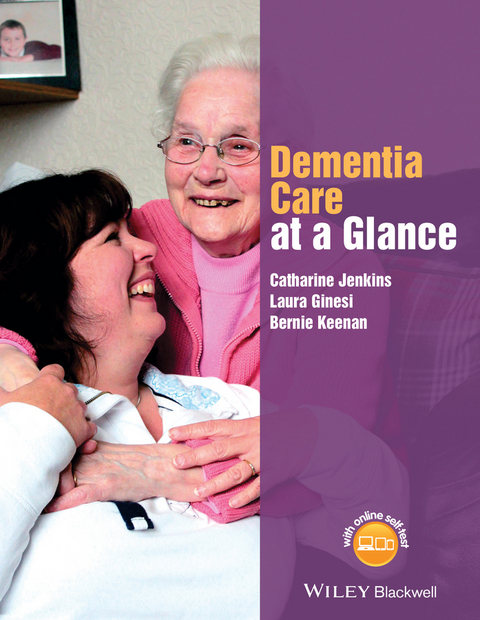
Dementia Care at a Glance (eBook)
John Wiley & Sons (Verlag)
978-1-118-85999-5 (ISBN)
Dementia Care at a Glance is the perfect companion for health and social care professionals, nurses, students as well as family members and voluntary workers needing information and guidance about dementia care. Taking a person-centred and interpersonal approach, each chapter outlines an aspect of the experience of living with dementia and the steps that the nurse or healthcare professional can take to support them.
This comprehensive book will assist readers to respond effectively, sensitively and with compassion to people living with dementia in acute settings, as well as in care environments and at home. It acknowledges the challenges that arise for people with dementia, family members and professionals and offers practical solutions based on current thinking and best practice.
- Presented in the bestselling at a Glance format, with superb illustrations and a concise approach
- Covers the common forms and manifestations of dementia, their causes, and how to address them
- Addresses a wide range of topics including, interventions, communication, care planning, medication, therapy, leadership as well as ethical and legal issues
- Takes a positive holistic approach, including not only physical and mental health issues but social and spiritual implications and a person-centred focus throughout
- Suitable for students on a range of healthcare courses
- Supported by a companion website with multiple-choice questions and reflective questions
Catharine Jenkins is a Senior Nurse Lecturer at Birmingham City University.
Laura Ginesi is a Lecturer in Health Sciences at the University of East Anglia.
Bernie Keenan is a Senior Lecturer at Birmingham City University.
Dementia Care at a Glance is the perfect companion for health and social care professionals, nurses, students as well as family members and voluntary workers needing information and guidance about dementia care. Taking a person-centred and interpersonal approach, each chapter outlines an aspect of the experience of living with dementia and the steps that the nurse or healthcare professional can take to support them. This comprehensive book will assist readers to respond effectively, sensitively and with compassion to people living with dementia in acute settings, as well as in care environments and at home. It acknowledges the challenges that arise for people with dementia, family members and professionals and offers practical solutions based on current thinking and best practice. Presented in the bestselling at a Glance format, with superb illustrations and a concise approach Covers the common forms and manifestations of dementia, their causes, and how to address them Addresses a wide range of topics including, interventions, communication, care planning, medication, therapy, leadership as well as ethical and legal issues Takes a positive holistic approach, including not only physical and mental health issues but social and spiritual implications and a person-centred focus throughout Suitable for students on a range of healthcare courses Supported by a companion website with multiple-choice questions and reflective questions
Catharine Jenkins is a Senior Nurse Lecturer at Birmingham City University. Laura Ginesi is a Lecturer in Health Sciences at the University of East Anglia. Bernie Keenan is a Senior Lecturer at Birmingham City University.
Dementia Care at a Glance 3
Contents 7
Preface 10
Acknowledgements 11
About the companion website 12
Part 1 Setting the scene 15
1 Introduction 16
Context 17
Who the book is for 17
Overview of dementia 17
Defining our terms 17
‘Stages’ of dementia 17
Causes for optimism 17
The strengths of people with dementia 17
Our beliefs and approach 17
2 The experiences of people with dementia 18
Gaining insight into people’s experiences 19
Listening to people with dementia 19
Learning through creative media 19
Stigma 19
Memory and identity 19
Part 2 Dementia causes and types 21
3 Brain basics 22
Introduction to the brain 23
The nervous system 23
Other tissues of the nervous system 23
The cerebrum 23
Cerebral hemispheres 23
Basal ganglia 23
Limbic structures 23
The brainstem 23
The cerebellum 23
4 Progression of dementia 24
The normal ageing brain 25
Progression of dementia 25
Signs and symptoms 25
Early diagnosis 25
5 Alzheimer’s disease 26
Overview 27
AD is not a normal part of ageing 27
Amyloid cascade hypothesis 27
Hyperphosphorylation of tau 27
Multiple neurotoxic pathways 27
Genetic risk factors for AD 27
Other factors 27
6 Vascular dementia 28
Vascular dementia 29
The cerebral circulation 29
Impaired perfusion of cerebral vessels (‘brain attack’) 29
Atherosclerosis of cerebral arteries 29
Haemorrhagic stroke 29
Cerebral amyloid angiopathy 29
Cerebral small vessel disease 29
7 Less common forms of dementia 30
Dementia with Lewy bodies 31
Frontotemporal dementia including Pick’s disease 31
Korsakoff’s syndrome 31
Creutzfeldt–Jakob disease 31
Huntington’s disease 31
Mixed dementia 31
8 Younger people with dementia 32
Context and statistics 33
Causation 33
Recognition and assessment 33
Life-stage and family issues 33
Care and interventions 33
Later stages and specialist care 33
9 People with learning disabilities and dementia 34
Old age and learning or intellectual disability 35
Genetic factors 35
Recognition 35
Family, friends and carer issues 35
Problems associated with dementia 35
Approaches to care 35
Part 3 Well-being and response in early stages 37
10 Promoting health to reduce risk of dementia 38
Reducing risk 39
Everyday physical well-being 39
Smoking cessation 39
Healthier diets 39
Moving more 39
Everyday mental well-being 39
Thinking and planning 39
Learning new skills 39
Developing social networks 39
Gendered health 39
11 Recognition and assessment 40
Forgetfulness 41
More than forgetfulness – recognising dementia 41
Benefits of diagnosis 41
The assessment process 41
Memory clinics 41
After the diagnosis 41
12 Post-diagnostic advice 42
Timely diagnosis 43
Feelings 43
Getting support 43
Understanding the condition 43
Practical priorities 43
Planning ahead 43
Legal issues 43
13 Signposting 44
The signposting process 45
For people diagnosed with dementia 45
For people with concerns or ‘subjective cognitive impairment’ 45
For partners, family and family carers 45
For friends of people with dementia 45
For volunteers 45
For health professionals 45
Part 4 Underpinning principles and skills 47
14 Values: Compassion and dignity 48
Values and approaches to care 49
All behaviour and communication has meaning 49
Person-centredness 49
Empathy 49
Compassion 49
Dignity 49
Respect 49
Protection 49
Comfort, well-being and enjoyment of life 49
15 The work of Tom Kitwood 50
Tom Kitwood: Dementia Care Pioneer 51
Kitwood’s life 51
Kitwood’s ideas 51
Defining dementia 51
Malignant social psychology 51
Personhood 51
Dementia care mapping 51
Critiquing Kitwood 51
16 Cultural issues 52
The significance of culture 53
Culture and old age 53
Memory problems and cultural responses 53
Culture and care 53
17 Spirituality 54
Defining spirituality 55
Spirituality and living with dementia 55
Living in the moment 55
Potential crises related to spiritual needs 55
Health and social care professionals 55
The ‘golden rule’ 55
Responses of faith communities 55
18 Communication 56
The brain and communication 57
Communication approach 57
Listening 57
Non-verbal communication 57
Verbal communication 57
Communicating without language 57
19 Common dementia-related problems 58
Why difficulties arise 59
Common problems 59
Low mood 59
Apathy 59
Repetitive speech 59
Aggression 59
The need for a sensitive approach 59
Part 5 Mental health problems 61
20 Depression in people with dementia 62
People with depression and dementia 63
Causes of depression 63
Recognising depression 63
Other peoples’ responses 63
Coping with depression and low mood 63
21 Delirium in dementia 64
Definition 65
Manifestations of delirium 65
Causes of delirium 65
Prevention 65
Management Strategies 65
Excessive drowsiness 65
22 Psychosis in people with dementia 66
Defining psychosis 67
Delirium (see Chapter 21) 67
Hallucinations and delusions in dementia 67
Coping strategies 67
Care and treatments 67
Part 6 Physical health problems 69
23 Sensory Impairment 70
Dementia and sensory loss 71
Visual problems 71
Interventions 71
Hearing problems and treatments 71
Interventions 71
Taste and smell: olfactory impairments 71
Touch 71
Proprioception (or ‘position sense’) 71
24 Falls 72
Possible reasons for falls 73
Specialist falls services 73
Design and technology 73
25 Nutrition 74
The pleasures of eating 75
Poor nutrition in people with dementia 75
Strategies to address poor nutrition 75
Assistance with eating 75
Malnutrition 75
26 Protecting and caring for skin 76
Promoting healthy skin 77
Nutrition 77
Causes of skin damage 77
Particular risk factors associated with dementia 77
Strategies to avoid skin problems 77
Specialist care 77
Pressure area care 77
Devices that can help relieve pressure 77
27 Continence 78
Continence 79
Assessment 79
Mobility 79
Behavioural management 79
Helpful design 79
Diet and lifestyle 79
Specialist services 79
28 Constipation 80
Constipation 81
Causes of constipation 81
Treatment of constipation 81
Strategies to prevent constipation 81
Part 7 Interventions 83
29 Exercise and dementia 84
Physical inactivity and dementia 85
Later life and risk of cognitive impairment 85
Potential benefits of physical activity 85
Confidence and self-efficacy 85
How much physical activity is beneficial? 85
30 Dementia-friendly communities 86
Dementia-friendliness 87
The objectives of environmental changes 87
The physical environment 87
Wayfinding 87
Design 87
The social environment 87
Hogewey village 87
31 Medication for dementia-related problems 88
Anti-dementia drugs 89
Anti-depressants 89
Anti-psychotics 89
Hypnotics 89
Pain relief – analgesia 89
Polypharmacy 89
32 Anti-dementia medication 90
Available medications 91
Benefits 91
How they work 91
Side effects 91
Existing medications and dementia 91
Vitamins and herbal remedies 91
New drugs in development 91
Taking part in drug trials 91
33 Medication management 92
Concordance 93
Problems associated with multiple medications or ‘polypharmacy’ 93
Addressing medication problems 93
Prompts and aids 93
Adjusting for disabilities 93
Swallowing difficulties 93
Covert medication 93
34 Cognitive interventions 94
Brain reserve 95
Cognitive stimulation interventions 95
Benefits of cognitive stimulation 95
Cognitive rehabilitation 95
Cognitive training 95
Benefits and disadvantages of cognitive rehabilitation and training 95
35 Activities for people with dementia 96
Recommended levels of physical activity for older adults 97
Staying active with dementia 97
Which activities work best? 97
Everyday activities 97
Activities to avoid 97
Quality of sleep 97
36 Creativity and people with dementia 98
Being creative 99
The nature of creativity 99
Procedural memory and creativity 99
Emotional strengths of people with dementia 99
Childlike fun 99
Modern technology – engaging with iPads and tablets 99
Appreciating art and the natural world 99
37 Music therapy 100
Music and music therapy 101
Music and the brain 101
Benefits 101
Incorporating music into the life of somebody with dementia 101
38 Reminiscence 102
The power of the past 103
Approaches to reminiscence 103
Reminiscence resources 103
Benefits of reminiscence 103
Disadvantages of reminiscence 103
The evidence base 103
Building reminiscence into other therapeutic activities 103
39 Life stories and memory boxes 104
Life stories 105
Memory boxes 105
Making a life story 105
Life review 105
Decisions on what to include 105
Potential difficulties 105
The format 105
Therapeutic benefits 105
40 Reality orientation 106
Therapies for people with dementia 107
Reality orientation 107
Twenty-four-hour RO 107
Examples 107
Criticisms of RO 107
Themed RO 107
Incorporating RO into everyday practice 107
41 Validation 108
The world of the person with dementia 109
Naomi Feil 109
Stages of dementia 109
The validation process 109
Critiques of Feil’s theories 109
Conclusions for current practice 109
Part 8 The physical environment 111
42 Sensory environments 112
All environments 113
Benefits of a sensory room 113
Design of sensory rooms 113
Gardens 113
Reminiscence rooms 113
Sensory input at home 113
43 Pets: animals as therapy 114
The benefits of animal company 115
Risks and disadvantages 115
Pets at home 115
Pets in care homes 115
Animals visiting hospital units 115
Robotic pets 115
44 Assistive technology 116
Definition 117
Prompting 117
Safety 117
Reassurance 117
Safety features 117
Telecare 117
Surveillance systems 117
Communication, stimulation and occupation 117
Ethical issues 117
45 Design for dementia 118
The environment and well-being 119
Hospitals 119
Orientation cues in care homes 119
Safety 119
Comfort, fun and family visits 119
Part 9 Carers and relationships 121
46 Relationships and dementia 122
Promoting relationships 123
Living well with dementia 123
Dealing with difficult feelings 123
Living bereavement 123
Guilt 123
Anger 123
Sexual feelings 123
47 Sex and sexuality 124
Expressing sexuality 125
Sexual relationships in the context of dementia 125
Sexual history 125
Sexual orientation and transgender issues 125
Problematic sexual behaviour 125
New relationships, capacity and consent 125
48 Carers’ issues and carer support 126
The role of ‘carer’ 127
What carers do 127
The impact on carers 127
Feelings 127
Relationships 127
Finances 127
Developing carer resilience 127
Support for carers 127
49 Reducing stress levels for family carers 128
Stressors 129
Sharing care 129
Honest conversations about the future 129
Coping strategies 129
Support from services 129
Self-support and mutual support 129
50 Having difficult conversations 130
Introduction 131
Planning ahead 131
Emotional distress 131
Truth-telling or ‘therapeutic lies’ 131
Reliving trauma 131
Mistaken identity 131
Disinhibition 131
Word-finding difficulties and frustration 131
Lack of conversation – mutism 131
Part 10 Responding to dementia-related difficulties 133
51 The multi-disciplinary team 134
Before meeting the multi-disciplinary team 135
First point of contact 135
The memory clinic 135
Support at home 135
Nursing home care, hospital or hospice 135
52 Care planning 136
The purpose of care plans 137
‘I’ statements 137
Crisis or emergency planning 137
Incorporating biography 137
Personalising the care plan 137
Assessment and holistic care planning 137
Care planning for family carers 137
53 Personal care 138
Personal care 139
Respect and dignity 139
Approaches to personal care 139
Washing and grooming 139
Dressing 139
Guidance on assistance with dressing 139
Guidance on assistance with toileting 139
54 Resistance to care 140
Definition 141
Reasons for resistance to care 141
Situational factors 141
Environmental factors 141
Personal and interpersonal factors 141
Using an ABC chart to gather data on triggers 141
Approaches to coping 141
Communication skills 141
Pain management 141
Natural waking and personal time schedules 141
Carers’ roles 141
55 Sundowning syndrome and sleep 142
Drivers of sleep-wakefulness 143
Sleep architecture 143
Sleep in the elderly 143
Dementia 143
Light and circadian rhythms 143
56 Transitions 144
Reasons for relocation 145
Issues related to mental capacity 145
Positive choices 145
Triggers for unplanned relocations 145
Avoiding relocation 145
Strategies to reduce the need for relocation 145
Choosing a care home 145
57 Walking 146
Walking is healthy 147
Promoting safe walking 147
Problematic walking or ‘wandering’ 147
Excessive walking as an indication of unmet need 147
Orientation 147
Restraint 147
On-going health benefits of walking 147
58 End-of-life care 148
Issues around death and dying 149
Advance care planning 149
Spiritual issues 149
Comfort and dignity 149
‘Do not resuscitate’ orders 149
Part 11 Ethical and legal issues 151
59 Abuse, neglect and safeguarding 152
Abuse 153
Safeguarding 153
Abusers 153
Poor practice 153
60 Ethical issues 154
Ethical principles 155
Ethical dilemmas 155
Autonomy 155
Driving a car 155
Duty of care and positive risk-taking 155
Beneficence 155
Protection from abuse 155
Informed consent 155
Truth telling and ‘therapeutic lies’ 155
Justice and considering others 155
61 Advocacy 156
Speaking up for another person’s interests 157
Skills of advocates 157
External agencies 157
Independent mental capacity advocates 157
Collective advocacy 157
People with dementia as advocates 157
Third sector organisations 157
62 Mental capacity 158
Defining capacity 159
Fluctuating abilities 159
The progression of dementia: decision-making needs 159
The Mental Capacity Act (2005) 159
Planning ahead 159
Assistance with decision-making 159
Best interests 159
Part 12 The future 161
63 Leadership issues 162
Person-centred leadership for care 163
Purpose and motivation 163
Person-centred leadership qualities 163
Relationship-centred care: needs of staff 163
Transformational leadership 163
Collaborative leadership 163
Changing care cultures 163
64 Research 164
Basic research into dementia 165
Qualitative research 165
Clinical trials 165
Funding for research into dementia 165
Researching well-being, quality of life and training 165
Examples of current research 165
65 Conclusion 166
Understandings of dementia 167
Person-centredness 167
Relationship-centred care 167
A social model in practice 167
Modern cohorts of older people 167
Contentious issues 167
Standards of care 167
End-of-life debates 167
Research: cure, care or prevention? 167
Funding and achieving high-quality care 168
Learning for the future 168
References 169
Recommended Reading 170
Index 172
EULA 176
| Erscheint lt. Verlag | 30.11.2015 |
|---|---|
| Reihe/Serie | At a Glance (Nursing and Healthcare) |
| Wiley Series on Cognitive Dynamic Systems | Wiley Series on Cognitive Dynamic Systems |
| Sprache | englisch |
| Themenwelt | Medizin / Pharmazie ► Medizinische Fachgebiete ► Geriatrie |
| Medizin / Pharmazie ► Pflege ► Altenpflege | |
| Pflege ► Fachpflege ► Neurologie / Psychiatrie | |
| Schlagworte | Altenpflege • dementia, Brain, neuro, neurological, nursing, alzheimer's, Vascular Dementia, compassion, dignity, Spirituality, Communication, Mental health, Depression, Delirium, Psychosis, Physical health, Falls, Nutrition, Sensory impairment, Continence, Constipation, interventions, exercise, medicaion, anti-dementia, cognitive, interventions, therapy, Reminiscence, memory boxes, Validation, assistive, design, relationships, technology, sex, sexuality, carer, stress, family, multi-disciplinary, care planning, care, su • geriatric medicine • Geriatrie • Gesundheits- u. Sozialwesen • Health & Social Care • Krankenpflege • Medical Science • Medizin • Mental Health • nursing • Nursing Older People • Psychische Gesundheit |
| ISBN-10 | 1-118-85999-5 / 1118859995 |
| ISBN-13 | 978-1-118-85999-5 / 9781118859995 |
| Informationen gemäß Produktsicherheitsverordnung (GPSR) | |
| Haben Sie eine Frage zum Produkt? |
 PDF (Adobe DRM)
Kopierschutz: Adobe-DRM
Adobe-DRM ist ein Kopierschutz, der das eBook vor Mißbrauch schützen soll. Dabei wird das eBook bereits beim Download auf Ihre persönliche Adobe-ID autorisiert. Lesen können Sie das eBook dann nur auf den Geräten, welche ebenfalls auf Ihre Adobe-ID registriert sind.
Details zum Adobe-DRM
Dateiformat: PDF (Portable Document Format)
Mit einem festen Seitenlayout eignet sich die PDF besonders für Fachbücher mit Spalten, Tabellen und Abbildungen. Eine PDF kann auf fast allen Geräten angezeigt werden, ist aber für kleine Displays (Smartphone, eReader) nur eingeschränkt geeignet.
Systemvoraussetzungen:
PC/Mac: Mit einem PC oder Mac können Sie dieses eBook lesen. Sie benötigen eine
eReader: Dieses eBook kann mit (fast) allen eBook-Readern gelesen werden. Mit dem amazon-Kindle ist es aber nicht kompatibel.
Smartphone/Tablet: Egal ob Apple oder Android, dieses eBook können Sie lesen. Sie benötigen eine
Geräteliste und zusätzliche Hinweise
Buying eBooks from abroad
For tax law reasons we can sell eBooks just within Germany and Switzerland. Regrettably we cannot fulfill eBook-orders from other countries.
aus dem Bereich


