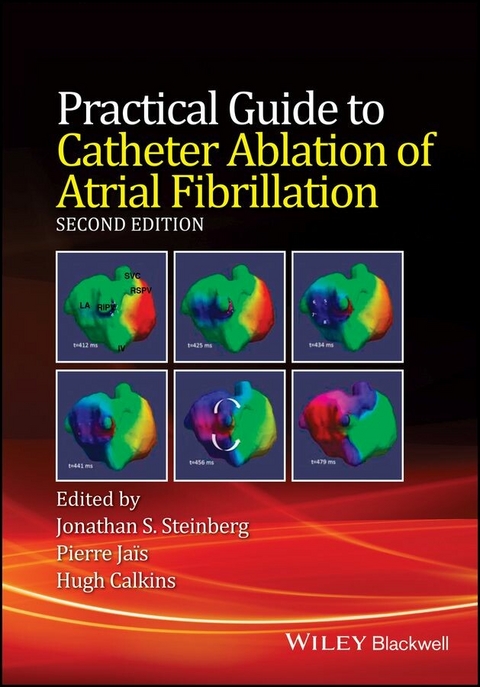
Practical Guide to Catheter Ablation of Atrial Fibrillation (eBook)
John Wiley & Sons (Verlag)
978-1-118-65857-4 (ISBN)
Now in its second edition, this practical guide offers clear-headed guidance to the successful application of catheter ablation for atrial fibrillation. This book concentrates on clinically-relevant information that providers can put to immediate use caring for patients.
- Takes a clear-headed practical approach to ablation of atrial fibrillation - long on actionable, clinically-relevant guidance, succinct and to-the-point on the theory behind the procedure
- Edited by three leading, internationally-known electrophysiologists with extensive experience in ablation for atrial fibrillation
- Written by international team of experts reflecting global best practices from centers with considerable experience in the use of catheter ablation
- Format designed to serve the needs of electrophysiologists regardless of experience, electrophysiology fellows, electrophysiology nurses and lab technical staff
- Covers hot topics such as new noninvasive imaging techniques, the treatment of challenging left atrial flutters, options for persistent atrial fibrillation and when a redo ablation is needed; and novel application of ablation targeting the autonomic nervous system
Jonathan S. Steinberg, MD, Adjunct Professor of Medicine, University of Rochester School of Medicine and Dentistry; Director, The Arrhythmia Institute, The Valley Health System, New York, NY and Ridgewood, NJ, USA.
Professor Jonathan S. Steinberg has helped produce many of the seminal and innovative clinical trials in electrophysiology, with a recent specific focus on the technical and clinical aspects of catheter ablation of atrial fibrillation. He is the author of more than 180 peer-reviewed publications and 250 abstracts, an editorial board member or regular reviewer for numerous journals, and is part of the American Board of Internal Medicine Clinical Cardiac Electrophysiology Committee. He continues to have an active clinical practice, managing patients with complex arrhythmias who require catheter ablation.
Pierre Jais, M.D., Professor, Department of Cardiology, Universite Victor Segalen-Bordeaux 2 and Hopital Cardiologique du Haut-Leveque, Bordeaux, France.
Pierre Jais is Professor at the Cardiology Hospital, Pessac, France, working with Michel Haissaguerre in the Rhythmology and Cardiac Stimulation Department. With this group he has pioneered AF ablation. He is a regular contributor at national and international symposia (240 communications) and has written many journal articles, mainly on electrophysiology and RF catheter ablation, particularly focusing on atrial and ventricular arrhythmias (412 journal publications, 38 as first author).
Hugh Calkins, M.D., F.A.C.C., FHRS, FAHA.
Nicholas J. Fortuin, M.D., Professor of Cardiology; Professor of Medicine; Director, Cardiac Arrhythmia Services and Electrophysiology Laboratory; Director, Johns Hopkins ARVD/C Program, Baltimore, MD, USA.
Dr Hugh Calkins is the Nicholas J. Fortuin M.D. Professor of Cardiology and Professor of Medicine at the Johns Hopkins University School of Medicine. He also is the Director of the Clinical Electrophysiology Laboratory, the Atrial Fibrillation Center, and the Arrhythmia Service at the Johns Hopkins Hospital. Dr Calkins has published more 500 articles and book chapters. He has lectured extensively throughout the world. The focus of his research efforts have been on atrial fibrillation, and catheter ablation. Dr Calkins is on the editorial board of the Journal of the American College of Cardiology, Circulation, Heart Rhythm, the Journal of Interventional Electrophysiology, and Circulation Arrhythmia and Electrophysiology. He is a past President of the Heart Rhythm Society.
Now in its second edition, this practical guide offers clear-headed guidance to the successful application of catheter ablation for atrial fibrillation. This book concentrates on clinically-relevant information that providers can put to immediate use caring for patients. Takes a clear-headed practical approach to ablation of atrial fibrillation long on actionable, clinically-relevant guidance, succinct and to-the-point on the theory behind the procedure Edited by three leading, internationally-known electrophysiologists with extensive experience in ablation for atrial fibrillation Written by international team of experts reflecting global best practices from centers with considerable experience in the use of catheter ablation Format designed to serve the needs of electrophysiologists regardless of experience, electrophysiology fellows, electrophysiology nurses and lab technical staff Covers hot topics such as new noninvasive imaging techniques, the treatment of challenging left atrial flutters, options for persistent atrial fibrillation and when a redo ablation is needed; and novel application of ablation targeting the autonomic nervous system
Jonathan S. Steinberg, MD, Adjunct Professor of Medicine, University of Rochester School of Medicine and Dentistry; Director, The Arrhythmia Institute, The Valley Health System, New York, NY and Ridgewood, NJ, USA. Professor Jonathan S. Steinberg has helped produce many of the seminal and innovative clinical trials in electrophysiology, with a recent specific focus on the technical and clinical aspects of catheter ablation of atrial fibrillation. He is the author of more than 180 peer-reviewed publications and 250 abstracts, an editorial board member or regular reviewer for numerous journals, and is part of the American Board of Internal Medicine Clinical Cardiac Electrophysiology Committee. He continues to have an active clinical practice, managing patients with complex arrhythmias who require catheter ablation. Pierre Jais, M.D., Professor, Department of Cardiology, Universite Victor Segalen-Bordeaux 2 and Hopital Cardiologique du Haut-Leveque, Bordeaux, France. Pierre Jais is Professor at the Cardiology Hospital, Pessac, France, working with Michel Haissaguerre in the Rhythmology and Cardiac Stimulation Department. With this group he has pioneered AF ablation. He is a regular contributor at national and international symposia (240 communications) and has written many journal articles, mainly on electrophysiology and RF catheter ablation, particularly focusing on atrial and ventricular arrhythmias (412 journal publications, 38 as first author). Hugh Calkins, M.D., F.A.C.C., FHRS, FAHA. Nicholas J. Fortuin, M.D., Professor of Cardiology; Professor of Medicine; Director, Cardiac Arrhythmia Services and Electrophysiology Laboratory; Director, Johns Hopkins ARVD/C Program, Baltimore, MD, USA. Dr Hugh Calkins is the Nicholas J. Fortuin M.D. Professor of Cardiology and Professor of Medicine at the Johns Hopkins University School of Medicine. He also is the Director of the Clinical Electrophysiology Laboratory, the Atrial Fibrillation Center, and the Arrhythmia Service at the Johns Hopkins Hospital. Dr Calkins has published more 500 articles and book chapters. He has lectured extensively throughout the world. The focus of his research efforts have been on atrial fibrillation, and catheter ablation. Dr Calkins is on the editorial board of the Journal of the American College of Cardiology, Circulation, Heart Rhythm, the Journal of Interventional Electrophysiology, and Circulation Arrhythmia and Electrophysiology. He is a past President of the Heart Rhythm Society.
Practical Guide to Catheter Ablation of Atrial Fibrillation 1
Contents 7
Contributors 9
Chapter 1: Indications for Catheter and Surgical Ablation of Atrial Fibrillation 13
Introduction 13
The 2012 HRS/EHRA/ECAS consensus document on Catheter ablation of atrial fibrillation 13
Concomitant surgical ablation of atrial fibrillation 13
Stand-alone surgical ablation of atrial fibrillation 14
Indications for catheter ablation of atrial fibrillation as defined by the 2010 European Society of Cardiology guidelines for atrial fibrillation management 14
Considerations on the published guidelines for AF ablation 14
Considerations on discussions of the risks and benefits of AF ablation with patients 16
Conclusions 16
References 16
Chapter 2: Catheter Ablation for Atrial Fibrillation: Past, Present, and Future 19
Introduction 19
Catheter-based treatment for atrial fibrillation 20
The past 20
The present 21
The present - Johns Hopkins Hospital 23
The future 24
Conclusions 25
References 25
Chapter 3: Staffing, Training, and Ongoing Volume Requirements 29
Staffing 29
Training 29
Indications, patient selection, and procedural issues 30
Basic theoretical and anatomical knowledge 30
Technical skills 30
Transseptal puncture 31
Follow-up 31
Volume requirements 31
Basic training 31
Training strategies: New technologies 32
References 33
Chapter 4: Equipment Options for the Ablation of Atrial Fibrillation 35
Sedation 35
General anesthesia 35
Anticoagulation 36
Esophageal probe 36
X-ray equipment and shielding 36
Fluoroscopy 36
Radiation protection 37
EP recording and pacing systems 37
Equipment for transseptal puncture 37
Brockenbrough needle 38
Echocardiography 39
Catheters, ablation generators, and electroanatomic mapping 40
Radiofrequency ablation catheters and generators 41
Non-RF systems 42
Conclusions 42
References 42
Chapter 5: Preprocedure Preparation for Catheter-Based Ablation of Atrial Fibrillation 45
Introduction 45
ECG and ambulatory ECG recordings 46
Transthoracic and transesophageal echocardiogram 49
Cardiac CT and MRI 50
Drug therapy 54
References 57
Chapter 6: Intracardiac Ultrasound 61
Technical requirements: imaging equipment and transducer 61
Historical perspective 61
Ultrasound principles and techniques 62
Technique for visualization of critical anatomic structures 62
Transseptal catheterization 67
Transseptal technique 67
Methodological variations 68
Pulmonary vein anatomy 68
Catheter vizualization, contact, and lesion-formation monitoring 69
Early detection and treatment of complications 71
Pericardial effusion 71
Intra-atrial thrombus 72
Pulmonary vein stenosis 73
Inadvertent puncture of aorta during transseptal catheterization 73
Other preventative measures 73
Catheter ablation of atrial fibrillation without fluoroscopy 73
Future directions 74
References 75
Chapter 7: Electroanatomic Mapping Systems 77
Introduction to electroanatomic mapping systems 77
CARTO system 77
CARTO-guided ablation in atrial fibrillation 78
EnSite NaVX 80
EnSite NaVX-guided ablation of atrial fibrillation 80
Rhythmia medical system 82
Noncontact mapping 83
Real-time position management (RPM) system 83
Contact force-guided radiofrequency ablation 84
Conclusions 84
References 84
Chapter 8: Magnetic and Robotic Catheter Navigation 87
Introduction 87
Remote magnetic catheter navigation 87
Performance 90
Safety 90
Other considerations 91
Advantages and disadvantages 91
Robotic catheter manipulation 91
Performance 91
Safety 92
Advantages and disadvantages 93
Summary 94
References 94
Chapter 9: MRI-Guided Procedures 97
Preprocedure MRI for EP procedure guidance 97
3D angiography 97
Ablation lesion imaging 97
Atrial substrate imaging 99
Fully MRI-guided EP procedures 99
Studies using real-time MRI guidance 99
Studies using MRI electroanatomic mapping guidance 100
Ongoing work toward fully MRI-guided clinical procedures 101
Intraprocedure ablation lesion imaging 101
Device visualization and navigation 102
Integrated visualization of real-time imaging, 3D anatomy, electrograms 104
Full-featured electrogram recording and pacing systems 105
MRI safety 106
Conclusions 106
References 107
Chapter 10: MRI Definition of Atrial Substrate 113
Introduction 113
Delayed enhancement MRI in atrial fibrillation 113
Preablation LA fibrosis quantification 113
Relationship between LA fibrosis, LA enhancement, and AF 113
Left atrial fibrosis and clinical AF 114
LA fibrosis and stroke 114
LA fibrosis and AF management: Utah classification and management algorithm 115
Lesion assessment after ablation 118
Conclusions 118
References 118
Chapter 11: The Utility of Noninvasive Mapping in Persistent Atrial Fibrillation Ablation 121
Introduction 121
Methodology of noninvasive mapping 121
Persistent AF ablation guided by noninvasive mapping 122
AF drivers revealed by noninvasive mapping 122
Electrogram characteristics of AF driver regions 124
AF drivers, fractionation, and atrial fibrosis 124
Ablation strategy for AF drivers 124
Clinical outcomes 124
Noninvasive mapping of AT post-AF ablation 127
Technical limitations of noninvasive mapping 127
Future areas of investigation 128
Conclusions 128
Acknowledgments 128
Relevant disclosures 128
References 128
Chapter 12: Interpretation of Circular Mapping Catheter Recordings 131
Interpretation of circular mapping catheter recordings 131
Role of the pulmonary veins 131
Circular mapping catheters 132
PV electrogram interpretation 132
Pacing maneuvers 132
Decremental pacing 132
Differential (CS) pacing 133
Site-specific pacing 134
Simultaneous or combination pacing 134
Pulmonary vein-specific electrogram interpretation 135
Left superior pulmonary vein 135
Left inferior pulmonary vein 136
Right superior pulmonary vein 136
Right inferior pulmonary vein 137
Identifying arrhythmogenic veins 137
PV recordings during ablation 137
End points of ablation 137
Entrance block 139
Exit block 139
PVI during sustained AF 140
Conclusions 140
References 142
Controversy: Differing Energy Sources - The Use of Radiofrequency Energy 143
Introduction 143
Mechanisms of action 143
Efficacy 144
Integration with three-dimensional (3D) mapping 144
Integration with remote navigation systems 144
Future directions 145
References 147
Controversy: Differing Energy Sources/Use of Cryo-Energy 149
Introduction 149
Preclinical studies 149
Importance of the energy delivery platform 149
Acute procedural outcomes 151
Long-term clinical outcomes 151
Safety of cryoballoon ablation 152
Conclusions 154
References 154
Chapter 13: Circumferential Ablation with Pulmonary Vein Isolation Guided by Lasso Catheter 157
Introduction 157
Complete PV isolation using 3D mapping and Lasso technique 157
Transseptal puncture 158
LA reconstruction 158
Selective PV angiography and identification of PV ostium 158
Single and double Lasso technique 158
CCLs surrounding the ipsilateral PVs 160
Procedural end point 161
Lasso catheter findings during CCLs 163
Complete PV isolation by CCLs 163
Inducibility of AF after CCL-based PV Isolation 177
Circumferential PV isolation with single Lasso 183
Complications 183
Long-term clinical outcome after CCLs in patients with paroxysmal AF 186
Conclusions 186
Acknowledgments 186
References 186
Controversy: Circumferential Versus Segmental Pulmonary Vein Isolation/Circumferential PVI 188
References 193
Controversy: Circumferential Versus Segmental Pulmonary Vein Isolation/Segmental PVI 195
Introduction 195
AF suppression after SOCA versus CPVA for PVI 195
Atrial tachyarrhythmias after SOCA versus CPVA for treatment of AF 197
Summary 200
References 201
Chapter 14: How to Select Target Sites in Electrogram-Guided Ablation: Options, Techniques, and Results 203
Introduction 203
Mechanisms of atrial fibrillation 203
The clinical importance of AF termination 204
Complex fractionated atrial electrogram ablation 204
Definitions and Development of the CFAE technique 204
Mechanisms of CFAE 205
Dominant frequency ablation 208
Techniques for dominant frequency analysis in the electrophysiology laboratory 208
Dominant frequency analysis in AF 209
Relationship of DF sites to CFAE 209
Spatiotemporal stability of DF locations 209
Limitations of dominant frequency analysis 209
Impact of ablation at high DF sites 210
DF ablation: conclusions 212
Emerging techniques in EGM-guided ablation 212
Conclusions 213
References 213
Controversy: Electrogram-Guided Ablation: Valuable Technique 218
Introduction 218
Electrophysiologic mechanisms underlying CFAEs 218
Electrogram-guided ablation: which CFAE to be ablated? 219
Ablation end points and AF termination by CFAE ablation 220
Relationship between CFAE and rotor 220
Relationship between clinical outcomes and unintentional pulmonary vein isolation during substrate ablation of AF guided solely by CFAE mapping 223
Clinical outcomes of electrogram-guided ablation 223
Conclusions 224
Disclosures 225
References 225
Controversy: Electrogram-Guided Ablation: Limited Contribution to Successful Outcome 227
References 230
Chapter 15: Left Atrial Linear Lesions 233
Introduction 233
Techniques 233
Materials and ablation settings 233
Confirmation of complete bidirectional block by differential pacing 233
Left atrial linear lesions 234
Mitral isthmus ablation 234
Roof line ablation 235
Anterior mitral isthmus ablation 237
Conclusions 239
References 239
Chapter 16: Ablation of Autonomic Ganglia 241
Introduction 241
Role of the autonomic nervous system in initiation and maintenance of AF: justification for ablation of GP 241
Localization of left atrial GP 243
GP ablation for AF: strategies not involving PVI 243
GP ablation technique: selective approach 243
GP ablation technique: anatomical approach 245
GP ablation for AF: PVI plus GP ablation 250
Efficacy of cardiac autonomic denervation for atrial fibrillation 252
References 253
Chapter 17: Trigger Mapping 257
Introduction 257
Preprocedural drug therapy considerations for patients undergoing trigger mapping 258
Stimulation protocols to elicit AF triggers 258
Catheter positioning for trigger mapping 258
Mapping of triggers: a systematic approach 261
Mapping of pulmonary vein triggers 261
Mapping of nonpulmonary vein triggers: general considerations 265
Coronary sinus triggers 267
Mitral annular triggers 268
Superior vena cava triggers 269
Crista terminalis triggers 271
Septal triggers 273
Left atrial appendage triggers 273
Ligament of Marshall triggers 274
Other triggers 275
Areas of uncertainty and future directions 275
Conclusions 276
References 277
Chapter 18: Mapping and Ablation of Electrical Rotor and Focal Sources for Atrial Fibrillation: A Patient-Tailored Mechanistic Approach 283
Introduction 283
Prior mapping for human AF 283
Development of focal impulse and rotor mapping 284
Electrophysiological mapping (focal impulse and rotor mapping) 284
Analysis and interpretation of computational maps of AF 284
Direct ablation at sources (FIRM) and postprocedure management 285
Results: localized sources were highly prevalent in human AF 287
Demonstration of electrical rotors during human AF 287
Acute results of FIRM-guided ablation 287
Location of rotors and focal sources in the CONFIRM trial 287
Relationship between localized sources and CFAE sites 287
Long-term efficacy of FIRM-guided ablation versus conventional ablation 288
Relationship of patient-specific sources to ablation lesions 288
Discussion: computational mapping compared with prior mapping of human AF 288
Limitations 291
Clinical implications and directions for future studies 291
Conclusions 291
Acknowledgments 291
References 291
Chapter 19: Renal Artery Denervation: Modulation of the Autonomic Nervous System to Treat Atrial Fibrillation 295
The autonomic nervous system and the substrate for atrial fibrillation 295
The renal nerves and renal denervation 296
Experimental work in arrhythmia models 297
Clinical experience 297
The technique of renal artery denervation 300
Conclusions 300
References 301
Chapter 20: The Stepwise Ablation Approach for Persistent Atrial Fibrillation 305
Introduction 305
Rationale for the stepwise ablation approach 305
Technique of stepwise ablation 305
Step 1: Thoracic/pulmonary vein isolation 305
Step 2: Electrogram-based ablation 306
Step 3: Linear ablation 306
Monitoring of AF cycle length 306
Right atrial ablation 306
Termination of AF as the procedural end point 307
Clinical outcomes 307
Predictors of successful clinical outcome 307
Cardiac function following stepwise ablation 307
Atrial tachycardia following stepwise ablation 308
Current limitations 310
Conclusions 310
References 310
Chapter 21: Limited Ablation for Persistent Atrial Fibrillation Using Preprocedure Reverse Remodeling 315
Background 315
Electrical remodeling 315
Evidence supporting atrial remodeling 315
Evidence for reverse remodeling 316
Evidence supporting preprocedure atrial remodeling 316
Clinical study using preablation antiarrhythmic drug therapy 316
Clinical study using cardioversion preablation 320
Discussion 321
Selecting ablation strategies for persistent AF 321
Practical application of the reverse remodeling concept 323
Conclusions 323
References 324
Chapter 22: Long-Standing Persistent Atrial Fibrillation Ablation 327
Introduction 327
Lessons learned from the literature for the treatment of LSP AF 327
Preprocedural and periprocedural management 328
Ablation protocol 329
Postprocedural management and follow-up 332
Conflict of interest 332
References 332
Chapter 23: Mapping and Ablation of Left Atrial Flutter 335
Introduction 335
Principle 335
Perimitral flutter 337
Roof-dependent flutter 337
Peritricuspid flutter 337
Simultaneous macroreentrant tachycardia 338
Other tachycardias 338
Three-dimensional (3D) electroanatomic mapping 339
Noninvasive mapping 339
Ablation 340
Summary 343
Abbreviations 343
References 343
Chapter 24: Follow-Up After Ablation: Assessing Success, Symptom Status, and Recurrent Arrhythmias 345
Introduction 345
Limitations of symptom-based follow-up strategies 345
Asymptomatic arrhythmia recurrence after catheter ablation 346
Tools for postablation rhythm monitoring 348
Intensity of ECG monitoring and rhythm outcome 349
Duration of the follow-up period and long-term success 350
Practical considerations and definition of ablation success 351
Conclusions 353
References 353
Chapter 25: How to Strategize the “Redo” Ablation Procedure 355
Introduction 355
Preprocedural factors associated with recurrence 355
Procedural factors and issues related to recurrence and redo ablation 356
Postprocedural characteristics of recurrence related to redo ablation 356
Non-AF recurrence 356
Patient selection 357
Timing reablation 357
Transseptal puncture 358
Radiation exposure 358
Pulmonary vein stenosis 358
Electrophysiologic issues related to the reablation procedure 358
Multipolar left atrial voltage mapping 359
Antiarrhythmic drug therapy 359
When to not redo 360
Conclusions 360
References 360
Chapter 26: Periprocedural Care for Catheter Ablation of Atrial Fibrillation 363
Procedural considerations to avoid acute complications and improve efficacy 363
Periprocedural anticoagulation 363
Uninterrupted warfarin 363
Management of newer oral anticoagulants 364
Vascular access 365
General anesthesia versus conscious sedation 365
Cardiac tamponade 365
In-patient monitoring 366
Periprocedural arrhythmia management 369
Preprocedure arrhythmia monitoring 369
Postprocedure arrhythmia monitoring 369
Periprocedural AADs 369
Postablation inflammation 369
Postdischarge follow-up and prevention of late complications 369
References 370
Chapter 27: Complications: Early and Late After Ablation 373
Early complications 374
Death 374
Hemorrhagic complications 374
Thromboembolic events 375
Phrenic nerve injury 375
Late complications 376
Esophageal injury/atrio-esophageal fistula 376
PV stenosis 377
Left atrial tachyarrhythmias 378
Delayed tamponade 378
Conclusions 378
References 379
Chapter 28: Charting Long-Term Success and the Challenge of Monitoring Outcomes 383
Charting what we do: how to evaluate (long-term) success in atrial fibrillation ablation 383
The ``rhythm´´ end points 383
Assessment of complete freedom from any atrial tachyarrhythmia 384
Regular atrial tachycardias after AF ablation 385
AF burden 385
Clinical evaluation 385
The confounding variables of rhythm end points 385
Blanking periods 385
Additional medication 386
Repeat ablations 386
Clinical improvement and quality of life 387
Improvement of left ventricular function in patients with heart failure and AF 387
Quality of life 387
Unsolved problems 387
Small patients' series 388
Follow-up 388
Results and complications 388
References 388
Index 393
End User License Agreement 407
| Erscheint lt. Verlag | 23.11.2015 |
|---|---|
| Sprache | englisch |
| Themenwelt | Medizin / Pharmazie ► Allgemeines / Lexika |
| Medizinische Fachgebiete ► Innere Medizin ► Kardiologie / Angiologie | |
| Schlagworte | Ablation • afib • Atrial Fibrillation • Atrial flutter • Atrial substrate • Catheter Ablation • catheter recordings • Circular mapping • Circumferential Ablation • ECG imagin • Electroanatomic mapping systems • Electrogram-guided Ablation • electrophysiology • Elektrophysiologie • Hugh Calkins • Interventional cardiology • Intracardiac ultrasound • Invasive Kardiologie • Jonathan Steinberg • Kardiologie • Magnetic and Robotic Catheter Navigation • Mapping of AF • Medical Science • Medizin • MRI-guided procedures • Noninvasive mapping • Persistent Atrial Fibrillation Ablation • Pierre Jais • Renal Artery Denervation |
| ISBN-10 | 1-118-65857-4 / 1118658574 |
| ISBN-13 | 978-1-118-65857-4 / 9781118658574 |
| Informationen gemäß Produktsicherheitsverordnung (GPSR) | |
| Haben Sie eine Frage zum Produkt? |
 PDF (Adobe DRM)
Kopierschutz: Adobe-DRM
Adobe-DRM ist ein Kopierschutz, der das eBook vor Mißbrauch schützen soll. Dabei wird das eBook bereits beim Download auf Ihre persönliche Adobe-ID autorisiert. Lesen können Sie das eBook dann nur auf den Geräten, welche ebenfalls auf Ihre Adobe-ID registriert sind.
Details zum Adobe-DRM
Dateiformat: PDF (Portable Document Format)
Mit einem festen Seitenlayout eignet sich die PDF besonders für Fachbücher mit Spalten, Tabellen und Abbildungen. Eine PDF kann auf fast allen Geräten angezeigt werden, ist aber für kleine Displays (Smartphone, eReader) nur eingeschränkt geeignet.
Systemvoraussetzungen:
PC/Mac: Mit einem PC oder Mac können Sie dieses eBook lesen. Sie benötigen eine
eReader: Dieses eBook kann mit (fast) allen eBook-Readern gelesen werden. Mit dem amazon-Kindle ist es aber nicht kompatibel.
Smartphone/Tablet: Egal ob Apple oder Android, dieses eBook können Sie lesen. Sie benötigen eine
Geräteliste und zusätzliche Hinweise
Buying eBooks from abroad
For tax law reasons we can sell eBooks just within Germany and Switzerland. Regrettably we cannot fulfill eBook-orders from other countries.
aus dem Bereich