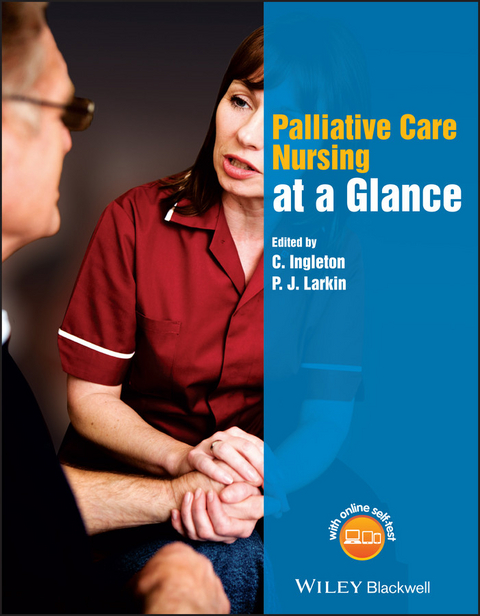
Palliative Care Nursing at a Glance (eBook)
John Wiley & Sons (Verlag)
978-1-118-75920-2 (ISBN)
Palliative Care Nursing at a Glance is the perfect companion for nursing students, health and social care practitioners, and all those involved in palliative care delivery, both in the clinical and home setting. Written by an expert team of academics, nurses, educators and researchers it provides a concise and easy-to-read overview of all the concepts and clinical decision-making skills necessary for the provision of good-quality palliative and end-of-life care.
Divided into six sections, the book includes coverage of all key clinical applications, principles of symptom management, palliative care approaches for a range of conditions and patient groups, exploration of the roles of the multi-professional team, as well as ethical challenges.
- Superbly illustrated, with full colour illustrations throughout
- Provides information on delivery of care in a range of settings
- Broad coverage makes it ideal reading for anyone involved in palliative care delivery
- User-friendly and accessible resource for those working in both specialist and non-specialist adult settings
Christine Ingleton is Professor of Palliative Care Nursing, School of Nursing and Midwifery, University of Sheffield.
Philip Larkin is Associate Professor of Clinical Nursing (Palliative Care), School of Nursing, Midwifery and Health Systems, University College Dublin and Our Lady's Hospice and Care Services, Harold's Cross Dublin.
Palliative Care Nursing at a Glance is the perfect companion for nursing students, health and social care practitioners, and all those involved in palliative care delivery, both in the clinical and home setting. Written by an expert team of academics, nurses, educators and researchers it provides a concise and easy-to-read overview of all the concepts and clinical decision-making skills necessary for the provision of good-quality palliative and end-of-life care. Divided into six sections, the book includes coverage of all key clinical applications, principles of symptom management, palliative care approaches for a range of conditions and patient groups, exploration of the roles of the multi-professional team, as well as ethical challenges. Superbly illustrated, with full colour illustrations throughout Provides information on delivery of care in a range of settings Broad coverage makes it ideal reading for anyone involved in palliative care delivery User-friendly and accessible resource for those working in both specialist and non-specialist adult settings
Christine Ingleton is Professor of Palliative Care Nursing, School of Nursing and Midwifery, University of Sheffield. Philip Larkin is Associate Professor of Clinical Nursing (Palliative Care), School of Nursing, Midwifery and Health Systems, University College Dublin and Our Lady's Hospice and Care Services, Harold's Cross Dublin.
Palliative Care Nursing at a Glance 3
Contents 7
Contributors 10
Preface 13
Abbreviations 14
About the companion website 16
Part 1 Introduction 19
1 Setting the scene 20
Introduction 21
What is palliative care? 21
Who receives palliative care? 21
Where is palliative care delivered? 21
Who provides palliative care? 21
References 21
2 Managing the needs of family caregivers 22
Introduction 23
What is a family caregiver? 23
Key assessment issues for family caregiving 23
The consequences of caregiving 23
Critical points for reflection 23
Reference 23
3 Principles of effective communication 24
Effective communication 25
Difficult conversations 25
The withdrawn patient 25
Difficult questions 25
Responding to anger 25
Looking ahead 25
References 25
4 Advance care planning 26
What is advance care planning? 27
Key principles of ACP 27
Putting ACP into practice 27
Aims in clinical consultation 27
Summary 27
References 27
5 Delivering palliative approaches in different care contexts 28
At home 29
Nursing and residential care homes 29
Acute hospitals 29
Hospices 29
Day care, out-patient and drop-in clinics 29
References 29
6 Integrated care pathways 30
What is an integrated care pathway? 31
ICPs used in palliative care 31
Variances 31
Summary 31
References 31
Part 2 Clinical applications 33
7 Principles of symptom management 34
Introduction 35
Always offer a holistic assessment and evaluation 35
Treating symptoms and goals of care 35
The importance of anticipation 35
Focus on the individual 35
Reassess and evaluate 35
Provide clear explanation and information 35
Reference 35
8 Best practice in pain management 36
Best practice in pain management 37
Acute and chronic pain 37
Management of pain 37
The pain history 37
References 37
9 Managing pain 38
Managing pain 39
Pain assessment 39
Opioid analgesic therapy 39
Addiction 39
Tolerance 39
Dependence 39
References 39
10 Complex pain problems and treatment challenges 40
Bone pain 41
Radiotherapy and chemotherapy 41
Bisphosphonates 41
Nerve blocks 41
Opioid side effects and toxicity 41
Nursing role 41
References 41
11 Managing nausea and vomiting 42
Introduction 43
Prevalence 43
Common causes 43
Gastrointestinal 43
Vestibular 43
Chemical 43
Raised intracranial pressure 43
Higher centres 43
Assessment 43
Management 43
Medications 43
Metoclopramide 43
Haloperidol 43
Cyclizine 43
Evaluation 43
References 43
12 Managing constipation 44
Introduction 45
Assessment 45
Constipation and opioids 45
Management: fact and fiction 45
Treatment 45
Evaluation 45
Management at the end of life 45
References 45
13 Understanding depression 46
Assessment 47
Who gets depressed? 47
When are patients more likely to get depressed? 47
Depression versus natural sadness 47
Screening for depression 47
Pharmacological and non-pharmacological methods of treatment 47
References 47
14 Understanding delirium and confusion 48
Definition and descriptors 49
Assessment 49
Management 49
Goals of care and reversibility 49
Specific pharmacological management 49
References 49
15 Managing myoclonus, tremors and muscle spasms 50
Introduction 51
Causes 51
Assessment 51
Management 51
Medications 51
Nursing care 51
References 51
16 Managing lymphoedema 52
Introduction 52
What is lymphoedema? 52
Assessment 53
Management 53
Skin care 53
Massage 53
Compression therapy 53
Exercise or physical activity 53
References 53
17 Managing hypercalcaemia of malignancy 54
Introduction 55
Definition 55
Calcium regulation in the body 55
Pathophysiology 55
Symptoms and signs 55
Management 55
Other measures 55
References 55
18 Assessing and managing oral hygiene 56
Introduction 57
Assessment 57
Best practice principles for oral care 57
Clinical treatment 57
Evaluation 57
Management at the end of life 57
References 57
19 Caring for people with dysphagia 58
Introduction 59
Assessment 59
Addressing treatment and goals of care 59
The role of ‘tube’ feeding 59
Management at the end of life 59
Reference 59
20 Managing breathlessness 60
Introduction 60
Causes 60
Assessment 61
Management 61
Pharmacological interventions in breathlessness 61
Non-pharmacological interventions in breathlessness 61
References 61
21 Cough and haemoptysis 62
Introduction 63
Prevalence 63
Causes 63
Assessment 63
Management and nursing care 63
Major haemoptysis 63
Summary 63
References 63
22 Explaining and exploring cachexia, anorexia and fatigue 64
Definitions 65
Causes 65
Management 65
Exercise as a palliative intervention 65
References 65
23 Continual subcutaneous infusion: using a syringe pump 66
What is continuous subcutaneous infusion? 67
What is the best type of CSCI equipment to use and why? 67
Safer ambulatory syringe drivers 67
Indications for use 67
Key considerations in set-up of a CSCI 67
Advantages of the CSCI 67
Disadvantages of the CSCI 67
Drug conversion and drug compatibility 67
Specific consideration in relation to diluent 67
Reference 67
24 Emergencies: superior vena cava obstruction 68
Palliative care emergencies 69
Causes 69
Signs and symptoms (Figure 24.1) 69
Reflect 69
Plan 69
References 69
25 Emergencies: haemorrhage 70
Haemorrhage 71
Causes 71
Signs and symptoms 71
Reflect 71
Plan: minor bleeding 71
Plan: haemorrhage 71
References 71
26 Emergencies: malignant spinal cord compression 72
Causes 73
Signs and Symptoms 73
Reflect 73
Plan 73
Nursing care concerns 73
References 73
27 Chemotherapy 74
Chemotherapy 75
The principles of chemotherapy 75
Chemotherapy as a palliative treatment 75
Patient information and support 75
Reference 75
28 Radiotherapy 76
Principles of radiotherapy 77
Types of radiotherapy 77
Radiotherapy interventions in palliative care 77
Side effects of radiotherapy 77
Site-related side effects 77
Patient information and support 77
Reference 77
Part 3 Palliative care for all 79
29 Palliative care approaches in heart failure 80
Definitions and descriptions 81
Palliative care approaches to symptom management 81
End-of-life care 81
References 81
30 Palliative care approaches to chronic obstructive pulmonary disease 82
Definitions and descriptors 83
Clinical presentation 83
Palliative approaches to symptom management 83
Pharmacological interventions 83
Psychological interventions 83
End-of-life care 83
References 83
31 Palliative care approaches in motor neurone disease 84
Aetiology of motor neurone disease 85
Types of presentation 85
Diagnosis 85
Treatment 85
Prognosis 85
Care and management of symptoms 85
Multi-disciplinary care 85
References 85
32 Palliative care approaches for people receiving dialysis 86
Context 87
Cause for concern register 87
Withdrawal of dialysis 87
Patients who wish to stop dialysis 87
Trajectory of decline following withdrawal of dialysis 87
Symptom management 87
Care coordination 87
Psychosocial and spiritual support 87
References 87
33 Palliative care approaches for people with progressive kidney disease: a non-dialytic pathway 88
Context 89
The stages of renal disease 89
Why people choose not to start dialysis 89
Shared decision-making 89
Supporting individualised end-of-life care 89
Caring for carers 89
Terminal phase 89
References 89
34 Care of the patient following a stroke 90
What is a stroke? 91
What happens following a stroke? 91
Typical stroke care 91
Rehabilitation after stroke 91
Social and psychological aspects of stroke 91
Transient ischaemic attack 91
Family caregiving in stroke 91
Palliative and supportive care 91
Reference 91
35 Principles of palliative care for older people 92
Goal setting in older person care 93
The challenge of co-morbidity in older people with palliative care needs 93
Managing discussion on place of care 93
Caregiver burden 93
References 93
36 Care of the person with dementia 94
Context 95
What is dementia? 95
Social and psychological perspectives 95
Family caregiving in dementia 95
Relationship-centred care and dementia 95
Palliative and supportive care in dementia 95
References 95
37 Care for people with mental illness 96
Introduction 97
Serious and persistent mental illness and palliative care 97
Challenges for practice 97
Stigma 97
Communication 97
References 97
38 Care for people with learning disabilities 98
People with learning disabilities 99
Causes of death in people with learning disabilities 99
Challenges in nursing people with learning disabilities at the end of their life 99
Key points for holistic, end-of-life assessment, care planning and delivery 99
References 99
39 Care for the homeless person 100
Introduction 100
Life expectancy 101
What is known about palliative care for homeless people? 101
Challenges for palliative care practitioners 101
Ways forward in terms of care and care planning 101
Conclusion 101
References 101
40 Care for people in prison 102
An increasing need for palliative care 103
Dying in prison 103
The prison environment 103
Transfer to hospital or hospice 103
Compassionate release 103
Summary 103
References 103
Part 4 Professional roles in palliative care 105
41 Understanding rehabilitation in palliative care 106
Principles of rehabilitation applied to palliative care 107
Assessment principles to determine rehabilitation options 107
Multi-disciplinary team approaches to rehabilitation 107
Re-evaluating rehabilitation goals towards the end of life 107
References 107
42 The social worker 108
Introduction 108
Counselling support 108
Family support and communication 109
Children and vulnerable adults 109
Practical supports 109
Care planning 109
Bereavement 109
Reference 109
43 The occupational therapist 110
Introduction 111
Referral to an OT 111
Role of the OT and the OT process in palliative care 111
Core interventions provided by the OT in palliative care 111
References 111
44 The physiotherapist 112
Location 113
Psychological benefits 113
Mobility 113
Exercise 113
Group work 113
Falls 113
Respiratory 113
Neurological and orthopaedic problems 113
Hydrotherapy 113
Early referral to physiotherapy 113
Reference 113
45 Complementary and supportive therapy 114
Introduction 115
Acupuncture 115
Music and art therapy 115
Mind–body techniques 115
Massage therapy 115
Regulation 115
Conclusions 115
References 115
46 The clinical nurse specialist 116
Introduction 117
History of the development of the role of CNS in palliative care 117
What the palliative care CNS does 117
Preparation for the role of palliative care CNS 117
Skills and competences 117
The future challenges 117
References 117
47 The advanced nurse practitioner 118
Introduction 119
The palliative care advanced nurse practitioner role 119
Autonomy in clinical practice 119
Pioneering professional and clinical leadership 119
Expert practitioners 119
Researcher 119
References 119
48 The nurse consultant 120
Nurse consultant 121
Qualifications for the job 121
Clinical practice 121
Academic qualification 121
Aspects of the job 121
Issues with the nurse consultant role 121
References 121
49 The chaplain 122
What is a chaplain? 123
What do chaplains do? 123
Patient care 123
Carer support 123
Staff support 123
Teaching and training 123
Research 123
Professional standards 123
Making effective use of a chaplain 123
Reference 123
50 The medical consultant 124
The role and function of the medical consultant in palliative care 125
References 125
Part 5 Ethical challenges in palliative care practice 127
51 Stress in palliative care nursing 128
Introduction 129
Sources of stress in nursing 129
Reducing stress in palliative care 129
Strategies for managing stress and preventing burnout 129
Summary 129
References 129
52 Responses to euthanasia and physician-assisted suicide 130
Main principles 131
Maintaining health and well-being 131
The Nursing and Midwifery Council (NMC) requirements 131
Reflect 131
How do these types of requests make you feel? 131
How should you respond? 131
Stop 131
Think 131
Approach 131
Reflect and discuss 131
References 131
53 Withholding and withdrawing life-sustaining care 132
Decision-making conflicts 132
Withdrawing and withholding life-sustaining care 132
Goals of care 132
Assessment 133
Legal position 133
Advance decisions to refuse treatment 133
Advance statements 133
Withholding treatments 133
Withdrawing life-sustaining treatment 133
References 133
54 Recognising and planning for the terminal phase of life 134
Diagnosing dying 135
Communication with patient and family 135
Documentation of care planning 135
Decisions around CPR 135
Reference 135
part 6 Managingend-of-life care 137
55 Changing goals of care at the end of life 138
Introduction 139
What is end-of-life care? 139
Explaining the dying process to families 139
Reviewing medicines and choices 139
Treatments, investigations and interventions 139
MDT discussions and considerations include 139
Principles of medication use at end of life 139
Excellence in nursing care involves 139
Syringe pumps for symptom management 139
The use of syringe pumps 139
56 Managing respiratory secretions at the end of life 140
Introduction 141
Definition 141
Cause 141
Prevalence 141
Impact 141
Management 141
Medications 141
Hyoscine butylbromide 20 mg SC stat 60–120 mg over 24 hours
Hyoscine hydrobromide 400 ?g SC stat 1.2–2.4 mg over 24 hours
Glycopyrronium 200 ?g SC stat 0.4–1.2 mg over 24 hours
Evaluation 141
References 141
57 Care at the moment of death 142
Introduction 142
Recognising and acknowledging death 142
Care of the body at the time of death 143
Issues of post-mortem or coroner inquest 143
Planning funerals – the role of the funeral director 143
58 Spiritual perspectives at the end of life 144
Spirituality 145
Assessing spiritual needs 145
Suffering and loss 145
Rituals and religious practice 145
Funerals 145
Reference 145
59 Bereavement 146
Introduction 147
Bereavement theories 147
Stage model by Parkes (1972) 147
Task model 147
The dual process model of grief 147
Risk factors for complicated grief 147
Support services 147
References 147
Index 149
EULA 152
| Erscheint lt. Verlag | 16.11.2015 |
|---|---|
| Reihe/Serie | At a Glance (Nursing and Healthcare) |
| Wiley Series on Cognitive Dynamic Systems | Wiley Series on Cognitive Dynamic Systems |
| Sprache | englisch |
| Themenwelt | Medizin / Pharmazie ► Gesundheitsfachberufe |
| Medizin / Pharmazie ► Medizinische Fachgebiete ► Onkologie | |
| Medizin / Pharmazie ► Medizinische Fachgebiete ► Palliativmedizin | |
| Medizin / Pharmazie ► Pflege ► Palliativpflege / Sterbebegleitung | |
| Schlagworte | Cancer & Palliative Care Nursing • Einführungen in die Krankenpflege • Einführungen in die Krankenpflege • Introductions to Nursing • Krankenpflege • Medical Science • Medizin • nursing • Palliative Care • Palliative, Care, caregivers, communication, care planning, pathways, sympton management, pain, nausea, vomiting, constipation, depression, Delirium, Confusion, myoclonus, tremors, muscle spasms, Lymphoedema, Hypercalcaemia Malignancy, hygiene, Dysphagia, Breathlessness, cough, Haemoptysis, cachexia, anorexia, fatigue, emergency, Haemorrhage, Chemotherapy, radiotherapy, Heart Failure, Chronic Obstructive Pulmonary, dialysis, Motor Neurone, kidney, stroke, dementia, mental illness, learning disability, homel • Palliativmedizin • Pflege • Pflege i. d. Krebs- u. Palliativmedizin |
| ISBN-10 | 1-118-75920-6 / 1118759206 |
| ISBN-13 | 978-1-118-75920-2 / 9781118759202 |
| Informationen gemäß Produktsicherheitsverordnung (GPSR) | |
| Haben Sie eine Frage zum Produkt? |
 PDF (Adobe DRM)
Kopierschutz: Adobe-DRM
Adobe-DRM ist ein Kopierschutz, der das eBook vor Mißbrauch schützen soll. Dabei wird das eBook bereits beim Download auf Ihre persönliche Adobe-ID autorisiert. Lesen können Sie das eBook dann nur auf den Geräten, welche ebenfalls auf Ihre Adobe-ID registriert sind.
Details zum Adobe-DRM
Dateiformat: PDF (Portable Document Format)
Mit einem festen Seitenlayout eignet sich die PDF besonders für Fachbücher mit Spalten, Tabellen und Abbildungen. Eine PDF kann auf fast allen Geräten angezeigt werden, ist aber für kleine Displays (Smartphone, eReader) nur eingeschränkt geeignet.
Systemvoraussetzungen:
PC/Mac: Mit einem PC oder Mac können Sie dieses eBook lesen. Sie benötigen eine
eReader: Dieses eBook kann mit (fast) allen eBook-Readern gelesen werden. Mit dem amazon-Kindle ist es aber nicht kompatibel.
Smartphone/Tablet: Egal ob Apple oder Android, dieses eBook können Sie lesen. Sie benötigen eine
Geräteliste und zusätzliche Hinweise
Buying eBooks from abroad
For tax law reasons we can sell eBooks just within Germany and Switzerland. Regrettably we cannot fulfill eBook-orders from other countries.
aus dem Bereich