
The Frith Prescribing Guidelines for People with Intellectual Disability (eBook)
John Wiley & Sons (Verlag)
978-1-118-89719-5 (ISBN)
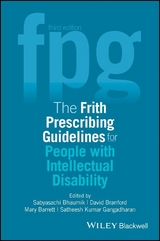
The Frith Prescribing Guidelines for People with Intellectual Disability provides comprehensive guidance on prescribing for patients with intellectual disability, as well as general information on the clinical care of this important population.
The guidelines have been conceived and developed by clinicians working in intellectual disability services. They are based on both the latest evidence and expert opinion to provide a consensus approach to prescribing as part of a holistic package of care, and include numerous case examples and scenarios. New to this edition are improved coverage of children and the role of primary care teams.
The Frith Prescribing Guidelines for People with Intellectual Disability, Third Edition, is a practical guide for busy clinicians, as well as a valuable reference for all primary and secondary health care professionals caring for people with intellectual disability.
Sabyasachi Bhaumik, Honorary Chair, University of Leicester, and Consultant Psychiatrist, Leicestershire Partnership NHS Trust, Leicester, UK
David Branford, Pharmacist Expert in the fields of intellectual disabilities and mental health
Mary Barrett, Consultant Psychiatrist for Adults with Learning Disabilities and Named Doctor for Safeguarding Adults, Leicestershire Partnership NHS Trust, Leicester, UK, and East Midlands Training Programme Director for Psychiatry of Intellectual Disability
Satheesh Kumar Gangadharan, Medical Director and Consultant Psychiatrist, Leicestershire Partnership NHS Trust, Leicester, UK
The Frith Prescribing Guidelines for People with Intellectual Disability provides comprehensive guidance on prescribing for patients with intellectual disability, as well as general information on the clinical care of this important population. The guidelines have been conceived and developed by clinicians working in intellectual disability services. They are based on both the latest evidence and expert opinion to provide a consensus approach to prescribing as part of a holistic package of care, and include numerous case examples and scenarios. New to this edition are improved coverage of children and the role of primary care teams. The Frith Prescribing Guidelines for People with Intellectual Disability, Third Edition, is a practical guide for busy clinicians, as well as a valuable reference for all primary and secondary health care professionals caring for people with intellectual disability.
Sabyasachi Bhaumik, Honorary Chair, University of Leicester, and Consultant Psychiatrist, Leicestershire Partnership NHS Trust, Leicester, UK David Branford, Pharmacist Expert in the fields of intellectual disabilities and mental health Mary Barrett, Consultant Psychiatrist for Adults with Learning Disabilities and Named Doctor for Safeguarding Adults, Leicestershire Partnership NHS Trust, Leicester, UK, and East Midlands Training Programme Director for Psychiatry of Intellectual Disability Satheesh Kumar Gangadharan, Medical Director and Consultant Psychiatrist, Leicestershire Partnership NHS Trust, Leicester, UK
Title Page 5
Copyright Page 6
Contents 7
List of contributors 9
Foreword 13
Preface 15
Acknowledgements 17
Chapter 1 Intellectual Disability 19
Prevalence 20
Aetiology 21
How common are health needs in people with ID? 22
How do psychiatric and behavioural problems present in ID? 22
What is the evidence base for medication treatment in ID? 23
Pharmacokinetic and pharmacodynamic issues in ID 23
Why this guideline? 24
Key issues in working with people with ID 25
Communication 25
Consent 25
Demonstrating a person’s capacity 26
References 27
Further reading 27
Chapter 2 Prescribing Practice 29
Definition 29
Prevalence 29
Categories of psychotropic medication use 30
Are psychotropic medications overprescribed for people with ID? 30
Polypharmacy 30
Do people with ID handle medication differently from the general population? 31
Are people with ID at greater risk of adverse reactions to medication? 32
How does communication impact on medication use? 32
The evidence base to support the use of psychotropic medication in ID 32
How effectively are medications for people with ID reviewed? 32
How do children with ID compare with adults? 33
Key guidelines 34
Recent guidance from the Royal College of Psychiatrists (UK) 36
References 36
Further reading 37
Chapter 3 Physical and Health Monitoring 39
General physical monitoring 39
Key points specific to intellectual disability 40
Part 1: Methylphenidate 40
Part 2: Antipsychotic medication 41
Part 3: High doses of antipsychotics 44
Part 4: Mood stabilisers 47
Key guidelines 47
References 48
Further reading 48
Chapter 4 Epilepsy 49
Definition 49
Prevalence 49
Epidemiology of epilepsy in ID 51
The nature of the epilepsy in adults with ID 52
Aetiology 52
Frequency 54
Clinical presentation 55
Differential diagnoses 55
NEA 56
Epilepsy and autism 57
Epilepsy and Down syndrome 57
Other syndromes associated with ID and epilepsy 59
Epilepsy, mental ill health and behaviour disorders 59
Investigations 64
Hierarchy of investigations for epilepsy in adults with ID 64
EEG monitoring in people with ID 65
Epilepsy mortality 66
SUDEP 66
Advice to clinicians 67
Epilepsy management 68
NICE guidance 68
The epilepsy care plan 68
Recording of seizures: The seizure diary 68
Risk assessment 69
Principles of pharmacotherapy 69
Starting treatment 70
Covert administration of medication 70
Antiepileptic medications (AEDs) 71
Choice of antiepileptics 71
Side effects of AEDs 72
Antiepileptic polypharmacy 75
Orphan antiepileptics 75
Newer antiepileptics 75
Therapeutic medication monitoring 75
Interactions between AEDs 75
Prolonged or repeated seizures 77
Refractory epilepsy 77
Neurosurgery 77
Psychosocial input 78
Patient information 78
References 79
Further reading 79
Chapter 5 Dementia in people with intellectual disability 81
Definition 81
Prevalence 81
Clinical presentation 82
Clinical stages of dementia in people with ID 83
Diagnosis of dementia in people with ID 84
Assessment 85
Management of dementia 88
Pharmacological interventions for the cognitive symptoms of dementia 89
Treatment of behavioural and psychological symptoms of dementia 90
References 91
Further reading 91
Evidence base references 91
References for questionnaires 92
Appendix 5.1 Tools for screening dementia in ID 92
Appendix 5.2 Neuro psychological tests for the diagnosis of dementia in ID 93
Chapter 6 Eating and Drinking Difficulties 95
Definition 95
Clinical presentation 95
Conditions associated with eating and drinking difficulties and ID 97
Prevalence 98
Managing nutritional needs 100
Reducing risks 101
Texture modification 101
Thickening drinks 102
Management of saliva 103
Choking 104
Swallowing medication 105
Management strategies 105
Feeding tubes 105
Guidance on the administration of medication via PEG tubes 107
Directions for administration of tablets via a feeding tube 108
References 109
Further reading 110
Chapter 7 Sleep Disorders 113
Definition 113
Insomnia 114
Clinical presentation 114
Prevalence 115
Management 115
Medication strategies 117
Melatonin 117
Sedative hypnotics 119
Other hypnotics 120
Antidepressants 121
Antipsychotics 121
Other sleep disorders 121
Obstructive sleep apnoea 121
Hypersomnia 121
Sleep–wake cycle disturbances 122
Parasomnias 122
Further reading 123
Chapter 8 Women’s health issues 125
Introduction 125
Definitions and aetiology 126
Key issues through the life cycle 127
Menstrual-related problems 128
Key menstrual cycle issues specific to ID 128
Management 128
References 133
Further reading 133
Chapter 9 Sexual Disorders 135
Definition 135
Prevalence 136
Aetiology 136
Treatment of sexual offenders 136
Evidence base for the use of psychotropic medications 137
References 141
Further reading 142
Chapter 10 Autism spectrum disorders 143
Definition 143
Clinical presentation 143
Prevalence 145
Management 146
Role of medication 146
Choosing a medication 147
References 151
Further reading 151
Chapter 11 Attention Deficit Hyperactivity Disorder 153
Definition 153
Diagnostic criteria 153
The clinical presentation of ADHD 155
Diagnosis 155
Dual diagnosis 156
Prevalence 156
Management 157
Role of medication 158
Monitoring of medication 159
Guidelines and practice parameters 162
Further reading 162
Chapter 12 Aggressive Behaviour 165
Definition 165
Prevalence 165
Role of medication 167
Guidelines 170
References 170
Further reading 170
Chapter 13 Self-Injurious Behaviour 171
Definition 171
Clinical presentation 171
Prevalence 172
Assessment and management 172
Assessment 172
Behavioural programmes 173
Role of medication 174
Biological model 174
Dopamine 174
Opioids 174
Serotonin 174
Choosing a medication 174
References 177
Further reading 177
Chapter 14 Anxiety Disorders 179
Definition 179
Clinical presentation 179
Box 14.1: Examples of behavioural correlates of anxiety symptoms 180
Box 14.2: Examples of symptoms causing diagnostic confusion 180
Prevalence 181
Management 181
Psychological treatment 181
Medication 181
Further reading 184
Chapter 15 Depression 187
Definition 187
Prevalence 188
Clinical presentation 188
Depression and Down syndrome 189
Depression in people with ASD 189
Depression in people with ID and epilepsy 189
Dementia 189
Schizophrenia 190
Life events 190
Suicide 190
Medication for the treatment of depression 190
Concerns about antidepressants 190
Duration and ending of treatment 191
Discontinuation reactions 191
Treatment of depression in adults with ID 193
Electroconvulsive therapy 193
Illustrative case study 15.1 194
Discussion case study 15.2 195
Key guidance 195
References 195
Further reading 196
Chapter 16 Bipolar Affective Disorder 197
Definition 197
Prevalence 197
Clinical presentation 198
Medication for bipolar affective disorder 198
General recommendations 198
Mixed episodes 206
Prophylaxis 207
Rapid cycling 207
Electroconvulsive therapy 208
Monitoring requirements 209
Key resources 209
References 209
Chapter 17 Schizophrenia 211
Definition 211
Prevalence 211
Key points specific to ID 212
Management 213
Side effects 213
Cognition 214
Drug interactions 214
Cautionary note 215
Drug treatment of schizophrenia and other psychotic disorders in adults with ID (Algorithm 17.1) 215
References 220
Further reading 220
Chapter 18 Alcohol Use Disorders 221
Definition 221
Clinical presentation 222
Prevalence 222
Assessment 222
Management 225
Role of medication 225
References 231
Further reading 231
Chapter 19 Personality disorders 233
Definition 233
Key points specific to intellectual disability 233
Medication treatments for personality disorders in general psychiatry 234
Definition 234
General adult psychiatry: Medication treatments based on the personality disorder diagnosis 235
Flamboyant cluster: Borderline personality disorder 235
Flamboyant cluster: Antisocial personality disorder 235
Odd, eccentric cluster 235
Anxious, fearful cluster 235
General adult psychiatry: Medication treatments based on the personality disorder predominant symptom domain 236
Psychiatry of ID: Issues in the diagnosis and treatment of personality disorders 236
References 241
Further reading 241
Chapter 20 Discussion case studies with suggested answers 243
Epilepsy 243
Dementia 244
Eating and drinking 245
Sleep 246
Women’s issues 246
Sexual disorders 247
ASD 248
ADHD 249
Aggression 251
Self-injurious behaviours 251
Anxiety 252
Depression 253
Questions 254
Bipolar 254
Schizophrenia 255
Questions 256
Alcohol 257
Personality disorder 258
Reference 258
Appendix Summary of syndromes mentionedin the guidelines 259
Index 263
EULA 272
| Erscheint lt. Verlag | 11.9.2015 |
|---|---|
| Sprache | englisch |
| Themenwelt | Medizin / Pharmazie ► Gesundheitsfachberufe |
| Medizin / Pharmazie ► Medizinische Fachgebiete ► Psychiatrie / Psychotherapie | |
| Medizin / Pharmazie ► Pflege | |
| Schlagworte | Approach • Arzneimittelverschreibung • Care • Clinical • Clinicians • Comprehensive • Consensus • Disability • Evidence • Expert Opinion • Frith • Geistige Behinderung • General • Guidelines • important • Information • Intellectual • Intellectual Disability Nursing • Krankenpflege • Krankenpflege bei geistigen Störungen • Krankenpflege bei geistigen Störungen • Latest • Medical Science • Medizin • nursing • Part • patients • People • Pharmacy • Pharmazie • Population • Prescribing • provides • Psychiatrie • Psychiatry |
| ISBN-10 | 1-118-89719-6 / 1118897196 |
| ISBN-13 | 978-1-118-89719-5 / 9781118897195 |
| Informationen gemäß Produktsicherheitsverordnung (GPSR) | |
| Haben Sie eine Frage zum Produkt? |
 PDF (Adobe DRM)
Kopierschutz: Adobe-DRM
Adobe-DRM ist ein Kopierschutz, der das eBook vor Mißbrauch schützen soll. Dabei wird das eBook bereits beim Download auf Ihre persönliche Adobe-ID autorisiert. Lesen können Sie das eBook dann nur auf den Geräten, welche ebenfalls auf Ihre Adobe-ID registriert sind.
Details zum Adobe-DRM
Dateiformat: PDF (Portable Document Format)
Mit einem festen Seitenlayout eignet sich die PDF besonders für Fachbücher mit Spalten, Tabellen und Abbildungen. Eine PDF kann auf fast allen Geräten angezeigt werden, ist aber für kleine Displays (Smartphone, eReader) nur eingeschränkt geeignet.
Systemvoraussetzungen:
PC/Mac: Mit einem PC oder Mac können Sie dieses eBook lesen. Sie benötigen eine
eReader: Dieses eBook kann mit (fast) allen eBook-Readern gelesen werden. Mit dem amazon-Kindle ist es aber nicht kompatibel.
Smartphone/Tablet: Egal ob Apple oder Android, dieses eBook können Sie lesen. Sie benötigen eine
Geräteliste und zusätzliche Hinweise
Buying eBooks from abroad
For tax law reasons we can sell eBooks just within Germany and Switzerland. Regrettably we cannot fulfill eBook-orders from other countries.
aus dem Bereich