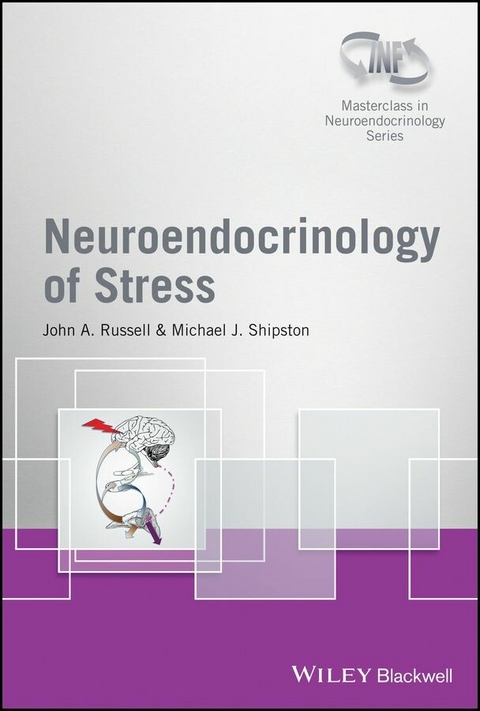
Neuroendocrinology of Stress (eBook)
John Wiley & Sons (Verlag)
978-1-118-92171-5 (ISBN)
Exposure to chronic stress has cumulative adverse effects on physical and mental health, considered to be the consequence of chronic exposure to high levels of stress hormones. Consequently, there is extensive research in progress to investigate and better understand how the brain organises neuroendocrine stress responses and how interventions may be able to moderate these responses to improve mental and physical health.
Neuroendocrinology of Stress highlights current knowledge of the organisation and physiology of these stress response systems, how the impact of dysregulation of these systems is being investigated, and considers the ways in which contributions to both psychiatric and physical diseases resulting from chronic stress effects can be critically addressed in basic research
• Written by a team of internationally renowned researchers, each chapter presents a succinct summary of the very latest developments in the field
• Both print and enhanced e-book versions are available
• Illustrated in full colour throughout
This is the second volume in a new Series ‘Masterclass in Neuroendocrinology’ , a co- publication between Wiley and the INF (International Neuroendocrine Federation) that aims to illustrate highest standards and encourage the use of the latest technologies in basic and clinical research and hopes to provide inspiration for further exploration into the exciting field of neuroendocrinology.
Series Editors: John A. Russell, University of Edinburgh, UK and William E. Armstrong, The University of Tennessee, USA
Exposure to chronic stress has cumulative adverse effects on physical and mental health, considered to be the consequence of chronic exposure to high levels of stress hormones. Consequently, there is extensive research in progress to investigate and better understand how the brain organises neuroendocrine stress responses and how interventions may be able to moderate these responses to improve mental and physical health. Neuroendocrinology of Stress highlights current knowledge of the organisation and physiology of these stress response systems, how the impact of dysregulation of these systems is being investigated, and considers the ways in which contributions to both psychiatric and physical diseases resulting from chronic stress effects can be critically addressed in basic research Written by a team of internationally renowned researchers, each chapter presents a succinct summary of the very latest developments in the field Both print and enhanced e-book versions are available Illustrated in full colour throughout This is the second volume in a new Series "e;Masterclass in Neuroendocrinology"e;, a co- publication between Wiley and the INF (International Neuroendocrine Federation) that aims to illustrate highest standards and encourage the use of the latest technologies in basic and clinical research and hopes to provide inspiration for further exploration into the exciting field of neuroendocrinology.
John A. Russell, University of Edinburgh, UK. William E. Armstrong, The University of Tennessee, USA.
List of Contributors, vii
Series Preface, ix
Preface, xi
About the Companion Website, xv
1 Methods and Approaches to Understand Stress Processing Circuitry, 1
James P. Herman and Brent Myers
2 Brain Monoaminergic Systems in Stress Neuroendocrinology, 19
Matthew W. Hale and Christopher A. Lowry
3 The Synaptic Physiology of the Central Nervous System Response to Stress, 43
Jeffrey G. Tasker and Marian Joëls
4 Illuminating the (Electro)physiology of Anterior Pituitary Corticotrophs, 71
Lie Chen, Peter Duncan, Duncan Macgregor, Zhi Liang and Michael J. Shipston
5 Stress and Sympathoadrenomedullary Mechanisms, 95
Regina Nostramo and Esther L. Sabban
6 Neuroendocrine Mechanisms of Stress Regulation in Humans, 121
Jens C. Pruessner and Nida Ali
7 Studying Chronic Stress in Animals: Purposes, Models and Consequences, 143
Antonio Armario
8 Modelling Stress-Related Mood Disorders in Animals, 169
Mathias V. Schmidt, Klaus V. Wagner, Xiao-Dong Wang and Georgia Balsevich
9 Glucocorticoid Involvement in Drug Abuse and Addiction, 195
John R. Mantsch and Paul J. Gasser
10 The Hypothalamic-Pituitary-Adrenal Axis: Circadian Dysregulation and Obesity, 219
Andries Kalsbeek, Yan Su, Eric Fliers and Susanne la Fleur
11 Using Rodent Models to Explore the Role of 11beta-Hydroxysteroid Dehydrogenase 2 (11beta-HSD2) in Prenatal Programming by Glucocorticoids, 245
Caitlin Wyrwoll, Anjanette Harris and Megan Holmes
12 Early-Life Stress: Rodent Models, Lessons and Challenges, 265
Pamela M. Maras and Tallie Z. Baram
13 Mothering Influences on Offspring Stress Response Mechanisms, 287
Claire-Dominique Walker and Barbara Woodside
14 Translational Research in Stress Neuroendocrinology: 11beta-Hydroxysteroid Dehydrogenase 1 (11beta-HSD1), A Case Study, 327
Rebecca M. Reynolds and Scott P. Webster
Glossary, 351
Index, 369
Chapter 1
Methods and Approaches to Understand Stress Processing Circuitry
James P. Herman and Brent Myers
Department of Psychiatry and Behavioral Neuroscience, University of Cincinnati, Cincinnati, Ohio, USA
Photomicrograph demonstrating the GABAergic phenotype of central amygdala (CeA) neurons projecting to the posterior bed nucleus of the stria terminalis (pBST). The retrograde tracer Fluorogold was injected into the pBST and visualized by immunohistochemistyry in the cell bodies of CeA neurons (brown). This was followed by in situ hybridization for GAD (glutamate decarboxylase) 65 mRNA (black grains), a marker for the GABAergic neurons. The co-localization of Fluorogold and GAD65 mRNA indicates that projections from the CeA to the pBST produce gamma-aminobutyric acid (GABA) and are inhibitory, putatively leading to disinhibition of the hypothalamic–pituitary–adrenocortical axis.
1.1 Introduction
Understanding mechanisms of neuroendocrine stress regulation requires the use of anatomical approaches to precisely localize neuronal populations that control physiological output. For example, the activation of the hypothalamo–pituitary–adrenocortical (HPA) axis is mediated in large part by 2000–4000 neurons (corticotropin releasing hormone neurons) located in the medial parvocellular division of the hypothalamic paraventricular nucleus (PVN), one of about 10 anatomically distinct subdivisions of this nucleus (Swanson and Sawchenko, 1983). Moreover, recent data suggest that upstream control of the HPA axis may be differentially regulated by subpopulations of neurons located within a defined brain region (e.g. the bed nucleus of the stria terminalis; Choi et al., 2007). Finally, regulatory changes of critical functional importance to HPA axis output can be subsumed by subpopulations of neurochemically distinct neurons within the PVN proper, which can be masked when the nucleus is considered as a unit. For example, vasopressin mRNA is normally expressed at very low levels in the medial parvocellular PVN, but is very abundant in neighbouring magnocellular neurons. When animals are adrenalectomized, glucocorticoid feedback inhibition of parvocellular neurons is lost, whereas magnocellular neurons are unaffected. Thus, despite the 8-fold increase in vasopressin mRNA expression in the parvocellular zone, which is involved in a massive drive of pituitary ACTH release, no net change is observed in whole-PVN vasopressin mRNA content due to dilutional effects of the magnocellular signal. All of these issues highlight the need to study central stress regulatory circuits in their anatomical context.
Understanding the anatomical context of stress processing is critical for both delineating normal homeostatic adaptive processes and those that culminate in stress pathologies, including such diverse diseases as post-traumatic stress disorder (PTSD), depression, cardiovascular disease and the metabolic syndrome. The current chapter is designed to provide an orientation on both tried and true and state-of-the-art approaches to stress circuit study, concentrating on methods used to characterize circuit activation, connectivity and function.
1.2 Assessment of stress activation
Tracing stress-regulatory circuits requires the use of methods to report activation of brain regions under study. In order for a particular set of neurons to regulate stress responses, one assumes that they should be either activated or deactivated during stimulation, be it discrete (acute) or prolonged. In the past, investigators have used measures of glucose metabolism (2-deoxyglucose autoradiography) or mitochondrial activity (cytochrome oxidase staining) to reveal activated pathways. In recent years, these rather crude methods have been replaced by use of molecular markers that precisely report cellular activation. This section will concentrate on molecular markers, as they afford single-cell resolution with the capacity to be combined with circuit mapping methods.
1.2.1 Markers of acute activation: Fos
The gold standard for mapping acute stress activated neurons employs methods to localize the immediate early gene, cfos. The cfos gene expression is driven by calcium signalling pathways, which are reliably activated during neuronal stimulation (Morgan and Curran, 1989). Post-stimulus induction of cfos gene expression is extremely rapid, due to the fact that transcription is initiated by removal of an arrest signal in the promoter region (Schroder et al., 2013). Moreover, cfos mRNA is unstable and rapidly degraded and, similarly, Fos protein has a relatively short half-life. This combination of ubiquitous localization, rapid transcription, rapid degradation and short protein half-life allows for assessment of rapid cellular activation against a background of virtually zero in the unstimulated state. These properties make cfos gene and Fos protein detection tools an excellent means by which to visualize activated neurons in the brain. While other immediate early genes (such as egr1 and arc) increase transcription after stressor exposure (Cullinan et al., 1995; Ons et al., 2004) (Table 1.1), to date cfos is the only gene that exhibits this ‘on–off’ property and makes it the method of choice for assessment of stress circuit activation in an anatomical context.
Table 1.1 Commonly-used Markers of Cellular Activation (partial list)
| Acute Cellular Activation | Identity | Cellular Mechanism |
| Fos | Immediate Early Gene, induced by acute stress | AP1 (activator protein-1) |
| Egr1 | Early Growth Response gene 1, increased by acute stress in select neural populations | MAPK (mitogen-activated protein kinases) |
| Arc | Activity-regulated Cytoskeletal-associated Protein, increased by acute stress in select neural populations | Neuroplasticity |
| Acute Activation of Signaling Pathways |
| pCREB | Cyclic-AMP Response Element Binding Protein | PKA (protein kinase A) |
| pERK | Extracellular-signal regulated kinase | MAPK |
| pSTAT3 | Signal transducer and activator of transcription 3 | cytokines, leptin |
| pCaMKII | Calmodulin Kinase II alpha | Calcium signaling |
| pAKT | Protein kinase B | PI3K (phosphoinositide 3-kinase), mTOR (mammalian target of rapamycin) |
| Chronic Cellular Activation |
| deltaFos B | Immediate Early Gene, accumulates with chronic stress |
Assessment of cfos induction can be performed using either in situ hybridization for cfos mRNA or immunohistochemistry for Fos protein. In situ hybridization using radiolabelled probes has the advantage of affording quantitation of the extent of stress-induced cfos induction, using densitometric analysis (off X-ray film or phosphorimager screens) or grain count analysis from emulsion dipped sections. Since the cfos mRNA is rapidly transcribed and degraded, peak levels are typically observed within 30 minutes of stimulus (stressor) onset and generally return to baseline within 90 minutes to 2 hours. Due to the time lag between transcription, translation and generation of a detectable pool of protein, Fos immunoreactivity typically peaks 90–120 minutes after stimulus onset and returns to baseline within 4 hours (it should be kept in mind that both synthesis and degradation will be subject to modification by stressor duration or intensity, so the above estimates should be considered a general rule of thumb rather than a firm guideline). Quantification of an absolute amount of protein by immunohistochemistry is problematic. However, this method of detection is suitable for analysis of numbers of activated neurons. Moreover, detection of Fos can be combined with immunohistochemistry for other antigens (dual or triple immunofluorescence) or transgene/knock-in fluorescent markers to phenotype-activated neurons or with fluorescent tracers to identify projections of activated neurons (see Section 1.3 on ‘Tract Tracing’). Immunohistochemistry is also quicker and cheaper than in situ hybridization (generally a 2–3 day procedure, with no radioisotope or disposal costs) and is generally the method of choice when information on the extent of induction is not required.
Use of cfos as an activational marker has been invaluable in identifying stress-activated pathways. However, its use comes with some caveats. First, one cannot assume that a cfos negative cell is not activated. There are numerous examples of cell populations that are electrophysiologically active after stress but do not show cfos induction (e.g. the CA1 region of the hippocampus). Second, cfos does not lend clear information on cellular inhibition, as neurons that are inhibited do not show a cfos signal. Finally, cfos is rapidly induced by the initiation of stress and, consequently, differences in post-excitation shut-off may not be visible as a reduction in the number of Fos (protein)-activated neurons detected by...
| Erscheint lt. Verlag | 31.8.2015 |
|---|---|
| Reihe/Serie | Wiley-INF Masterclass in Neuroendocrinology Series |
| Wiley-INF Neuroendocrinology Series | Wiley-INF Neuroendocrinology Series |
| Sprache | englisch |
| Themenwelt | Medizinische Fachgebiete ► Innere Medizin ► Endokrinologie |
| Medizin / Pharmazie ► Medizinische Fachgebiete ► Neurologie | |
| Studium ► 1. Studienabschnitt (Vorklinik) ► Biochemie / Molekularbiologie | |
| Naturwissenschaften ► Biologie | |
| Technik | |
| Schlagworte | Biowissenschaften • endocrinology • Endokrinologie • Life Sciences • Medical Science • Medizin • Neuroendocrinology • neuroendocrinology, stress, chronic stress, stress hormones, neuroendocrine stress, Brain Monoaminergic Systems, synaptic physiology, neuroendocrine mechanisms, stress regulation, chronic stress • Neuroendokrinologie • Neuroscience • Neurowissenschaften |
| ISBN-10 | 1-118-92171-2 / 1118921712 |
| ISBN-13 | 978-1-118-92171-5 / 9781118921715 |
| Informationen gemäß Produktsicherheitsverordnung (GPSR) | |
| Haben Sie eine Frage zum Produkt? |
 EPUB (Adobe DRM)
Kopierschutz: Adobe-DRM
Adobe-DRM ist ein Kopierschutz, der das eBook vor Mißbrauch schützen soll. Dabei wird das eBook bereits beim Download auf Ihre persönliche Adobe-ID autorisiert. Lesen können Sie das eBook dann nur auf den Geräten, welche ebenfalls auf Ihre Adobe-ID registriert sind.
Details zum Adobe-DRM
Dateiformat: EPUB (Electronic Publication)
EPUB ist ein offener Standard für eBooks und eignet sich besonders zur Darstellung von Belletristik und Sachbüchern. Der Fließtext wird dynamisch an die Display- und Schriftgröße angepasst. Auch für mobile Lesegeräte ist EPUB daher gut geeignet.
Systemvoraussetzungen:
PC/Mac: Mit einem PC oder Mac können Sie dieses eBook lesen. Sie benötigen eine
eReader: Dieses eBook kann mit (fast) allen eBook-Readern gelesen werden. Mit dem amazon-Kindle ist es aber nicht kompatibel.
Smartphone/Tablet: Egal ob Apple oder Android, dieses eBook können Sie lesen. Sie benötigen eine
Geräteliste und zusätzliche Hinweise
Buying eBooks from abroad
For tax law reasons we can sell eBooks just within Germany and Switzerland. Regrettably we cannot fulfill eBook-orders from other countries.
aus dem Bereich