


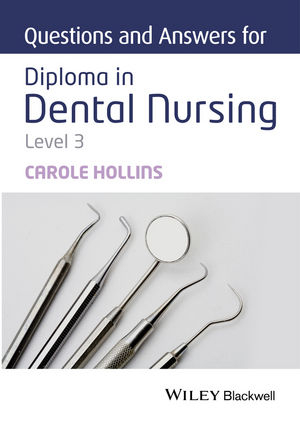
Questions and Answers for Diploma in Dental Nursing, Level 3 (eBook)
John Wiley & Sons (Verlag)
978-1-118-92376-4 (ISBN)
Questions and Answers for Diploma in Dental Nursing, Level 3 is a comprehensive revision guide for dental nurses preparing for the written examination of the City & Guilds Level 3 Diploma in Dental Nursing (formerly NVQ). Practice questions test your knowledge of Units 312-315, covering the principles of infection control in the dental environment, assessment of oral health and treatment planning, dental radiography, and the scientific principles in the management of oral health diseases and dental procedures. This guide is the must-have companion to the course text Diploma in Dental Nursing, Level 3, 3rd Edition,as you work towards qualification as a successful and accomplished dental nurse.
Key features:
- Revision guide tailored for students taking the City & Guilds Level 3 Diploma in Dental Nursing
- Presents multiple choice questions in the format of the exam, and answers with brief explanations so if you go wrong you know how to improve
- Written by Carole Hollins, an experienced examiner and well-known author of dental nursing books
Carole Hollins is a dental practitioner and member of the British Dental Association. She is a member of the Faculty of General Dental Practitioners and a former Chairman of the National Examining Board for Dental Nurses. Previous Chairman of both the National Certificate Committee and the Qualifications Council, Carole has been involved in the training and examining of dental nurses for over 20 years.
Questions and Answers for Diploma in Dental Nursing, Level 3 is a comprehensive revision guide for dental nurses preparing for the written examination of the City & Guilds Level 3 Diploma in Dental Nursing (formerly NVQ). Practice questions test your knowledge of Units 312-315, covering the principles of infection control in the dental environment, assessment of oral health and treatment planning, dental radiography, and the scientific principles in the management of oral health diseases and dental procedures. This guide is the must-have companion to the course text Diploma in Dental Nursing, Level 3, 3rd Edition, as you work towards qualification as a successful and accomplished dental nurse. Key features: Revision guide tailored for students taking the City & Guilds Level 3 Diploma in Dental Nursing Presents multiple choice questions in the format of the exam, and answers with brief explanations so if you go wrong you know how to improve Written by Carole Hollins, an experienced examiner and well-known author of dental nursing books
Carole Hollins is a dental practitioner and member of the British Dental Association. She is a member of the Faculty of General Dental Practitioners and a former Chairman of the National Examining Board for Dental Nurses. Previous Chairman of both the National Certificate Committee and the Qualifications Council, Carole has been involved in the training and examining of dental nurses for over 20 years.
Introduction vii
How to Use This Book ix
Unit 312: Principles of Infection Control in the Dental Environment
Outcome 1 Understand the Process of Infection Control 3
Outcome 2 Understand the Significance of Microorganisms 15
Outcome 3 Understand the Management of Infectious Conditions Affecting Dental Patients 23
Outcome 4 Know the Various Methods of Decontamination 31
Outcome 5 Understand Relevant Health and Safety Legislation Policies and Guidelines 41
Unit 313: Assessment of Oral Health and Treatment Planning
Outcome 1 Understand the Various Methods of Dental Assessment 53
Outcome 2 Know the Clinical Assessments Associated with Orthodontics 63
Outcome 3 Understand the Changes That May Occur in the Oral Tissues 71
Outcome 4 Know the Medical Emergencies That May Occur in the Dental Environment 79
Outcome 5 Know the Basic Structure and Function of Oral and Dental Anatomy 87
Unit 314: Dental Radiography
Outcome 1 Know the Regulations and Hazards Associated with Ionising Radiation 103
Outcome 2 Know the Different Radiographic Films and Their Uses 111
Outcome 3 Understand the Imaging Process and the Different Chemicals Used 119
Outcome 4 Understand the Importance for Stock Control of Radiographic Films 129
Unit 315: Scientific Principles in the Management of Oral Health Diseases and Dental Procedures
Outcome 1 Know the Common Oral Diseases 139
Outcome 2 Understand the Methods for the Prevention and Management of Oral Diseases 151
Outcome 3 Know How to Manage and Handle Materials and Instruments during Dental Procedures 163
Outcome 4 Understand the Purpose and Stages of Different Dental Procedures 183
Index 193
OUTCOME 1
Understand the Process of Infection Control
Questions
- Hand hygiene is important in minimising the risk of cross infection in the dental workplace. Which one of the following levels of hand hygiene aims to physically remove routinely acquired microorganisms?
- Clinical
- Hygienic
- Social
- Surgical
- Cross infection may occur in the dental workplace in a variety of ways. Which one of the following options describes the least likely method for a cross-infection incident to occur in a well-organised environment?
- Aerosol spray
- Direct contact
- Inoculation injury
- Particle spatter
- What is the correct term used to describe a person who is infected with a pathogenic microorganism but who shows no outward signs of disease?
- Carrier
- Contaminated
- High risk
- Infectious
- There are various levels of cleanliness referred to in the clinical setting. Which one of the following options is the term used when only bacteria and fungi have been destroyed by the cleaning method involved?
- Aseptic
- Disinfected
- Socially clean
- Sterilised
- Various methods are used in the dental workplace to prevent cross-infection incidents. Which one of the following options is the term used to describe the method of removing potential aerosol and droplet contamination between dental procedures?
- Barrier method
- Surface cleaning
- Use of disposables
- Zoning
- Which one of the following is an example of a potential indirect cross-infection incident?
- Clean inoculation injury
- Use of disinfected extraction forceps
- Use of a disposable aspirator tip
- Use of a new endodontic hand file
- There are various methods available to the dental team for preventing cross infection in the dental workplace. Which one of the following options is the most effective method of preventing cross infection between patients?
- Use of autoclave
- Use of barrier methods
- Use of disposable items
- Use of washer–disinfector
- While working in the dental workplace, the dental team will always try to avoid the transfer of microorganism contamination from one person to another. Which one of the following methods prevents cross infection from staff to patients?
- Disinfection
- Handwashing
- Sterilisation
- Zoning
- Various methods are used in the dental workplace to prevent cross-infection incidents. Which one of the following options is the term used to describe the method of preventing contamination of equipment items that cannot be sterilised in the usual way?
- Barrier method
- Surface cleaning
- Use of disposables
- Zoning
- The basic principle of the system of ‘standard (universal) precautions’ used in all health-care work environments is to assume which one of the following?
- All dental personnel will be free from disease
- All patients will have received a full range of childhood vaccinations
- Any patient may be infected with a pathogen at any time
- Any patient may have a natural immunity to some diseases
- Which one of the following options is the term used when items have undergone a process to remove physical contamination so that they can be rendered safe for reuse?
- Cleaned
- Decontaminated
- Disinfected
- Sterilised
- Which one of the following items of personal protective equipment is most important in preventing cross infection by aerosol spray?
- Mask
- Plastic apron
- Safety glasses
- Visor
- There are various routes of transmission of microorganisms that may result in a cross-infection incident. Which one of the following options is the most likely route of transmission from a patient when a member of staff has an uncovered wound on their finger?
- Aerosol spray
- Airborne droplets
- Direct entry
- Inoculation
- Hand hygiene is important in minimising the risk of cross infection in the dental workplace. Which level of hand hygiene aims to significantly reduce the numbers of normally resident microorganisms on the hands?
- Clinical
- Hygienic
- Social
- Surgical
- There are various levels of cleanliness referred to in the clinical setting. Which one of the following options is the term used when all pathogenic microorganisms and spores have been destroyed by the cleaning method involved?
- Decontaminated
- Disinfected
- Socially clean
- Sterilised
- Various methods are used in the dental workplace to prevent cross-infection incidents. Which one of the following options is the term used when dirty instruments are physically separated from clean ones during a dental procedure?
- Barrier method
- Surface cleaning
- Use of disposables
- Zoning
- Which one of the following options identifies the reason for the use of sealed pouches to store instruments in the clinical area of the dental workplace?
- Allows easy identification of items
- Avoids aerosol contamination
- Keeps items dry
- Keeps items tidy
- Which one of the following options is a suitable disinfectant for the routine cleaning of work surfaces in the clinical area between patients and for use as an impression disinfectant too?
- Aldehyde
- Chlorhexidine gluconate
- Isopropyl alcohol
- Sodium hypochlorite
- Various items of equipment are used in the dental workplace to assist in infection control processes. Which one of the following items is used to sterilise instruments and render them safe for reuse?
- Autoclave
- Distiller
- Ultrasonic bath
- Washer–disinfector
- Which one of the following statements regarding clinical handwashing technique is false?
- Antibacterial soap should be used
- Illustrated directions should be present at each handwashing sink
- Rinsing should occur towards the fingers
- Taps should not be hand operated
- Which one of the following options summarises the need for standard precautions to be followed at all times in the dental workplace?
- Avoids identifying infectious patients
- Healthy carrier cannot be identified
- Helps isolate infectious patients
- Prevents any staff exposure to infectious patients
- Indirect cross infection occurs when microorganisms are transferred from a contaminated item to another person. Which one of the following techniques will prevent the occurrence of indirect cross-infection incidents?
- Decontamination of items
- High-speed aspiration
- Use of disposables
- Zoning of the clinical area
- Many viruses are transmitted from person to person by direct contact with infected blood. Which one of the following options is the correct chemical for use when cleaning away a blood spillage?
- Aldehyde
- Chlorhexidine gluconate
- Detergent
- Sodium hypochlorite
- Which one of the following statements regarding the reprocessing of instruments is false?
- All instruments should be sterilised before reuse
- Detergent solution should be used when manually scrubbing instruments
- Endodontic files should be discarded after use
- Metal brushes should be used to remove persistent debris
- Which one of the following options is the correct sequence of events to be followed during the decontamination of instruments before sterilisation is carried out?
- Debride, inspect, rinse and scrub
- Debride, scrub, rinse and inspect
- Scrub, inspect, rinse and debride
- Scrub, rinse, debride and inspect
Answers
- Correct answer C: Social handwashing involves the use of general-purpose soap (rather than a special antibacterial hand cleanser) that is worked into a lather to physically clean the hands. This action will remove any general microorganisms from the hand surfaces, such as those acquired by using door handles in public places, taps and toilet flush handles and so on.
- Correct answer C: Aerosol spray and particle spatter are everyday occurrences during the delivery of dental treatment and are always likely to occur in this environment. Direct contact with some body fluids (such as saliva or respiratory tract discharge) may occur outside of the immediate clinical area simply by contact with the public, as happens anywhere. However, inoculation injuries should be a rare occurrence if the infection control policy is followed correctly by all dental personnel.
- Correct answer A: There are many diseases that can be transmitted without every sufferer becoming ill immediately (if at all), and the infected person is then often unaware that they have been exposed to pathogens. However, they can still pass the disease onto a third person by any of the usual routes of transmission, and that person will also then become infected. This intermediary who shows no signs of disease nor suffers any symptoms is called a carrier, and the likelihood of a healthy carrier unknowingly being treated at some point in a dental workplace forms the basis of the principles of ‘standard precautions’ – to treat every...
| Erscheint lt. Verlag | 13.7.2015 |
|---|---|
| Sprache | englisch |
| Themenwelt | Medizin / Pharmazie ► Allgemeines / Lexika |
| Medizin / Pharmazie ► Gesundheitsfachberufe | |
| Medizin / Pharmazie ► Pflege ► Fachpflege | |
| Medizin / Pharmazie ► Zahnmedizin | |
| Schlagworte | dental nurse, dental nursing, City & Guilds, Level 3 Diploma in Dental Nursing, questions and answers, revision guide, infection control, oral health, dental radiography, oral health diseases, dental procedures • Dental Nursing • dentistry • Praxis der Zahnarzthelferin • Zahnmedizin |
| ISBN-10 | 1-118-92376-6 / 1118923766 |
| ISBN-13 | 978-1-118-92376-4 / 9781118923764 |
| Informationen gemäß Produktsicherheitsverordnung (GPSR) | |
| Haben Sie eine Frage zum Produkt? |
 EPUB (Adobe DRM)
Kopierschutz: Adobe-DRM
Adobe-DRM ist ein Kopierschutz, der das eBook vor Mißbrauch schützen soll. Dabei wird das eBook bereits beim Download auf Ihre persönliche Adobe-ID autorisiert. Lesen können Sie das eBook dann nur auf den Geräten, welche ebenfalls auf Ihre Adobe-ID registriert sind.
Details zum Adobe-DRM
Dateiformat: EPUB (Electronic Publication)
EPUB ist ein offener Standard für eBooks und eignet sich besonders zur Darstellung von Belletristik und Sachbüchern. Der Fließtext wird dynamisch an die Display- und Schriftgröße angepasst. Auch für mobile Lesegeräte ist EPUB daher gut geeignet.
Systemvoraussetzungen:
PC/Mac: Mit einem PC oder Mac können Sie dieses eBook lesen. Sie benötigen eine
eReader: Dieses eBook kann mit (fast) allen eBook-Readern gelesen werden. Mit dem amazon-Kindle ist es aber nicht kompatibel.
Smartphone/Tablet: Egal ob Apple oder Android, dieses eBook können Sie lesen. Sie benötigen eine
Geräteliste und zusätzliche Hinweise
Buying eBooks from abroad
For tax law reasons we can sell eBooks just within Germany and Switzerland. Regrettably we cannot fulfill eBook-orders from other countries.


