


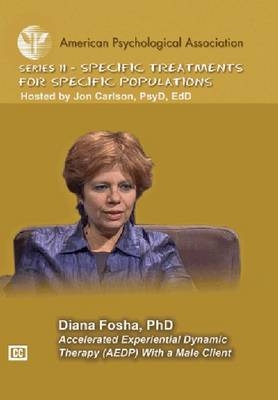
Accelerated Experiential Dynamic Psychotherapy (AEDP) With a Male Client
2013
American Psychological Association (Hersteller)
978-1-4338-1327-6 (ISBN)
American Psychological Association (Hersteller)
978-1-4338-1327-6 (ISBN)
- Keine Verlagsinformationen verfügbar
- Artikel merken
Accelerated experiential dynamic psychotherapy (AEDP) is both a theory of transformational process and a model of psychotherapy with three fundamental elements: attachment, emotion processing, and transformation. Emphasising the regulation and processing of relatedness and emotion, AEDP integrates psychodynamic and relational elements within an affect-centred experiential framework.
Accelerated experiential dynamic psychotherapy (AEDP) is both a theory of transformational process and a model of psychotherapy with three fundamental elements:
Attachment
emotion processing
transformation
Emphasising the regulation and processing of relatedness and emotion, AEDP integrates psychodynamic and relational elements within an affect-centred experiential framework. This approach is effective with male clients because it avoids pathologising problems, and instead affirms strengths and reflects positive qualities to offset commonly negative expectations of treatment.
In this phase-oriented treatment, Dr. Diana Fosha first focuses on building the relationship and establishing safety, simultaneously working with anxiety and attending to interferences with core emotion. She then helps the client to gain visceral access to experience, using moment-to-moment tracking of fluctuations in affect. Next, Dr. Fosha affirms and processes the experience of transformation by drawing attention to its positive and healing effects. Finally, the client is able to construct a coherent, cohesive narrative, with newfound personal truth and strengthened sense of self.
Accelerated experiential dynamic psychotherapy (AEDP) is both a theory of transformational process and a model of psychotherapy with three fundamental elements:
Attachment
emotion processing
transformation
Emphasising the regulation and processing of relatedness and emotion, AEDP integrates psychodynamic and relational elements within an affect-centred experiential framework. This approach is effective with male clients because it avoids pathologising problems, and instead affirms strengths and reflects positive qualities to offset commonly negative expectations of treatment.
In this phase-oriented treatment, Dr. Diana Fosha first focuses on building the relationship and establishing safety, simultaneously working with anxiety and attending to interferences with core emotion. She then helps the client to gain visceral access to experience, using moment-to-moment tracking of fluctuations in affect. Next, Dr. Fosha affirms and processes the experience of transformation by drawing attention to its positive and healing effects. Finally, the client is able to construct a coherent, cohesive narrative, with newfound personal truth and strengthened sense of self.
Diana Fosha, PhD, the developer of accelerated experiential dynamic psychotherapy (AEDP) and Director of the AEDP Institute, is the author of The Transforming Power of Affect: A Model for Accelerated Change (2000), and of articles on experiential process in dynamic psychotherapy. She also contributed to Healing Trauma: Attachment, Mind, Body and Brain, edited by Marion Solomon and Daniel Siegel (2003).
| Erscheint lt. Verlag | 30.6.2013 |
|---|---|
| Verlagsort | Washington DC |
| Sprache | englisch |
| Themenwelt | Medizin / Pharmazie ► Medizinische Fachgebiete ► Psychiatrie / Psychotherapie |
| ISBN-10 | 1-4338-1327-0 / 1433813270 |
| ISBN-13 | 978-1-4338-1327-6 / 9781433813276 |
| Zustand | Neuware |
| Informationen gemäß Produktsicherheitsverordnung (GPSR) | |
| Haben Sie eine Frage zum Produkt? |


