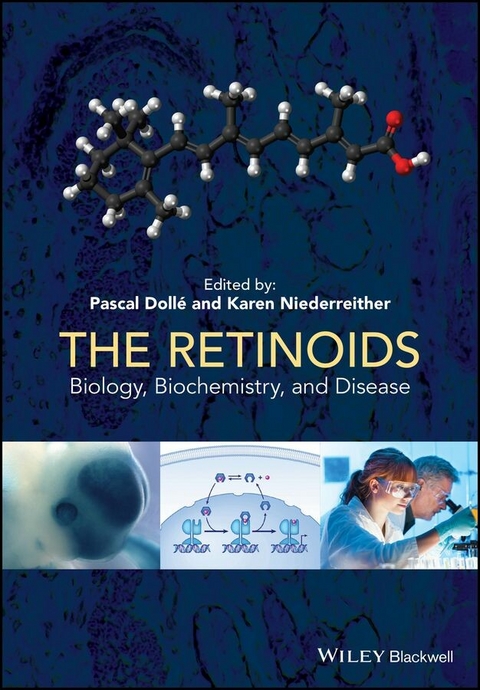
The Retinoids (eBook)
John Wiley & Sons (Verlag)
978-1-118-62790-7 (ISBN)
The text is divided into five sections, the first of which examines vitamin A metabolic and enzymatic pathways. Focus then shifts to the role of retinoic acid signaling in development, and then to retinoids and physiological function. The book concludes with chapters on retinoids, disease and therapy.
Comprehensive in scope and written by leading researchers in the field, The Retinoids: Biology, Biochemistry, and Disease will be an essential reference for biologists, biochemists, geneticists and developmental biologists, as well as for clinicians and pharmacists engaged in clinical research involving retinoids.
Pascal Dollé, M.D., Ph.D., is Team Leader and Department Head at the Institute of Genetics and Molecular and Cellular Biology (IGBMC), Illkirch, France
Karen Niederreither, Ph.D, is an Associate Professor at the University of Strasbourg, School of Dentistry in Strasbourg, France, and performs research at the IGBMC, Illkirch, France
The Retinoids: Biology, Biochemistry, and Disease provides an overview and synthesis of the retinoid molecules, from basic biology to mechanisms of diseases and therapy. Divided into five sections, the book covers retinoic acid signaling from biochemical, genetic, developmental, and clinical perspectives. The text is divided into five sections, the first of which examines vitamin A metabolic and enzymatic pathways. Focus then shifts to the role of retinoic acid signaling in development, and then to retinoids and physiological function. The book concludes with chapters on retinoids, disease and therapy. Comprehensive in scope and written by leading researchers in the field, The Retinoids: Biology, Biochemistry, and Disease will be an essential reference for biologists, biochemists, geneticists and developmental biologists, as well as for clinicians and pharmacists engaged in clinical research involving retinoids.
Pascal Dollé, M.D., Ph.D., is Team Leader and Department Head at the Institute of Genetics and Molecular and Cellular Biology (IGBMC), Illkirch, France Karen Niederreither, Ph.D, is an Associate Professor at the University of Strasbourg, School of Dentistry in Strasbourg, France, and performs research at the IGBMC, Illkirch, France
Contributors ix
Preface xiii
Part I: Vitamin A metabolic and enzymatic pathways 1
1 Vitamin a Metabolism, Storage and Tissue Delivery Mechanisms 3
William S. Blaner and Yang Li
2 Assimilation and Conversion of Dietary Vitamin a into Bioactive Retinoids 35
Earl H. Harrison and Carlo dela Senã's
3 Intracellular Storage and Metabolic Activation of Retinoids: Lipid Droplets 57
Joseph L. Napoli and Charles R. Krois
4 Evolution of the Retinoic Acid Signaling Pathway 75
Vincent Laudet, Elisabeth Zieger, and Michael Schubert
Part II: Biochemistry and cellular biology of retinoic acid signaling 91
5 Control of Gene Expression by Nuclear Retinoic Acid Receptors: Post-Translational And Epigenetic Regulatory Mechanisms 93
Marilyn Carrier and Cécile Rochette-Egly
6 Retinoic Acid Receptor Coregulators in Epigenetic Regulation of Target Genes 117
Li-Na Wei
7 Retinoid Receptors: Protein Structure, Dna Recognition and Structure-Function Relationships 131
William Bourguet and Dino Moras
8 How the RAR-RXR Heterodimer Recognizes the Genome 151
Sylvia Urban, Tao Ye, and Irwin Davidson
9 Retinoid Receptor-Selective Modulators: Chemistry, 3D Structures and Systems Biology 165
Marco-Antonio Mendoza-Parra, William Bourguet, Angel R. de Lera, and Hinrich Gronemeyer
10 Use of Retinoid Receptor Ligands to Identify Other Nuclear Receptor Ligands: Retinoid-Related Molecules are Ligands for the Small Heterodimer Partner (SHP) "Orphan" Receptor 193
Marcia I. Dawson and Zebin Xia
11 The Dual Transcriptional Activity of Retinoic Acid 273
Noa Noy
12 Retinoids, epigenetic changes during stem cell differentiation, and cell lineage choice 291
Lorraine J. Gudas
Part III: RETINOIC ACID SIGNALING IN DEVELOPMENT 307
13 Retinoic Acid Signaling and Central Nervous System Development 309
Malcolm Maden
14 The Role of Retinoic Acid in Limb Development 339
Gregg Duester
15 Retinoic Acid Signaling and Heart Development 353
Stéphane Zaffran and Karen Niederreither
16 Retinoic Acid in the Developing Lung and Other Foregut Derivatives 371
Wellington V. Cardoso and Felicia Chen
17 Retinoic Acid and the Control of Meiotic Initiation 383
Josephine Bowles and Peter Koopman
Part IV: RETINOIDS AND PHYSIOLOGICAL FUNCTIONS 401
18 Retinoids and the Visual Cycle: New Actors for an "OLD" Function 403
Darwin Babino and Johannes von Lintig
19 Retinoid Signaling in the Central Nervous System 421
Peter McCaffery and Wojciech Krezel
20 Retinoid Turnover and Catabolism: Influences of Diet and Inflammation 449
A. Catharine Ross and Reza Zolfaghari
21 Retinoids and the Immune System 465
J. Rodrigo Mora and Makoto Iwata
22 Retinoic Acid Receptor Signaling in Post-Natal Male Germ Cell Differentiation 485
Manuel Mark and Norbert B. Ghyselinck
Part V: RETINOIDS, DISEASE AND THERAPY 505
23 Epidemiology and Prevention of Vitamin a Deficiency Disorders 507
Keith P. West, Jr.
24 Retinoid Pathway Gene Mutations and the Pathophysiology Of Related Visual Diseases 529
Yaroslav Tsybovsky and Krzysztof Palczewski
25 Retinoic Acid in Acute Myeloid Leukemias 543
Hugues de Thé and Pierre Fenaux
26 Advances in the Use of Retinoids in Cancer Therapy and Prevention 557
Michael J. Spinella, Sarah J. Freemantle, and Ethan Dmitrovsky
Index 575
PREFACE
VITAMIN A AND RETINOIDS: AN AMAZING HISTORY AND HOPES FOR DISEASE PREVENTION
Historically the vitamin A precursor carotenoids had been long suspected of having medicinal properties. For thousands of years, humans and animals suffered from vitamin A deficiency, typified by night blindness and xerophthalmia—a failure of tear production which, if untreated, would result in blindness. While the underlying causes of such maledictions were a mystery, in 1500 BC the ancient Egyptians recommended eating animal or fish liver for their curative powers. The native people of the Arctic also long knew to avoid eating the liver of polar bears because they became sick (unknowingly by vitamin A). Western explorers not savvy to the vitamin A rich properties of polar bear liver, as early as 1596 accounted a horrible illness–sluggishness, blurred vision, nausea, headache, and skin loss, resulting in coma and even death—all signs of acute hypervitaminosis A or vitamin A toxicity.
Not until the twentieth century was vitamin A actually isolated. In 1909 Hopkins and Steep extracted a lipid/fat substance that mice and rats absolutely required for their growth. Elmer McCollum performed a careful analysis of the growth-promoting factors in protein-free milk, leading to the isolation of the first known fat-soluble vitamin. This essential, growth promoting compound was named “fat soluble A”, a terminology distinguishing it from other water-soluble vitamins, such as the recently discovered anti-scurvey factor—vitamin C. In 1920 Jack Drummond suggested that the “vital substance” be given the name vitamin A, a substance later associated with a pigmented yellow color. In 1935 George Wald found vitamin A was a component of the retina. When the rhodopsin pigment was exposed to light, it yielded opsin and a vitamin A-containing compound (the chromophore), indicating that vitamin A was essential in retinal function. While the nature of the chromophore and the reactions occurring during the visual cycle were characterized long ago, there have been recent developments in the characterization of the enzymes and carrier proteins involved in this cycle, with novel findings indicating that an alternative pathway for chromophore regeneration has evolved in cones (the photoreceptors of the retina that operate in bright daylight and which are responsible visual acuity and color discrimination). Two chapters in this book (Chapters 18 and 24) review these findings, the latter chapter describing gene mutations leading to visual diseases and discussing therapeutic strategies.
In the late 1970s researchers suggested that the physiological activity of vitamin A may be occurring through ligand binding to nuclear receptors. In the 1980s the goal of many researchers became to elucidate how these signaling molecules prodded gene expression. In 1986 the groups of Pierre Chambon and Ronald Evans independently cloned and characterized the first retinoic acid receptor—a molecule providing an entry point for detailing vitamin A biology. In 2004 the two scientists were awarded the Albert Lasker Basic Medical Research Award for their discoveries that retinoids and other pathways, including steroids, vitamin D, thyroid hormone, and many other lipid based drugs, transmit signals through similar pathways. These discoveries advanced the mechanisms of vitamin A and retinoid signaling. Several authors at the forefront of research aiming to solve structure–function relationships of retinoid receptors, their genomic target loci, and the post-translational and epigenetic regulatory mechanisms that fine-tune their activity according to the cellular context, provide a comprehensive overview of these complex phenomena in Part II of this book (Chapters 5–8). These are followed by two chapters on the chemistry of retinoid-related synthetic molecules, an important research field for drug design of selective receptor agnonists/antagonists, with Chapter 10 emphasizing how research on retinoid-related molecules led to the identification of modulators of another nuclear receptor, the small heterodimer partner “orphan” receptor.
Worldwide problems of nutritional deficiencies appear insurmountable, as the planet’s population tops seven billion. Vitamin A deficiency and its associated diseases afflict impoverished populations and are endemic in sub-Saharan Africa and southern Asia. These deficiencies preferentially target infants, preschool children, and pregnant women. Vitamin A deficiency is the leading preventable cause of vision loss. Over 200 million are estimated as lacking sufficient serum retinol levels. Vitamin A deficiency diseases frequently include rod photoreceptor dysfunction and night blindness, and in more severe cases blinding ulcerations and necrosis of the cornea. The World Health Organization estimates that 14 million children have preventable irreversible blindness, with half dying within a year of losing sight. Also because inflammation reduces retinol-binding protein levels, compromised immune function increases death rate following bacterial-induced diarrhea, malaria, or HIV infection. Lower food intake during disease results in a synergistic downward progression of malnutrition and disease, which can be lethal. Providing a small concentrated dose of retinol has proven effects increasing infant survival by over 30%. Retinol treatments are extremely low cost, with consequent saving of vision—with sometimes only two days of treatment restoring night blindness. One chapter of this book (Chapter 23) describes the consequences to world health of retinoid deficiencies, while others provide updated reviews on the relationship between the retinoid pathway and inflammatory processes (Chapter 20) and its functions in the immune system (Chapter 21).
Nutritional deficiencies are a common survival challenge and for the fat-soluble vitamin A our organism has developed exquisite mechanisms to enzymatically convert and maintain adequate stores of retinoids (mainly in the liver), allowing adults to survive under vitamin A deficiency for months or even years. The first part of this book provides detailed accounts on the mechanisms of vitamin A and carotenoid absorption, liver storage, and tissue-targeted delivery through the blood circulation, with one chapter (Chapter 4) discussing current knowledge on the ancestry of retinoid receptors in multicellular organisms and the molecular evolution of the retinoic acid signaling pathway.
In the 1970s Michael Sporn first used the term “chemoprevention” for clinical trials using retinoids to prevent or delay the occurrence of certain forms of cancer. Unfortunately, large-scale clinical trials providing retinol to smokers with premalignant oral lesions had disappointing results and, in some cases, had to be interrupted. Potentially, these high dose treatments decreased cellular retinoid signaling—perhaps by inducing CYP26 enzymatic activity, leading to retinoic acid (RA) degradation. Currently compounds inhibiting these enzymes are being tested for cancer treatment efficacy. Clinical pharmacology employing the synthetic retinoid fenretinide indicates retinoid derivatives are plausible cancer treatment strategies. Phase III clinical trial data suggested that fenretinide reduces breast cancer relapse, inducing tumor cell death and necrosis. The retinoid X receptor (RXR) agonist bexarotene is being tested for treatment of T-cell lymphoma and Kaposi sarcoma. These data are reviewed in the last chapter of this book.
How can we better understand intracellular functions related to cancer? As detailed in Chapter 11, there are key examples of how the biological activity of RA critically relies on a balance of several lipid-binding proteins. Reductions in one of these proteins, cellular retinoic acid-binding protein 2 (CRABP2) and augmentations in fatty acid-binding protein 5 (FABP5), change RA signaling from normal physiological growth inhibition to pathological states of neoplastic breast cancer growth. There are also antagonistic effects of RA and estrogen—another hormone acting through nuclear receptors—in breast cancer cells (Chapter 8). Selective gene targets are either induced or inhibited within cell-specific contexts, indicating some of the selective parameters in which RA can be capable of arresting neoplastic growth.
There are many additional reasons that populations in affluent well-nourished countries should be concerned about retinoid signaling. The most oppressing health problem in the United States (and a growing plague in the entire world) is the alarming increase in obesity. This rise in obesity is even found in poorer countries, due to food insecurity choices based on high calorie intake. The increase in the overweight population and its associated diseases (cardiovascular, diabetes and metabolic diseases) will have a predicted economic impact of more than $30 trillion over the next 20 years, according to a 2011 report by the World Economic Forum and Harvard School of Public Health. The collective impact of noncommunicable cardiovascular, diabetic, and other metabolic diseases linked to obesity impacts large segments of the world population. Proteins selectively binding retinoids (such as retinol-binding protein) are increased in obese patients. Retinoic acid has a pharmacological side effect of inducing weight loss. While this clinical side effect is clearly disadvantageous in...
| Erscheint lt. Verlag | 18.5.2015 |
|---|---|
| Sprache | englisch |
| Themenwelt | Medizin / Pharmazie ► Medizinische Fachgebiete |
| Studium ► 1. Studienabschnitt (Vorklinik) ► Physiologie | |
| Naturwissenschaften ► Biologie ► Biochemie | |
| Naturwissenschaften ► Biologie ► Mikrobiologie / Immunologie | |
| Technik | |
| Schlagworte | Biochemie • biochemistry • Biologie • Biowissenschaften • Cell & Molecular Biology • Clinical Pharmacology & Therapeutics • Klinische Pharmakologie u. Therapie • Life Sciences • Medical Science • Medizin • Retinoide • retinoids, biology, biochemistry, disease, retinoid molecules, basic biology, retinoid acid, retinoic acid signaling, genetics, developmental biology, vitamin A metabolic pathways, vitamin A enzymatic pathways, physiological function • Zell- u. Molekularbiologie |
| ISBN-10 | 1-118-62790-3 / 1118627903 |
| ISBN-13 | 978-1-118-62790-7 / 9781118627907 |
| Informationen gemäß Produktsicherheitsverordnung (GPSR) | |
| Haben Sie eine Frage zum Produkt? |
 EPUB (Adobe DRM)
Kopierschutz: Adobe-DRM
Adobe-DRM ist ein Kopierschutz, der das eBook vor Mißbrauch schützen soll. Dabei wird das eBook bereits beim Download auf Ihre persönliche Adobe-ID autorisiert. Lesen können Sie das eBook dann nur auf den Geräten, welche ebenfalls auf Ihre Adobe-ID registriert sind.
Details zum Adobe-DRM
Dateiformat: EPUB (Electronic Publication)
EPUB ist ein offener Standard für eBooks und eignet sich besonders zur Darstellung von Belletristik und Sachbüchern. Der Fließtext wird dynamisch an die Display- und Schriftgröße angepasst. Auch für mobile Lesegeräte ist EPUB daher gut geeignet.
Systemvoraussetzungen:
PC/Mac: Mit einem PC oder Mac können Sie dieses eBook lesen. Sie benötigen eine
eReader: Dieses eBook kann mit (fast) allen eBook-Readern gelesen werden. Mit dem amazon-Kindle ist es aber nicht kompatibel.
Smartphone/Tablet: Egal ob Apple oder Android, dieses eBook können Sie lesen. Sie benötigen eine
Geräteliste und zusätzliche Hinweise
Buying eBooks from abroad
For tax law reasons we can sell eBooks just within Germany and Switzerland. Regrettably we cannot fulfill eBook-orders from other countries.
aus dem Bereich