


Skeletal Trauma Analysis (eBook)
John Wiley & Sons (Verlag)
978-1-118-38419-0 (ISBN)
Nicholas V. Passalacqua received his Bachelor of Arts degree from Michigan State University, his Master of Science degree from Mercyhurst University, and a Master of Arts and PhD from Michigan State University. Nick works as a deploying anthropologist at the Joint POW/MIA Accounting Command - Central Identification Laboratory, actively engaging in the recovery and identification of U.S. servicemembers from past conflicts.
Christopher W. Rainwater received his Bachelor of Arts degree from the University of Florida, his Master of Science degree from Mercyhurst University, and is currently a PhD candidate at New York University. Chris works as a forensic anthropologist for the Office of Chief Medical Examiner in New York City, actively engaging in anthropological casework in all five boroughs. He also serves as the Director of Photography for the agency.
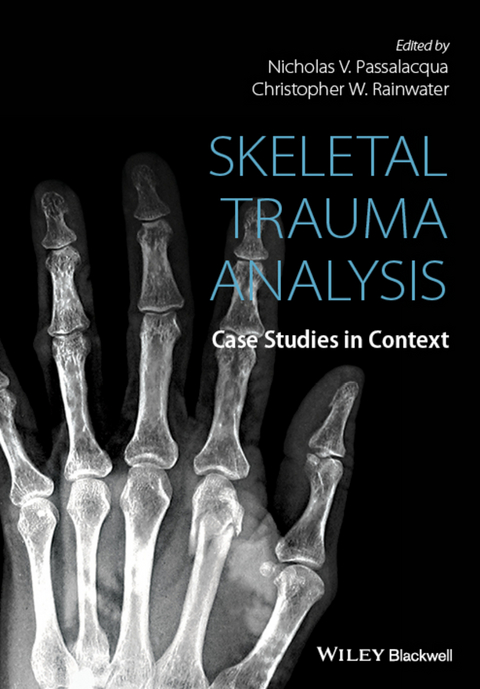
In the post-Daubert era, forensic science disciplines are increasingly informed by robust, statistically-sound experimental research. The educational value of the well-documented case study, however, remains as important as ever. Emphasizing known contextual information, this volume serves as a case-driven guide to skeletal trauma analysis through the unique perspective of each chapter's authors. Both forensic anthropologists and pathologists contribute skeletal trauma cases covering a range of topics including child abuse, blunt force trauma, descents from height, plane crashes, sharp force trauma and dismemberment, gunshot wounds, blast trauma, and burned body interpretation. Several chapters also include a discussion of potentially confounding taphonomic influences such as animal scavenging, water immersion, burning, and extended postmortem intervals. Detailed descriptions with multiple supporting images allow the practitioner's skeletal trauma interpretation to be compared to the "e;answer"e; as it pertains to the known circumstances surrounding the traumatic events of each case.
Nicholas V. Passalacqua received his Bachelor of Arts degree from Michigan State University, his Master of Science degree from Mercyhurst University, and a Master of Arts and PhD from Michigan State University. Nick works as a deploying anthropologist at the Joint POW/MIA Accounting Command - Central Identification Laboratory, actively engaging in the recovery and identification of U.S. servicemembers from past conflicts. Christopher W. Rainwater received his Bachelor of Arts degree from the University of Florida, his Master of Science degree from Mercyhurst University, and is currently a PhD candidate at New York University. Chris works as a forensic anthropologist for the Office of Chief Medical Examiner in New York City, actively engaging in anthropological casework in all five boroughs. He also serves as the Director of Photography for the agency.
List of contributors vii
1 Introduction 1
Nicholas V. Passalacqua and Christopher W. Rainwater
2 Atypical gunshot and blunt force injuries: wounds along the biomechanical continuum 7
Brian F. Spatola
3 Over-interpretation of bone injuries and implications for cause and manner of death 27
João Pinheiro, Eugénia Cunha, and Steven Symes
4 Skeletal injuries in cases of child abuse: two case studies from the Harris County Institute of Forensic Sciences 42
Jason M. Wiersema and Jennifer C. Love
5 Blunt force trauma patterns in the human skull and thorax: a case study from northern California 56
Eric J. Bartelink
6 Patterns of skeletal trauma inflicted during the Spanish Civil War 74
Nicholas V. Passalacqua, Ciarán Brewster, Marina Martínez de Pinillos González, and José Miguel Carretero Díaz
7 Shot and beaten to death? Suspected projectile and blunt force trauma in a case involving an extended period of post-mortem water immersion 90
Hugo F.V. Cardoso, Katerina S. Puentes, and Luís F.N. Coelho
8 Man's best friend: a case study of ballistics trauma and animal scavenging 108
Gina Hart
9 Skeletal evidence of violent sexual assault in remains with excessive evidence of scavenging 118
Hugh E. Berryman and Tiffany B. Saul
10 Neurocranial fractures 130
Jennifer C. Love
11 Blunt force trauma associated with a fall from heights 147
MariaTeresa A. Tersigni-Tarrant
12 Low-velocity impact trauma: an illustrative selection of cases from the Joint POW/MIA Accounting Command - Central Identification Laboratory 156
Paul Emanovsky
13 Blast trauma 167
Angi M. Christensen and Victoria A. Smith
14 Case studies in skeletal blast trauma 177
Nikki A. Willits, Joseph T. Hefner, and MariaTeresa A. Tersigni-Tarrant
15 Burned human remains in a double homicide: a forensic case in Cyprus 189
Popi Th. Chrysostomou
16 The utility of spatial analysis in the recognition of normal and abnormal patterns in burned human remains 204
Christina L. Fojas, Luis L. Cabo, Nicholas V. Passalacqua, Christopher W. Rainwater, Katerina S. Puentes, and Steven A. Symes
17 Three modes of dismemberment: disarticulation around the joints, transection of bone via chopping, and transection of bone via sawing 222
Christopher W. Rainwater
18 Kreischer Mansion homicide 246
Lauren Regucci and Bradley Adams
19 Postmortem trauma and the "CSI Effect:" is television making smarter criminals? 266
Elizabeth A. Murray and Anthony E. Dwyer
Index 289
CHAPTER 1
Introduction
Nicholas V. Passalacqua and Christopher W. Rainwater
The focus of this volume is human skeletal trauma in a forensic context, specifically for the forensic anthropologist or forensic pathologist. Forensically, skeletal trauma is extremely important as it may be the only direct evidence of violence indicating the decedent’s cause of death after the decomposition of soft tissues. Therefore, an accurate understanding and interpretation of skeletal trauma is key to forensic investigations.
Forensic anthropologists are increasingly being asked to consult on skeletal trauma cases and the majority of courtroom testimonies provided by forensic anthropologists concern interpretations of skeletal trauma (Murray and Anderson, 2007). The scope and necessity of forensic anthropology has evolved beyond developing a biological profile in order to determine the identity of the unknown remains (Dirkmaat and Cabo, 2012). Forensic anthropologists now routinely reconstruct the death event through detailed skeletal trauma analysis, archaeological recovery, and taphonomic analyses – none of which were envisioned in a routine forensic anthropology consultation in the 1970s (Stewart, 1979).
A better understanding of skeletal trauma has developed over the last few decades through a number of different research avenues; however, the root of modern skeletal trauma interpretation goes back to forensic anthropologists working alongside forensic pathologists at the Medical Examiner’s Office in Memphis, Tennessee (Passalacqua and Fenton, 2013). These original case study interpretations of known incidents set the precedent for how bones break and how to interpret skeletal trauma.
More recently, forensic science and peer-reviewed research has begun to trend toward experimental research with a strong statistical basis and large sample sizes. While this approach to skeletal trauma research informs the field (e.g., Baumer et al., 2010), it is often first-hand experience that is most instructive, as well as the basis for subsequent large-scale skeletal trauma research projects. As peer-reviewed journals are no longer the best outlets for these types of publications, we felt an edited volume would be a worthy addition to the investigation of skeletal trauma analysis in the field of forensic anthropology. Additionally, many forensic anthropology programs do not receive enough case work to sufficiently train students in skeletal trauma interpretation and it is our hope that is volume will help in developing trauma analysis skills beyond an introductory level.
Skeletal trauma can be considered as any in vivo damage that affects bone or hard tissues (e.g., cartilage, dentition) and the importance of skeletal trauma analysis is the fact that these hard tissues offer a permanent record of a traumatic event regardless of the mechanism, and thus skeletal trauma can be broken down into several categories. Antemortem trauma deals with any skeletal injury that occurred prior to death and exhibits some evidence of healing or callus formation. While the proper interpretation of antemortem trauma is paramount for documenting a history of repeated injuries that may be seen in child or elder abuse cases, antemortem trauma can also be particularly useful in identification efforts. Blunt force trauma occurs when a bone fails (fractures) following an inability to resist extrinsic force. Perimortem blunt force trauma interpretation can reveal the direction of force as well as a minimum number, and possibly sequence, of injures. Sharp force trauma involves an impact with an object with a cutting surface where the bone is incised. This involves knife cut wounds, hacking or chopping events, and dismemberment with both knives and saws. High-speed projectile or ballistic trauma results from a fast-moving object where anisotropic bone will respond as a brittle material. Like blunt force trauma, the direction of force and number or sequence of impacts may be interpreted. Thermal alterations or burned bone relate to a rapid dehydration of bone as the heat from the fire destroys the organic material of the bone. As a general postmortem process, it is important to distinguish thermal damage from perimortem trauma. As soft tissue is rapidly degraded, the forensic anthropologist is often consulted on these types of cases. These categories of trauma are not discrete and often operate on a continuum which may result in multiple forms of trauma being present simultaneously.
Skeletal trauma analysis: case studies in context
The goal of this volume is to present a number of real forensic anthropology case studies by practicing forensic anthropologists. The chapters that follow deal with a number of issues ranging from how forensic anthropologists approach trauma analysis, to how perpetrators perceive forensic science and attempt to alter the evidence based on their perceptions.
Forensic anthropology is a perpetually developing field whose existence within a medicolegal context requires constant re-evaluation of methods. Spatola opens this volume in Chapter 2 with a challenge to move away from typological approaches of trauma-type classification, and towards the use of descriptive anatomical language and a more focused look at the wound production’s biomechanical continuum. He successfully illustrates how weapon-centric classification can bias or result in over-reaching interpretations of the cause of death. This is especially noticeable in ambiguous cases and can lead to problematic outcomes. His chapter is complimented by that of Pinheiro and colleagues (Chapter 3) who note that the entire process from death to discovery must be known in order to achieve accurate trauma interpretations. They emphasize two types of case knowledge: that contextual details specific to the case must be known, and that the analysts must have an understanding of biological and taphonomic processes. The authors show that a lack of knowledge in either of these areas can have a profound effect on the final case interpretation. Importantly, they demonstrate that the fullest and most accurate understanding of the cause of death is best achieved through a medicolegal death investigation that incorporates multidisciplinary discourse between forensic pathologists, forensic anthropologists, and law enforcement.
Collaboration and a thorough knowledge of biomechanical processes is also discussed in Chapter 4 by Wiersema and Love, who demonstrate that forensic anthropologists play a key role in the interpretation of repetition and the sequence of skeletal injuries – trauma that is not often apparent with only a soft tissue examination. They highlight the importance of this refined skillset to the investigation of child abuse.
The sequence of skeletal injuries is also emphasized by Bartelink’s case study in Chapter 5 involving the documentation of blunt force trauma to the skull and antemortem injuries to the knee. Anthropological findings regarding the antemortem injuries allowed investigators to make progress towards establishing the identification of the decedent. In this case, perimortem trauma analysis was useful as it contradicted the statements made by the suspects and played an important role in developing a plea-bargain for the accused.
Passalacqua and colleagues (Chapter 6) contribute an example focusing on the importance of patterns of trauma on individuals recovered from a Spanish Civil War (1936–1939) mass grave. They provide a unique perspective of what repetitive, state-sanctioned institutionalized violence looks like and how alternative interpretations are worth investigating for individuals whose trauma pattern deviates from the norm.
Cardoso and colleagues (Chapter 7) demonstrate that the physical environment in which the remains are deposited can have significant impacts on the duration of the perimortem interval of bone. Their case study demonstrates that human remains submerged in water allowed the bone to remain in a plastic state and thereby complicated an interpretation of peri- and postmortem lesions. Cardoso and colleagues show that contextual information is key to understanding trauma related to the death event versus damage that occurred postmortem.
Context of the deceased is important in the case study provided by Hart in Chapter 8, who demonstrates the utility of forensic anthropology in distinguishing between ballistic and carnivore trauma by reconstructing skull fragments resulting from a gunshot wound. This analysis contributed to the ruling on manner of death and emphasizes the importance of having anthropologists on staff in the medical examiner’s office.
Berryman and Saul (Chapter 9) present a known case with skeletal evidence of sexual abuse. Through close examination of scavenged remains, they found details useful for the identification of the deceased, the cause of death, and evidence of severe traumatic sexual assault via osseous trauma.
Several chapters in this volume examine blunt force trauma interpretation.
Love (Chapter 10) emphasizes the importance of understanding forces associated with skull fracture patterns. She presents two cases of blunt force trauma in adult crania, and discusses adult cranial fracture pattern interpretation in terms of impact surface, impact energy, typical location of fracture initiation, and amount of fracture propagation.
Blunt force perimortem trauma discussed by Tersigni-Tarrant (Chapter 11) focuses on the axial skeleton as a result of a fall from a height. It also presents...
| Erscheint lt. Verlag | 27.4.2015 |
|---|---|
| Sprache | englisch |
| Themenwelt | Medizin / Pharmazie ► Gesundheitsfachberufe |
| Medizinische Fachgebiete ► Chirurgie ► Unfallchirurgie / Orthopädie | |
| Medizin / Pharmazie ► Medizinische Fachgebiete ► Notfallmedizin | |
| Medizin / Pharmazie ► Medizinische Fachgebiete ► Orthopädie | |
| Studium ► 2. Studienabschnitt (Klinik) ► Rechtsmedizin | |
| Naturwissenschaften ► Biologie | |
| Naturwissenschaften ► Chemie | |
| Technik | |
| Schlagworte | Analytische Chemie / Forensik • Anthropologie • Anthropology • Authors • Biological Anthropology • Biologische Anthropologie • Biowissenschaften • CASE • casedriven • Chapters • Chemie • Chemistry • disciplines • Educational • Experimental research • Forensic • Forensics • Forensic Science • Forensik • Guide • important • Information • known • Life Sciences • Perspective • postdaubert era • remains • Robust • Science • serves • Skeletal • Study • Unique • Volume • welldocumented |
| ISBN-10 | 1-118-38419-9 / 1118384199 |
| ISBN-13 | 978-1-118-38419-0 / 9781118384190 |
| Informationen gemäß Produktsicherheitsverordnung (GPSR) | |
| Haben Sie eine Frage zum Produkt? |
 EPUB (Adobe DRM)
Kopierschutz: Adobe-DRM
Adobe-DRM ist ein Kopierschutz, der das eBook vor Mißbrauch schützen soll. Dabei wird das eBook bereits beim Download auf Ihre persönliche Adobe-ID autorisiert. Lesen können Sie das eBook dann nur auf den Geräten, welche ebenfalls auf Ihre Adobe-ID registriert sind.
Details zum Adobe-DRM
Dateiformat: EPUB (Electronic Publication)
EPUB ist ein offener Standard für eBooks und eignet sich besonders zur Darstellung von Belletristik und Sachbüchern. Der Fließtext wird dynamisch an die Display- und Schriftgröße angepasst. Auch für mobile Lesegeräte ist EPUB daher gut geeignet.
Systemvoraussetzungen:
PC/Mac: Mit einem PC oder Mac können Sie dieses eBook lesen. Sie benötigen eine
eReader: Dieses eBook kann mit (fast) allen eBook-Readern gelesen werden. Mit dem amazon-Kindle ist es aber nicht kompatibel.
Smartphone/Tablet: Egal ob Apple oder Android, dieses eBook können Sie lesen. Sie benötigen eine
Geräteliste und zusätzliche Hinweise
Buying eBooks from abroad
For tax law reasons we can sell eBooks just within Germany and Switzerland. Regrettably we cannot fulfill eBook-orders from other countries.
aus dem Bereich


