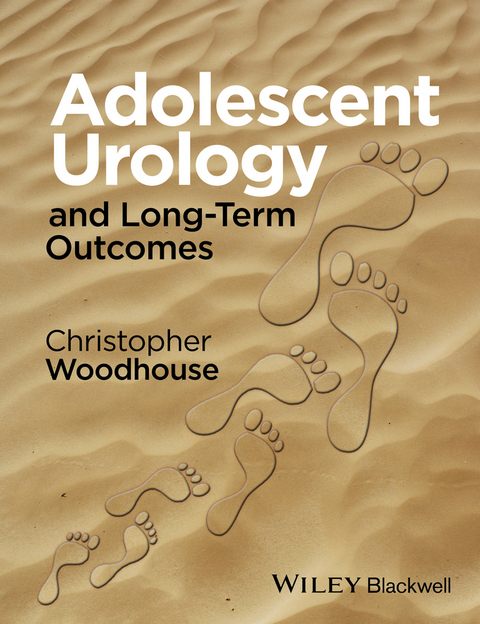
Adolescent Urology and Long-Term Outcomes provides urologists and pediatric urologists with a comprehensive and expert clinical guide to the main urologic problems that can occur during adolescence.
Fully covering disorders related to sex and genital development, the kidney, bladder, ureta and urethra, Professor Woodhouse, a world-leading expert and global pioneer in this field systematically outlines the best clinical practice in the surgical and medical management of these complex and extremely challenging conditions, as well covering the long-term outcome for the patient.
Given the sensitive nature of these problems and their effect on adolescent patients, attention is paid to the psychological aspect of such disorders: especially how best to manage patients struggling to come to terms with what are very personal and complex issues at what is often a difficult and turbulent period of their life.
Well-illustrated with over 120 figures including step-by-step surgical diagrams throughout, chapters will also include a unique 'voice of the experts' feature - a running dialogue between leading experts and Prof Woodhouse on the topic in question.
This modern, expert guide to adolescent urologic problems from one of the leading names in the field will be an essential tool for modern-day urologists and urologic surgeons, especially those specialising in pediatric patients, as well as pediatricians and endocrinologists.
Adolescent Urology and Long-Term Outcomes provides urologists and pediatric urologists with a comprehensive and expert clinical guide to the main urologic problems that can occur during adolescence. Fully covering disorders related to sex and genital development, the kidney, bladder, ureta and urethra, Professor Woodhouse, a world-leading expert and global pioneer in this field systematically outlines the best clinical practice in the surgical and medical management of these complex and extremely challenging conditions, as well covering the long-term outcome for the patient. Given the sensitive nature of these problems and their effect on adolescent patients, attention is paid to the psychological aspect of such disorders: especially how best to manage patients struggling to come to terms with what are very personal and complex issues at what is often a difficult and turbulent period of their life. Well-illustrated with over 120 figures including step-by-step surgical diagrams throughout, chapters will also include a unique voice of the experts feature a running dialogue between leading experts and Prof Woodhouse on the topic in question. This modern, expert guide to adolescent urologic problems from one of the leading names in the field will be an essential tool for modern-day urologists and urologic surgeons, especially those specialising in pediatric patients, as well as pediatricians and endocrinologists.
Christopher Woodhouse, MB, FRCS, FEBU is Emeritus Professor of Adolescent Urology, University College, London. Previously a consultant at the Royal Marsden Hospital, he joined UCL and was made Professor of Adolescent Urology in 2006. He is widely considered one of the world's leading experts in pediatric urology and in particular, adolescent urology and congenital urological anomalies. He's had over 260 papers, 65 chapters and three books published, as well as having given more than 450 lectures and presentations around the world. He authored 'Long-term Paediatric Urology' in 1991, of which this book will be a completely revised and modernised update.
List of Contributors vi
Preface viii
1 Adolescent and transitional urology--an introduction 1
Part I: The kidney
2 Anatomical and cystic anomalies of the kidney 13
3 Stones 22
4 Prune-belly syndrome 29
Part II: The ureter
5 Renal function in adolescents
Dr Kate Hillman and Professor Guy Neild 41
6 Structural anomalies and reconstruction of the ureter 49
7 Vesico-ureteric reflux 58
Part III: The bladder
8 The neuropathic bladder and spina bifida 75
9 Lower urinary tract replacement and reconstruction 91
10 Urinary diversion and undiversion 116
11 Other bladder conditions 122
12 Exstrophy and epispadias 128
13 Cloacal exstrophy 154
Part IV: The urethra
14 Posterior urethral valves 167
15 Hypospadias 177
Part V: Disorders of sex development
16 Scrotal abnormalities 193
17 The overvirilized female 202
18 The undervirilized male 218
19 Adolescent sexuality and counseling 232
Part VI: Neoplasia
20 Neoplastic disease: outcomes in survivors 239
Index 250
"I would encourage you to read and enjoy this book and think outside the box to develop an exciting career. Be inspired!." (BJU International, 1 August 2015)
CHAPTER 1
Adolescent and transitional urology—an introduction
Definition
The term “adolescent urology” means the care of patients with congenital or acquired conditions of the genito-urinary tract from around puberty until death.
It is clearly not a very satisfactory term. “Adolescent” ought to refer only to the transitional period between childhood and adulthood. Unfortunately, no other term has so far emerged to cover the specialty.
Adolescent medicine is a specialty in its own right. However, it is predicated on the knowledge that the conditions are unique to the adolescent period, or that management of a chronic condition of childhood is altered by adolescence, but then returns to a more familiar pathway in adulthood. The urological conditions of childhood, as we shall see, do not have an obvious destination in adult urology.
Background
Historically the majority of children with the major congenital anomalies would have died young. There were almost no survivors of those born with spina bifida beyond infancy. Fifty percent of children with exstrophy died before the age of 10. There was no treatment for end-stage renal failure until chronic dialysis came along in the 1960s so about a half of those born with posterior urethral valves died before adulthood. There were no survivors amongst those born with cloacal exstrophy until 1960. Good antibiotics for gram-negative infections were discovered in the 1970s, before which gram-negative septicemia, especially in association with renal stones, was frequently fatal.
Although there were some long-term survivors, there was little need for long-term urological care until, perhaps, the 1970s. Figure 1.1 shows the number of papers listed in Pubmed with the search terms ‘adolescent’ and ‘urology’.
Figure 1.1 Graph with logarithmic scale to show the number of papers listed in PubMed with the search terms “adolescent” (solid line) and “adolescent urology” (broken line), by year. The data are inaccurate in about the first 50 years as there were no key words in most papers. On checking a random sample from the early years, most had no relevance to urology.
With improving survival rates in the second half of the twentieth century came the realization that many children with major congenital anomalies had holistic and medical needs that would continue for the rest of their lives. The problem, then, was to identify clinicians with the knowledge and interest to take on such care. The needs are the same everywhere, although at present the solutions are limited. Gradually, special units have appeared, particularly in Europe and Australia, to provide this service. Adolescent wards are being built, mainly in pediatric hospitals.
However, there is a further difficulty: children do not become adults overnight or on achieving an arbitrary birthday. Adolescence is a phase of passing from childhood to adult life that is easily recognizable and creates unique problems in the management of chronic illness. It has a variety of formal definitions. In the Oxford English Dictionary it is described as “between childhood and manhood (14 to 25 years old) or womanhood (12 to 21).” The Department of Health in the United Kingdom is imprecise about its beginning, but rules that its end is the 19th birthday, which means that all care must be transferred at once to standard adult clinics. Neither of these definitions is wholly satisfactory, if only because children mature into adulthood at variable rates. For example when patients with congenital bladder disorders (mean age 20 years) were asked at what age they felt able to act independently from their parents, the mean answer was 17 years but the range was 11 to 25 years [1].
Although the need for a service to help the transition from pediatrics to adult medicine has been recognized in some specialties for 70 years or more, the main contribution in the twenty-first century has been the establishment of “transition clinics.” The first that I can identify was founded by Dr. J. Roswell Gallagher in Boston Children’s Hospital in 1954 [2]. Despite this, provision in the United States, and elsewhere, for long-term care remains limited [3]. Most subspecialties of pediatrics see the need for transition clinics but the provision is sparse and for many chronically ill or disabled children adult care is only available on sufferance in the pediatric hospital or in a general urology clinic. The lack of facilities for long-term care is reflected in the paucity of literature on the subject. Figure 1.2 shows the number of publications in PubMed on transitional care.
Figure 1.2 Papers listed in PubMed under “transitional care” (dark line) and “transitional care, urology” (light line) from 1974, when the first paper appears, to 2012.
The purpose of a transition clinic is to prepare children and their families for continuing medical and holistic care in the adult environment. It is predicated on the assumption that there is an adult unit to which such care may be transferred. In some chronic conditions of childhood, there is an obvious adult equivalent. For example, children with type I diabetes can eventually go to an adult diabetic specialist, although they will have a need for adolescent care in the interim. Even so, good transition is frequently unavailable [4].
In urology (and several other areas), there is no adult equivalent—there is no adult exstrophy, prune-belly syndrome (PBS) or disorder of sex development (DSD). Even the similarities that neural tube defects and posterior urethral valves (PUV) have with acquired adult conditions are deceptive. Children with major urological conditions need care that continues beyond adolescence and it is this which has to be planned in the transition clinic.
The prevalence of chronic illness in children in the United Kingdom is 17–19%. Data from other countries are limited. In the United States, in 1992, it was estimated that 31% of children had a chronic condition, however only 5% were considered to be severe and 29% moderately severe [5]. Even higher figures were recorded by Bethell et al. in 2011, but the increase was almost entirely accounted for by obesity. Excluding obesity, the prevalence of chronic disease in 12 to 17 year olds was 34.4% of which 50% were deemed to be severe. Although no urological condition appeared in the commonest 20 conditions considered, it is clear that long-term care is major numerical problem [6].
The process of transition
Barriers to transition
Perhaps the most obvious barrier to the movement of children with urologic anomalies into adult care is that there are very few clinics dedicated to receiving them! This makes transition difficult.
There are no figures available to show how many “adolescent urologists” are required. From the figures in Table 1.1 a total population of about 4 million would provide enough work for one urologist specializing in long-term care. This figure must be treated with caution. The incidence of the given anomalies is not accurately recorded. The incidences are falling and will continue to do so as selective pregnancy terminations become more common. Nonetheless, the figure does illustrate that it is a small specialty. If there is an even distribution of age and a working life of 30 years (both doubtful suppositions), there would only be a vacancy in the United Kingdom in alternate years. In the United States there would be about 80 adolescent urologists.
Table 1.1 An estimate of the number of adolescent urologists required in the United Kingdom. Births per year are based on published incidences.
| Births per year | Total adults in populationa | Total consultations at two per patient/year | Urologists needed at 1/1600 consultations |
| Exstrophy | 14 | 840 |
| Posterior urethral valves | 70 | 4200 |
| Spina bifida | 105 | 4200 |
| Others (estimate) | 2760 |
| Totals | 12000 | 24000 | 15 = 1 per 4 million population |
Notes: aIt is presumed that all except those with spina bifida will have an adult life of 60 years, but only 40 years for those with spina bifida.
The practical aspects of geography have to be considered. There will be far fewer adolescent urologists than there are pediatric urologists. If there is a “long-term urologist” in the same city, a smooth transition should be possible. The more remotely the child lives, the more difficult will be the problem unless the family has the means and inclination to travel regularly.
In countries with some form of universal or socialized health system, it may be presumed that hospital funding would not be a problem. However, travel costs may not be refunded. In insurance-based systems, adolescents with long-term health problems are a poor commercial prospect.
The transition process
Children and their families are accustomed to the holistic care received in a pediatric setting. There is a specific focus on the anomaly, but education, social...
| Erscheint lt. Verlag | 2.3.2015 |
|---|---|
| Sprache | englisch |
| Themenwelt | Medizin / Pharmazie ► Medizinische Fachgebiete ► Pädiatrie |
| Medizin / Pharmazie ► Medizinische Fachgebiete ► Urologie | |
| Schlagworte | Best • Clinical • disorders • endocrinology • Endokrinologie • Expert • Field • Global • Guide • longterm • Main • Medical • Medical Science • Medizin • Nature • outcomes • Pädiatrie • Patient • patients • Pediatric • Pediatrics • Pioneer • Practice • Problems • sensitive • Sex • social outcome • surgical • systematically • Urologie • urologists • Urology • worldleading |
| ISBN-13 | 9781118844830 / 9781118844830 |
| Informationen gemäß Produktsicherheitsverordnung (GPSR) | |
| Haben Sie eine Frage zum Produkt? |
 EPUB (Adobe DRM)
Kopierschutz: Adobe-DRM
Adobe-DRM ist ein Kopierschutz, der das eBook vor Mißbrauch schützen soll. Dabei wird das eBook bereits beim Download auf Ihre persönliche Adobe-ID autorisiert. Lesen können Sie das eBook dann nur auf den Geräten, welche ebenfalls auf Ihre Adobe-ID registriert sind.
Details zum Adobe-DRM
Dateiformat: EPUB (Electronic Publication)
EPUB ist ein offener Standard für eBooks und eignet sich besonders zur Darstellung von Belletristik und Sachbüchern. Der Fließtext wird dynamisch an die Display- und Schriftgröße angepasst. Auch für mobile Lesegeräte ist EPUB daher gut geeignet.
Systemvoraussetzungen:
PC/Mac: Mit einem PC oder Mac können Sie dieses eBook lesen. Sie benötigen eine
eReader: Dieses eBook kann mit (fast) allen eBook-Readern gelesen werden. Mit dem amazon-Kindle ist es aber nicht kompatibel.
Smartphone/Tablet: Egal ob Apple oder Android, dieses eBook können Sie lesen. Sie benötigen eine
Geräteliste und zusätzliche Hinweise
Buying eBooks from abroad
For tax law reasons we can sell eBooks just within Germany and Switzerland. Regrettably we cannot fulfill eBook-orders from other countries.
aus dem Bereich