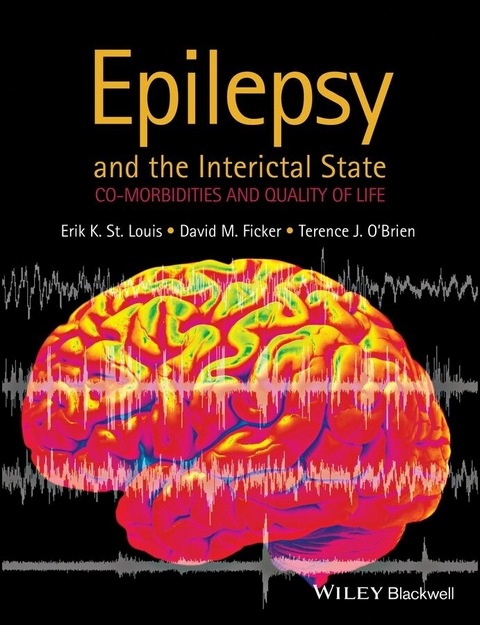
Epilepsy care traditionally focuses on seizures, yet for most epilepsy sufferers, other interictal factors such as mood, cognitive abilities, and treatment adverse effects most influence how they feel and function day to day.
Epilepsy and the Interictal State is a practical and comprehensive text that covers quality of life issues, cognition and therapy, adverse effects of epilepsy treatments, mood state and psychiatric co-morbidity and general health aspects of epilepsy. Each chapter employs a standard structure providing background, epidemiology, pathophysiology, etiology, diagnosis, treatment, prognosis and further practical advice.
From an international team of expert editors and contributors, Epilepsy and the Interictal State is a valuable resource for specialist epileptologists and neurologists, as well as for neurosurgeons, neurology nurses, psychiatrists, family physicians and general practitioners.
Erik K. St Louis, Department of Neurology, Mayo Clinic, Rochester, MN, USA
David M. Ficker, Department of Neurology, University of Cincinnati, Cincinnati, OH, USA
Terence J. O’Brien, Departments of Medicine and Neurology, The Royal Melbourne Hospital, The University of Melbourne, Parkville, Vic, Australia
Epilepsy care traditionally focuses on seizures, yet for most epilepsy sufferers, other interictal factors such as mood, cognitive abilities, and treatment adverse effects most influence how they feel and function day to day.Epilepsy and the Interictal State is a practical and comprehensive text that covers quality of life issues, cognition and therapy, adverse effects of epilepsy treatments, mood state and psychiatric co-morbidity and general health aspects of epilepsy. Each chapter employs a standard structure providing background, epidemiology, pathophysiology, etiology, diagnosis, treatment, prognosis and further practical advice.From an international team of expert editors and contributors, Epilepsy and the Interictal State is a valuable resource for specialist epileptologists and neurologists, as well as for neurosurgeons, neurology nurses, psychiatrists, family physicians and general practitioners.
Erik K. St Louis, Department of Neurology, Mayo Clinic, Rochester, MN, USA David M. Ficker, Department of Neurology, University of Cincinnati, Cincinnati, OH, USA Terence J. O'Brien, Departments of Medicine and Neurology, The Royal Melbourne Hospital, The University of Melbourne, Parkville, Vic, Australia
List of contributors, ix
Foreword, xiii
Section I: Quality of life and the interictal state in epilepsy
1 Quality of life in epilepsy: the key importance of the interictal state, 3
David M. Ficker
2 Comorbidities in epilepsy: range and impact, 7
J. Layne Moore and John O. Elliott
3 Epilepsy, comorbidities, and consequences: implications for understanding and combating stigma, 15
Rosemarie Kobau, Colleen K. DiIorio, Nancy J. Thompson, Yvan A. Bamps, and Erik K. St. Louis
Section II: Cognition and epilepsy
4 Causes and types of cognitive domain impairments in epilepsy, 29
Impairment of consciousness in epilepsy, 31
Luigi Maccotta, Clemente Vega, and R. Edward Hogan
Ictal cognitive impairments due to nonconvulsive status epilepticus, 38
Elizabeth Waterhouse
Memory and dysexecutive impairments in epilepsy, 45
Erik K. St. Louis and Ashley M. Enke
Attention deficit/hyperactivity disorder, disordered attention, and epilepsy, 63
David W. Dunn and William G. Kronenberger
Behavioral and developmental disorders in epilepsy, 68
Michael Smith and Esmeralda L. Park
5 Cognitive effects of epilepsy therapies, 74
Beth A. Leeman and Kimford J. Meador
6 Autism and epilepsy, 88
Vladimyr Komárek
7 Cognitive rehabilitation strategies in epilepsy, 94
Cher Stephenson and Robert D. Jones
Section III: Adverse effects of epilepsy therapies
8 Adverse effects in epilepsy: recognition, measurement, and taxonomy, 103
Frank G. Gilliam, Laura S. Snavely, and Piero Perucca
9 Clinically important antiepileptic drug interactions and their influence on adverse effects in epilepsy, 110
Frank M.C. Besag and Philip N. Patsalos
10 Minimizing the adverse effects of epilepsy therapies: principles and practice, 120
Erik K. St. Louis
11 Idiosyncratic adverse side effects of antiepileptic drugs: risk, prevention, and counseling, 127
Mary L. Zupanc and Lily H. Tran
12 Antiepileptic drug therapy and fetal development, 136
Frank J.E. Vajda
Section IV: Mood state, psychiatric comorbidity, and epilepsy
13 Mood state, anxiety, and psychosis in epilepsy, 147
Michael Salzberg
14 The contribution of sleep and anxiety disorders to quality of life in people with epilepsy, 159
Dee Snape, Ann Jacoby, and Gus Baker
15 Epilepsy and personality, 171
Christopher Turnbull, Simon Jones, Sophia J. Adams, and Dennis Velakoulis
16 Psychogenic attacks and epilepsy, 183
Bláthnaid McCoy and Selim R. Benbadis
Section V: General health and epilepsy 17
Obesity and epilepsy, 195
Sandra J. Petty and Alison M. Pack
18 Epilepsy in the elderly: vascular disease, the aging brain, and selection of appropriate therapies, 203
Katherine H. Noe and Joseph I. Sirven
19 Balance disorders and falls in epilepsy, 216
Sandra J. Petty, Keith D. Hill, and John D. Wark
20 Bone health in epilepsy, 224
Sandra J. Petty, and John D. Wark
21 Sleep and epilepsy, 230
Irakli Kaolani and Erik K. St. Louis
22 Use of complementary and alternative medicine in epilepsy, 241
Dana Ekstein and Steven C. Schachter
23 Epilepsy and alcohol and substance abuse, 252
Ekrem Kutluay and Jonathan C. Edwards
24 Driving, employment, and related issues in epilepsy, 258
Kristine Ziemba and Joe Drazkowski
Index, 267
CHAPTER 1
Quality of life in epilepsy: the key importance of the interictal state
David M. Ficker
University of Cincinnati Neuroscience Institute Epilepsy Center, Department of Neurology, University of Cincinnati Academic Health Center, USA
Introduction
Quality of life (QOL) has become recognized as a critical concept in a wide range of disease states in medicine over the last several decades, especially in chronic medical conditions such as epilepsy. The traditional clinical measures used by clinicians in treating patients with epilepsy are seizure frequency and medication adverse effects. A patient with epilepsy is considered to be controlled when they are seizure-free and are having few or no adverse effects from their antiepileptic drugs (AEDs). Patients, however, may be more concerned about psychosocial issues such as driving, independence, and employment than about AED adverse effects or seizure unpredictability [1]. These aspects of QOL are infrequently assessed in routine clinical care. Although epilepsy is a disorder that only produces neurologic symptoms on an intermittent basis (i.e., only during the seizure), psychosocial problems, AED therapy, and side effects may be the major factors that a patient perceives as interfering with daily living. Other interictal factors have been explored as potential contributors to QOL and will be briefly reviewed here.
QOL is clearly subjective in nature and may be difficult to measure. In the simplest terms, QOL can be defined as how a patient feels and functions. There are three essential elements [2, 3]: 1) physical health, 2) psychological health, and 3) social health. Physical health includes aspects such as daily function, general health, pain, endurance, and specific epilepsy-related variables such as seizure frequency, severity, and medication-related side effects. Psychological health includes aspects such as emotional well-being, psychiatric and emotional health, self-esteem, and cognition. Social health includes aspects of relationships with friends and family, occupational status, and issues pertaining to independence.
Tools for measuring QOL
Because QOL is difficult to quantify in everyday practice, research instruments have been developed with which to assess it. Measurement tools can be either generic or disease-specific.
Generic assessments such as the RAND 36-Item Health Survey [4] (also known as the SF-36) can be applied to many different patient populations and may allow for comparisons among different disease states. However, they may not measure important features in patients with epilepsy, such as fear of seizures or social embarrassment.
Epilepsy-specific measures of QOL have been developed over the past several years. The Quality of Life in Epilepsy (QOLIE) instruments were designed for use in a wide range of epilepsy patients, including those who with both benign and severe disease [3]. Three tools have been developed: QOLIE-89 [5], QOLIE-31 [6], and QOLIE-10 [7]. The QOLIE-89 contains 89 items in 17 scales, the QOLIE-31 contains 31 items in 7 scales, and the QOLIE-10 contains 10 items from the 7 QOLIE-31 scales and is intended as a screening tool. The scales represented in each survey are outlined in Table 1.1. All of the QOLIE inventories have been validated in studies of patients with epilepsy [5–7]. The questionnaires are simple to complete and have a standardized scoring system; however, they may be challenging to use in routine clinical practice. A QOL tool for newly diagnosed epilepsy patients (NEWQOL) has also been developed [8].
Table 1.1 Comparison of epilepsy-specific quality-of-life (QOL) tools
| Scale | QOLIE-89 | QOLIE-31 | QOLIE-10 |
| Health perceptions | × |
| Seizure worry | × | × | × |
| Physical function | × |
| Role limitation, physical | × |
| Role limitation, emotional | × |
| Pain | × |
| Overall QOL | × | × | × |
| Emotional well-being | × | × | × |
| Energy/fatigue | × | × | × |
| Attention/concentration | × | × | × |
| Memory | × |
| Language | × |
| Medication effects | × | × | × |
| Social function, work, driving | × | × | × |
| Social support | × |
| Social isolation | × |
| Health discouragement | × |
These tools have been used in many epilepsy QOL studies, and several important findings that impact the clinical practice of epilepsy have been reported. In particular, it seems that interictal factors rather than the ictal state have the greatest impact on QOL in epilepsy patients. While these findings may impact clinical practice, unfortunately interictal factors are often not routinely assessed in the clinic setting.
Ictal factors: seizure frequency and severity
It is relatively intuitive that seizures should affect QOL; large-scale surveys suggest that they have a negative impact. Seizure frequency, seizure type, and seizure severity each have an effect. A European study of 5000 epilepsy patients showed that those who experienced at least one seizure per month had poorer QOL than those who were seizure-free in the past year [9]. Another study suggested that patients who had a minimum of six seizures over the previous 6 months had poorer QOL than those who had fewer seizures and those who were seizure-free [10]. In addition, patients who achieved seizure freedom had QOL similar to the general population [10]. A study analyzing different degrees of seizure control showed that QOL improved only when seizure freedom was attained, while lesser degrees of seizure reduction (i.e., 75–99%, 50–74%, or 0–50%) were not associated with improvement in QOL [11]. Recent seizures also seem to have a greater impact on QOL than more remote seizures [12] and have bearing on how patients with epilepsy prioritize the perceived impact of seizure control or medication adverse effects on QOL; in particular, patients who had recent seizures tended to be more sensitive toward medication adverse effects, while patients who had more remote seizures (but who had not experienced a recent seizure) were more concerned about seizure control [13]. Longer periods of seizure freedom were associated with better QOL in a cohort of over 600 people with epilepsy [14]. Seizure severity has also been shown to impact QOL in a number of studies [15–18]. Epilepsy surgery, especially when resulting in seizure freedom, results in improved QOL [19–21].
Interictal factors
While seizures and seizure severity may negatively impact QOL, when multivariate studies are performed there are other factors that have a greater effect. In particular, mood and medication adverse effects make a significant contribution to QOL.
The presence of medication adverse effects has been shown in several studies to negatively impact QOL. These studies utilized a standardized checklist of medication adverse effects: the Adverse Events Profile (AEP) [22]. In a cohort of 200 patients with epilepsy, higher AEP scores were associated with a worse QOL [23]. Use of the AEP in a randomized controlled trial resulted in improvements in QOL scores when clinicians were presented with AEP scores, compared to standard clinical practice without AEP review [24]. In this study, seizure frequency did not correlate with QOL but the presence of higher AEP scores was associated with a poorer QOL, suggesting the importance of interictal symptoms to QOL.
Comorbid mood disorders are very common in people with epilepsy [25], with both anxiety and depression being highly prevalent. Both depression and anxiety significantly impact QOL. A study of refractory epilepsy patients shows that depression is an important contributor to QOL, yet seizure-related factors are not [26]. Other studies suggest that depression and anxiety significantly impact QOL [27–30].
Conclusion
Although it is important to assess ictal factors such as seizure frequency, severity, and recency in the clinic, interictal factors should be prioritized in order to maximize patient QOL. A conceptual model (Figure 1.1) can be used to elucidate the relationship between ictal and interictal factors in epilepsy QOL. There are many interrelated contributions; our traditional clinical assessments of seizure frequency and a cursory assessment of side effects may not be sufficient and other measures—including mood and more systematic and quantitative screening for adverse effects with validated tools such as the AEP—may be...
| Erscheint lt. Verlag | 2.3.2015 |
|---|---|
| Sprache | englisch |
| Themenwelt | Medizin / Pharmazie ► Allgemeines / Lexika |
| Medizin / Pharmazie ► Medizinische Fachgebiete ► Neurologie | |
| Schlagworte | Epilepsie • Epilepsy • Epilepsy care seizures interictal factors cognitive abilities treatment Epilepsy and the Interictal State quality of life issues cognition therapy adverse effects epilepsy treatments mood state psychiatric co-morbidity epilepsy Erik K. St Louis David M. Ficker Terence J. O'Brien • Medical Science • Medizin |
| ISBN-13 | 9781118951019 / 9781118951019 |
| Informationen gemäß Produktsicherheitsverordnung (GPSR) | |
| Haben Sie eine Frage zum Produkt? |
 EPUB (Adobe DRM)
Kopierschutz: Adobe-DRM
Adobe-DRM ist ein Kopierschutz, der das eBook vor Mißbrauch schützen soll. Dabei wird das eBook bereits beim Download auf Ihre persönliche Adobe-ID autorisiert. Lesen können Sie das eBook dann nur auf den Geräten, welche ebenfalls auf Ihre Adobe-ID registriert sind.
Details zum Adobe-DRM
Dateiformat: EPUB (Electronic Publication)
EPUB ist ein offener Standard für eBooks und eignet sich besonders zur Darstellung von Belletristik und Sachbüchern. Der Fließtext wird dynamisch an die Display- und Schriftgröße angepasst. Auch für mobile Lesegeräte ist EPUB daher gut geeignet.
Systemvoraussetzungen:
PC/Mac: Mit einem PC oder Mac können Sie dieses eBook lesen. Sie benötigen eine
eReader: Dieses eBook kann mit (fast) allen eBook-Readern gelesen werden. Mit dem amazon-Kindle ist es aber nicht kompatibel.
Smartphone/Tablet: Egal ob Apple oder Android, dieses eBook können Sie lesen. Sie benötigen eine
Geräteliste und zusätzliche Hinweise
Buying eBooks from abroad
For tax law reasons we can sell eBooks just within Germany and Switzerland. Regrettably we cannot fulfill eBook-orders from other countries.
aus dem Bereich