Geriatric Emergencies (eBook)
John Wiley & Sons (Verlag)
978-1-118-65566-5 (ISBN)
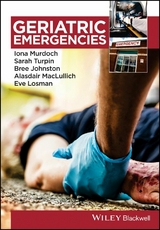
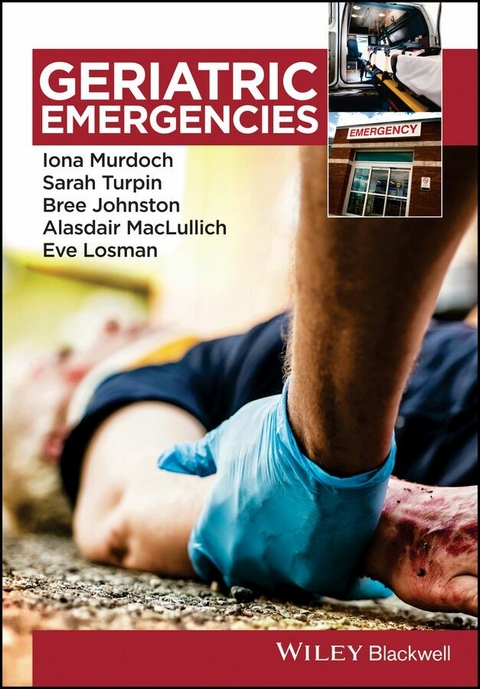
Geriatric Emergencies is a practical guide to the common conditions affecting older patients who present in an emergency to hospital or primary care.
Beginning with the essentials of history taking and clinical examination, the book covers a comprehensive range of emergencies, emphasizing the different management approaches which may be required in older patients. Common geriatric presentations such as falls, delirium and stroke, are explored in detail in addition to more diverse topics such as abdominal pain, major trauma and head injury. Ethical considerations such as advanced care planning, palliative care and capacity assessment are discussed with practical tips on communicating with patients and their relatives.
Geriatric Emergencies provides concise up-to-date guidance to the emergency management of the older patient. It is a recommended resource for all health professionals working in the acute environment, in which a large proportion of patients are aged over 65.
Iona Murdoch, Emergency Medicine ST3, East of England Deanery, Cambridge, UK
Sarah Turpin, Geriatric Medicine ST5, South East Scotland Deanery, Edinburgh, UK
Bree Johnston, Professor of Medicine and Associate Chief for Education, Division of Geriatrics, University of California, San Francisco, CA, USA
Alasdair MacLullich, Professor of Geriatric Medicine, University of Edinburgh, Edinburgh, UK
Eve Losman, Assistant Professor of Emergency Medicine, University of Michigan, MI, USA
Geriatric Emergencies is a practical guide to the common conditions affecting older patients who present in an emergency to hospital or primary care.Beginning with the essentials of history taking and clinical examination, the book covers a comprehensive range of emergencies, emphasizing the different management approaches which may be required in older patients. Common geriatric presentations such as falls, delirium and stroke, are explored in detail in addition to more diverse topics such as abdominal pain, major trauma and head injury. Ethical considerations such as advanced care planning, palliative care and capacity assessment are discussed with practical tips on communicating with patients and their relatives.Geriatric Emergencies provides concise up-to-date guidance to the emergency management of the older patient. It is a recommended resource for all health professionals working in the acute environment, in which a large proportion of patients are aged over 65.
Iona Murdoch, Emergency Medicine ST3, East of England Deanery, Cambridge, UK Sarah Turpin, Geriatric Medicine ST5, South East Scotland Deanery, Edinburgh, UK Bree Johnston, Professor of Medicine and Associate Chief for Education, Division of Geriatrics, University of California, San Francisco, CA, USA Alasdair MacLullich, Professor of Geriatric Medicine, University of Edinburgh, Edinburgh, UK Eve Losman, Assistant Professor of Emergency Medicine, University of Michigan, MI, USA
Preface, vii
Acknowledgements, ix
List of Abbreviations, xi
1 Introduction to geriatric emergency medicine, 1
2 Essentials of assessment and management in geriatric emergency medicine, 9
3 Special skills in geriatric emergency medicine, 30
4 Vulnerable adults and elder abuse, 51
5 Chest pain and atrial fibrillation, 62
6 Dyspnoea, 85
7 Infection and sepsis, 100
8 Falls and immobility, 112
9 Syncope, 127
10 Dizziness, 137
11 Major trauma, 146
12 Fractures and back pain, 158
13 Skin trauma, 179
14 Head injury, 188
15 Abdominal emergencies, 200
16 Diabetic and environmental emergencies, 220
17 Acute kidney injury and metabolic emergencies, 230
18 Delirium, 242
19 Stroke and transient ischaemic attack, 256
Index, 273
Chapter 1
Introduction to geriatric emergency medicine
Demographics
Population ageing is an international phenomenon, in terms of both the increasing number of people reaching old age and the rise in median age. Between 2000 and 2050, the proportion of the world's population over 60 years of age will double from about 11% to 22%, with the absolute number of people aged over 60 years expected to increase from 605 million to 2 billion over the same period (1). The number of people aged 80 years or older will have almost quadrupled to 395 million between 2000 and 2050 (1) (Figures 1.1 and 1.2). An ageing population brings potential benefits but also imposes particular challenges, particularly a growing demand for health and social care services. Whilst many people are staying healthy and active into old age, the number of older people who are reliant on care or have multiple health problems is increasing.
Figure 1.1 Projections of the population by age and sex for the United States: 2010–2050 (NP2008-T12), Population Division, US Census Bureau; Release Date: August 14, 2008.
Figure 1.2 Percentage of older people in the United Kingdom 1985, 2010, 2035.
Source: Office for National Statistics, National Records of Scotland, Northern Ireland Statistics and Research Agency.
Over 65% of patients admitted to hospital are over 65 years old in the United Kingdom (UK) and many have complex medical conditions (2). In the United States (US), 19.6 million emergency department visits were made by patients aged over 65 in 2009–2010 (3). Those aged 65 years and older are twice as likely to be admitted than those under 65, rising to over 10 times more likely in those aged 85 and above (4).
Emergency department attendance as an older patient is associated with adverse outcomes, including an increased rate of subsequent (separate) hospitalisation, increased re-attendance to the ED, increased rate of functional decline and reduced capacity for independent living (5).
KEY POINT
The beginning of this potential cascade of adverse events is at the front door of the emergency department, where a rushed or inadequate assessment resulting in hastened discharge or inappropriate disposition places complex older patients in a vulnerable position.
Emergency presentations
Illnesses in the older patient presenting to the ED are more likely to be of a higher acuity compared to younger patients. They are more likely to arrive by ambulance, they are more likely to be acutely unwell even when they appear stable on initial evaluation, and they are more likely to require immediate critical care.
Older patients often present with non-specific problems including the classic ‘geriatric giants’: falls, delirium, immobility and incontinence. These presenting complaints are often representative of multi-factorial disorders including underlying illness and comorbidity that require consideration of a broad differential; the assessment of these older patients requires skilful history and examination.
KEY POINT
Older patients with decreased functional reserve have the potential to deteriorate extremely quickly when placed under physiological stress.
Frailty at the front door
The presentation of frail patients to the ED and acute medical unit (AMU) is attracting increasing interest. These patients have previously not been a priority and have fallen through gaps in an environment designed to treat condition-specific problems rather than address the more complex issues which can present in a patient who is ‘frail’. Mortality rates of frail older patients presenting to EDs and AMUs is high and as such, this condition must be addressed by emergency physicians and acute physicians.
A large study on frail adults who were discharged from the ED showed they have a poorer 30-day outcome that non-frail patients, with between 10% and 45% (depending on level of frailty) increased risk of hospitalisation, nursing home admission and death (6). Studies such as these make the recognition and diagnosis of frailty early in an acute illness episode imperative so that interventions can be planned and initiated.
A recent international consensus on the definition of physical frailty defines it as, ‘a medical syndrome with multiple causes and contributors that is characterised by diminished strength, endurance, and reduced physiologic function that increases an individual’s vulnerability to increased dependency and/or death' (7).
The definitive diagnosis of frailty is usually made by a geriatrician and can be based on any number of well-validated models of frailty; two of the most well-known theoretical concepts of frailty are the frailty phenotype (Fried) (Box 1.1) and the frailty index (Rockwood).
In the ED or AMU setting, the frailty phenotype may be more appropriate as it can be applied at first contact; the frailty index is a deficit accumulation model that has many strengths but does require comprehensive medical and functional assessment before it can be applied.
Box 1.1 The frailty phenotype (8)
- Unintentional weight loss (10 lbs over past year)
- Self-reported exhaustion
- Weakness (reduced grip strength)
- Slow walking speed
- Low physical activity
- No criteria = Robust
- 1–2 criteria = Pre-frail
- 3 or more criteria = Frail.
There are several rapid screening tests that are aimed at helping acute care physicians to objectively identify frail patients early in their admission and target early interventions to help prevent deterioration in health or increased dependency (Table 1.1).
Table 1.1 The FRAIL scale, a rapid screening tool for older patients presenting to medical services (9)
| 3 or greater = Frailty; 1 or 2 = Pre-frail |
| Fatigue: ‘Are you fatigued?’ Resistance: ‘Cannot walk up one flight of stairs?’ Aerobic: ‘Cannot walk one block?’ Illnesses: ‘Do you have more than five illnesses?’ Loss of weight: ‘Have you lost more than 5% of your body weight in the past 6 months?’ |
Source: From Van Kan GA, Rolland YM, Morley JE, Vellas B. Frailty: toward a clinical definition. J Am Med Dir Assoc. 2008 Feb;9(2):71–72. Reproduced with permission of Springer.
Another way of identifying frail patients in the emergency or acute care setting is if they present with a classic frailty syndrome. These syndromes are falls, delirium and dementia, polypharmacy (Chapter 2), incontinence, immobility and the receipt of end of life care (10).
If a patient is identified as frail or pre-frail using a screening test on admission, then plans should be made for early comprehensive geriatric assessment (CGA) with an aim of facilitating appropriate discharge and preventing progression from pre-frail to frail. Where the service is available, such patients should also strongly be considered for referral or transfer to specialist geriatric care. Patients in earlier states of frailty may benefit more from CGA than patients who are approaching end-stage frailty (10).
KEY POINT
Omitting a frailty assessment in an older patient in the ED in the interests of time pressure is a false economy.
Comprehensive geriatric assessment (CGA)
CGA is defined as ‘a multidimensional, interdisciplinary diagnostic process to determine the medical, psychological, and functional capabilities of a frail older person in order to develop a coordinated and integrated plan for treatment and long-term follow-up’ (11). CGA is carried out by a multi-disciplinary team and often utilises standardised assessment tools. CGA is a highly effective process: it leads to improved discharge rates, reduced readmissions, reduced long-term care, greater patient satisfaction and lower costs (12).
Owing to time constraints, it is not usually possible to undertake CGA in the ED. However, research has shown that it is possible to embed aspects of the CGA into the ED, thus creating an ‘Emergency Frailty Unit’ with associated improvements in patient and operational outcomes. Work in the United Kingdom has shown that embedding CGA into the ED was associated with a reduction in readmission rates from 26% to 19.9% at 90 days (13). Frailty assessment units and AMUs are increasingly utilising versions of CGA in the emergency setting (Table 1.2).
Table 1.2 Components of comprehensive geriatric assessment (14)
| Medical | Active medical problems Comorbid conditions and disease severity Medication review Nutritional status |
| Mental health | Cognitive assessment Mood and anxiety |
| Functional capacity | Activities of daily living and instrumental activities of daily living Activity levels and exercise tolerance Gait and balance |
| Social circumstances | Social support from family, neighbours or friends Daytime activities and social network Eligibility for care resources |
| Environment | Home situation, facilities and safety Use of local... |
| Erscheint lt. Verlag | 24.12.2014 |
|---|---|
| Sprache | englisch |
| Themenwelt | Medizin / Pharmazie ► Allgemeines / Lexika |
| Medizin / Pharmazie ► Medizinische Fachgebiete ► Geriatrie | |
| Schlagworte | ageing ethics geriatric emergency delirium stroke immobility elderly patients • Emergency Medicine & Trauma • geriatric medicine • Geriatrie • Medical Science • Medizin • Notfallmedizin u. Traumatologie |
| ISBN-10 | 1-118-65566-4 / 1118655664 |
| ISBN-13 | 978-1-118-65566-5 / 9781118655665 |
| Informationen gemäß Produktsicherheitsverordnung (GPSR) | |
| Haben Sie eine Frage zum Produkt? |
 EPUB (Adobe DRM)
Kopierschutz: Adobe-DRM
Adobe-DRM ist ein Kopierschutz, der das eBook vor Mißbrauch schützen soll. Dabei wird das eBook bereits beim Download auf Ihre persönliche Adobe-ID autorisiert. Lesen können Sie das eBook dann nur auf den Geräten, welche ebenfalls auf Ihre Adobe-ID registriert sind.
Details zum Adobe-DRM
Dateiformat: EPUB (Electronic Publication)
EPUB ist ein offener Standard für eBooks und eignet sich besonders zur Darstellung von Belletristik und Sachbüchern. Der Fließtext wird dynamisch an die Display- und Schriftgröße angepasst. Auch für mobile Lesegeräte ist EPUB daher gut geeignet.
Systemvoraussetzungen:
PC/Mac: Mit einem PC oder Mac können Sie dieses eBook lesen. Sie benötigen eine
eReader: Dieses eBook kann mit (fast) allen eBook-Readern gelesen werden. Mit dem amazon-Kindle ist es aber nicht kompatibel.
Smartphone/Tablet: Egal ob Apple oder Android, dieses eBook können Sie lesen. Sie benötigen eine
Geräteliste und zusätzliche Hinweise
Buying eBooks from abroad
For tax law reasons we can sell eBooks just within Germany and Switzerland. Regrettably we cannot fulfill eBook-orders from other countries.
aus dem Bereich