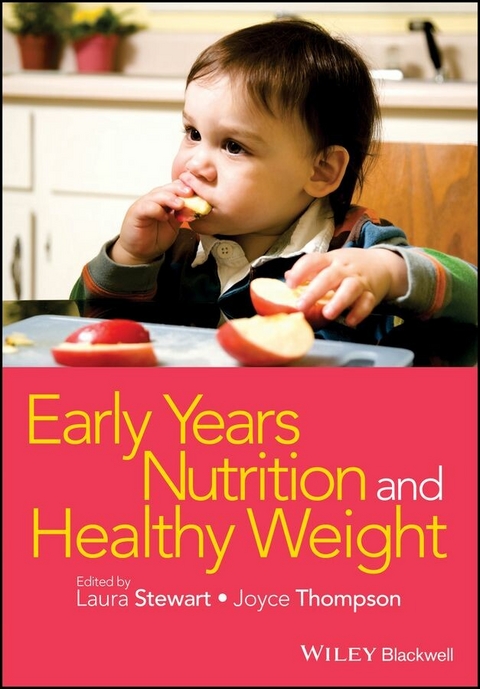
Early Years Nutrition and Healthy Weight (eBook)
John Wiley & Sons (Verlag)
978-1-118-79275-9 (ISBN)
Early Years Nutrition and Healthy Weight focuses on theearly years of childhood as a key period in which eating andexercise habits are formed. Combining current evidence withpractical advice, an international group of health specialistsadvise on the avoidance and management of childhood obesity. Theylook at key risk areas such as early sedentary behaviour, parentalinfluences and underlying medical causes, and also investigatepractical interventions including advice during pregnancy,parenting strategies, and prevention during pre-school and theearly school years.
This practical handbook contains vital information and advice forall nutritionists and dietitians working with young children andfamilies. It will also be a valuable text for health visitors,paediatricians and general practitioners, and students of nutritionand dietetics specialising in paediatric nutrition.
Key features:
- Only practitioner handbook dedicated to the early years ofchildhood as the key to ensuring healthy weight in later life
- Covers pregnancy through to pre-school and early school yearsinterventions
- Also addresses the social and psychological issues thatunderpin nutritional problems
- International group of expert authors consider the issue acrossthe developed world
- Case studies in each chapter illustrate the application oftheory to practice
Dr Laura Stewart is the Tayside Weight Management PathwayManager, at NHS Tayside, Scotland UK where she specialises inchildhood weight management.
Joyce Thompson is a Dietetic Consultant in Public HealthNutrition, at NHS Tayside, Scotland, UK where she addressesnutrition across the lifecourse.
Early Years Nutrition and Healthy Weight focuses on the early years of childhood as a key period in which eating and exercise habits are formed. Combining current evidence with practical advice, an international group of health specialists advise on the avoidance and management of childhood obesity. They look at key risk areas such as early sedentary behaviour, parental influences and underlying medical causes, and also investigate practical interventions including advice during pregnancy, parenting strategies, and prevention during pre-school and the early school years. This practical handbook contains vital information and advice for all nutritionists and dietitians working with young children and families. It will also be a valuable text for health visitors, paediatricians and general practitioners, and students of nutrition and dietetics specialising in paediatric nutrition. Key features: Only practitioner handbook dedicated to the early years of childhood as the key to ensuring healthy weight in later life Covers pregnancy through to pre-school and early school years interventions Also addresses the social and psychological issues that underpin nutritional problems International group of expert authors consider the issue across the developed world Case studies in each chapter illustrate the application of theory to practice
Dr Laura Stewart is the Tayside Weight Management Pathway Manager, at NHS Tayside, Scotland UK where she specialises in childhood weight management. Joyce Thompson is a Dietetic Consultant in Public Health Nutrition, at NHS Tayside, Scotland, UK where she addresses nutrition across the lifecourse.
Contributors, viii
Foreword, x
Acknowledgments, xii
1 Importance of good health and nutrition before and during pregnancy, 1
Catherine R. Hankey
2 Nutrition and health in the early years, 14
Judy More
3 Defining and measuring childhood obesity, 30
Charlotte M. Wright
4 Early life risk factors for childhood obesity, 40
John J. Reilly and Adrienne R. Hughes
5 Early physical activity and sedentary behaviours, 46
Anthony D. Okely and Xanne Janssen
6 Talking about weight with families, 59
Paul Chadwick and Helen Croker
7 Parenting strategies for healthy weight in childhood, 71
Clare Collins, Tracy Burrows and Kerith Duncanson
8 Pre-school prevention interventions, 81
Pinki Sahota
9 Contribution of food provision in primary schools to the prevention of childhood obesity, 91
Ethan A. Bergman
10 Early clinical interventions and outcomes, 100
Louise A. Baur
Index, 112
Chapter 1
Importance of good health and nutrition before and during pregnancy
Catherine R. Hankey
Human Nutrition, University of Glasgow, Glasgow, UK
Introduction
Pregnancy is a time of anticipation and excitement, especially for healthy mothers with no known health concerns for their foetus. It is increasingly evident that the lifestyle and health practices of mothers can impact markedly on their own health and that of their foetus.
Historically, pregnancy has been associated with ‘blooming maternal health’ and is probably the only period across the life course when positive encouragement for weight gain is given by many, at least in the developed world. Increasingly, given the worldwide epidemic of obesity, this positive response to sometimes excessive weight gain in pregnancy has been less widely accepted, but it does still have cross-cultural impact. Pregnancy can also offer a positive setting which may increase the willingness of the individual to consider improving their health. It has been envisaged as a ‘new start’, which has been associated with positive improvements in lifestyle. Research has examined whether pregnant women can be encouraged to become more physically active, to attempt smoking cessation and to minimise or avoid alcohol intake. Attempts have been made to alter women’s food choice during pregnancy towards eating more healthy foods such as fruit and vegetables, and away from foods rich in fat and sugar which have often been associated with negative health consequences including the development of gestational diabetes (GDM). Good maternal health both pre-conceptually and during pregnancy has long been recognised as valuable. Evidence is accruing that preparing for pregnancy could offer real health benefits to both maternal and infant health, particularly in the context of the current obesity epidemic. However, this opportunity appears only available to few; for example in the UK, only around 50% of all pregnancies are reported as planned and there were close to 800 000 live births in 2012 [1].
Importance of good maternal health before and during pregnancy
Good maternal health is crucial to reduce the chances of adverse outcomes such as GDM, miscarriage, pre-eclampisa, still birth, macrosomia and caesarean section for the mother, and abnormal birth weight and increased risk of obesity in infancy for the unborn child.
Abstinence from smoking and alcohol consumption together with regular physical activity has long been advocated to pregnant women, given the benefits this can bring for maternal and foetal health. Maternal nutritional status has been recognised as important before and during pregnancy, to maximise the chances of a healthy pregnancy and an optimal outcome for both mother and infant. Historically, dietary advice for optimal health in pregnancy has focussed on healthy eating with an emphasis on the maintenance of good health in terms of dietary intakes, and a sufficient intake of macro- and micro-nutrients [2]. Dietary advice advocated for all adults and appropriate to pregnant women to increase awareness and encourage them to eat well is illustrated in the UK’s visual representation ‘The Eatwell Plate’ [3] (see Chapter 8). This graphic representation, designed for use by all adults, appears to have achieved consensus as a valuable tool, and as well as due to its widespread use in UK National Health Service (NHS), it is advocated by various health charities. However, uncertainties remain as to the scientific evidence on which the tool’s graphic representation is based.
It has recently been highlighted that most pregnant women want to know the best foods to eat and what they should avoid. Current issues of concern include the possible dangers of eating liver, the need to avoid unprocessed cheese and too much tuna and oil-rich fish beyond two portions per week [4, 5].
According to National Institute of Health and Care Excellence (NICE), alcohol, for those in the first 12 weeks of pregnancy, should be avoided completely, and intakes throughout the remainder of pregnancy ought to be very limited, due to potential negative effects on foetal health [6]. Furthermore, as alcohol supplies energy of 7 kcal/g, it is considered as a concentrated source of energy, and hence even moderate consumption may increase energy intakes and encourage excessive prenatal weight gain.
Maternal caffeine intake has received considerable interest, given suggestions that raised intakes increase the likelihood of foetal growth restriction. In a large prospective observational study in two UK maternity units [7], retrospective caffeine intakes were determined and findings indicated that low caffeine intakes (up to 100 mg/day) are safe, but higher levels, in excess of 200 mg/day, increased the risk of miscarriage, premature birth and low birth–weight babies. Two hundred milligram of caffeine equates to around two cups daily of tea and/or coffee, though other rich sources such as caffeinated drinks should also be considered. Decaffeinated versions of these drinks may be of value.
Link between maternal diet and foetal growth
Dietary patterns in pregnancy have been studied using factor analyses or similar component analyses to investigate links between maternal diet and foetal growth, and dietary patterns in pregnancy and their associations with socioeconomic status (SES) and lifestyle. This is arguably a clear way to examine diet and health relationships, as the human diet contains a wide variety of nutrients and many may correlate with health outcomes. Danish researchers looked at associations between dietary patterns and foetal growth in over 40 000 pregnant women. Three major dietary patterns were observed: (1) a western diet rich in dairy fat and red and processed meats, (2) a healthy diet rich in fruit, vegetables, poultry and fish and (3) a mixture of both. The health conscious pattern was associated with a 24% lower occurrence of a small for gestational age (SGA) babies [8]. This pattern was evident when parity, maternal smoking, age, height, pre-pregnancy weight and fathers’ height were included as confounding factors.
Using the Avon Longitudinal Study of Parents and Children (ALSPAC) data [9], Northstone et al. examined dietary patterns in the third trimester of pregnancy. Associations were determined between social and demographic characteristics and habitual dietary intake when estimated using a food frequency questionnaire. Dietary patterns were categorised into four broad groups: (1) ‘processed diet’, full of high fat foods, (2) the ‘confectionary diet’, (3) the ‘vegetarian diet’ and (4) the ‘health conscious diet’ where the latter dietary pattern fulfilled the majority of dietary targets and was favoured by educated, older and non-white pregnant mothers.
In contrast, poorer diets were favoured by pregnant woman who smoked and were white, young and overweight.
Whilst ALSPAC data indicated the associations between dietary patterns and characteristics of the pregnant women, the Danish study illustrated a positive link between poorer dietary patterns and SGA babies, when the socio-economic and other factors were controlled. This epidemiological evidence favours specific macronutrients or micronutrients that may be underlying the association with SGA.
Micronutrients most likely to be at risk in pregnancy
The micronutrients most commonly at risk of shortfalls are iron, vitamin D and folic acid. A recent systematic review confirmed that in the UK and other developed countries, intakes of all these micronutrients are consistently reported to be below national recommendations [10]. The accuracy of these findings has been compromised by the limitations of dietary intake measurements, but a clear trend towards suboptimal intakes is evident. For these reasons, this chapter will deliberately focus on these key micronutrients.
Iron
Recent estimates, according to the Nutrition Impact Model Study, of the worldwide prevalence of anaemia in pregnant women is 38% (95% CI 33–43), that is 32 (28–36) million pregnant women globally [11]. Anaemia in pregnancy, diagnosed using World Health Organization (WHO) guidance [12], is defined as a haemoglobin concentration less than 11.0 g/l. Around 50% of anaemia is estimated to be as a result of iron deficiency, the world’s most commonly occurring nutritional disorder. Inadequate iron intakes are known to compromise maternal and foetal well-being, and intervention strategies to manage the situation should be implemented. This usually comes in the form of dietary advice, but more common is iron supplementation.
Dietary approaches to managing iron status
Advice given in antenatal clinics should be appropriate with respect to iron status. The UK Scientific Advisory Committee on Nutrition (SACN) has recently summarised its guidance on how to challenge a shortfall in iron status: ‘a healthy balanced diet’, which includes a variety of foods containing iron, will help people achieve adequate iron status [13]. Such an approach is more effective than consuming iron-rich foods at the same time as foods/drinks that enhance iron absorption (e.g. citrus fruit juice, red meat) whilst avoiding foods containing components that inhibit iron absorption (e.g. tea, coffee, milk).
Given the increasing concern that one of the major sources of dietary iron – red and processed meat products – has been linked to the development of colon cancer, the...
| Erscheint lt. Verlag | 11.2.2015 |
|---|---|
| Sprache | englisch |
| Themenwelt | Medizin / Pharmazie ► Gesundheitsfachberufe ► Diätassistenz / Ernährungsberatung |
| Medizin / Pharmazie ► Medizinische Fachgebiete ► Pädiatrie | |
| Schlagworte | childhood, obesity, weight • children • Dietetics • disorder • Ernährung • Ernährung u. Diätetik • Ernährung • Ernährung u. Diätetik • evidence-based • Fettleibigkeit • Gesundheits- u. Sozialwesen • Health & Social Care • international • Interventions • Kinderernährung • Kinderernährung • Management • Medical Science • Medizin • Nutrition • Nutrition & Dietetics General • Obesity • Pädiatrie • Pädiatrie • Paediatric • Pediatric • Pediatrics • Pregnancy • Public Health • school • sedentary |
| ISBN-10 | 1-118-79275-0 / 1118792750 |
| ISBN-13 | 978-1-118-79275-9 / 9781118792759 |
| Informationen gemäß Produktsicherheitsverordnung (GPSR) | |
| Haben Sie eine Frage zum Produkt? |
 EPUB (Adobe DRM)
Kopierschutz: Adobe-DRM
Adobe-DRM ist ein Kopierschutz, der das eBook vor Mißbrauch schützen soll. Dabei wird das eBook bereits beim Download auf Ihre persönliche Adobe-ID autorisiert. Lesen können Sie das eBook dann nur auf den Geräten, welche ebenfalls auf Ihre Adobe-ID registriert sind.
Details zum Adobe-DRM
Dateiformat: EPUB (Electronic Publication)
EPUB ist ein offener Standard für eBooks und eignet sich besonders zur Darstellung von Belletristik und Sachbüchern. Der Fließtext wird dynamisch an die Display- und Schriftgröße angepasst. Auch für mobile Lesegeräte ist EPUB daher gut geeignet.
Systemvoraussetzungen:
PC/Mac: Mit einem PC oder Mac können Sie dieses eBook lesen. Sie benötigen eine
eReader: Dieses eBook kann mit (fast) allen eBook-Readern gelesen werden. Mit dem amazon-Kindle ist es aber nicht kompatibel.
Smartphone/Tablet: Egal ob Apple oder Android, dieses eBook können Sie lesen. Sie benötigen eine
Geräteliste und zusätzliche Hinweise
Buying eBooks from abroad
For tax law reasons we can sell eBooks just within Germany and Switzerland. Regrettably we cannot fulfill eBook-orders from other countries.
aus dem Bereich