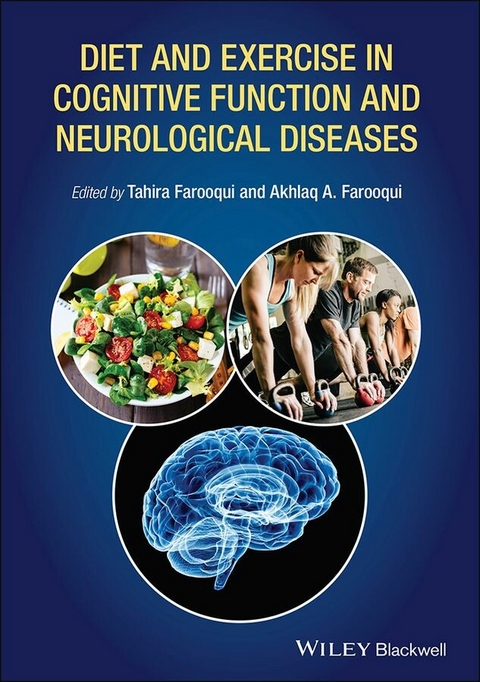
Diet and Exercise in Cognitive Function and Neurological Diseases (eBook)
384 Seiten
Wiley-Blackwell (Verlag)
978-1-118-84056-6 (ISBN)
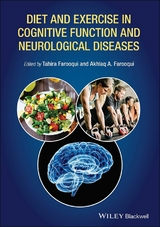
Diet and exercise have long been recognized as important components of a healthy lifestyle, as they have a great impact on improving cardiovascular and cerebrovascular functions, lowering the risk of metabolic disorders, and contributing to healthy aging. As a greater proportion of the world’s population is living longer, there has been increased interest in understanding the role of nutrition and exercise in long-term neurological health and cognitive function.
Diet and Exercise in Cognitive Function and Neurological Diseases discusses the role and impact that nutrition and activity have on cognitive function and neurological health. The book is divided into two sections. The first section focuses on diet and its impact on neurobiological processes. Chapters focus on the impacts of specific diets, such as the Mediterranean, ketogenic and vegan diets, as well as the role of specific nutrients, fats, fatty acids, and calorie restriction on neurological health and cognitive function. The second section of the book focuses on exercise, and its role in maintaining cognitive function, reducing neuroinflammatory responses, regulating adult neurogenesis, and healthy brain aging. Other chapters look at the impact of exercise in the management of specific neurological disorders such Multiple Sclerosis and Parkinson’s Disease.
Diet and Exercise in Cognitive Function and Neurological Diseases is a timely reference on the neurobiological interplay between diet and exercise on long-term brain health and cognitive function.Tahira Farooqui and Akhlaq A. Farooqui, The Ohio State University, Columbus, OH, USA
Contributors
Abdullah S. Alhomida,
Department of Biochemistry, College of Science, King Saud University, Riyadh, Saudi Arabia
Trevor Archer,
Department of Psychology, University of Gothenburg, Gothenburg, Sweden; Network for Empowerment and Well-Being, Gothenburg, Sweden
António Ascensão,
Research Centre in Physical Activity, Health and Leisure (CIAFEL), Faculty of Sport, University of Porto, Porto, Portugal
Jimmy D. Bell,
Department of Life Sciences, Clipstone Building, University of Westminster, London, UK
Caren Bernardi,
Programa de Pós-Graduação Ciências da Reabilitação, Universidade Federal de Ciências da Saúde de Porto Alegre, Porto Alegre, Brazil
Richard Bloch,
Department of Psychiatry and Behavioral Medicine, Brody School of Medicine at East Carolina University, Greenville, NC, USA
Virginia Boccardi,
Department of Internal Medicine, Surgical, Neurological, Metabolic Disease and Geriatric Medicine, Second University of Naples, Naples, Italy
Marialaura Bonaccio,
Department of Epidemiology and Prevention, IRCCS Istituto Neurologico Mediterraneo NEUROMED, Pozzilli, Italy
Mario Roberto Generosi Brauner,
Escola de Educação Física (ESEF), Universidade Federal do Rio Grande do Sul, Porto Alegre, Brazil
Michael J. Chen,
Department of Biological Sciences, California State University, Los Angeles, CA, USA
Undurti N. Das,
UND Life Sciences, Federal Way, WA, USA
Margaret Joy Dauncey,
Wolfson College, University of Cambridge, Cambridge, UK
Abeer M. Eissa,
Psychogeriatric Research Center, Department of Psychiatry, School of Medicine, Ain Shams University, Cairo, Egypt
Kirk I. Erickson,
Department of Psychology, University of Pittsburgh, Pittsburgh, PA, USA
Akhlaq A. Farooqui,
Department of Molecular and Cellular Biochemistry, College of Medicine, The Ohio State University, Columbus, OH, USA
Tahira Farooqui,
Department of Molecular and Cellular Biochemistry, College of Medicine, The Ohio State University, Columbus, OH, USA
Heather M. Francis,
School of Psychology, Science Department, University of New South Wales, Sydney, New South Wales, Australia
Dorota Frydecka,
Department and Clinic of Psychiatry, Wrocław Medical University, Wrocław, Poland
Giovanni de Gaetano,
Department of Epidemiology and Prevention, IRCCS Istituto Neurologico Mediterraneo NEUROMED, Pozzilli, Italy
Danilo Garcia,
Network for Empowerment and Well-Being, Gothenburg, Sweden; Center for Ethics, Law and Mental Health, University of Gothenburg, Gothenburg, Sweden
Nicola J. Gates,
School of Psychiatry, Centre for Healthy Brain Ageing (CheBA), University of New South Wales, Sydney, New South Wales, Australia; Brain and Mind Psychology, Sydney, New South Wales, Australia
Dmitry Gerashchenko,
Department of Psychiatry, Harvard Medical School and Veterans Affairs Boston Healthcare System, West Roxbury, MA, USA
Carlos Alberto Gonçalves,
Programa de Pós-Graduação Ciências da Reabilitação, Universidade Federal de Ciências da Saúde de Porto Alegre, Porto Alegre, Brazil; Departamento de Bioquímica, Instituto de Ciências Básicas da Saúde, Universidade Federal do Rio Grande do Sul, Porto Alegre, Brazil
Geoffrey W. Guy,
GW Pharmaceuticals, Porton Down, Salisbury, Wiltshire, UK
Christa W. Habela,
Division of Child Neurology, Department of Neurology, The Johns Hopkins School of Medicine, Baltimore, MD, USA
A. Garrett Hazelton,
Department of Psychiatry and Behavioral Medicine, Brody School of Medicine at East Carolina University, Greenville, NC, USA
Doaa H. Hewedi,
Psychogeriatric Research Center, Department of Psychiatry, School of Medicine, Ain Shams University, Cairo, Egypt
Licia Iacoviello,
Department of Epidemiology and Prevention, IRCCS Istituto Neurologico Mediterraneo NEUROMED, Pozzilli, Italy
Ryuta Kawashima,
Smart Ageing International Research Centre, Institute of Development, Aging and Cancer, Tohoku University, Sendai, Japan
Haseeb A. Khan,
Department of Biochemistry, College of Science, King Saud University, Riyadh, Saudi Arabia
Eric H. Kossoff,
Division of Child Neurology, Department of Neurology, The Johns Hopkins School of Medicine, Baltimore, MD, USA
Edwin D. Lephart,
Department of Physiology and Developmental Biology and The Neuroscience Center, College of Life Sciences, Brigham Young University, Provo, UT, USA
Adrian l. Lopresti,
School of Psychology and Exercise Science, Murdoch University, Murdoch, Western Australia, Australia
José Magalhães,
Research Centre in Physical Activity, Health and Leisure (CIAFEL), Faculty of Sport, University of Porto, Porto, Portugal
Inês Marques-Aleixo,
Research Center in Physical Activity, Health and Leisure (CIAFEL), Faculty of Sport, University of Porto, Porto, Portugal
Bonita L. Marks,
Departments of Exercise and Sport Science, Emergency Medicine, and Allied Health Sciences, University of North Carolina at Chapel Hill, Chapel Hill, NC, USA
Sara Mayero,
Department of Psychiatry, Hospital Moncloa, Madrid, Spain
Błażej Misiak,
Department and Clinic of Psychiatry, Wrocław Medical University, Wrocław, Poland; Department of Genetics, Wrocław Medical University, Wrocław, Poland
Paula I. Moreira,
Centre for Neuroscience and Cell Biology (CNC), UC-Biotech/Biocant Park, University of Coimbra, Cantanhede, Portugal; Institute of Physiology, Faculty of Medicine, University of Coimbra, Coimbra, Portugal
Ahmed A. Moustafa,
School of Social Sciences and Psychology & Marcs Institute for Brain and Behaviour, University of Western Sydney, Sydney, New South Wales, Australia
Shin Murakami,
Department of Basic Sciences, College of Osteopathic Medicine, Touro University-California, Mare Island, Vallejo, CA, USA
Bijli Nanda,
Department of Physiology, School of Medical Sciences and Research, Sharda University, Greater Noida, Uttar Pradesh, India
Shantanu R. Neravetla,
Medical Director, Heart Health Now LLC, Springfield, OH, USA
Surender R. Neravetla,
Director Cardiac Surgery Springfield Regional Medical Center, Springfield, OH, USA; Wright State University, Dayton, OH, USA
Rui Nouchi,
Human and Social Response Research Division, International Research Institute of Disaster Science, Tohoku University, Sendai, Japan; Smart Ageing International Research Centre, Institute of Development, Aging and Cancer, Tohoku University, Sendai, Japan
Alistair V.W. Nunn,
School of Pharmacy, University of Reading, Reading, UK
Mohammad Shamsul Ola,
Department of Biochemistry, College of Science, King Saud University, Riyadh, Saudi Arabia
Paulo J. Oliveira,
Centre for Neuroscience and Cell Biology (CNC), UC-Biotech/Biocant Park, University of Coimbra, Cantanhede, Portugal
Kanti Bhooshan Pandey,
Department of Biochemistry, University of Allahabad, Allahabad, Uttar Pradesh, India
Giuseppe Paolisso,
Department of Internal Medicine, Surgical, Neurological, Metabolic Disease and Geriatric Medicine, Second University of Naples, Naples, Italy
Helios Pareja-Galeano,
Department of Physiology, School of Medicine, University of Valencia, Valencia, Spain; Fundación del Hospital Clínico Universitario Valencia (FIHCUV-INCLIVA), Valencia, Spain
Syed Ibrahim Rizvi,
Department of Biochemistry, University of Allahabad, Allahabad, Uttar Pradesh, India
Sy Saeed,
Department of Psychiatry and Behavioral Medicine, Brody School of Medicine at East Carolina University, Greenville, NC, USA
Fabián Sanchis-Gomar,
Department of Physiology, School of Medicine, University of Valencia, Valencia, Spain; Fundación del Hospital Clínico Universitario Valencia (FIHCUV-INCLIVA), Valencia, Spain
Estela Santos-Alves,
Research Centre in Physical Activity, Health and Leisure (CIAFEL), Faculty of Sport, University of Porto, Porto, Portugal
S. Manjunatha,
Endocrine Research Unit, Mayo Clinic College of Medicine, Rochester, MN, USA
Maria Fiatarone Singh,
Exercise Health and Performance Faculty Research Group, Sydney Medical School, The University of Sydney, Lidcombe, New South Wales, Australia; Hebrew SeniorLife, Boston, MA, USA; Jean Mayer USDA Human Nutrition Research Center on Aging at Tufts University, Boston, MA, USA
Patsri Srisuwan,
Outpatient and Family Medicine Department, Phramongkutklao Hospital and College of Medicine, Bangkok, Thailand
Richard J....
| Erscheint lt. Verlag | 6.2.2015 |
|---|---|
| Sprache | englisch |
| Themenwelt | Geisteswissenschaften ► Psychologie ► Allgemeine Psychologie |
| Geisteswissenschaften ► Psychologie ► Verhaltenstherapie | |
| Medizin / Pharmazie ► Gesundheitsfachberufe ► Diätassistenz / Ernährungsberatung | |
| Medizin / Pharmazie ► Medizinische Fachgebiete ► Neurologie | |
| Naturwissenschaften ► Biologie | |
| Technik | |
| Schlagworte | Biowissenschaften • Cognitive Neuropsychology & Cognitive Neuroscience • Kognitive Neuropsychologie u. Neurowissenschaft • Life Sciences • Medical Science • Medizin • Neurologie • Neurology • Neurophysiologie • Neurophysiology • Neuropsychologie • Psychologie • Psychology |
| ISBN-10 | 1-118-84056-9 / 1118840569 |
| ISBN-13 | 978-1-118-84056-6 / 9781118840566 |
| Informationen gemäß Produktsicherheitsverordnung (GPSR) | |
| Haben Sie eine Frage zum Produkt? |
 EPUB (Adobe DRM)
Kopierschutz: Adobe-DRM
Adobe-DRM ist ein Kopierschutz, der das eBook vor Mißbrauch schützen soll. Dabei wird das eBook bereits beim Download auf Ihre persönliche Adobe-ID autorisiert. Lesen können Sie das eBook dann nur auf den Geräten, welche ebenfalls auf Ihre Adobe-ID registriert sind.
Details zum Adobe-DRM
Dateiformat: EPUB (Electronic Publication)
EPUB ist ein offener Standard für eBooks und eignet sich besonders zur Darstellung von Belletristik und Sachbüchern. Der Fließtext wird dynamisch an die Display- und Schriftgröße angepasst. Auch für mobile Lesegeräte ist EPUB daher gut geeignet.
Systemvoraussetzungen:
PC/Mac: Mit einem PC oder Mac können Sie dieses eBook lesen. Sie benötigen eine
eReader: Dieses eBook kann mit (fast) allen eBook-Readern gelesen werden. Mit dem amazon-Kindle ist es aber nicht kompatibel.
Smartphone/Tablet: Egal ob Apple oder Android, dieses eBook können Sie lesen. Sie benötigen eine
Geräteliste und zusätzliche Hinweise
Buying eBooks from abroad
For tax law reasons we can sell eBooks just within Germany and Switzerland. Regrettably we cannot fulfill eBook-orders from other countries.
aus dem Bereich