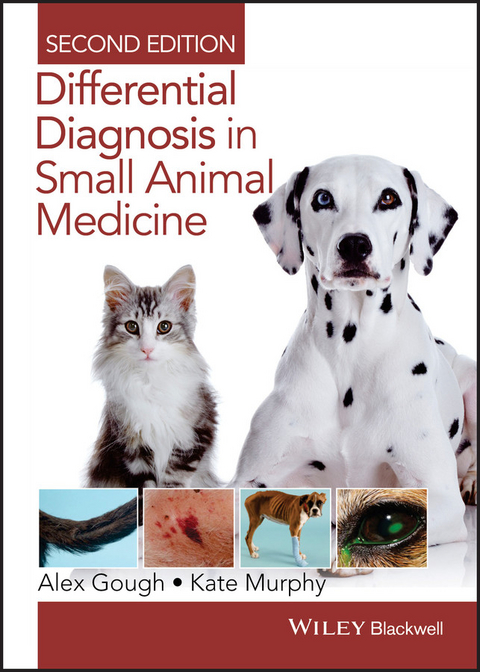
Differential Diagnosis in Small Animal Medicine (eBook)
John Wiley & Sons (Verlag)
978-1-118-40971-8 (ISBN)
A vital pocket-sized reference tool for busy practitioners and students, saving hours of searching through multiple sources. Differential Diagnosis in Small Animal Medicine, Second Edition brings together comprehensive differential diagnosis lists covering a wide range of presenting signs. This new edition has been fully updated with alphabetised lists for improved navigation. The lists cover the majority of presentations that are encountered in practice, including both common and uncommon conditions.
- Details differential diagnoses from diverse findings such as history, physical examination, diagnostic imaging, laboratory test results and electrodiagnostic testing
- Provides guidance on how common conditions are, and how commonly they are the cause of the presenting sign
- Useful throughout the working day for vets in small animal practice, the information will save hours searching alternative multiple references
- New co-author Kate Murphy brings her expertise as an ECVIM diplomate
- For ultimate ease of use this book is also available as an app for iOS and Android devices. To purchase the app visit www.skyscape.com/wiley/DDxSAMed2
About the authors
Alex Gough, MA, VetMB, CertSAM, CertVC, PGCert (Neuroimaging), MRCVS Alex is the director of a referral and first opinion practice in Bath, UK, where he sees referrals in small animal medicine, cardiology and neurology. He is a holder of the Royal College of Veterinary Surgeons Certificate of Small Animal Medicine and Veterinary Cardiology and a Postgraduate Certificate in Neuroimaging for Research. He is the author of Breed Predispositions to Disease in Dogs and Cats (with Alison Thomas, Wiley-Blackwell, 2010) and is a frequent contributor to the Veterinary Times.
Kate Murphy, BVSc (Hons), DSAM, DipECVIM-CA, MRCVS, PGCert(HE) Kate is the clinical lead in a referral practice in Bristol, UK, where she sees a wide spectrum of medicine cases. Before working in referral practice, Kate was a small animal medicine clinician at the University of Bristol from 2002 to early 2011 where she ran the intensive care and emergency medicine service and also the medicine referral team. She is a diplomate of the European College of Veterinary Internal Medicine. Kate is co-author of Notes on Canine Internal Medicine (with Edward Hall and Peter Darke, Wiley-Blackwell, 2004), has contributed chapters to BSAVA manuals and also has a number of peer-reviewed publications.
A vital pocket-sized reference tool for busy practitioners and students, saving hours of searching through multiple sources. Differential Diagnosis in Small Animal Medicine, Second Edition brings together comprehensive differential diagnosis lists covering a wide range of presenting signs. This new edition has been fully updated with alphabetised lists for improved navigation. The lists cover the majority of presentations that are encountered in practice, including both common and uncommon conditions. Details differential diagnoses from diverse findings such as history, physical examination, diagnostic imaging, laboratory test results and electrodiagnostic testing Provides guidance on how common conditions are, and how commonly they are the cause of the presenting sign Useful throughout the working day for vets in small animal practice, the information will save hours searching alternative multiple references New co-author Kate Murphy brings her expertise as an ECVIM diplomate For ultimate ease of use this book is also available as an app for iOS and Android devices.To purchase the app visit www.skyscape.com/wiley/DDxSAMed2
About the authors Alex Gough, MA, VetMB, CertSAM, CertVC, PGCert (Neuroimaging), MRCVS Alex is the director of a referral and first opinion practice in Bath, UK, where he sees referrals in small animal medicine, cardiology and neurology. He is a holder of the Royal College of Veterinary Surgeons Certificate of Small Animal Medicine and Veterinary Cardiology and a Postgraduate Certificate in Neuroimaging for Research. He is the author of Breed Predispositions to Disease in Dogs and Cats (with Alison Thomas, Wiley-Blackwell, 2010) and is a frequent contributor to the Veterinary Times. Kate Murphy, BVSc (Hons), DSAM, DipECVIM-CA, MRCVS, PGCert(HE) Kate is the clinical lead in a referral practice in Bristol, UK, where she sees a wide spectrum of medicine cases. Before working in referral practice, Kate was a small animal medicine clinician at the University of Bristol from 2002 to early 2011 where she ran the intensive care and emergency medicine service and also the medicine referral team. She is a diplomate of the European College of Veterinary Internal Medicine. Kate is co-author of Notes on Canine Internal Medicine (with Edward Hall and Peter Darke, Wiley-Blackwell, 2004), has contributed chapters to BSAVA manuals and also has a number of peer-reviewed publications.
"Differential Diagnosis in Small Animal Medicine is not a book, it is a tool - and very useful one." (European Journal of Companion Animal Practice, 1 October 2015)
"It will be handy for your clinical rota but I'm certain you will keep it when in practice." (Vet Nurses Today, 1 October 2015)
"The second edition of Differential Diagnosis in Small Animal Medicineis an excellent resource for third- and fourth-year veterinary students on clinical rotations and new graduates who are in need of a compact, pocket-friendly reference with a problem-oriented approach to clinical cases." (Journal of the American Veterinary Medical Association, 15 June 2015)
"I would say this book allows for peace of mind that every possible avenue has been explored. When dealing with a returning patient, which requires more in-depth examination, the book may well come into its own. The list-like structure makes referencing simple and clear, and explains the varying diagnosis resulting from a huge range of clinical signs and biological data." (Veterinary Record, 2016)
PART 1
HISTORICAL SIGNS
1.1 General, systemic and metabolic historical signs
1.1.1 Polyuria/polydipsia
Diet
- Increased salt intake
- Very-low-protein diet
Drugs/toxins
- Aminophylline
- Corticosteroids
- Delmadinone acetate
- Diuretics
- Ethylene glycol
- Indomethacin
- Lilies
- Lithium
- Melamine
- NPK fertilisers
- Paraquat
- Phenobarbitone
- Potassium bromide
- Primidone
- Proligestone
- Raisins/grapes
- Terfenadine
- Theophylline
- Vitamin D rodenticides
Electrolyte disorders
- Hypercalcaemia q.v.
- Hypernatraemia q.v.
- Primary
- Secondary to dehydration, lack of intake, excessive loss of water, severe vomiting/diarrhoea, etc.
- Hypokalaemia q.v.
Endocrine disease
- Acromegaly
- Diabetes mellitus*
- Diabetes insipidus
- Central
- Nephrogenic
- Hyperadrenocorticism
- Hyperthyroidism* (C)
- Hypoadrenocorticism (D)
- Insulinoma
- Pheochromocytoma
- Primary hyperaldosteronism
- Primary hyperparathyroidism
Hepatobiliary disease, e.g.
- Hepatic neoplasia* q.v.
- Hepatitis/cholangiohepatitis* q.v.
Infectious disease, e.g.
- Toxaemia, e.g.
- Pyometra*
Miscellaneous
- Congenital lack of ADH receptors
- Hypothalamic disease
- Pericardial effusion
- Polycythaemia
- Psychogenic*
Neoplasia*
Physiological
- Exercise
- High environmental temperature
Renal disorders
- Acute kidney injury* q.v.
- Chronic kidney disease* q.v.
- Following urethral obstruction*
- Glomerulonephritis
- Primary renal glycosuria
- Pyelonephritis
- Renal medullary washout
Note: Polyuria and polydipsia are considered together here, since one will lead to the other, with only a few exceptions. These include polydipsia in the face of obstructive lower urinary tract disease or oliguric renal failure and polyuria which is not matched by fluid intake, in which case dehydration will rapidly follow. None of these scenarios are encountered commonly in practice. Polydipsia without polyuria can occur in situations of increased urinary loss of fluid, such as after strenuous exercise.
1.1.2 Weight loss
Decreased nutrient intake
- Anorexia* q.v.
- Diet
- Poor-quality diet
- Underfeeding
- Dysphagia q.v.
- Oral disease, e.g.
- Dental disease
- Masticatory myositis
- Temporomandibular joint disease
- Regurgitation q.v.
Increased nutrient loss
- Burns
- Chronic blood loss
- Epistaxis q.v.
- Haematemesis q.v.
- Haematuria q.v.
- Melaena q.v.
- Diabetes mellitus/diabetic ketoacidosis*
- Effusions q.v.
- Fanconi syndrome (D)
- Intestinal parasites*
- Neoplasia*
- Protein-losing enteropathy*
- Protein-losing nephropathy
Increased nutrient use
Endocrine, e.g.
- Hyperthyroidism* (C)
Neoplasia*
Physiological
- Cold environment
- Exercise
- Fever q.v.
- Lactation*
- Pregnancy*
Maldigestion/malabsorption
- Cardiac failure
- Exocrine pancreatic insufficiency
- Hepatic failure/bile salt deficiency q.v.
- Hypoadrenocorticism (D)
- Neoplasia*
- Renal disease* q.v.
- Small intestinal disease* q.v., e.g.
- Antibiotic-responsive diarrhoea
- Inflammatory bowel disease
- Lymphangiectasia
Regurgitation and vomiting* q.v.
1.1.3 Weight gain
- Decreased energy utilisation, e.g.
- Decreased exercise
Fluid accumulation
- Ascites* q.v.
- Peripheral oedema q.v.
- Pleural effusion
Increased body fat
Overeating
- Boredom
- Excessive appetite (normal in some breeds)
- High-calorie diets
- Overfeeding*
Endocrinopathies
- Acromegaly
- Hyperadrenocorticism
- Hypogonadism
- Hypothyroidism* (D)
- Insulinoma
Increased organ size
- Hepatomegaly* q.v.
- Renomegaly q.v.
- Splenomegaly* q.v.
- Uterine enlargement q.v.
- Pregnancy*
- Pyometra*
Neoplasia
- Large abdominal mass (often associated with poor body condition)*
- Drugs, e.g.
- Corticosteroids
1.1.4 Polyphagia
Behavioural/psychological
- Boredom
- Normal in some breeds*
- Psychogenic, e.g. problem with satiety centre
Diet
- Highly palatable food*
- Poor-quality food
Drugs, e.g.
- Benzodiazepines
- Corticosteroids
- Mirtazapine
- Progestagens
Endocrine
- Acromegaly
- Diabetes mellitus*
- Hyperadrenocorticism
- Hyperthyroidism *(C)
- Insulinoma
Increased nutrient loss, e.g.
- Exocrine pancreatic insufficiency
- Malabsorption
- Small intestinal disease
Increased nutrient use, e.g.
- Neoplasia
Malassimilation q.v.
Physiological
- Cold environment
- Increased exercise
- Lactation
- Pregnancy
1.1.5 Anorexia/inappetence
Anorexia, primary
- Intracranial disease, e.g.
- Hypothalamic neoplasia
Anorexia, secondary
- Anosmia
- Chronic rhinitis q.v.
- Nasal neoplasia
- Other nasal disease
- Neurological disease
- Endocrine disease, e.g.
- Diabetic ketoacidosis
- Hypoadrenocorticism (D)
- Fever* q.v.
- Gastrointestinal disease q.v., e.g.
- Gastritis
- Inflammatory bowel disease*
- Heart disease, e.g.
- Cardiac failure*
- Hepatic disease* q.v.
- Infection*
- Metabolic abnormalities, e.g.
- Hypercalcaemia q.v.
- Hypokalaemia q.v.
- Pain*
- Pancreatic disease*, e.g.
- Pancreatitis
- Renal disease* q.v.
- Respiratory disease, e.g.
- Airway disease* q.v.
- Diaphragmatic hernia
- Pleural effusion* q.v.
- Pneumonia q.v.
Diet
- Recent dietary changes*
- Unpalatable diet*
Difficulty with mastication
- Dental disease*
- Lingual disease
- Oral neoplasia*
- Oral ulceration, e.g.
- Ingestion of caustic or acidic substances*
- Renal disease
Difficulty with prehension
- Blindness q.v.
- Myopathy, e.g.
- Masticatory myositis
- Tetanus
- Pain on opening jaw, e.g.
- Mandibular or maxillary fracture
- Retrobulbar abscess
- Skull fractures
- Soft tissue trauma
- Temporomandibular joint disease
- Trigeminal nerve disease, e.g.
- Neoplasia
- Trigeminal neuritis
Difficulty with swallowing
Pharyngeal disease
- Foreign body*
- Neoplasia
- Neurological disease
- Ulceration
Oesophageal disease, e.g.
- Foreign body*
- Megaoesophagus
- Neoplasia
- Stricture
- Ulceration
- Vascular ring anomaly
Drugs
- Acetazolamide
- Amiodarone
- Amphotericin B
- Bethanechol
- Bromocriptine
- Butorphanol
- Cardiac glycosides
- Chlorambucil
- Diazoxide
- Doxorubicin
- Fentanyl
- Hydralazine
- Itraconazole
- Ketoconazole
- Melphalan
- Methimazole
- Mitotane
- Nicotinamide
- Oxytetracycline (C)
- Penicillamine
- Theophylline
- Trimethoprim/sulphonamide (C)
Psychological/behavioural* factors
- Altered schedule
- New family members
- New house
- New pets
1.1.6 Failure to grow
With good body condition
- Chondrodystrophy (normal in many breeds)* (D)
- Endocrine disorders
- Congenital hyposomatotropism (pituitary dwarfism)
- Congenital hypothyroidism
With poor body condition
- Dietary intolerance
- Exocrine pancreatic insufficiency*
- Inadequate nutrient intake
- Anorexia q.v.
- Poor-quality diet
- Underfeeding
- Cardiac disorders, e.g.
- Congenital
- Endocarditis
- Endocrine disease
- Diabetes insipidus
- Diabetes mellitus*
- Hypoadrenocorticism (D)
- Gastrointestinal disease, e.g.
- Histoplasmosis
- Obstruction,...
| Erscheint lt. Verlag | 12.1.2015 |
|---|---|
| Sprache | englisch |
| Themenwelt | Medizin / Pharmazie |
| Veterinärmedizin ► Kleintier | |
| Schlagworte | <p>Differential Diagnosis, veterinary medicine, small animals, dogs, cats, canine, feline, DDx</p> • Veterinärmedizin • Veterinärmedizin f. Kleintiere • Veterinärmedizin / Innere Medizin • Veterinärmedizin • Veterinärmedizin f. Kleintiere • Veterinärmedizin / Innere Medizin • Veterinary Internal Medicine • Veterinary Medicine • Veterinary Medicine - Small Animal General |
| ISBN-10 | 1-118-40971-X / 111840971X |
| ISBN-13 | 978-1-118-40971-8 / 9781118409718 |
| Informationen gemäß Produktsicherheitsverordnung (GPSR) | |
| Haben Sie eine Frage zum Produkt? |
 EPUB (Adobe DRM)
Kopierschutz: Adobe-DRM
Adobe-DRM ist ein Kopierschutz, der das eBook vor Mißbrauch schützen soll. Dabei wird das eBook bereits beim Download auf Ihre persönliche Adobe-ID autorisiert. Lesen können Sie das eBook dann nur auf den Geräten, welche ebenfalls auf Ihre Adobe-ID registriert sind.
Details zum Adobe-DRM
Dateiformat: EPUB (Electronic Publication)
EPUB ist ein offener Standard für eBooks und eignet sich besonders zur Darstellung von Belletristik und Sachbüchern. Der Fließtext wird dynamisch an die Display- und Schriftgröße angepasst. Auch für mobile Lesegeräte ist EPUB daher gut geeignet.
Systemvoraussetzungen:
PC/Mac: Mit einem PC oder Mac können Sie dieses eBook lesen. Sie benötigen eine
eReader: Dieses eBook kann mit (fast) allen eBook-Readern gelesen werden. Mit dem amazon-Kindle ist es aber nicht kompatibel.
Smartphone/Tablet: Egal ob Apple oder Android, dieses eBook können Sie lesen. Sie benötigen eine
Geräteliste und zusätzliche Hinweise
Buying eBooks from abroad
For tax law reasons we can sell eBooks just within Germany and Switzerland. Regrettably we cannot fulfill eBook-orders from other countries.
aus dem Bereich