Organizational Psychology (eBook)
Wiley (Verlag)
978-1-118-72445-3 (ISBN)
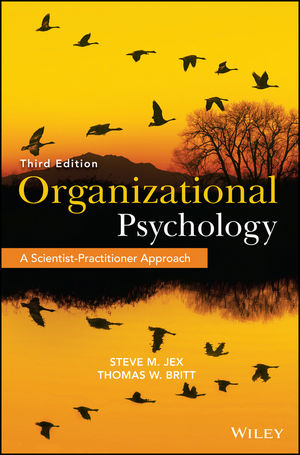
Organizational Psychology: A Scientist-Practitioner Approach, Third Edition provides students with a thorough overview of both the science and practice of organizational psychology. Reflecting changes in the global workplace, the third edition expands coverage of the effects of technology on processes and personnel, the generalizability of theories across cultures, including organizational climate, and employee health and well-being. The new edition retains the hallmark features of the text and
- Expanded coverage of the pervasive effects of technology on the social environment of work, including virtual work and the impact of social media.
- More graphics, including tables and charts, to help students understand and remember various related concepts and theories.
- Includes a unique full chapter on research methods and the use of statistics in understanding organizations.
- New chapter on the work/non-work interface, including consideration of both employees' life stages and changes over their careers.
- Provides Instructors with comprehensive presentation and testing materials.
- More on ethics, in light of relatively recent scandals in corporations and in politics.
- Expanded coverage throughout on cross-cultural issues and diversity in organizations.
- Additional readings facilitate in-depth learning.
Industrial and organizational psychologists contribute to the success of an organization by improving the performance, satisfaction, and well-being of employees. By identifying how behaviors and attitudes can be improved through hiring practices, training programs, and feedback and management systems, I/O psychologists also help organizations transition during periods of change and development. Organizational Psychology: A Scientist-Practitioner Approach, Third Edition is a comprehensive guide to the theory and application of behavioral science in the workplace.
STEVE M. JEX, PHD, is a well-known researcher in workplace stress and consults for many organizations including the United States Army. He teaches and directs graduate students at Bowling Green State University.
THOMAS W. BRITT, PHD, is a social psychologist specializing in work and family. He brings that expertise as well as his teaching experience with undergraduates to this new edition of Organizational Psychology. He teaches and directs graduate students at Clemson University.
The foundation of organizational psychology, updated to reflect the changing workplace Organizational Psychology: A Scientist-Practitioner Approach, Third Edition provides students with a thorough overview of both the science and practice of organizational psychology. Reflecting changes in the global workplace, the third edition expands coverage of the effects of technology on processes and personnel, the generalizability of theories across cultures, including organizational climate, and employee health and well-being. The new edition retains the hallmark features of the text and Expanded coverage of the pervasive effects of technology on the social environment of work, including virtual work and the impact of social media. More graphics, including tables and charts, to help students understand and remember various related concepts and theories. Includes a unique full chapter on research methods and the use of statistics in understanding organizations. New chapter on the work/non-work interface, including consideration of both employees' life stages and changes over their careers. Provides Instructors with comprehensive presentation and testing materials. More on ethics, in light of relatively recent scandals in corporations and in politics. Expanded coverage throughout on cross-cultural issues and diversity in organizations. Additional readings facilitate in-depth learning. Industrial and organizational psychologists contribute to the success of an organization by improving the performance, satisfaction, and well-being of employees. By identifying how behaviors and attitudes can be improved through hiring practices, training programs, and feedback and management systems, I/O psychologists also help organizations transition during periods of change and development. Organizational Psychology: A Scientist-Practitioner Approach, Third Edition is a comprehensive guide to the theory and application of behavioral science in the workplace.
STEVE M. JEX, PHD, is a well-known researcher in workplace stress and consults for many organizations including the United States Army. He teaches and directs graduate students at Bowling Green State University. THOMAS W. BRITT, PHD, is a social psychologist specializing in work and family. He brings that expertise as well as his teaching experience with undergraduates to this new edition of Organizational Psychology. He teaches and directs graduate students at Clemson University.
Preface
Organizations are complex social systems that sometimes perform well and sometimes fail miserably. Organizational psychology is a subfield within the larger domain of industrial/organizational psychology that seeks to facilitate a greater understanding of social processes in organizations. Organizational psychologists also seek to use these insights to enhance the effectiveness of organizations—a goal that is potentially beneficial to all.
This book is designed to provide students with a thorough overview of both the science and practice of organizational psychology. It was originally written to serve as the primary text for a course in organizational psychology (graduate, or upper-level undergraduate), but could also meet the needs of an organizational behavior course as well. Because this book will be used at the graduate level, we've invested considerable effort to provide a solid research base in all of the chapters. At the same time, we have also tried to write the book in a style that students will find enjoyable, accessible, and perhaps, at times, even entertaining.
New to the Third Edition
Given the positive feedback we have received over the past 8 years, we did not feel it was necessary to introduce drastic changes in the third edition of this book. We did, however, want to keep up with important changes in both the field of organizational psychology and important trends in organizations. To that end, we have created a completely new chapter in this edition titled “The Work–Nonwork Interface.” In this chapter we examine how people initially transition into the work role, how they balance work with other aspects of their lives, and ultimately how they transition out of work through retirement. We felt this chapter was necessary for two reasons. First, the boundaries between work and other aspects of people's lives are growing more and more permeable due to technology, and this impacts the way people behave in organizations. Second, we believe that youth employment and retirement are increasingly important topics and wanted to be one of the first textbooks to cover them in depth. We have also made a conscious effort to incorporate cross-cultural findings in each chapter because organizations are growing increasingly global in nature, and therefore it is vital to examine the generalizability of our knowledge base beyond U.S. borders. In Chapters 1 through 5 we provide an introduction to the field of organizational psychology, examination of the most common research methods used to study behavior in organizations, the processes by which employees are socialized into organizations, how people balance work with other aspects of their lives, and finally become productive members of organizations.
Chapters 6 through 8 offer an exploration of counterproductive behaviors that employees exhibit, how employees might come to view the workplace as stressful, but also how work may also evoke positive feelings such as satisfaction and commitment.
Chapters 9 and 10 examine motivation in the workplace; in Chapter 9 we examine motivational theories, and in Chapter 10 we describe how those theories are applied in organizations to influence employees' behavior. Chapters 11 and 12 deal with leadership processes in organizations and team dynamics and effectiveness, respectively. Those who have used previous editions of the book will note that we have eliminated the “general” chapter on group behavior, which drew more from the social psychological literature. This was a tough choice because we did have some positive feedback on that chapter over the years, but we ultimately felt that there were other good sources available on basic group processes. We note, however, that some of the material from that general groups chapter was retained and incorporated into the teams chapter.
Chapters 13 through 15 are focused on “macro” or organization-level processes. These include the design of organizations, organizational culture and climate, and organizational change and development.
In terms of content, the major changes involved updating the substantive material in the chapters. Since the second edition many new developments have occurred in the field of organizational psychology, and a great deal of new research has been conducted. We have worked hard to convey these new developments and summarize important new research findings. We have also continued the feature “People Behind the Research” in the third edition where we feature prominent researchers to describe how they became interested in a particular topic. We introduced this feature in the second edition because we felt it would be interesting to students, and more importantly, put a “human face” on some of the names that are cited in the text. Because we received a great deal of positive feedback about this feature in the second edition we have continued it in the third edition, although most of the individuals featured have changed.
Continued Unique Features of the Book
In this third edition we've been careful to retain the features of previous editions of the book that we felt made it unique. For example, we still have a full chapter on research methodology and statistics. Furthermore, because the first edition came out, there have been even more methodological developments in the field—this further validates the decision to include such a chapter in previous editions.
The third edition also continues to cover many topics that are not traditionally part of organizational psychology such as recruitment, job performance, and compensation. This was and continues to be done largely because of the belief that there is considerable interrelationship between the “I” and the “O” sides of the broader field of industrial/organizational psychology.
A third and final unique feature that has not changed is the use of “Comment” boxes throughout the book. Although the content of many of these boxes has changed, the motivation behind them has stayed the same—to encourage students to think about and discuss the chapter material. We both strongly believe that students learn much more when they are highly engaged in the material, and do not feel that reading is a chore. Some of the comments relate current events, some provide extended commentary on chapter material, and others are simply designed to help the reader get to know the authors a little better.
Acknowledgments
The authors would first like to thank the reviewers who provided feedback on our initial proposal for the third edition of this book. We incorporated many of their suggestions and we appreciate their insights. We also wish to thank the many colleagues and students who have provided feedback on the second edition since it came out in 2008. Many of you have stopped by to chat about the book at conferences, and this feedback has been extremely valuable. Although we cannot guarantee that we've addressed every criticism of the second edition, we've certainly listened and made an effort to do so.
We would also like to thank Tisha Rossi, our editor at Wiley, for her help during the revision process. Tisha provided us with some very valuable editorial feedback, yet also allowed us a considerable amount of discretion on the content of the book. We also greatly appreciate Tisha's flexibility on deadlines. We also thank Tisha's assistant Amanda Orenstein for her help providing us with tables and figures from previous editions of the book.
The authors also thank especially Alison Bayne and Kelsey-Jo Ritter from Bowling Green State University, and Kristen Jennings, Janelle Cheung, and Kandice Goguen from Clemson University for all of their help during the revision process. Alison thoroughly went through every chapter and actually developed some of the new comment boxes in the chapters. She also did a tremendous job organizing the many new citations that were added to this edition, and basically just helping to keep this whole process organized. Kelsey-Jo was the first author on the new work–nonwork chapter, and did a tremendous job developing new material for the instructor and student websites. On the Clemson University front, Kristen Jennings and Janelle Cheung conducted extensive annotated bibliographies for many of the chapters in the book, and Kandice Goguen hunted down most of the new references for many of the chapters. In addition, all three students read over final versions of the chapters. They helped us complete the revision with their usual blend of a positive attitude and conscientiousness, two attributes I hope they know I do not take for granted.
A Note From Tom Britt
I would first like to thank Steve for giving me the opportunity to jump on board and work with him on the second revision to the textbook, and to continue to work on this third revision. I have enjoyed collaborating with Steve on multiple projects, and working together definitely comes easy. I am blessed to have my wonderful wife Renea to spend my life with, and could not have completed the revision without her unconditional love and support. I would also like to thank my twin sons, Noah and Jordan, now 14, for their love and support. They are two incredible blessings in my life. I would also like to thank them for playing so well with each other when dad was on the computer working on the revision.
A Note From Steve Jex
I would first like to thank Tom for initially agreeing to join me on the second edition and continuing into the third edition. Tom is a very...
| Erscheint lt. Verlag | 12.12.2014 |
|---|---|
| Sprache | englisch |
| Themenwelt | Geisteswissenschaften ► Psychologie ► Arbeits- und Organisationspsychologie |
| Medizin / Pharmazie ► Medizinische Fachgebiete ► Psychiatrie / Psychotherapie | |
| Schlagworte | applied industrial psychology • Arbeitspsychologie • Human Capital • Human Resources • Industrial Psychology • industrial psychology diversity • introduction to organizational psychology • I/O Psychology • Organizational & Industrial Psychology • Organizational Behavior • organizational behavioral science • organizational group dynamics • organizational psychology • Organizational Psychology: A Scientist Practitioner Approach • Organizational Psychology: A Scientist-Practitioner Approach, Third Edition • organizational psychology ethics • organizational psychology models • organizational psychology overview • organizational psychology practice • organizational psychology research • organizational psychology text • psychological theory generalizability • Psychologie • Psychologie i. d. Arbeitswelt • Psychology • psychology graduate text • Steve M. Jex • Stress psychology • Thomas W. Britt • work/home balance psychology • workplace psychology |
| ISBN-10 | 1-118-72445-3 / 1118724453 |
| ISBN-13 | 978-1-118-72445-3 / 9781118724453 |
| Informationen gemäß Produktsicherheitsverordnung (GPSR) | |
| Haben Sie eine Frage zum Produkt? |
 EPUB (Adobe DRM)
Kopierschutz: Adobe-DRM
Adobe-DRM ist ein Kopierschutz, der das eBook vor Mißbrauch schützen soll. Dabei wird das eBook bereits beim Download auf Ihre persönliche Adobe-ID autorisiert. Lesen können Sie das eBook dann nur auf den Geräten, welche ebenfalls auf Ihre Adobe-ID registriert sind.
Details zum Adobe-DRM
Dateiformat: EPUB (Electronic Publication)
EPUB ist ein offener Standard für eBooks und eignet sich besonders zur Darstellung von Belletristik und Sachbüchern. Der Fließtext wird dynamisch an die Display- und Schriftgröße angepasst. Auch für mobile Lesegeräte ist EPUB daher gut geeignet.
Systemvoraussetzungen:
PC/Mac: Mit einem PC oder Mac können Sie dieses eBook lesen. Sie benötigen eine
eReader: Dieses eBook kann mit (fast) allen eBook-Readern gelesen werden. Mit dem amazon-Kindle ist es aber nicht kompatibel.
Smartphone/Tablet: Egal ob Apple oder Android, dieses eBook können Sie lesen. Sie benötigen eine
Geräteliste und zusätzliche Hinweise
Buying eBooks from abroad
For tax law reasons we can sell eBooks just within Germany and Switzerland. Regrettably we cannot fulfill eBook-orders from other countries.
aus dem Bereich