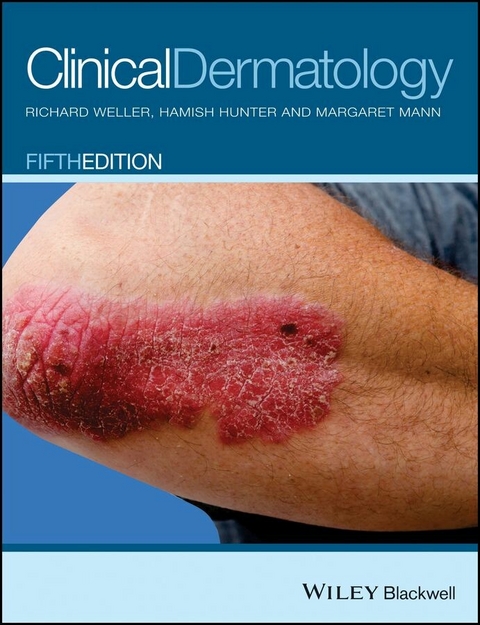
Clinical Dermatology (eBook)
John Wiley & Sons (Verlag)
978-1-118-85102-9 (ISBN)
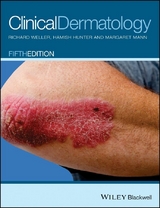
The best-selling text has been completely revised and revitalised in this fifth edition, with the authors once again encouraging general practitioners, medical students, general physicians and early stage dermatology specialist trainees and interns to relish the unique challenge of diagnosing and treating skin conditions.
Clinical Dermatology, 5th edition contains over 400 high quality pictures and diagrams combined with colourful phrases to illustrate and entertain as it teaches. The book has established a reputation as a 'way of learning' and as an accessible guide to the subject for the aspiring specialist. Readers are guided through the maze that too often lies between the presenting skin complaint and its final diagnosis and treatment. The authors have skilfully crafted an easily read text with enough detail to clarify the subject, but not enough to obscure it.
This fifth edition contains new chapters on non-invasive physical treatment and dermoscopy, and new material on cosmetic dermatology, surgical dermatology, the skin and the psyche, and dermatoses of non-Caucasian skin. The text throughout the book has been updated in line with developments in the science and practice of dermatology.
'... brilliantly succeeds in enticing you to look further. The writing is clear, and the joint British-American authorship avoids any parochial views.' From a review of a previous edition in BMJ
'...a very well-presented book...an excellent aid for teaching. I recommend this book highly to individuals and departments.' From a review of a previous edition in J Derm Treatment
'... provides a good overview of the structure and function of the skin as well as a good foundation for learning dermatology...well organized and includes a chapter dedicated to skin signs of systemic disease which is not covered in the other dermatology primers.' From a review of a previous edition in JAMA
Richard Weller, Senior Lecturer, Department of Dermatology, University of Edinburgh, UK.
Hamish Hunter, Clinical Research Fellow, University of Manchester, UK.
Margaret Mann, Assistant Professor, Director of Aesthetic Dermatology, Case Western School of Medicine, OH, USA
The best-selling text has been completely revised and revitalised in this fifth edition, with the authors once again encouraging general practitioners, medical students, general physicians and early stage dermatology specialist trainees and interns to relish the unique challenge of diagnosing and treating skin conditions. Clinical Dermatology, 5th edition contains over 400 high quality pictures and diagrams combined with colourful phrases to illustrate and entertain as it teaches. The book has established a reputation as a way of learning and as an accessible guide to the subject for the aspiring specialist. Readers are guided through the maze that too often lies between the presenting skin complaint and its final diagnosis and treatment. The authors have skilfully crafted an easily read text with enough detail to clarify the subject, but not enough to obscure it. This fifth edition contains new chapters on non-invasive physical treatment and dermoscopy, and new material on cosmetic dermatology, surgical dermatology, the skin and the psyche, and dermatoses of non-Caucasian skin. The text throughout the book has been updated in line with developments in the science and practice of dermatology. ... brilliantly succeeds in enticing you to look further. The writing is clear, and the joint British-American authorship avoids any parochial views. From a review of a previous edition in BMJ ...a very well-presented book...an excellent aid for teaching. I recommend this book highly to individuals and departments. From a review of a previous edition in J Derm Treatment provides a good overview of the structure and function of the skin as well as a good foundation for learning dermatology well organized and includes a chapter dedicated to skin signs of systemic disease which is not covered in the other dermatology primers. From a review of a previous edition in JAMA
Richard Weller, Senior Lecturer, Department of Dermatology, University of Edinburgh, UK. Hamish Hunter, Clinical Research Fellow, University of Manchester, UK. Margaret Mann, Assistant Professor, Director of Aesthetic Dermatology, Case Western School of Medicine, OH, USA
Preface to the Fifth Edition vii
Acknowledgements viii
Introduction ix
1 Skin Disease in Perspective 1
2 The Function and Structure of the Skin 7
3 Diagnosis of Skin Disorders 30
4 Disorders of Keratinization 45
5 Psoriasis 52
6 Other Papulosquamous Disorders 68
7 Eczema and Dermatitis 76
8 Reactive Erythemas and Vasculitis 99
9 Bullous Diseases 113
10 Connective Tissue Disorders 126
11 Disorders of Blood Vessels and Lymphatics 140
12 Sebaceous and Sweat Gland Disorders 156
13 Regional Dermatology 171
14 Racial Skin Differences 197
15 The Skin at Different Ages 208
16 Infections 214
17 Infestations 249
18 Skin Reactions to Light 258
19 Disorders of Pigmentation 267
20 Skin Tumours 278
21 The Skin in Systemic Disease 311
22 Cosmetic Dermatology 323
23 The Skin and the Psyche 334
24 Other Genetic Disorders 342
25 Drug Eruptions 351
26 Medical Treatment 359
27 Physical Forms of Treatment 366
28 Dermoscopy 385
Formulary 1: Topical Treatments 397
Formulary 2: Systemic Medication 410
Index 427A
1
Skin Disease in Perspective
This chapter presents an overview of the causes, prevalence and impact of skin disease.
The many roles of the skin
The skin is the largest organ in the body. It is the boundary between ourselves and the world around us, and its primary role is that of a barrier, preventing the entry of noxious chemicals and infectious organisms, and the exit of water and other chemicals. It is a sort of ‘space suit’, nicely evolved to house all the other organs and chemicals in our body.
Skin has other roles too. It is an important sense organ, and controls heat and water loss. It reflects internal changes (see Chapter 21) and reacts to external ones. It can sweat, grow hair, erect its hairs, change colour, smell, grow nails, secrete sebum, synthesize vitamin D and release nitric oxide. When confronted with insults from outside, it usually adapts easily and returns to a normal state, but sometimes it fails to do so and a skin disorder appears. Some of the internal and external factors that are important causes of skin disease are shown in Figure 1.1. Often several will be operating at the same time. Just as often, however, no obvious cause for a skin abnormality can be found, and here lies much of the difficulty of dermatology. When a cause is obvious, for example when the washing of dishes leads to an irritant hand dermatitis, or when episodes of severe sunburn are followed by the development of a melanoma, education and prevention are just as important as treatment.
Figure 1.1 Internal and external factors causing skin diseases.
The prevalence and cost of skin disorders
Skin diseases are very common. Probably everyone has experienced a skin disorder, such as sunburn, irritation, dry skin, acne, warts or pigment changes. The most common skin disorders in the United Kingdom are given in Table 1.1. People in other countries and in other environments may also develop skin diseases peculiar to their surroundings, or common skin diseases at different rates. For example, people living in tropical areas develop infectious diseases, such as leishmaniasis, not seen in more temperate climates. Different age groups experience different skin conditions. In the United States, for example, diseases of the sebaceous glands (mainly acne) peak at the age of about 18 years and then decline, while the prevalence of skin tumours steadily mounts with age (Figure 1.2).
Table 1.1 The most common categories of skin disorder in the United Kingdom.
| Skin cancer Acne Atopic eczema Psoriasis Viral warts Other infective skin disorders Benign tumours and vascular lesions Leg ulcers Contact dermatitis and other eczemas |
Figure 1.2 The age-dependent prevalence of some skin conditions.
The idea that ‘common things occur commonly’ is well known to surgeons as an aid to diagnosis. It is equally true of dermatology – an immense subject embracing more than 2000 conditions. In the United Kingdom some 70% of a dermatologist's work is caused by only nine types of skin disorder (Table 1.1). Latest figures suggest that approximately one-quarter of the population of England and Wales, some 13 million people, will have a skin condition for which they will seek medical advice over a 12-month period. In the United States approximately one-third of the population has a skin disorder at any given time.
The most recent estimate of the annual cost of skin disease in the United States was $39.3 billion dollars ($29.1 billion dollars in direct medical costs and $10.2 billion in lost productivity costs). Table 1.2 shows a breakdown of the top five most costly skin conditions seen in the United States.
Table 1.2 Most costly skin conditions in the United States (2004).
| Condition | Direct medical cost ($billions) |
| Skin ulcers/wounds | 9.7 |
| Acne | 2.5 |
| Herpes simplex/zoster | 1.7 |
| Cutaneous fungal infection | 1.7 |
| Contact dermatitis | 1.6 |
Adapted from Bickers et al. (2006). Reproduced with permission of Elsevier.
In the United Kingdom, skin disorders are the most common reason for a patient to consult their general practitioner with a new problem; on average each general practitioner conducts over 600 consultations per year related to skin disorders. These figures are likely to be an under-estimation of the problem given the complexities of the classification of skin conditions. However, this is only the tip of an iceberg of skin disease, the sunken part of which consists of problems that never get to doctors, being dealt with or ignored in the community.
How large is this problem? No one quite knows, as those who are not keen to see their doctors seldom star in the medical literature. People tend to be shy about skin diseases, and many of them settle spontaneously, often before patients seek help. The Proprietary Association of Great Britain (PAGB) conducted a survey in 2005 in which 1500 members of the general public were asked questions about their everyday health in the preceding 12 months. Of these, 818 (54%) respondents had experienced a skin condition, of which 69% ‘self cared’ for their condition and only 14% sought professional advice, usually from their general practitioner or practice nurse. Figure 1.3 summarizes what happens to those with skin problems in the United Kingdom.
Figure 1.3 Skin problems in the United Kingdom and how they are dealt with in 1 year. Patients in the United States usually refer themselves to dermatologists. (Adapted from Schofield et al. (2009) Skin conditions in the UK: a healthcare needs assessment. Metro Commercial Printing Ltd, Watford.)
Psoriasis is a common chronic inflammatory condition of the skin which affects aproximately 1.5% of the population. Figure 1.4 demonstrates how the ‘iceberg’ analogy can be applied to UK psoriasis patients. In the course of a single year most of those with psoriasis see no doctor, and only a few will see a dermatologist. Some may have fallen victim to fraudulent practices, such as ‘herbal’ preparations laced with steroids, and baseless advice on ‘allergies’.
Figure 1.4 The ‘iceberg’ of psoriasis in the United Kingdom during a single year.
Several population-based studies have confirmed that this is the case with other skin diseases too. In another UK study, 14% of adults and 19% of children had used a skin medication during the previous 2 weeks; only one-tenth of these were prescribed by doctors. In a study of several tons of unused medicinal preparations, 7% by weight had been manufactured for topical use on the skin.
In 2007, £413.9 million was spent in the United Kingdom on over-the-counter (non-prescribed) treatments for skin disorders, 18% of all over-the-counter sales. Preparations used to treat skin disease can be found in about half of all homes in the United Kingdom; the ratio of non-prescribed to prescribed remedies is about 6 : 1. Skin treatments come second only to painkillers in the list of non-prescription medicines.
No one who has worked in any branch of medicine can doubt the importance of diseases of the skin. A neurologist, for example, will know all about the Sturge–Weber syndrome (p. 302), a gastroenterologist about the Peutz–Jeghers syndrome (p. 275) and a cardiologist about the LEOPARD syndrome (p. 275); yet paradoxically, even in their own wards, they will see far more of other, more common skin conditions, such as drug eruptions, asteatotic eczema and scabies. They should know about these too. In primary care, skin problems are even more important, and the prevalence of some common skin conditions, such as skin cancer and atopic eczema, is undoubtedly rising.
The pattern of skin disease in a community depends on many other factors, both genetic and environmental; some are listed in Table 1.3. In developing countries, for example, overcrowding and poor sanitation play a major part. Skin disorders there are common, particularly in the young, and are dominated by infections and infestations – the so-called ‘dermatoses of poverty’ – amplified by the presence of HIV infection.
Table 1.3 Factors influencing the prevalence of skin diseases in a community.
| High level of | High incidence of |
| Ultraviolet radiation | Skin malignancy in Caucasoids |
| Heat and humidity | Fungal and bacterial infections |
| Industrialization | Contact dermatitis |
| Underdevelopment | Infestations |
| Bacterial and fungal infections |
The impact of skin disorders
Much of this book is taken up with ways in which skin diseases can do harm. Most fit into the...
| Erscheint lt. Verlag | 19.11.2014 |
|---|---|
| Sprache | englisch |
| Themenwelt | Medizin / Pharmazie ► Medizinische Fachgebiete ► Dermatologie |
| Schlagworte | Book • Clinical • Clinical Dermatology • concise • Dermatologie • Dermatology • Disease • Edition • Editions • Fifth • First • Function • Guide • immediately • Introduction • ix skin • Mark • Medical • Medical Science • Medizin • Popular • Practice • students • Team • VII • wrote |
| ISBN-10 | 1-118-85102-1 / 1118851021 |
| ISBN-13 | 978-1-118-85102-9 / 9781118851029 |
| Informationen gemäß Produktsicherheitsverordnung (GPSR) | |
| Haben Sie eine Frage zum Produkt? |
 EPUB (Adobe DRM)
Kopierschutz: Adobe-DRM
Adobe-DRM ist ein Kopierschutz, der das eBook vor Mißbrauch schützen soll. Dabei wird das eBook bereits beim Download auf Ihre persönliche Adobe-ID autorisiert. Lesen können Sie das eBook dann nur auf den Geräten, welche ebenfalls auf Ihre Adobe-ID registriert sind.
Details zum Adobe-DRM
Dateiformat: EPUB (Electronic Publication)
EPUB ist ein offener Standard für eBooks und eignet sich besonders zur Darstellung von Belletristik und Sachbüchern. Der Fließtext wird dynamisch an die Display- und Schriftgröße angepasst. Auch für mobile Lesegeräte ist EPUB daher gut geeignet.
Systemvoraussetzungen:
PC/Mac: Mit einem PC oder Mac können Sie dieses eBook lesen. Sie benötigen eine
eReader: Dieses eBook kann mit (fast) allen eBook-Readern gelesen werden. Mit dem amazon-Kindle ist es aber nicht kompatibel.
Smartphone/Tablet: Egal ob Apple oder Android, dieses eBook können Sie lesen. Sie benötigen eine
Geräteliste und zusätzliche Hinweise
Buying eBooks from abroad
For tax law reasons we can sell eBooks just within Germany and Switzerland. Regrettably we cannot fulfill eBook-orders from other countries.
aus dem Bereich