Zum Hauptinhalt springen
Nicht aus der Schweiz? Besuchen Sie lehmanns.de

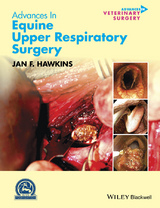
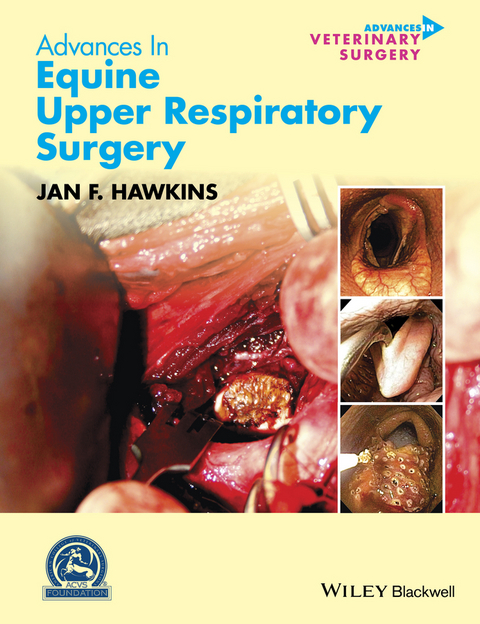
Advances in Equine Upper Respiratory Surgery (eBook)

Jan F. Hawkins (Herausgeber)

eBook Download: EPUB
2014 | 1. Auflage
296 Seiten
Wiley-Blackwell (Verlag)
9781118814673 (ISBN)

Lese- und Medienproben

Advances in Equine Upper Respiratory Surgery -
Systemvoraussetzungen
142,99 inkl. MwSt
(CHF 139,70)
Der eBook-Verkauf erfolgt durch die Lehmanns Media GmbH (Berlin) zum Preis in Euro inkl. MwSt.
  • Download sofort lieferbar
  • Zahlungsarten anzeigen

Advances in Equine Upper Respiratory Surgery is a comprehensive, up-to-date reference on surgical techniques in the upper respiratory tract in the horse, presenting theory and background as well as detailed procedures information. Part of the Advances in Veterinary Surgery series copublished with the ACVS Foundation, the book covers the most common upper respiratory diseases, with in-depth information on laryngeal hemiplegia and dorsal displacement of the soft palate.  Providing a complete resource, the book reflects the current state of the art, offering a significant update on disorders of the nasal septum, nasal passage, paranasal sinuses, hard and soft palate, epiglottis, arytenoids, guttural pouch, and trachea in the horse.

The book includes 200 images illustrating key points of each surgical procedure. Potential complications and expectation management are discussed alongside the technique information. Advances in Equine Upper Respiratory Surgery is a useful reference for those in clinical practice and surgical residents.


Jan F. Hawkins, DVM, DACVS, is an Associate Professor of Large Animal Surgery in the Department of Veterinary Clinical Sciences at Purdue University, West Lafayette, IN.

Jan F. Hawkins, DVM, DACVS, is an Associate Professor of Large Animal Surgery in the Department of Veterinary Clinical Sciences at Purdue University, West Lafayette, IN.

"Overall, this book is a useful reference that is thorough, accurate, and a quick read for any situation. I recommend it to veterinarians at all levels who have an interest in upper airway disorders of horses. Personally, I am pleased to own this book." (Journal of the American Veterinary Medical Association, 15 December 2015)

1
Recurrent Laryngeal Neuropathy: Grading of Recurrent Laryngeal Neuropathy


Katie J. Smith and Padraic M. Dixon

Introduction


Equine recurrent laryngeal neuropathy (RLN) has long been recognized in larger breeds of horses as a cause of laryngeal airway obstruction with production of abnormal respiratory noise during work and with variable levels of reduced athletic performance (Christley et al. 1997; Dixon et al. 2001; Marks et al. 1970; Morris and Seeherman 1990). The characterization and subjective evaluation of the degree of RLN present in affected horses has been the subject of much debate. Methods employed in the assessment of laryngeal function include listening to the horse's respiratory noise during exercise, palpation of the muscular process of the arytenoid cartilage to assess laryngeal muscle atrophy, and digital, endoscopic and electromyographic assessment of the laryngeal adductor reflex, laryngeal ultrasonography, and endoscopy, the latter of which has been the most commonly used technique for the past three decades.

Experienced clinicians can detect specific abnormal noise caused by RLN and subjectively assess the grade of RLN by noting the stage of exercise when the noise begins and by assessing the loudness and nature of any noise produced. In general, horses with milder degrees of RLN make more musical inspiratory “whistling” noises while more severely affected horses make harsher inspiratory and later biphasic noises, and do so after minimal work. However, there is no objective data on these correlations. Furthermore, fitter horses will make less noise than an unfit horse with a similar degree of RLN and some horses with endoscopically demonstrable low-grade RLN do not make any audible noise during exercise. Spectrum analysis of respiratory sounds recorded in exercising horses with a normal laryngeal endoscopic appearance and in horses with induced laryngeal hemiplegia has revealed unique patterns for RLN, characterized by specific frequency bands of inspiratory sounds (Cable et al. 2002; Derksen et al. 2001). However, the sensitivity and specificity of sound spectrograms (83% and 75%, respectively) indicate insufficient reliability to be used alone in dynamic investigation of upper airway abnormalities.

Palpation of the muscular process of the arytenoid can be used to detect cricoarytenoideus dorsalis muscle atrophy. The muscular process of the arytenoid on the affected side is discernibly more prominent than the unaffected contralateral cartilage in cases with notable muscle atrophy. This test may be of use in horses with severe RLN that have gross muscle wasting, but is less reliable in the earlier stages of disease as lower grades of atrophy are commonly palpable in many large, clinically normal horses that have subclinical RLN. Laryngeal palpation is also less accurate in heavily muscled horses such as draft horses and ponies.

The laryngeal adductor reflex (“thoracolaryngeal or slap test”) has been used to assess laryngeal adductor function. The absence of a rapid arytenoid adduction movement following slapping the contralateral saddle area assessed endoscopically or via palpation of the larynx can be attributable in some cases to disruption of the adductory component of the recurrent laryngeal nerve. However, this test has fallen out of favor due to its lack of reliability (Newton-Clarke et al. 1994). An electromyographic technique to evaluate the duration of this reflex (comparing the left and right sides of the larynx) also held great promise (Cook and Thalhammer 1991), until it was shown that normal horses have a slower reflex on the left side, likely due the longer left recurrent laryngeal nerve (Hawe et al. 2001).

Ultrasonography has been used in laryngeal investigations (see Chapter 3) by assessing laryngeal adductor muscle atrophy and laryngeal dysplasia (Garrett et al. 2011). Although laryngeal adductor atrophy occurs ahead of abductor atrophy and this assessment has potential, there is little objective data on its value in grading the severity of RLN.

Resting endoscopic grading


Resting endoscopic assessment is currently the most common technique used to evaluate laryngeal function and indeed forms the mainstay of all upper airway assessments. Endoscopy to assess laryngeal function must be performed in unsedated horses (with the use of a twitch for restraint if necessary). There is a widespread consensus to use the right nasal passage when endoscopically assessing the larynx due to a purported reduction in artifactual changes in left cartilage movement and positioning, although this has not been substantiated scientifically. The endoscope is inserted via the right ventral meatus and positioned midline in the nasopharynx. Arytenoid symmetry and synchrony are observed during quiet breathing, following swallowing (induced by trans-endoscopic laryngeal flushing) and during transient nostril occlusion to induce maximal abduction.

Despite the common use of resting laryngeal endoscopy, limited agreement between authors resulted in the development of multiple different grading systems, including the widely used four-grade system of Hackett and Ducharme (Hackett et al. 1991), the five-grade system of Lane (Lane et al. 2006), and the six-grade system of Dixon et al. (Dixon et al. 2001). In 2003, an international panel of specialists reviewed the existing laryngeal grading systems and developed a consensus system of resting laryngeal grading known as the Havemeyer grading system comprising four main grades (Robinson 2004). The Havemeyer grading system essentially uses the four-grade system of Hackett and Ducharme (Hackett et al. 1991) but with grades 2 and 3 divided into subgrades (Table 1.1) (Robinson 2004). The three subgrades of grade 3 in the Havemeyer system are equivalent to grades 2, 3, and 4 of the system of Dixon et al. (Dixon et al. 2001).

Table 1.1 Havemeyer grading system of laryngeal function in the standing unsedated horsea

Grade character Description Sub-grade
1 All arytenoid cartilage movements are synchronous and symmetrical and full arytenoid cartilage abduction can be achieved and maintained.
2 Arytenoid cartilage movements are asynchronous and/or larynx is asymmetric at times but full arytenoid cartilage abduction can be achieved and maintained. 2.1 Transient asynchrony, flutter, or delayed movements are seen.
2.2 There is asymmetry of the rima glottidis much of the time due to reduced mobility of the affected arytenoid and vocal fold but there are occasions, typically after swallowing or nasal occlusion when full symmetrical abduction is achieved and maintained.
3 Arytenoid cartilage movements are asynchronous and/or asymmetric. Full arytenoid cartilage abduction cannot be achieved and maintained. 3.1 There is asymmetry of the rima glottidis much of the time due to reduced mobility of the arytenoid and vocal fold but there are occasions, typically after swallowing or nasal occlusion, when full symmetrical abduction is achieved but not maintained.
3.2 Obvious arytenoid abductor deficit and arytenoid asymmetry. Full abduction is never achieved.
3.3 Marked but not total arytenoid abductor deficit and asymmetry with little arytenoid movement. Full abduction is never achieved
4 Complete immobility of the arytenoid cartilage and vocal fold.

aDescription generally refers to the left arytenoid cartilage in reference to the right. However, this grading system can apply to the right side.

An important disadvantage of all resting endoscopic grading systems is the use of a static system to characterize a dynamic process where an infinite range of movements is possible. Specifically, there has been controversy regarding the clinical significance of various forms of asynchrony and/or asymmetry, predominantly of the Havemeyer laryngeal function grades 2 and 3.1. However, a general consensus is that the inability to achieve full abduction of the affected arytenoid cartilage during resting examination is likely to be associated with compromised respiratory function during exercise. In addition, experienced clinicians anecdotally concur that laryngeal asymmetry at end exhalation and asynchronous arytenoid movement during inhalation are not causes for concern if horses can attain and maintain full bilateral arytenoid abduction after swallowing or nasal occlusion.

Incomplete laryngeal abduction at rest was once viewed as equivocal in terms of its ability to accurately predict dynamic laryngeal function (Hackett et al. 1991; Hammer et al. 1998; Lane et al. 2006). This is attributable to the fact that in the four-grade system of Hackett and Ducharme (Hackett et al. 1991) (where grade 3 was not subdivided), did not sufficiently differentiate between horses not able to attain and maintain full arytenoid abduction. Thus, horses with slight asymmetry but able to achieve full arytenoid abduction were in the same category as those with marked asymmetry and incapable of attaining even moderate arytenoid abduction. Therefore, the addition of subgrades to grade 3 was advantageous in differentiating horses with varying degrees of asymmetry in order to accurately predict dynamic laryngeal function. Importantly, research correlating...

Erscheint lt. Verlag 11.11.2014
Reihe/Serie AVS - Advances in Vetinary Surgery
AVS - Advances in Vetinary Surgery
Sprache englisch
Themenwelt Medizin / Pharmazie
Veterinärmedizin Klinische Fächer Chirurgie
Veterinärmedizin Pferd
Schlagworte Pferdemedizin • Veterinärchirurgie • Veterinärmedizin • Veterinärmedizin / Chirurgie, Orthopädie, Trauma • Veterinärmedizin f. Pferde • Veterinärchirurgie • Veterinärmedizin • Veterinärmedizin / Chirurgie, Orthopädie, Trauma • Veterinärmedizin f. Pferde • Veterinary Medicine • Veterinary Medicine - Equine • Veterinary Surgery, Orthopedics & Trauma
ISBN-13 9781118814673 / 9781118814673
Informationen gemäß Produktsicherheitsverordnung (GPSR)
Haben Sie eine Frage zum Produkt?
EPUBEPUB (Adobe DRM)

Kopierschutz: Adobe-DRM
Adobe-DRM ist ein Kopierschutz, der das eBook vor Mißbrauch schützen soll. Dabei wird das eBook bereits beim Download auf Ihre persönliche Adobe-ID autorisiert. Lesen können Sie das eBook dann nur auf den Geräten, welche ebenfalls auf Ihre Adobe-ID registriert sind.
Details zum Adobe-DRM

Dateiformat: EPUB (Electronic Publication)
EPUB ist ein offener Standard für eBooks und eignet sich besonders zur Darstellung von Belle­tristik und Sach­büchern. Der Fließ­text wird dynamisch an die Display- und Schrift­größe ange­passt. Auch für mobile Lese­geräte ist EPUB daher gut geeignet.

Systemvoraussetzungen:
PC/Mac: Mit einem PC oder Mac können Sie dieses eBook lesen. Sie benötigen eine Adobe-ID und die Software Adobe Digital Editions (kostenlos). Von der Benutzung der OverDrive Media Console raten wir Ihnen ab. Erfahrungsgemäß treten hier gehäuft Probleme mit dem Adobe DRM auf.
eReader: Dieses eBook kann mit (fast) allen eBook-Readern gelesen werden. Mit dem amazon-Kindle ist es aber nicht kompatibel.
Smartphone/Tablet: Egal ob Apple oder Android, dieses eBook können Sie lesen. Sie benötigen eine Adobe-ID sowie eine kostenlose App.
Geräteliste und zusätzliche Hinweise

Buying eBooks from abroad
For tax law reasons we can sell eBooks just within Germany and Switzerland. Regrettably we cannot fulfill eBook-orders from other countries.

Mehr entdecken
aus dem Bereich
Weichteiloperationen bei Kaninchen und Meerschweinchen. …

von Dr. Milena Thöle; Dr. Yvonne Eckert

eBook Download (2020)
Schlütersche Verlagsgesellschaft mbH & Co. KG
CHF 64,45