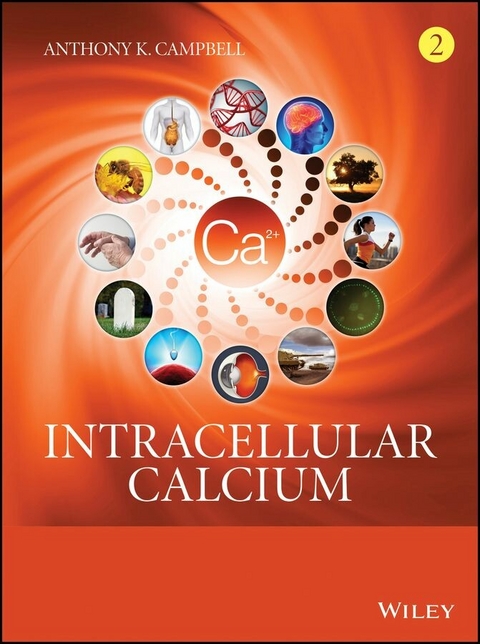
Intracellular Calcium (eBook)
John Wiley & Sons (Verlag)
978-1-118-67553-3 (ISBN)
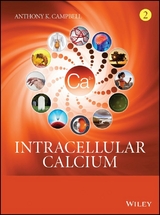
Thousands of imaginative scientists, over more than a century, have revealed the fascinating story of intracellular calcium, through a pathway of ingenious invention and discovery.
Intracellular Calcium, the definitive book on this topic, reveals:
- The pathway of discovery and invention of intracellular calcium over more than 100 years.
- The evidence for intracellular calcium as a universal switch in all animal, plant, fungal and microbial cells
- How the components required for calcium signalling are named and classified.
- The ingenious technology, which has been developed to study intracellular calcium.
- How calcium is regulated inside cells and how it works to trigger an event.
- The role of intracellular calcium in disease, cell injury and cell death.
- How many drugs work through the calcium signalling system.
- How intracellular calcium is involved in the action of many natural toxins.
- How the intracellular calcium signalling system has evolved over 4000 million years, showing why it was crucial to the origin of life.
A key principle presented throughout the book is the molecular variation upon which the intracellular calcium signalling system depends. This variation occurs within the same cell type and between cells with different functions, providing the invisible matrix upon which Darwin and Wallace's Natural Selection depends.
Featuring more than 100 figures, including detailed chemical structures as well as pictures of key pioneers in the field, a bibliography of more than 1500 references, as well as detailed subject and organism indices, this definitive work provides a unique source of scholarship for teachers and researchers in the biomedical sciences and beyond.
Professor Anthony K. Campbell is Professor in Medical Biochemistry, Cardiff University. He obtained an exhibition at Pembroke College, Cambridge, and then a first class degree in Natural Sciences, and a PhD in Biochemistry at Cambridge University. He moved to Cardiff as lecturer in Medical Biochemistry at the then Welsh National School of Medicine in 1970, and the Professor in Medical Biochemistry, followed by Professor in the School of Pharmacy and Pharmaceutical Sciences at Cardiff University. He has studied intracellular calcium as a cell regulator for over 40 years, pioneering the application of Ca¯2+-activated photoproteins to measure free Ca¯2+ in live animal, plant, bacterial and archaeal cells. He is a world authority on bioluminescence, developing the use of genetically engineered bioluminescence to measure chemical processes in live cells. One of his inventions, using chemiluminescence, is now used in several hundred million clinical tests per year worldwide, was awarded the Queen's Anniversary Prize in 1998, and was selected by the Eureka project of Universities UK in 2006 as one of the top hundred inventions and discoveries from UK Universities in the past fifty years. For the past 15 years his research focus has been lactose and food intolerance, which has led to a new hypothesis on the cause of irritable bowel syndrome, and the mystery illness which afflicted Charles Darwin for 50 years, but was never cured. He is now investigating the relevance of this hypothesis to the current diabetic epidemic, Parkinson's and Alzheimer's disease. He has published 9 books, and over 250 internationally peer-reviewed papers on intracellular calcium, bioluminescence, lactose and food intolerance. Several of his patents have been exploited throughout the world.
Preface
I keep six honest serving-men (They taught me all I know); Their names are What and Why and When And How and Where and Who.
– Rudyard Kipling, Just So Stories (1902)
The story of intracellular calcium is a marvellous example of how the curiosity of thousands of scientists has led to an understanding of one of the most important regulatory systems in the whole of life – calcium inside cells. This curiosity has catalysed the ingenuity of scientific inventors, who have given us a wide range of molecular, electrophysiological, microscopical and imaging techniques, which have revolutionised biological and medical research. The curiosity about an apparently humble cation, Ca2+, has also led to major breakthroughs in understanding killer diseases, such as heart attacks and strokes, and the consequent development of drugs to treat them. This, quite surprisingly, has produced multimillion dollar markets, with enormous benefits to the world economy and the creation of high-technology jobs. One such example is the remarkable story of a luminous jellyfish, Aequorea, where the curiosity, begun by Osamu Shimomura, about how it produced a green flash when touched, has given us a key indicator for intracellular free Ca2+ and the green fluorescent protein (GFP). Then we have the brilliance of Roger Tsien and the huge contribution he has made, first by inventing a family of fluorescent indicators for intracellular Ca2+, synthesised chemically, and then the genetically engineered Ca2+ indicators based on GFP. The major contribution of Michael Berridge, in the search for the intracellular messenger inositol trisphosphate (IP3) which releases Ca2+ from internal stores, is another example of how scientific curiosity, judgment and persistence can lead to a major discovery. Yet, interestingly, although Osamu Shimomura and Roger Tsien shared the Nobel Prize for Chemistry in 2008, there has been no Nobel Prize for intracellular Ca2+ as such.
Some years ago I gave a lecture about my work at the Karolinska Institutet in Stockholm, Sweden. At an enjoyable supper afterwards, with his group, a member of the Nobel Committee asked me who I thought should win the Nobel Prize for intracellular Ca2+. I was flattered to learn that he had used the first version of Intracellular Calcium: Its Universal Role as Regulator (Figure 1) to make a presentation to the committee. He was very discrete. I said that Roger Tsien and Michael Berridge were obvious candidates. But my actual answer was the two people whose pictures are in the frontispiece. Lewis Victor Heilbrunn was deceased, but Setsuro Ebashi was still alive at the time. His discovery of the first Ca2+-binding protein, troponin C, and the first intracellular Ca2+ store, the sarcoplasmic reticulum, really triggered the explosion in the study of intracellular calcium in the latter part of the twentieth century. The Nobel Prize system is an inspiration to us all. Important as it is to recognise seminal contributions of individuals, the story of intracellular calcium highlights the problem of the prize system. Too many people have made seminal contributions and have made major discoveries. Thank goodness for that, otherwise we might as well all give up!
Figure 1 (a) Intracellular Calcium: Its Universal Role as Regulator (Campbell, 1983). Front cover reproduced with permission from John Wiley & Sons. (b) Rubicon: The Fifth Dimension of Biology (Campbell, 1994).
Campbell, 1994. Front Cover reproduced with permission from Gerald Duckworth & Co. Ltd.
There have been dozens of multiauthor books on intracellular calcium published since my first book, Intracellular Calcium: Its Universal Role as Regulator, was published by Wiley in 1983. In my first book, the aim was to document as well as I could the evidence that intracellular calcium was indeed a universal regulator in living systems. It led me to realise that Ca2+ is both a digital switch and an analogue regulator, depending on the phenomenon concerned. This is the basis of my Rubicon hypothesis (Figure 1). In the present book, my main aim is to explain how Ca2+ actually works inside cells and, crucially, the evidence for this. In particular, I aim to use what we have learnt about the molecular and cellular biology of intracellular calcium, to show why Nature has selected particular components for specific tasks. Why, for example, has muscle chosen to use calsequestrin in the sarcoplasmic reticulum, as its main Ca2+ sink, whereas non-excitable cells such as the liver use calreticulin? Natural history is about describing what goes on in the Universe. Natural science is about understanding how the Universe works. My aim has been to bring together these two essential approaches to scientific endeavour.
To my knowledge there are no other books on intracellular calcium written by one person. Quite a challenge! Multiauthor books provide detailed information on highly focussed topics written by world experts. A single-author book offers the opportunity to develop themes within and between chapters. It also allows the author to develop individual creativity, whilst still retaining the consensus view. Since I was a boy I have had three intellectual passions: a love of nature, natural history; an insatiable curiosity about how nature and man-made things work, natural science; and music, as a tenor, viola player and conductor. This book sings the music of intracellular calcium. Everywhere you look, smell, taste, hear and feel, intracellular calcium is involved. This book is focussed on molecular mechanisms. But, it also aims to focus on the real problems that nature has given us. What really matters is not what happens to an artificial tissue culture cell system in the laboratory, but rather how cells in nature work. Thus, throughout I have addressed the questions about Ca2+ signalling in the natural physiology and pathology of the cells involved. This gives us a great opportunity to enjoy and marvel at the beauties of nature.
I have tried to emphasise two key scientific principles throughout the book. First, to show how intracellular Ca2+ acts as a switch, to activate a wide range of cellular events, and how an analogue mechanism can be superimposed on this digital signalling process, to alter the timing and strength of the cell event. Secondly, in the tradition of Charles Darwin and Alfred Russel Wallace (note his baptism document in the church of St Mary, up the road in Llanbradoc where he was born, shows he was christened Russell with two 'l's because his father misspelt a friend's name), the molecular biodiversity of the components of the Ca2+ signalling system is highlighted, upon which their BIG idea of evolution by Natural Selection critically depends. These themes are a development of two of my previous books (Figure 1). Rubicon: The Fifth Dimension of Biology provided evidence to support the hypothesis that life, throughout 4000 million years of evolution, has depended critically on the evolution of digital events in cells, organisms and ecosystems.
Most importantly, at a cultural level, the story of intracellular calcium has revealed the beauty of molecular biodiversity throughout the animal, plant and microbial kingdoms. Yet, why is this story so poorly dealt with in schools, and even many university curricula? In fact, I have found major mistakes in school exam revision books, including in one physics book – the emphasis on potassium and not calcium in the regulation of the heart beat! As one of the founders of the renaissance, Albrecht Dürer (1471–1528), wrote ‘Be guided by Nature and do not depart from it thinking you can do better yourself. You will be misguided, for truly art is hidden in Nature and he who can draw it out possesses it’. I believe this philosophy is crucial when we teach students at school and university, and when we try to communicate our work to the general public, or even politicians!
There are 13 chapters. Chapter 1 aims to arouse curiosity about what could be special concerning calcium inside cells. Chapter 2 lays down some key principles and identifies important issues about how we name things – nomenclature. Chapter 3 provides an historical overview, starting with Ringer's famous experiments on frog heart at the end of the nineteenth century. Chapter 4 discusses how we can study intracellular Ca2+ and Chapter 5 summarises how Ca2+ is regulated inside cells, so that it can carry out its unique regulatory role. Chapter 6 describes how Ca2+ works in cell and what is unique about the chemistry of intracellular Ca2+. Chapters 7, 8 and 9 deal with the cellular events in animal, microbial and plant cells, which are triggered by a rise in intracellular Ca2+. Chapters 10 and 11 relate to medical and pathological problems, first cell injury and then drugs which affect the Ca2+ signalling system. Chapter 12 is focussed on the evolution of Ca2+ signalling. There is some speculation here. But, hopefully this not too far fetched and, in any event, able to catalyse new thoughts about this fascinating aspect of intracellular Ca2+. The final chapter summarises what we know and what we do not know about intracellular Ca2+. I also discuss the importance of intracellular calcium in the curricula at school and university, and why it is important for professional scientists to engage with schools and the public. We all need to show how curiosity has led to the major discoveries and inventions which...
| Erscheint lt. Verlag | 16.10.2014 |
|---|---|
| Sprache | englisch |
| Themenwelt | Studium ► 1. Studienabschnitt (Vorklinik) ► Physiologie |
| Naturwissenschaften ► Biologie ► Biochemie | |
| Naturwissenschaften ► Biologie ► Zellbiologie | |
| Naturwissenschaften ► Chemie ► Organische Chemie | |
| Technik | |
| Schlagworte | Bacteria • Biochemie • Biochemie u. Chemische Biologie • biochemistry • Biochemistry (Chemical Biology) • Biology • biomedicine • Biowissenschaften • Cell & Molecular Biology • cell death • Cell Injury • Cell regulator • Chemie • Chemistry • Darwin • endocytosis • genetic manipulation • G-proteins • Imaging • intracellular calcium • Kalzium • Life Sciences • Medical Science • Medizin • Metabolism • Microbiology • microorganisms • Molecular Biology • Pathology • pharmacology • Pharmacology & Pharmaceutical Medicine • Pharmakologie u. Pharmazeutische Medizin • Plasma membrane • Zellbiologie • Zell- u. Molekularbiologie |
| ISBN-10 | 1-118-67553-3 / 1118675533 |
| ISBN-13 | 978-1-118-67553-3 / 9781118675533 |
| Informationen gemäß Produktsicherheitsverordnung (GPSR) | |
| Haben Sie eine Frage zum Produkt? |
 EPUB (Adobe DRM)
Kopierschutz: Adobe-DRM
Adobe-DRM ist ein Kopierschutz, der das eBook vor Mißbrauch schützen soll. Dabei wird das eBook bereits beim Download auf Ihre persönliche Adobe-ID autorisiert. Lesen können Sie das eBook dann nur auf den Geräten, welche ebenfalls auf Ihre Adobe-ID registriert sind.
Details zum Adobe-DRM
Dateiformat: EPUB (Electronic Publication)
EPUB ist ein offener Standard für eBooks und eignet sich besonders zur Darstellung von Belletristik und Sachbüchern. Der Fließtext wird dynamisch an die Display- und Schriftgröße angepasst. Auch für mobile Lesegeräte ist EPUB daher gut geeignet.
Systemvoraussetzungen:
PC/Mac: Mit einem PC oder Mac können Sie dieses eBook lesen. Sie benötigen eine
eReader: Dieses eBook kann mit (fast) allen eBook-Readern gelesen werden. Mit dem amazon-Kindle ist es aber nicht kompatibel.
Smartphone/Tablet: Egal ob Apple oder Android, dieses eBook können Sie lesen. Sie benötigen eine
Geräteliste und zusätzliche Hinweise
Buying eBooks from abroad
For tax law reasons we can sell eBooks just within Germany and Switzerland. Regrettably we cannot fulfill eBook-orders from other countries.
aus dem Bereich