Psoriasis (eBook)
John Wiley & Sons (Verlag)
978-1-118-66181-9 (ISBN)
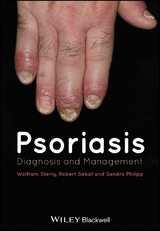
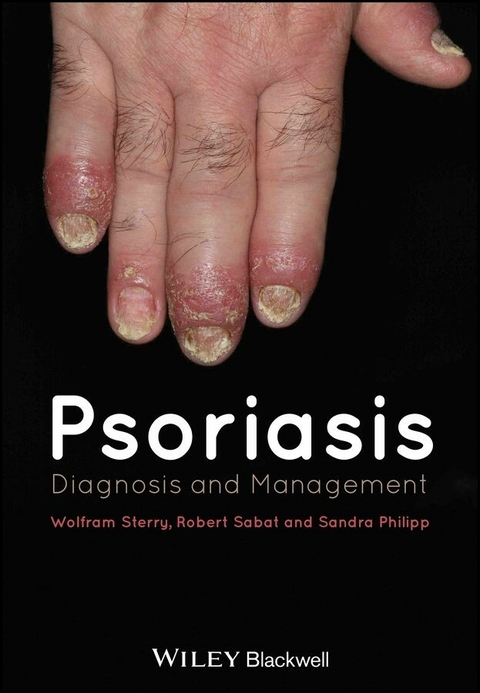
Practical and user-friendly, this is the ideal guide to the diagnosis and treatment of psoriasis, helping you navigate a logical management pathway through a complex maze of possibilities.
Psoriasis is a cruel disease that can seriously affect the sufferer’s quality and length of life. It is also highly idiosyncratic, with features that vary greatly from patient to patient; this being mirrored in the highly variable response to treatment. It is increasingly recognized that psoriasis is not a discrete disease and that many patients suffer two or three comorbid conditions that can complicate the efforts of doctors treating patients.
Psoriasis: Diagnosis and Management will provide dermatologists of all levels with a practical, well-illustrated approach to fully understanding the disease, including clear, clinical guidance to enable best-practice and effective management of patients.
In full color throughout and excellently illustrated, key highlights include:
- easily understandable description of the psoriasis pathogenesis;
- a strong emphasis on the clinical features of psoriasis;
- careful consideration of comorbid conditions as part of the psoriatic spectrum to be managed;
- coverage of both traditional and contemporary management approaches;
- plenty of diagnostic algorithms and management protocols to aid the daily practical care of patients.
Brought to you by several of the world’s leading authorities on the subject, Psoriasis: Diagnosis and Management isan essentialpurchase for the dermatologist.
Practical and user-friendly, this is the ideal guide to the diagnosis and treatment of psoriasis, helping you navigate a logical management pathway through a complex maze of possibilities.Psoriasis is a cruel disease that can seriously affect the sufferer s quality and length of life. It is also highly idiosyncratic, with features that vary greatly from patient to patient; this being mirrored in the highly variable response to treatment. It is increasingly recognized that psoriasis is not a discrete disease and that many patients suffer two or three comorbid conditions that can complicate the efforts of doctors treating patients.Psoriasis: Diagnosis and Management will provide dermatologists of all levels with a practical, well-illustrated approach to fully understanding the disease, including clear, clinical guidance to enable best-practice and effective management of patients.In full color throughout and excellently illustrated, key highlights include: easily understandable description of the psoriasis pathogenesis; a strong emphasis on the clinical features of psoriasis; careful consideration of comorbid conditions as part of the psoriatic spectrum to be managed; coverage of both traditional and contemporary management approaches; plenty of diagnostic algorithms and management protocols to aid the daily practical care of patients. Brought to you by several of the world s leading authorities on the subject, Psoriasis: Diagnosis and Management is an essential purchase for the dermatologist.
Wolfram Sterry, MD, Professor of Dermatology, Venereology and Allergy, University Hospital Charité, Berlin, Germany. Robert Sabat, MD, Head of Psoriasis Research and Treatment Center, Department of Dermatology and Allergy/Institute of Medical Immunology, University Hospital Charité, Berlin, Germany. Sandra Philipp, MD, Senior Physician, Psoriasis Research and Treatment Center, Department of Dermatology and Allergy/Institute of Medical Immunology, University Hospital Charité, Berlin, Germany
List of contributors, vii
Preface, ix
Part I: Epidemiology and economic aspects
1 Epidemiology and economic aspects, 3
Luigi Naldi, Simone Cazzaniga, and Giovanna Rao
2 Cost-effective psoriasis management, 11
Luigi Naldi, Simone Cazzaniga, and Giovanna Rao
Part II: Etiology and pathogenesis
3 Microscopic skin alterations, 21
Kerstin Wolk, Hans-Joachim Röwert-Huber, and Robert
Sabat
4 Pathogenesis of psoriasis, 28
Robert Sabat and Kerstin Wolk
5 Genetics of psoriasis, 49
Ellen Witte and Robert Sabat
Part III: Clinical features/diagnostic procedure
6 Plaque psoriasis, 57
Wolfram Sterry
7 Gutatte psoriasis, 76
Wolfram Sterry and Frank Bachmann
8 Erythrodermic psoriasis, 81
Wolfram Sterry
9 Pustular psoriasis, 84
Sandra Philipp
10 Nail psoriasis, 93
Sandra Philipp
11 Psoriatic arthritis, 98
Marina Backhaus
12 Mucosal presentation of psoriasis, 108
Georgios Kokolakis
13 Psoriasis in different life situations, 112
Sandra Philipp
Part IV: Evaluation of disease severity
14 Evaluation of disease severity--clinical scores and
questionnaires, 129
Frank Bachmann
Part V: Psoriasis and associated diseases
15 Psoriasis and associated diseases, 143
Steven M. Nwe and Kenneth B. Gordon
Part VI: Therapeutic management
16 Therapeutic aim of psoriasis therapy, 161
Sandra Philipp
17 Treatment of plaque psoriasis, 163
Topical therapy of psoriasis, 163
Knud Kragballe
Phototherapy and photochemotherapy, 175
Erhard Hölzle
Classical systemic treatments, 184
Peter C.M. van de Kerkhof
Biologics, 197
Sandra Philipp
18 Special therapeutic aspects, 214
Wolfram Sterry
19 Combination treatments, 221
Peter C.M. van de Kerkhof
20 Optimizing adherence to treatment, 228
Frank Bachmann
21 Psoriasis therapy in children, 233
Sandra Philipp
22 Therapy of psoriasis during pregnancy, 241
Sandra Philipp
23 Recent and future developments in targeted therapy, 249
Caitriona Ryan and Alan Menter
Index, 268
Chapter 1
Epidemiology and economic aspects
Luigi Naldi, Simone Cazzaniga, and Giovanna Rao
Bergamo General Hospital, Bergamo, Italy
Epidemiology
Epidemiologic research should be understood in the light of its main interest, that is, prevention of the disease and its consequences in man.
Descriptive epidemiology
The measures employed are incidence and prevalence. A first step in descriptive epidemiology is to obtain a valid definition of what constitutes a “case.” Quite surprisingly, up to now, no widely employed diagnostic criteria have been developed for clinical and population based studies of psoriasis. The first diagnosis made by a physician and the first appearance of skin lesions as reported by the patient have both been taken as markers of “onset” in epidemiologic studies.
Incidence—there are few studies
In a pilot study conducted in Rochester, Minnesota, in the period 1980–1983, incident cases were defined as patients requiring, for the first time in their life, medical care for a condition diagnosed as psoriasis. The age- and sex-adjusted (1980 US white population) annual incidence rate was 60.4 per 100,000 people. The crude rates were 54.4 for men and 60.2 for women. In another study from the United States, a cohort of 1633 adult subjects was followed up from 1970 to 2000. Rates adjusted to the 2000 US population increased significantly over time from 50.8 in the period 1970–1974, to 100.5 per 100,000 in the period 1995–1999. In a third study from the United States, a cohort of people younger than 18 years was followed up between 1970 and 1999. The overall incidence of psoriasis age- and sex-adjusted to the 2000 US population was 40.8 per 100,000. The incidence increased steadily with increasing age. Moreover, incidence increased in most recent years in both boys and girls. In a study based on data from the United Kingdom General Practice Research Database (UKGPRD) where cases were recorded by general practitioners from January 1996 to December 1997, a rate as high as 14 per 10,000 person-years was estimated, much higher than rates in the United States.
Prevalence
Each new case (incident case) enters the prevalence pool and remains there until either recovery or death. If recovery and death are not frequent, even low incidence rates (such as those calculated for psoriasis) produce a high prevalence. Prevalence measures may be relative to a point in time (point prevalence) or to a longer period (period and lifetime prevalence). Prevalence of psoriasis “ever experienced” in the past at any age (i.e. lifetime prevalence) approximates the cumulative incidence in that age group, that is, the proportion of the birth cohort developing the disease until the time of survey, provided that psoriasis does not affect mortality per se and that the recall of past episodes is complete.
Results of selected studies of the prevalence of psoriasis in defined populations provide estimates ranging from 0.05% in China to 4.8% in Norway (Table 1.1). Besides geographic variations, these estimates are expected to change according to the period considered, that is, point prevalence vs “lifetime prevalence.” In addition, variations may be expected to arise from differences in case definition and ascertainment, and from differences in age distribution of dynamic populations.
Table 1.1 Selected estimates of the prevalence of psoriasis.
| Country | Ascertainment method | No. of subjects (age) | Measurea | Estimate ×100 |
| Faroe Islands | Clinical examination | 10,984 | PT | 2.8 |
| Norway | Questionnaire | 14,667 (20–54 years) | LT | 4.8 |
| Norway | Questionnaire | 10,576 | PT | 1.4 |
| Sweden | Monitoring of diagnoses | 159,200 | PP | 2.3 |
| Denmark | Questionnnaire | 3892 (16–99 years) | LT | 4.2 |
| Croatia | Clinical examination | 8416 | PT | 1.5 |
| USA | Clinical examination | 20,749 (1–74 years) | PT | 0.8–1.4b |
| China | Monitoring of diagnoses | 670,000 | PT | 0.05–0.84 |
| England | Questionnaire and clinical examination | 2180 | PT | 0.6–1.6b |
| Australia | Questionnaire and clinical examination | 1037 (adults) | PT | 2.3 |
| Italy | Questionnaire | 3660 (>44 years) | LT | 3.1 |
| Germany, working adults | Examination | 90,880 | PP | 2.0 |
| USA | Questionnaire | 10,122 | LT | 3.1 |
| Sweden, male conscripts | Examination | 1,226,193 (20 years) | LT | 0.5 |
| United Kingdom UKGPRD | Examination | 7,533,475 | PP | 1.5 |
| USA (Caucasians vs African Americans) | Questionnaire | 21,921 vs 2443 | LP | 2.5 vs 1.3 |
| Spain | Questionnaire | 12,938 | LP | 1.17–1.43 |
| Portugal | Questionnaire and clinical examination | 1000 | PP | 1.9 |
a LT: lifetime prevalence; PP: period prevalence; PT: point prevalence.
b Different estimates are provided according to severity indexes, or age groups.
Ethnic and geographic variations
It appears that Mongoloid races in the Far East of Asia have remarkably low prevalence rates. Lower prevalence rates have also been documented in African Americans compared with Caucasians in United States. Duffy et al. analyzed cumulative incidence in 3808 twin pairs and documented significantly higher prevalence rates in southern states of Australia with respect to northern areas. Geographical variations were also described in Norway with the northern regions of Troms and Finmark showing higher rates, and Hedmark and Oppland regions in the south of the country showing lower rates.
Sex and age variations
Most prevalence studies suggest that psoriasis tends to be slightly more prevalent among men than among women. The few studies available providing age-specific incidence rates of psoriasis suggest that incidence increases more or less steadily with age up to the seventh decade of life. If psoriasis appeared throughout life, then both point prevalence and lifetime prevalence would increase with age. However, prevalence estimates in several studies do not increase with age and even decrease, suggesting higher mortality rates in older psoriatics compared with the general population. It has been reported that age at onset in large series of psoriatic patients has a bimodal distribution. This has been taken as evidence for etiologic heterogeneity, and type I and type II psoriasis have been proposed. In fact, variations in numerator data, that is, the number of people experiencing onset at different ages, may simply reflect the age distribution of the population of origin.
Familial aggregation
A history of psoriasis in first degree relatives is given by 20–30% of psoriatics. In a study, the prevalence of psoriasis increased with the number of first-degree relatives affected from 3% with no relative affected to about 40% with two relatives affected.
Analytic epidemiology
The causative model of psoriasis involves interaction between genetic predisposition and environmental factors.
Genetic factors
Heritability quantifies the overall role of genetic factors when a multifactorial model of inheritance is postulated. Measures of the heritability of psoriasis have been provided based on population data and the analysis of concordance of twins. The estimates ranged from 0.5 to 0.9.
Personal habits
Smoking has been consistently linked with psoriasis. Studies that examine the exposure before the onset of psoriasis and control for confounding factors offer the more convincing evidence. There are indications that the risk for smoking may vary according to gender, with it being higher in women. Smoking and alcohol may alter the expression of psoriasis (e.g. pattern distribution, clinical varieties) and its clinical course. Smoking has been linked with acral lesions. Alcohol has been associated with severity of psoriasis and treatment failures.
Body weight and diet
It is well established that increased body mass index (BMI) and increased waist circumference are risk factors for developing psoriasis (Table 1.2). The association has been documented also in infantile psoriasis. Scanty data are available concerning diet. In an Italian case-control study, the risk of psoriasis increased with increasing BMI and was inversely related to...
| Erscheint lt. Verlag | 29.9.2014 |
|---|---|
| Sprache | englisch |
| Themenwelt | Medizin / Pharmazie ► Medizinische Fachgebiete ► Dermatologie |
| Schlagworte | Arthritis • Backhaus • contributors • Dermatologie • Dermatology • Different • Ellen • Genetics • Ix • kokolakis • Life • List • marina • Medical Science • Medizin • Mucosal • Part • pathogenesis • presentation • Psoriasis • psoriatic • Robert • Sandra • Skin alterations |
| ISBN-10 | 1-118-66181-8 / 1118661818 |
| ISBN-13 | 978-1-118-66181-9 / 9781118661819 |
| Informationen gemäß Produktsicherheitsverordnung (GPSR) | |
| Haben Sie eine Frage zum Produkt? |
 EPUB (Adobe DRM)
Kopierschutz: Adobe-DRM
Adobe-DRM ist ein Kopierschutz, der das eBook vor Mißbrauch schützen soll. Dabei wird das eBook bereits beim Download auf Ihre persönliche Adobe-ID autorisiert. Lesen können Sie das eBook dann nur auf den Geräten, welche ebenfalls auf Ihre Adobe-ID registriert sind.
Details zum Adobe-DRM
Dateiformat: EPUB (Electronic Publication)
EPUB ist ein offener Standard für eBooks und eignet sich besonders zur Darstellung von Belletristik und Sachbüchern. Der Fließtext wird dynamisch an die Display- und Schriftgröße angepasst. Auch für mobile Lesegeräte ist EPUB daher gut geeignet.
Systemvoraussetzungen:
PC/Mac: Mit einem PC oder Mac können Sie dieses eBook lesen. Sie benötigen eine
eReader: Dieses eBook kann mit (fast) allen eBook-Readern gelesen werden. Mit dem amazon-Kindle ist es aber nicht kompatibel.
Smartphone/Tablet: Egal ob Apple oder Android, dieses eBook können Sie lesen. Sie benötigen eine
Geräteliste und zusätzliche Hinweise
Buying eBooks from abroad
For tax law reasons we can sell eBooks just within Germany and Switzerland. Regrettably we cannot fulfill eBook-orders from other countries.
aus dem Bereich