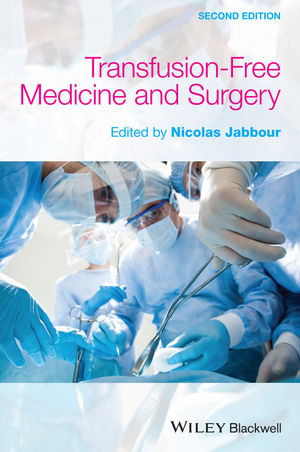
Transfusion-Free Medicine and Surgery (eBook)
John Wiley & Sons (Verlag)
978-1-118-55471-5 (ISBN)
This book aims to be a guide to the practice of blood conservation. The first chapter discusses the legal and administrative aspects of bloodless medicine describing the legal principles and practical issues relatd to refusal of transfusion. The second is on balancing the risks and benefits of transfusion includes clinical vignettes of appropriate and inappropriate transfusion. The remainder of the book covers the principles and practice of bloodless medicine, including a chapter on the scientific issues of haemostasis and the investigation of bleeding idsorders. The book concludes with chapters on blood conservation in neonatal and paediatric surgery, the costs associated with blood transfusion and the quest for artifical blood. New chapters will be included to address blood utilization in oncology and geriatric patients.
This book aims to be a guide to the practice of blood conservation. The first chapter discusses the legal and administrative aspects of bloodless medicine describing the legal principles and practical issues relatd to refusal of transfusion. The second is on balancing the risks and benefits of transfusion includes clinical vignettes of appropriate and inappropriate transfusion. The remainder of the book covers the principles and practice of bloodless medicine, including a chapter on the scientific issues of haemostasis and the investigation of bleeding idsorders. The book concludes with chapters on blood conservation in neonatal and paediatric surgery, the costs associated with blood transfusion and the quest for artifical blood. New chapters will be included to address blood utilization in oncology and geriatric patients.
Nicolas Jabbour, MD, FACS, Medical Director, Nazih Zuhdi Transplant Institute at INTEGRIS Baptist Medical Center, Oklahoma City, Oklahoma, USA Dr Jabbour performs live donor liver transplantation, hepatobiliary/pancreatic and liver surgery. Previously, he was the Associate Director of Multi-organ Abdominal Transplantation, Director of Transfusion-free Medicine and Surgery and Associate Professor of Surgery at the USC Keck School of Medicine. He was also an attending staff member at Los Angeles County USC Medical Center, the Norris Cancer Hospital and the Children's Hospital of Los Angeles. Dr Jabbour earned his undergraduate degree with the highest distinction at the Facultes Notre Dame de la Paix in Namur, Belgium, and his M.D. with the highest distinction at the Universitaires Libre de Bruxelles in Brussels, Belgium. After graduating, he completed his internship at Brugmann University Hospital under the auspices of the Universite Libre de Bruxelles. His residencies were completed at Lincoln Hospital and Our Lady of Mercy Hospital under the auspices of New York Medical College in New York City. His fellowship in transplantation surgery was conducted at the University of Pittsburgh and Children's Hospital of Pittsburgh under the direction of Dr. Thomas E Starzl. He is board certified in both general surgery and surgical critical care and certified transplant surgeon from the University of Pittsburgh. Dr Jabbour was one of the team leaders who performed the world's first bloodless live donor liver transplantation in adult and pediatric Jehovah's Witness patients, and who initiated adult to adult live donor liver transplantation in the west coast. Dr. Jabbour's research interests include living related liver transplantation and innovative liver monitoring.
Contributors, ix
Preface, xiii
1 History of blood transfusion and patient blood management,
1
Shannon L. Farmer, James Isbister, and Michael F. Leahy
2 The ethical complexities of transfusion-free medicine, surgery
and research, 19
Katrina A. Bramstedt
3 Transfusion therapy - Balancing the risks and benefits,
28
Irina Maramica and Ira A. Shulman
4 The physiology of anemia and the threshold for blood
transfusion, 61
Senthil G. Krishna, Ahsan Syed, Jason Bryant, and Joseph D.
Tobias
5 Blood transfusion in surgery, 83
Sharad Sharma, Lance W Griffin, and Nicolas Jabbour
6 Current view of coagulation system, 102
Yoogoo Kang and Elia Elia
7 Topical hemostatic agents, 143
Fabrizio Di Benedetto and Giuseppe Tarantino
8 Intraoperative strategies for transfusion-free medicine,
158
Joseph D. Tobias
9 Post-operative management in transfusion-free medicine and
surgery in the ICU, 207
Jean-Louis Vincent
10 The changing transfusion practice of neonatal and pediatric
surgery, 222
Pamela J. Kling and Nicolas Jabbour
11 Current management of anemia in oncology, 247
Shelly Sharma and Sharad Sharma
12 Artificial blood, 271
Aryeh Shander, Mazyar Javidroozi, and Seth Perelman
13 Translational strategies to minimize transfusion requirement
in liver surgery and transplantation: Targeting
ischemia-reperfusion injury, 289
Reza F. Saidi and S. Kamran Hejazi Kenari
14 Legal and administrative issues related to transfusion-free
medicine and surgery programs, 315
Randy Henderson and Nicolas Jabbour
15 Basic principles of bloodless medicine and surgery, 338
Nicolas Jabbour
Index, 347
Chapter 1
History of blood transfusion and patient blood management
Shannon L. Farmer1, James Isbister2, and Michael F. Leahy3
1School of Surgery, Faculty of Medicine, Dentistry and Health Sciences, University of Western Australia, Perth, Western Australia; Centre for Population Health Research, Curtin Health Innovation Research Institute, Curtin University, Perth, Western Australia
2University of Sydney, Sydney, Australia
University of Technology, Sydney, Australia
Monash University, Melbourne, Australia University of New South Wales, Sydney, Australia;
Haematology & Transfusion Medicine, Royal North Shore Hospital, Sydney, Australia
3Department of Haematology, Fremantle Hospital and Health Service, Fremantle, Western Australia;
School of Medicine and Pharmacology, University of Western Australia, Perth, Western Australia
Introduction
For more than two decades authorities have been calling for a major change in transfusion practice [1]. This is now even more urgent as new challenges continue to emerge. These include supply difficulties due to a diminishing donor pool and an increasing aging and consuming population, spiraling costs of blood and ongoing safety issues. Knowledge of transfusion limitations continues to grow, while a burgeoning literature demonstrates a strong dose-dependent relationship between transfusion and adverse patient outcomes [2, 3]. These factors combine to now make change vital [4].
Historically, changing long-standing medical practice has been challenging—perhaps even more so in transfusion. Despite professional guidelines and educational initiatives, wide variations in transfusion practice exist between countries, institutions and even between individual clinicians within the same institution [5–8]. This suggests that much practice may be based on misconceptions, belief and habit rather than evidence.
It is not the first time strongly entrenched belief has been an impediment to scientific progress. Edwin Hubble's description of an expanding universe in 1929 has been hailed as one of the great intellectual revolutions of the twentieth century. However, it has been suggested that, because of knowledge of Newton's law of gravity, an expanding universe could have been predicted over two hundred years earlier [9]. What slowed scientific progress? The widely held belief in a static universe prevailed. The belief was so strong at the time that in 1915 Einstein even modified his theory of relativity to accommodate it [9].
A brief review of the history of transfusion provides some insights as to how a behavior-based practice developed in transfusion and therefore how change may be effected by a more patient-focused approach (Figure 1.1).
Figure 1.1 Transfusion history timeline.
Blood: early beliefs and practice
Blood has always been viewed with awe and mysticism. It has been used in rituals, to seal treaties, as nourishment, a curative and poison—all based on the belief that blood had special power [10]. It appears that transfusion of blood was first conceived in Greek mythology where the sorceress Medea shows her ability to transfuse blood to give life to the dead and dying [11]. Athena, the goddess of wisdom, gave some of the blood of the slain Gorgon leader to Asclepius, the god of medicine. Hart notes,
“This gift of blood became ‘the gift of life’ and empowered him to revive the dead” [12].
There are reports as early as the seventh century BC of physicians prescribing blood to be drunk to treat a variety of diseases. An ancient Assyrian physician wrote to the king and assured him that his son was “doing better” after giving him blood to drink [10]. First-century Greek physician Aretaeus of Cappadocia, describing treatments for epilepsy, wrote “I have seen persons holding a cup below the wound of a man recently slaughtered, and drinking a draught of the blood!” [13]. Historian Reay Tannahill reported that in 1483 dying Louis XI of France hoped to recover by swallowing blood from children [14].
Bloodletting was fundamental to the medical care of patients for over 2000 years [15]. It was one of the longest lasting medical practices in history. Yet its acceptance was based on a belief—that disease was caused by an imbalance of blood and other “humors” in the body. Bleeding was thought to restore balance. One seventeenth-century proponent of the practice, Guy Patin, Dean of the Faculty of Medicine in Paris, wrote: “There is no remedy in the world which works as many miracles as bleeding” [16]. It was recommended in various medical texts to treat over 100 diverse ailments including pain, plague, fever, epilepsy, melancholy, liver disease, stroke, even broken bones and hemorrhage [15, 17]. It remained one of the most trusted procedures for treatment of sickness and maintenance of health until the mid-nineteenth century [15].
An example of its “life-saving” therapeutic reputation was reported in 1825 [18]. A French sergeant, who during combat sustained a stab wound through the chest, fainted from blood loss. He was taken to a local hospital where physicians immediately began bleeding him to prevent inflammation. Over the first 24 hours they bled over half his blood volume. Over subsequent days surgeons performed more bloodletting as well as applying leeches to the wound. The patient recovered and was discharged almost 3 months later. The sergeant's physician wrote,
“by the large quantity of blood lost, amounting to 170 ounces [almost eleven pints], besides that drawn by the application of leeches, the life of the patient was preserved.”
In this and other cases, physicians saw improvements in the patients' symptoms, reinforcing their belief in the practice. Of interest, Starr notes that bloodletting empowered physicians in the face of diseases they did not understand—finding comfort in the fact that they were doing something for the patient [16]. This practice reinforcement was echoed in the twentieth century by Dunphy in relation to the modern practice of transfusing blood into patients. He wrote,
“Transfusion certainly makes the surgeon feel better, but it may not make the patient feel better. Perhaps we all have a tendency to transfuse to make ourselves more comfortable” [19].
Blood transfusion
The practice of transfusing blood was pioneered during a period of fierce competition between England and France for world ascendency in literature, arts, science and medicine. The quest to perform the first blood transfusion was part of this, and long-held beliefs about blood's qualities were its practice foundation. It was still held that disease was a result of imbalance of humors and that bleeding might “draw out corruption.” It was also believed that blood carried characteristics and temperament. Thus the first transfusions into humans were performed to treat psychiatric illness, believing that the blood of a calm animal such as a lamb or calf would calm the “phrensied” person [10, 16, 20].
Transfusion with animal blood
Technical advances such as the description of the circulation by William Harvey in 1628 and the development of the “syringe” using a sharpened goose quill by Francis Potter in 1652 and Sir Christopher Wren in 1658 made injection of fluids into vessels possible. Members of the British Royal Society began experiments with injecting a variety of fluids including wine, beer, dye, opium and milk. Experiments with transfusing blood began between 1665 and 1668, with physicians believing it to be the most compatible fluid. The first were animal-to-animal transfusions, followed by animal-to-human transfusions [16, 21].
The English are credited with performing the first blood transfusion experiments. Beginning in 1665 scientist John Wilkins, surgeon Richard Lower and others made numerous attempts at transfusing blood from one dog to another [21]. The first successful animal-to-animal transfusion by Lower was reported in 1666. Speculation developed amongst colleagues as to what behavioral and physical changes transfusion might bring about in the recipient [16, 21]. In France physician Jean Baptiste Denis and colleagues claimed to have conceived the idea of transfusing humans almost 10 years earlier at a meeting in Paris, but only began their experiments in animal transfusions in 1667. They transfused dog blood into dogs, and then calf blood into dogs. They also reported that the transfusion of blood from a young dog into an elderly dog rejuvenated its vigor [21, 22].
These experiments led to the first human transfusion. The first is credited to Denis in June 1667 in which he transfused the blood of a lamb into a 16-year-old described as suffering a “contumacious and violent fever,” extreme lethargy and being possessed of an “incredible stupidity” [21, 23]. Denis' choice of “mild” animal blood for transfusion was based partly on his feeling that animal blood was more pure because “debauchedness, envy, anger, melancholy and passions corrupted human blood” [23]. He also reasoned that transfusion achieved the same effect as bleeding, without weakening the patient. They would draw out a quantity of blood and replace it with “new and pure” blood. Denis...
| Erscheint lt. Verlag | 1.8.2014 |
|---|---|
| Sprache | englisch |
| Themenwelt | Medizinische Fachgebiete ► Innere Medizin ► Hämatologie |
| Medizin / Pharmazie ► Medizinische Fachgebiete ► Pharmakologie / Pharmakotherapie | |
| Schlagworte | Agents • anemia • Blood • Blood Transfusion • Bluttransfusionen • Bramstedt • Chirurgie • coagulation • ethical complexities • History • intraoperative • jabbour current • Lance • Medical Science • Medizin • Physiology • Surgery • System • Tarantino • Tobias • Transfusion • transfusionfree • View |
| ISBN-10 | 1-118-55471-X / 111855471X |
| ISBN-13 | 978-1-118-55471-5 / 9781118554715 |
| Informationen gemäß Produktsicherheitsverordnung (GPSR) | |
| Haben Sie eine Frage zum Produkt? |
 EPUB (Adobe DRM)
Kopierschutz: Adobe-DRM
Adobe-DRM ist ein Kopierschutz, der das eBook vor Mißbrauch schützen soll. Dabei wird das eBook bereits beim Download auf Ihre persönliche Adobe-ID autorisiert. Lesen können Sie das eBook dann nur auf den Geräten, welche ebenfalls auf Ihre Adobe-ID registriert sind.
Details zum Adobe-DRM
Dateiformat: EPUB (Electronic Publication)
EPUB ist ein offener Standard für eBooks und eignet sich besonders zur Darstellung von Belletristik und Sachbüchern. Der Fließtext wird dynamisch an die Display- und Schriftgröße angepasst. Auch für mobile Lesegeräte ist EPUB daher gut geeignet.
Systemvoraussetzungen:
PC/Mac: Mit einem PC oder Mac können Sie dieses eBook lesen. Sie benötigen eine
eReader: Dieses eBook kann mit (fast) allen eBook-Readern gelesen werden. Mit dem amazon-Kindle ist es aber nicht kompatibel.
Smartphone/Tablet: Egal ob Apple oder Android, dieses eBook können Sie lesen. Sie benötigen eine
Geräteliste und zusätzliche Hinweise
Buying eBooks from abroad
For tax law reasons we can sell eBooks just within Germany and Switzerland. Regrettably we cannot fulfill eBook-orders from other countries.
aus dem Bereich