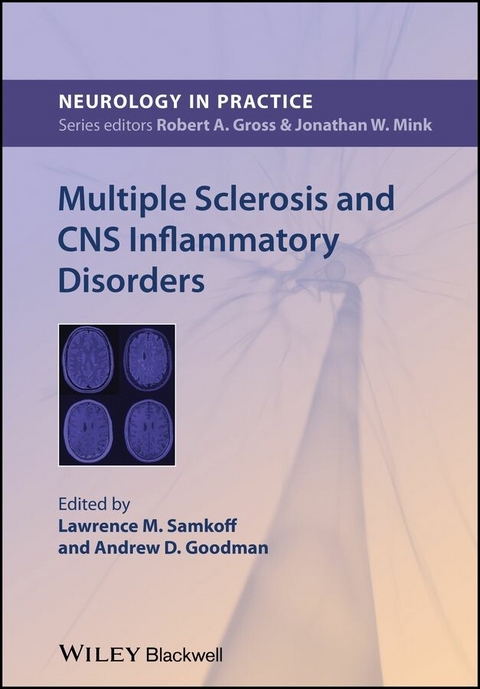
Multiple Sclerosis and CNS Inflammatory Disorders (eBook)
John Wiley & Sons (Verlag)
978-1-118-29865-7 (ISBN)
Multiple Sclerosis and CNS Inflammatory Disorders is a practical guide to effective care of patients with multiple sclerosis and other neuroimmunologic and CNS inflammatory disorders.
It provides the scientific basis of multiple sclerosis including etiology, epidemiology, and pathogenesis. It covers the diagnostic process, the course of the disease and prognosis, and the use of MRI in diagnosis and disease monitoring. Disease-modifying treatment algorithms for relapsing-remitting multiple sclerosis, switching therapy, and progressive multiple sclerosis treatment algorithms are all discussed in detail. It also addresses multiple sclerosis in childhood and pregnancy and includes assessment of alternative therapies.
This new addition to the Neurology in Practice series contains practical guidance and learning features:
• Algorithms and guidelines
• “Tips and Tricks” boxes on improving outcomes
• “Caution” warning boxes to avoiding problems
• “Science Revisited”—quick reminders of the basic science principles necessary for understanding
Multiple Sclerosis and CNS Inflammatory Disorders is an ideal reference for neurologists in practice and training.
Lawrence M. Samkoff, MD, Associate Professor of Neurology at the School of Medicine and Dentistry, University of Rochester Medical Center, Rochester, NY, USA
Andrew D. Goodman, MD, Professor of Neurology, Chief of the Neuroimmunology Unit, and Director of the Multiple Sclerosis Center at the School of Medicine and Dentistry, University of Rochester Medical Center , Rochester, NY, USA
Multiple Sclerosis and CNS Inflammatory Disorders is a practical guide to effective care of patients with multiple sclerosis and other neuroimmunologic and CNS inflammatory disorders. It provides the scientific basis of multiple sclerosis including etiology, epidemiology, and pathogenesis. It covers the diagnostic process, the course of the disease and prognosis, and the use of MRI in diagnosis and disease monitoring. Disease-modifying treatment algorithms for relapsing-remitting multiple sclerosis, switching therapy, and progressive multiple sclerosis treatment algorithms are all discussed in detail. It also addresses multiple sclerosis in childhood and pregnancy and includes assessment of alternative therapies. This new addition to the Neurology in Practice series contains practical guidance and learning features: Algorithms and guidelines Tips and Tricks boxes on improving outcomes Caution warning boxes to avoiding problems Science Revisited quick reminders of the basic science principles necessary for understanding Multiple Sclerosis and CNS Inflammatory Disorders is an ideal reference for neurologists in practice and training.
Lawrence M. Samkoff, MD, Associate Professor of Neurology at the School of Medicine and Dentistry, University of Rochester Medical Center, Rochester, NY, USA Andrew D. Goodman, MD, Professor of Neurology, Chief of the Neuroimmunology Unit, and Director of the Multiple Sclerosis Center at the School of Medicine and Dentistry, University of Rochester Medical Center , Rochester, NY, USA
Contributors vii
Series Foreword x
Preface xi
chapter 1 1
Etiology
Sonya U. Steele and Ellen M. Mowry
chapter 2 10
Immunopathogenesis of Multiple Sclerosis
Anne H. Cross and Laura Piccio
chapter 3 18
Diagnostic Process
Dalia Rotstein and Paul O'Connor
chapter 4 29
MRI in Diagnosis and Disease Monitoring
María I. Gaitán and Daniel S. Reich
chapter 5 45
Relapsing MS: Disease Staging and Therapeutic Algorithms
Mohsen Khoshnam and Mark Freedman
chapter 6 57
Progressive MS Treatment Algorithms
Megan H. Hyland and Jeffrey A. Cohen
chapter 7 67
Sex-Determined Issues in Multiple Sclerosis
Callene Momtazee and Barbara Giesser
chapter 8 77
Pediatric Multiple Sclerosis
Robert Thompson Stone and Brenda Banwell
chapter 9 91
Complementary and Alternative Medicine: Risks and Benefits
Allen C. Bowling
chapter 10 102
Symptomatic Management of MS
Jessica Robb, Lawrence M. Samkoff, and Andrew D. Goodman
chapter 11 114
Invisible Symptoms of MS: Fatigue, Depression, and
Cognition
Leigh E. Charvet, Benzi Kluzer, and Lauren B. Krupp
chapter 12 122
Rehabilitation
Nesanet S. Mitiku, Alexius E. G. Sandoval, and George H.
Kraft
chapter 13 134
Psychosocial Adaptation to Multiple Sclerosis
David J. Rintell
chapter 14 144
Transverse Myelitis and Acute Disseminated
Encephalomyelitis
Benjamin M. Greenberg
chapter 15 153
Neuromyelitis Optica
Marcelo Matiello and Brian G. Weinshenker
chapter 16 163
Neurosarcoidosis
Thomas F. Scott
chapter 17 169
Lyme Neuroborreliosis
Erica Patrick and Eric Logigian
chapter 18 178
Neuro-Behçet Syndrome
Aksel Siva and Sabahattin Saip
Index 191
1
Etiology
Sonya U. Steele and Ellen M. Mowry
Department of Neurology, Johns Hopkins University, Baltimore, MD, USA
Background
Multiple sclerosis (MS) is a chronic inflammatory disease of the central nervous system (CNS) characterized by the breakdown of the insulating myelin sheath that covers the nerve axons in the CNS and subsequent degeneration of axons. The process leads most commonly to intermittent neurological symptoms followed, over time, by progressive neurological symptoms in many patients. MS affects approximately 400,000 people in the USA and more than 2.1 million people worldwide, but the incidence has increased in the last five decades, particularly in women (3.6/100,000 person-years) compared to men (2.0/100,000 person-years) (Alonso & Hernan 2008; National Multiple Sclerosis Society 2012). While the etiology of MS is not understood in detail, it is unlikely to be the result of a single causative event. Instead, converging evidence suggests that MS is caused by an abnormal autoimmune response in genetically susceptible individuals after specific environmental exposures. Thus, it is not a heritable disease in the classic sense, but a complex disease that emerges from genes interacting with other genes and genes interacting with the environment. The factors thought to mediate the risk of MS are subject to intense ongoing research and include genetic, immunologic, infectious, and environmental contributors. The aim of this chapter is to review the current data on MS risk factors, with particular emphasis on those that may be modifiable on a personal or population level.
CAUTION!
Over the years, many different causes for MS have been suggested, several of which have led to unfounded angst in those living with or at risk for developing MS. Here are some of the most popular theories that have not been proven to date (National Multiple Sclerosis Society 2012):
- Owning a dog or other small pet (canine distemper)
- Allergies
- Exposure to heavy metals (e.g., mercury, lead, or manganese)
- Physical trauma
- Aspartame
Genes
Familial aggregation is a well-recognized phenomenon in MS, and family and twin studies have long shown evidence for a strong genetic component underlying MS. This is illustrated by the 25–30% concordance among monozygotic twins, the 5% concordance among same-sex dizygotic twins, and the 3.5% concordance among nontwin siblings (Gourraud et al. 2012). However, the inheritance of MS cannot be explained by a simple genetic model, and neither the familial recurrence rate nor twin concordance supports the presence of a Mendelian trait. Rather, susceptibility is polygenic, with each gene contributing a relatively small amount of the overall risk. More than likely, genetic heterogeneity (different susceptibilities among individuals) also exists. Additionally, epidemiological data strongly hint at a parent-of-origin effect in MS: maternal half-siblings having double the risk for MS compared to paternal half-siblings (2.35% vs. 1.31%), while the risk for MS in maternal half-siblings compared to their full siblings does not differ significantly (Gourraud et al. 2012). The mechanism of the increased risk conferred maternally remains to be elucidated, but epigenetic mechanisms such as DNA methylation or histone modification may play a role (Handel et al. 2010).
SCIENCE REVISITED
Maternal parent-of-origin effect
Mendelian traits are controlled by a single locus and involve the transmission of one allele from both mother and father to a diploid offspring. This simple rule may not be followed in MS and other complex disorders, in which not only do multiple genes appear to contribute to susceptibility, but genomic imprinting may play an important role. Imprinting is an epigenetic process through which the expression of a gene is dependent on the sex of the parent from whom it was inherited. In other words, imprinted alleles are silenced such that the genes are either expressed only from the nonimprinted allele inherited from the mother or the father. Epidemiological data hint at a maternal parent-of-origin effect in MS. The mechanism of the increased risk conferred maternally remains to be elucidated, but epigenetic mechanisms that regulate genomic function (such as DNA methylation, RNA-associated silencing, and histone modifications) have been strongly implicated. Examples of other imprinted genetic disorders include Prader–Willi/Angelman syndrome and Russell–Silver syndrome.
The first direct evidence for a relationship between genes and MS susceptibility came in 1972, when MS was shown to be associated with the human leukocyte antigen (HLA) on chromosome 6p21 (encoding proteins involved in presenting peptide antigens to T cells) (Gourraud et al. 2012). This association was later fine-mapped to a specific locus, HLA-DRB1 of the class II gene HLA-DRB1 (Gourraud et al. 2012). Although the HLA-DRB*1501 haplotype exerts the strongest genetic effect in MS (heterozygosity conferring an odds ratio (OR) of 2.7 and homozygosity of 6.7), the association is not straightforward. In fact, a number of HLA-DRB1 haplotypes are both positively and negatively associated with the disease, differ in magnitude of effect, and either act on their own or greatly alter risk in combination with another haplotype (Kallaur et al. 2011). For example, HLA-DRB1*08 only modestly increases MS risk, but in combination with HLA-DRB1*15, it more than doubles the risk associated with a single copy of the latter (Kallaur et al. 2011). On the other hand, HLA-DRB1*14 carries such a protective effect that it completely abrogates the increased risk of HLA-DRB1*15 (Kallaur et al. 2011). And whereas association of MS with HLA-DRB1*15 has long been known in Northern Europe, in other regions, such as Sardinia, HLA-DRB1*0301, HLA-DRB1*0405, and HLA-DRB1*1303 are more commonly associated with MS (Kallaur et al. 2011). In fact, the relative frequencies of susceptibility and protective HLA haplotypes, which vary between countries, may play important roles in determining the risk of the disease.
It has been estimated that the HLA locus accounts for 20–60% of the genetic susceptibility in MS, leaving a large portion of the genetic component of MS (still) to be explained. In 2007, the International Multiple Sclerosis Genetics Consortium (IMSGC) completed the first MS genome-wide association study (GWAS) using trios (an affected individual and both their parents) from the UK and the USA (Gourraud et al. 2012). In addition to the HLA-DRB1 region, two new risk loci were identified: the genes for interleukin-7 receptor alpha (IL-7RA) and interleukin-2 receptor alpha (IL-2RA), which have since been replicated. These genes code for the alpha chain of the IL-7 or IL-2 receptors, which promote lymphocyte growth and differentiation. MS-associated variants in the IL-2RA gene contribute to the production of soluble IL-2RA, a biomarker of peripheral inflammation. The IL-7/IL-7RA interaction is important for memory T-cell maintenance and development and proliferation and survival of B and T cells; the protective haplotype is associated with less soluble IL-7RA; the risk allele thus likely produces a change in function (Gregory et al. 2007).
The most recent GWAS data from the IMSGC demonstrate at least 102 SNPs exerting a modest effect (OR, 1.06–1.22) (Gourraud et al. 2012). Most of the loci harbor genes with pertinent immunological roles, including several genes associated with other autoimmune disorders, consistent with the autoimmune hypothesis of MS etiology. Most notably, the results of the GWAS implicate genes coding for cytokine pathways (CXCR5, IL-2RA, IL-7R, IL-7, IL-12RB1, IL-22RA2, IL-12A, IL-12B, IRF8, TNFRSF1A, TNFRSF14, TNFSF14) and for costimulatory (CD37, CD40, CD58, CD80, CD86, CLECL1) and signal transduction (CBLB, GPR65, MALT1, RGS1, STAT3, TAGAP, TYK2) molecules of immunological relevance (Gourraud et al. 2012). Of interest, at least two genes (KIF1B, GPC5) not involved in the immune system but instead with neuronal growth and repair mechanisms may also be associated with MS. These genes may influence the potential of remyelination of lesions, and their discovery gives a hint to a disturbance of repair mechanisms in addition to autoimmune processes in MS.
Still relatively little is known about how the identified MS risk variants exert their effects at the molecular and cellular levels. Their incomplete penetrance and moderate individual effects probably reflect interactions with other genes, posttranscriptional regulatory mechanisms, or significant environmental and epigenetic influences. Further genetic and functional studies are required to pinpoint the functionally relevant genes and pathways, to understand how these influence risk, and to determine if the genes themselves, or the downstream effects thereof, can be modified to alter MS risk.
Gender effects: Genetic or biologic?
MS is more prevalent in females than males, and this female predominance appears to have increased markedly over the past 100 years. Interestingly, the preponderance of females among MS patients is even seen in the pediatric MS population, especially after about the age of 10 years. The...
| Erscheint lt. Verlag | 14.7.2014 |
|---|---|
| Reihe/Serie | NIP- Neurology in Practice |
| NIP- Neurology in Practice | NIP- Neurology in Practice |
| Sprache | englisch |
| Themenwelt | Medizin / Pharmazie ► Medizinische Fachgebiete ► Neurologie |
| Schlagworte | algorithms • Basis • Care • Course • Diagnosis • Diagnostic • Disease • disorders • etiology • Guide • inflammatory • Medical Science • Medizin • MRI • Multiple • Neurologie • Neurology • patients • Practical • prognosis • relapsingremitting • Scientific • sclerosis • Treatment • use |
| ISBN-10 | 1-118-29865-9 / 1118298659 |
| ISBN-13 | 978-1-118-29865-7 / 9781118298657 |
| Informationen gemäß Produktsicherheitsverordnung (GPSR) | |
| Haben Sie eine Frage zum Produkt? |
 EPUB (Adobe DRM)
Kopierschutz: Adobe-DRM
Adobe-DRM ist ein Kopierschutz, der das eBook vor Mißbrauch schützen soll. Dabei wird das eBook bereits beim Download auf Ihre persönliche Adobe-ID autorisiert. Lesen können Sie das eBook dann nur auf den Geräten, welche ebenfalls auf Ihre Adobe-ID registriert sind.
Details zum Adobe-DRM
Dateiformat: EPUB (Electronic Publication)
EPUB ist ein offener Standard für eBooks und eignet sich besonders zur Darstellung von Belletristik und Sachbüchern. Der Fließtext wird dynamisch an die Display- und Schriftgröße angepasst. Auch für mobile Lesegeräte ist EPUB daher gut geeignet.
Systemvoraussetzungen:
PC/Mac: Mit einem PC oder Mac können Sie dieses eBook lesen. Sie benötigen eine
eReader: Dieses eBook kann mit (fast) allen eBook-Readern gelesen werden. Mit dem amazon-Kindle ist es aber nicht kompatibel.
Smartphone/Tablet: Egal ob Apple oder Android, dieses eBook können Sie lesen. Sie benötigen eine
Geräteliste und zusätzliche Hinweise
Buying eBooks from abroad
For tax law reasons we can sell eBooks just within Germany and Switzerland. Regrettably we cannot fulfill eBook-orders from other countries.
aus dem Bereich