Interceptive Orthodontics (eBook)
John Wiley & Sons (Verlag)
978-1-118-88028-9 (ISBN)
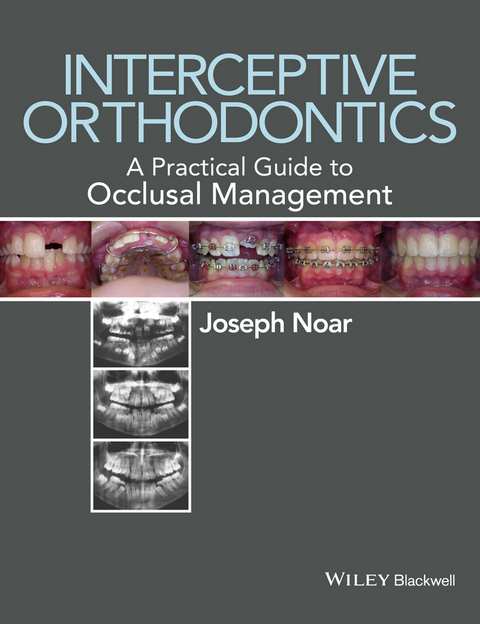
Interceptive Orthodontics: A Practical Guide to Occlusal Management aims to guide the practitioner in the art of interceptive management of the developing dentition. The goal is to guide the permanent dentition into the line of the dental arches, avoiding complex orthodontic treatment for teeth displaced far from their ideal position, and thereby reducing orthodontic treatment time. This book covers growth of the jaws and tooth development, and explains the correct timing of interceptive management. It also discusses orthodontic assessment, special investigations and comprehensive management of the mixed dentition, taking in the issues of early crowding, impaction, supernumerary and supplemental teeth, dental arch expansion, space maintenance and space management. In line with best available evidence, it provides clear treatment objectives and detailed treatment planning advice.
Practical, accessible and illustrated with a wealth of colour images, this is an ideal clinical companion for general dental practitioners, oral surgeons, paediatric dentists and orthodontists. It is also a valuable reference for all training grades.
Mr. Joseph H. Noar is a Consultant/Honorary Senior Lecturer in the Orthodontic Unit at the Eastman Dental Hospital, London, UK. He qualified in Dentistry at the University of Manchester in 1981, completed his postgraduate specialist orthodontic training at the Eastman Dental Institute in 1988, and was appointed to his current post in 1993. Mr Noar is first and foremost a clinician but has always been involved in orthodontic research and the development of the specialty in the UK. He lectures nationally and internationally, has published widely and teaches on the postgraduate orthodontic training program at the Eastman Dental Institute. He has served the British Orthodontic Society in various capacities for many years.
Identify problems and introduce solutions early for an ideal aesthetic resultInterceptive Orthodontics: A Practical Guide to Occlusal Management aims to guide the practitioner in the art of interceptive management of the developing dentition. The goal is to guide the permanent dentition into the line of the dental arches, avoiding complex orthodontic treatment for teeth displaced far from their ideal position, and thereby reducing orthodontic treatment time. This book covers growth of the jaws and tooth development, and explains the correct timing of interceptive management. It also discusses orthodontic assessment, special investigations and comprehensive management of the mixed dentition, taking in the issues of early crowding, impaction, supernumerary and supplemental teeth, dental arch expansion, space maintenance and space management. In line with best available evidence, it provides clear treatment objectives and detailed treatment planning advice.Practical, accessible and illustrated with a wealth of colour images, this is an ideal clinical companion for general dental practitioners, oral surgeons, paediatric dentists and orthodontists. It is also a valuable reference for all training grades.
Mr. Joseph H. Noar is a Consultant/Honorary Senior Lecturer in the Orthodontic Unit at the Eastman Dental Hospital, London, UK. He qualified in Dentistry at the University of Manchester in 1981, completed his postgraduate specialist orthodontic training at the Eastman Dental Institute in 1988, and was appointed to his current post in 1993. Mr Noar is first and foremost a clinician but has always been involved in orthodontic research and the development of the specialty in the UK. He lectures nationally and internationally, has published widely and teaches on the postgraduate orthodontic training program at the Eastman Dental Institute. He has served the British Orthodontic Society in various capacities for many years.
Preface vii
1 Introduction 1
What do we know about growth? 1
Growth and development of the jaws 2
2 Recognising the problem 9
Is an attractive smile important? 9
3 Investigations 15
Radiographs 15
Cone-beam computed tomography 17
Study models 23
Photographs 24
What is the scope of orthodontic change? 24
4 Managing the developing occlusion 29
Thumb/finger sucking 29
Crowding of the permanent lateral incisors 32
Serial extraction: a modern approach 39
The unerupted central incisor 42
Submerging deciduous second molars 45
Fusion, gemination, and morphology issues 47
Upper labial fraenum 48
Leeway space and the use of intraoral anchorage arches 50
Sagittal problems: Class II 51
Sagittal problems: Class III 59
Ectopic and impacted teeth 62
Missing teeth 65
Index 75
CHAPTER 1
Introduction
An attractive smile with a good display of teeth is important for psychological well-being. There are a number of goals that should be aimed for when considering dental attractiveness, such as the symmetry, alignment, smile line, dental arch shape and gingival contour, as well as the quality and morphology of the dental tissue itself. Orthodontic management of the developing dentition is important to ensure that the established dentition will be in the most aesthetic position. Orthodontics requires a good understanding of facial and dental growth and the effects of occlusal guidance.
In the past it was common practice for patients to be referred to an orthodontist once their secondary dentition was established. This practice allowed many developing problems to significantly worsen and ultimately be more difficult to correct. In many cases, developmental problems can be managed as the dentition develops and early intervention can eliminate some of the complex occlusal problems that can take 24 months or longer to manage with orthodontic appliances.
The premise of early interceptive treatment is to allow the secondary dentition to establish itself in an aesthetic position with the dental units lying within the dental arches. Issues such as skeletal discrepancy are managed within the scope of the genetic potential of each patient and early intervention should be decided on not only with reference to the severity of the discrepancy, but also the aesthetic and emotional needs of the patient and the implications of not undertaking treatment. For these reasons, general dental practitioners (GDPs) must consider early referral to a specialist orthodontist for all patients to ensure that all opportunities for occlusal guidance are taken. Referral at the age of 7 years allows any developing issues to be addressed in a strategic and planned manner.
What Do We Know about Growth?
While a patient is still growing, there exists the possibility of addressing orthodontic problems with orthodontic appliances to alter facial growth. However, the problem in clinical orthodontics is that facial growth continues from birth to early adulthood and the growth pattern cannot be accurately predicted. We do know the average rate and direction of growth, but are aware of different skeletal relationships in three planes of space and of growth rotations that lead to differences in facial form from Class II to Class III, high and low angle and transverse discrepancies. We also have some understanding of the role of the facial muscles and the influence environmental factors have on the dentition (Figure 1.1). However, we cannot reliably predict the timing of growth or the ultimate amount of growth for any individual until it is almost at an end, even if analytical techniques such as cervical spine and hand/wrist radiograph assessments are employed. In addition, while the soft tissue balance between the tongue, lips and cheeks and how this affects tooth position and dental arch shape can be predicted, we cannot quantify the latter over time or predict accurately the influences that these may have on the dental arch.
Figure 1.1 Directions of facial growth.Growth and Development of the Jaws
Growth generally refers to an increase in size, number or complexity by natural development. Development is an increase in the degree of organisation (Proffit, 1993). Craniofacial growth may be divided into four components (Thilander, 1995):
- growth mechanisms (how new bone is formed);
- growth pattern (change in size and shape of the bone);
- growth rate (speed at which the bone is formed);
- regulating mechanism that initiates and directs the above three factors.
Growth Mechanisms
Growth and development of the craniofacial skeleton occurs in two ways:
- endochondral ossification: growth and ossification of a cartilage model;
- intramembranous ossification: transformation of mesenchymal connective tissue and deposition of bone on existing bone surfaces.
The bones of the skull base mainly grow and develop by endochondral ossification, and the vault of the cranium and facial skeleton mainly by intramembranous ossification (Enlow, 1990).
Although several ossified areas fuse into large morphological units, remnants of the chondrocranium persist as synchondroses (cartilaginous joints) between the bones in the cranial base. When intramembranously formed bones meet, sutures develop. Bone growth and adaptation can thus proceed due to the separation of bones in the synchondroses and suture areas.
Growth of the Cranial Base
Displacement growth of the cranial base is made possible mainly by synchondroses. The spheno-occipital synchondrosis is regarded as the most important growth centre for the cranial base (Sicher, 1952; Björk, 1955). The upper facial skeleton is attached to the anterior cranial base, whereas the mandible is connected to the middle cranial base; thus, the length and growth of the cranial base has an important effect on the jaw relationships (Björk, 1955).
Growth of the Mid-Face
Scott (1953) suggested that the essential primary elements directing craniofacial skeletal growth are the cartilages, in particular the anterior extension of the chondrocranium, the nasal septal cartilage. The anteroposterior expansive growth of the nasal septal cartilage, which is buttressed against the cranial base posteriorly, is thought to ‘push’ the mid-face downward and forward and as such, the nasal septum is thought to play an important part in the prenatal and very early postnatal growth of the mid-face. However, opinions differ as to its role in postnatal growth; one view is that growth is secondary to, and compensatory for, passive displacement of the mid-facial bones and the nasal septum plays a significant biomechanical role in maintaining normal mid-facial form (Melsen, 1977; Moss, 1977).
Growth of the Mandible
The cartilage of the mandibular condyle is a secondary cartilage and is different in origin and structure from the epiphyseal plate and synchondrosal cartilage (Thilander et al., 1976).
The traditional view of the condylar cartilage was that it controlled overall mandibular growth and represented a major growth centre for the entire mandible (Scott, 1962). Koski and Makinen (1963) and Koski and Mason (1964) attempted to grow the condylar cartilages of rats and showed that cartilage only grew when it was explanted with the adjacent bone. Koski and his team interpreted this as confirmation of the views of Moss (1968) that growth of the condylar cartilage is always secondary to forward displacement of the mandible as a result of some outside influence, ‘the functional matrix’, and only participates in regional adaptive growth. They suggested therefore, that condylar cartilage is not a major growth centre for the mandible, but it does have a great capacity to adapt to mandibular displacement during growth (Koski and Ronning, 1966; Enlow, 1990).
Experimental studies in animals by McNamara et al. (1982) have shown that cellular proliferation in the condylar cartilage can be influenced by appliances that displace the jaw forwards. However, the extent to which condylar growth can be modified in amount or direction by external influences is not clear. Displacement growth is made possible by the craniofacial sutures, which have the dual function of permitting growth movement and uniting the bones of the upper facial skeleton (Thilander, 1995). According to the Sutural Theory of Weinmann and Sicher (1947), the intrinsic pattern of expansive proliferative growth in the sutures generates forces that separate the bones and are thus responsible for the displacement of the maxillary complex. When sutures are transplanted to non-functional sites, however, no growth occurs (Ryoppy, 1965). Similarly, it has been demonstrated that growth of the circumaxillary sutures can be reduced or inhibited by the application of force to the maxilla (Elder and Tuenge, 1974). It is now accepted that facial sutures are not centres of active growth, but sites at which adaptive growth can occur in response to environmental demands (Moss and Salentijn, 1969).
All inner and outer bone surfaces of the facial skeleton are associated with a mosaic of functional growth fields. These fields carry out specific, localised growth activities that involve separate areas of resorption and deposition on all periosteal and endosteal surfaces (Enlow, 1990). Growth remodelling by periosteal resorption and deposition is paced by the growth and functions of the soft tissues in which the bones are embedded (Enlow, 1990). The influence of the periosteum is therefore of greatest significance with respect to the change in size and shape of the bones, i.e. the growth pattern (Enlow and Bang, 1965). The periosteum continues to function as an osteogenic zone throughout life, but its regenerative capacity is extremely high in the young child (Thilander, 1995).
Growth Pattern
At birth the face makes up approximately one-eighth of the total volume of the skull, this proportion increasing to one-half in the adult male (Mills, 1983). The change in the size and shape of the bone takes place on the basis of several basic principles: remodelling, cortical drift, relocation, displacement and the ‘V’ principle (Enlow, 1990). These principles of bone growth will result in the following changes in size and shape of the nasomaxillary complex and the...
| Erscheint lt. Verlag | 16.6.2014 |
|---|---|
| Sprache | englisch |
| Themenwelt | Medizin / Pharmazie ► Allgemeines / Lexika |
| Medizin / Pharmazie ► Gesundheitsfachberufe | |
| Medizin / Pharmazie ► Zahnmedizin | |
| Schlagworte | Aesthetic • Arches • avoiding • Complex • Dental • dentistry • Dentition • displaced • goal • Guide • Ideal • Identify • introduce • Kinderzahnheilkunde • line • Occlusal • Orthodontic • Orthodontics • Orthodontik • Pediatric Dentistry • Permanent • Position • Practical • Problems • resultinterceptive • Solutions • Teeth • Treatment • Zahnmedizin |
| ISBN-10 | 1-118-88028-5 / 1118880285 |
| ISBN-13 | 978-1-118-88028-9 / 9781118880289 |
| Informationen gemäß Produktsicherheitsverordnung (GPSR) | |
| Haben Sie eine Frage zum Produkt? |
 EPUB (Adobe DRM)
Kopierschutz: Adobe-DRM
Adobe-DRM ist ein Kopierschutz, der das eBook vor Mißbrauch schützen soll. Dabei wird das eBook bereits beim Download auf Ihre persönliche Adobe-ID autorisiert. Lesen können Sie das eBook dann nur auf den Geräten, welche ebenfalls auf Ihre Adobe-ID registriert sind.
Details zum Adobe-DRM
Dateiformat: EPUB (Electronic Publication)
EPUB ist ein offener Standard für eBooks und eignet sich besonders zur Darstellung von Belletristik und Sachbüchern. Der Fließtext wird dynamisch an die Display- und Schriftgröße angepasst. Auch für mobile Lesegeräte ist EPUB daher gut geeignet.
Systemvoraussetzungen:
PC/Mac: Mit einem PC oder Mac können Sie dieses eBook lesen. Sie benötigen eine
eReader: Dieses eBook kann mit (fast) allen eBook-Readern gelesen werden. Mit dem amazon-Kindle ist es aber nicht kompatibel.
Smartphone/Tablet: Egal ob Apple oder Android, dieses eBook können Sie lesen. Sie benötigen eine
Geräteliste und zusätzliche Hinweise
Buying eBooks from abroad
For tax law reasons we can sell eBooks just within Germany and Switzerland. Regrettably we cannot fulfill eBook-orders from other countries.
aus dem Bereich