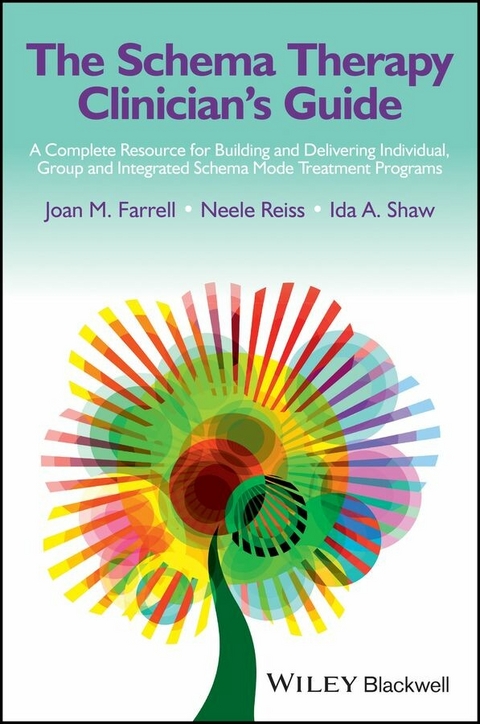
The Schema Therapy Clinician's Guide (eBook)
John Wiley & Sons (Verlag)
978-1-118-50914-2 (ISBN)
The Schema Therapy Clinician's Guide is a complete clinical resource for psychotherapists implementing schema therapy, group schema therapy or a combination of both in a structured, cost-effective way. The authors provide ready-made individual and group sessions with patient hand-outs.
- A unique resource providing ready-made individual and group schema therapy sessions, linked across schema modes, allowing clinicians to pick and choose what they need or adopt a full integrated individual and group program which can be delivered over a range of treatment lengths from a six week intensive program to a one year outpatient treatment
- Approaches treatment by targeting maladaptive Schema Modes rather than specific disorders, thus increasing clinical flexibility and ensuring shelf life through changes in diagnostic classification
- Provides step-by-step instructions and tips for therapists, along with a wealth of unique clinical resources including sample scripts, handouts, session exercises, assignment forms and patient materials
- Meets the current need for effective clinical treatments that can provide tangible effects on time and on budget
Joan M. Farrell, Ph.D. is a Clinical Psychologist, Research and Training Director of the Center for Borderline Personality disorder Treatment and Research, Indiana University School of Medicine, USA, and Adjunct Professor in the Department of Psychology, Indiana University-Purdue University Indianapolis (IUPUI). She is an International Society for Schema Therapy (ISST) Certified Schema Therapy Trainer and Supervisor, the Coordinator for Training & Certification of the ISST and an Executive Board member.
Neele Reiss is a Researcher, Clinical Psychologist and Schema Therapist in the Department of Differential Psychology and Psychological Diagnostics, Goethe-University Frankfurt, Germany, and a Director of the Institute for Psychotherapy in Mainz, Germany. She is an International Society for Schema Therapy (ISST) Certified Schema Therapy Trainer and Supervisor.
Ida A. Shaw, M.A. is the Director of the Schema Therapy Institute Midwest, Indianapolis, USA, and Senior Clinical Supervisor at the Center for BPD Treatment and Research, Indiana University School of Medicine. She is an ISST Certified Schema Therapy Trainer and Supervisor in Adult, Child-Adolescent and Group.
The Schema Therapy Clinician s Guide is a complete clinical resource for psychotherapists implementing schema therapy, group schema therapy or a combination of both in a structured, cost-effective way. The authors provide ready-made individual and group sessions with patient hand-outs. A unique resource providing ready-made individual and group schema therapy sessions, linked across schema modes, allowing clinicians to pick and choose what they need or adopt a full integrated individual and group program which can be delivered over a range of treatment lengths from a six week intensive program to a one year outpatient treatment Approaches treatment by targeting maladaptive Schema Modes rather than specific disorders, thus increasing clinical flexibility and ensuring shelf life through changes in diagnostic classification Provides step-by-step instructions and tips for therapists, along with a wealth of unique clinical resources including sample scripts, handouts, session exercises, assignment forms and patient materials Meets the current need for effective clinical treatments that can provide tangible effects on time and on budget
Joan M. Farrell, Ph.D. is a Clinical Psychologist, Research and Training Director of the Center for Borderline Personality disorder Treatment and Research, Indiana University School of Medicine, USA, and Adjunct Professor in the Department of Psychology, Indiana University-Purdue University Indianapolis (IUPUI). She is an International Society for Schema Therapy (ISST) Certified Schema Therapy Trainer and Supervisor, the Coordinator for Training & Certification of the ISST and an Executive Board member. Neele Reiss is a Researcher, Clinical Psychologist and Schema Therapist in the Department of Differential Psychology and Psychological Diagnostics, Goethe-University Frankfurt, Germany, and a Director of the Institute for Psychotherapy in Mainz, Germany. She is an International Society for Schema Therapy (ISST) Certified Schema Therapy Trainer and Supervisor. Ida A. Shaw, M.A. is the Director of the Schema Therapy Institute Midwest, Indianapolis, USA, and Senior Clinical Supervisor at the Center for BPD Treatment and Research, Indiana University School of Medicine. She is an ISST Certified Schema Therapy Trainer and Supervisor in Adult, Child-Adolescent and Group.
List of Figures and Tables ix
About the Authors xi
Foreword xiii
Acknowledgments xvii
About the Companion Web Site xix
1 Introduction 1
1.1 Background 1
1.2 The Chapters 3
2 The Basics of Schema Therapy 5
2.1 The Theoretical Model 5
2.2 Goals and Stages of Schema Therapy 9
2.3 Limited Reparenting 10
2.4 The Components of Schema Therapy 20
3 The Integrated Schema Therapy Treatment Program 21
3.1 The Patients: Who Are Good Candidates? 26
3.2 The Group Schema Therapy Sessions 27
3.2.1 The "Welcome" session 28
3.2.2 Schema Therapy Education sessions 28
3.2.3 Mode Awareness sessions 28
3.2.4 Mode Management sessions 29
3.2.5 Experiential Mode Work sessions 29
3.3 The Individual Schema Therapy (IST) Sessions 30
3.4 Options for the Delivery of the Treatment Program 31
3.5 Structural Aspects of the Group Sessions 35
3.6 Assessment and Orientation 36
3.7 The Milieu of the Treatment Program 43
3.7.1 Multidisciplinary teams in intensive settings 43
3.7.2 The physical environment 45
4 The Group Schema Therapy Sessions 47
4.1 General Therapist Tips for Group Schema Therapy 52
4.2 The Welcome Group Session 59
4.3 Five Schema Therapy Education (STE) Sessions 70
4.4 The 12 Mode Awareness Sessions 95
4.5 The 12 Mode Management Sessions 114
4.6 The 12 Experiential Mode Work Sessions 195
4.6.1 Maladaptive Coping Mode sessions (EMW 1&7) 195
4.6.2 Dysfunctional Parent Mode sessions (EMW 2&8) 213
4.6.3 Vulnerable Child Mode sessions (EMW 3&9) 227
4.6.4 Angry/ Impulsive Child Mode sessions (EMW-ACM 4&10)240
4.6.5 Happy Child Mode sessions (EMW 5&11) 247
4.6.6 Healthy Adult Mode sessions (EMW 6&12) 255
5 The Individual Schema Therapy sessions 263
5.1 The Schema Therapy Conceptualization and Goals 265
5.2 The Maladaptive Coping Modes (MCM) 267
5.2.1 Schema Therapy behavioral pattern-breaking interventions267
5.2.2 Schema Therapy cognitive interventions 275
5.2.3 Schema Therapy experiential interventions 278
5.3 Dysfunctional Parent Modes (DyPMs) 280
5.3.1 Schema Therapy behavioral pattern-breaking interventions280
5.3.2 Schema Therapy cognitive interventions (Handout:IST-DyPM3) 282
5.3.3 Schema Therapy experiential interventions 288
5.4 The Vulnerable Child Mode 292
5.4.1 Schema Therapy behavioral pattern-breaking interventions292
5.4.2 Schema Therapy cognitive interventions 295
5.4.3 Schema Therapy experiential interventions 299
5.5 The Angry or Impulsive Child Mode (ACM, ICM) 302
5.5.1 Schema Therapy behavioral pattern-breaking interventions302
5.5.2 Schema Therapy cognitive interventions 306
5.5.3 Schema Therapy experiential interventions 309
5.6 The Happy Child Mode 311
5.6.1 Schema Therapy behavioral pattern-breaking interventions311
5.6.2 Schema Therapy cognitive interventions 313
5.6.3 Schema Therapy experiential interventions 315
5.7 The Healthy Adult Mode (HAM) 316
5.7.1 Schema Therapy behavioral pattern-breaking interventions316
5.7.2 Schema therapy cognitive interventions 317
5.7.3 Schema Therapy experiential interventions 319
6 Training, Supervision, Research, and Concluding Remarks321
6.1 Training 321
6.2 Supervision 321
6.3 Research on Schema Therapy 323
6.4 Concluding Remarks 324
References 326
Index 328
Foreword
I am very pleased to have been invited to write the foreword for this groundbreaking resource, which will allow clinicians to integrate Individual and Group Schema Therapy (GST) sessions into complete treatment programs that can be delivered over a range of patient populations, treatment lengths, and levels of care.
Since I first heard about the extremely positive results of the authors’ randomized controlled trial of GST for patients with borderline personality disorder (BPD) in 2008, I have been very excited about the potential of the group model to make Schema Therapy more available and affordable for patients. Given the worsening climate for mental health reimbursement in this era of managed care in the United States and elsewhere in the world, Group Schema Therapy has the potential to deliver the powerful treatment strategies of the schema approach in a more cost-effective manner than has been possible with individual schema therapy – with equivalent or perhaps superior results. I am especially excited about the large-scale clinical trial that is under way at 14 sites in six different countries. Arnoud Arntz and Joan Farrell serve as the co-principal investigators of the study, testing the efficacy and cost-effectiveness of the Group Schema Therapy model for BPD patients combined with two different numbers of individual sessions.
This book, with the collaboration of Neele Reiss, the psychologist and schema therapist who pioneered GST in Germany, extends the integrated Individual and Group Schema Therapy program for use with a wide range of patient groups – personality disorder, complex trauma, chronic difficulties, those who have failed in other treatments, and those who need a higher level of care. It includes the novel concept of giving patients a “bank account” of individual ST sessions to draw on, as they need to; this concept was developed for the BPD multisite trial. Since the publication of the first book on GST (Farrell & Shaw, 2012), there have been many initiatives internationally to apply the GST model to other diagnostic groups of patients. Like individual ST, GST is trans-diagnostic – in the sense that the focus of interventions is the mode profile of the patient rather than specific symptoms. Thus, GST, like ST, should be effective for disorders other than BPD. Of course, any application needs empirical validation and I am happy to say that preliminary findings are promising. This integrated program has been tested in inpatient and day hospital settings for BPD (Reiss et al., 2013a) and mixed Cluster B and C disorders (Muste, 2012; Fuhrhans, 2012). Its use in forensic settings is being evaluated in the UK. A randomized controlled trial comparing ST to cognitive–behavioral therapy (CBT) for avoidant PD and social phobia and an experimental case series for dissociative disorders are under way in the Netherlands.
The integration of Group and Individual Schema Therapy presented here feels entirely consistent with my own individual model, in terms of the conceptual model, therapeutic alliance, and treatment interventions. The GST model encourages group members to become like a healthy family in which they can “re-family” each other, under the watchful guidance of two highly skilled therapist-parents. The sense of belonging and acceptance provided by this group analogue of a loving family seems to catalyze both the limited reparenting and emotion-focused components of ST. Furthermore, by utilizing two co-therapists for each group, GST has found a way to free up one therapist to move fluidly around the group, often working with one or two members at a time, creating novel experiential exercises to bring about change. At the same time, the second therapist serves as the “stable base” for the rest of the group, maintains an ongoing emotional connection with each member, monitors the reactions of all members, explains what is happening to educate them about what is taking place, and intervenes to shift the direction of the group to focus on the needs of other group members. I am also impressed that GST goes well beyond the traditional CBT/DBT (dialectical behavioral therapy) group format, in which members are taught skills in a seminar-like setting; and beyond non-CBT groups, in which the therapist does individual work with one member while the rest of the group primarily watches. In GST, the techniques used in Individual Schema Therapy, like imagery change work and mode role-plays, have been adapted to engage all of the members in unique exercises that make use of the power of group interaction and support. These group therapeutic factors, combined with the broad range of integrative techniques that are already part of ST, may account for the large treatment effects in the controlled outcome study I mentioned earlier, as well as in preliminary data from other ongoing studies of GST.
The authors describe a systematic approach to ST treatment, while retaining the flexibility that I have always valued so highly in developing Individual Schema Therapy. The treatment suggestions are specific and well organized, while avoiding the temptation to write a therapeutic “cookbook” for therapists to follow in a rote manner. The authors have preserved the core elements of ST by developing “limited reparenting” intervention strategies for each mode that arises, seizing “experiential moments” to do emotion-focused work that brings about change at a deep level. Like individual ST, their group model blends experiential, cognitive, interpersonal, and behavioral work. The program presented here divides ST interventions into four main components: Schema Therapy Education, Mode Awareness, Mode Management, and Experiential Mode Work. There are sessions of each component that target the main schema modes one at a time. The individual and group sessions are coordinated by mode. The individual ST sessions give therapists the option of a cognitive, experiential, or behavioral pattern-breaking intervention. The authors provide specific therapist script examples that allow access for the beginner using ST, yet have the essential flexibility of ST so that they can be adapted to meet an individual patient’s mode and need. The combination of structure and flexibility in this manual make it accessible to practitioners at all levels of experience with ST. The book is written at a level that should appeal to a very broad range of mental health professionals, including psychologists, social workers, psychiatrists, counselors, and psychiatric nurses, as well as interns and residents.
The experience that the authors have gained over 30 years of training therapists throughout the world, and of leading GST groups with a broad range of clinical populations, is evident throughout the volume. This book is the first published treatment manual for integrating Individual and Group Schema Therapy, and succeeds in providing the most essential information that clinicians will need in order to develop and implement such programs. The program sessions can be delivered in intensive form for higher levels of care, such as inpatient and day therapy, or spread over a year of outpatient treatment. The program could begin with more sessions per week, then taper in intensity and be moved to outpatient care. The user-friendly format of the book includes patient examples, descriptions of group and individual sessions, and examples of therapist scripts to explain core ST concepts in language easily understood by patients, along with patient handouts, exercises, and assignments. This material is presented in the manual itself as well as being available in downloadable form on the Wiley website for use with patients.
On a more personal level, I had the opportunity to experience GST first hand as a participant at an advanced training workshop that I invited Joan and Ida with Neele to teach for the senior schema therapists at our New York institute. I am even more excited about the potential of ST in a group after this experience, and would love to conduct an ST group like this myself once I have learned the necessary skills. Joan Farrell is an outstanding schema therapist who serves as the “stable base,” emotional center, and “educator” for the group as a whole – a role I can imagine myself learning to fill, given enough time and experience. What truly amazed me – perhaps because her style is so different from mine and Joan’s – was the remarkable group work of Ida Shaw. It is hard to convey the level of originality, creativity, and spontaneity she brings to the group experience. She is able to blend elements of gestalt, psychodrama, role-playing, and her own infectious style of play into an approach that perfectly fits the intensive demands of schema mode work, cajoling patients to change in profound ways. The group exercises in this manual will allow schema therapists to try out some of her unique work. Neele Reiss adds the perspective of the “next generation” of schema therapists who are intent upon practicing and empirically validating ST. She collaborated on inpatient studies of the integrated model for BPD patients (Reiss et al., 2013a) and her current work applies ST interventions to problems like test phobia and eating disorders.
I highly recommend this outstanding manual to all mental health professionals working with more complex, chronic, and hard-to-treat patient populations – especially those who are looking for an evidence-based,...
| Erscheint lt. Verlag | 15.4.2014 |
|---|---|
| Sprache | englisch |
| Themenwelt | Geisteswissenschaften ► Psychologie ► Klinische Psychologie |
| Medizin / Pharmazie ► Medizinische Fachgebiete ► Psychiatrie / Psychotherapie | |
| Schlagworte | Clinical psychology • Group scheme therapy, clinical psychology, psychiatry • Klinische Psychologie • Psychologie • Psychology |
| ISBN-10 | 1-118-50914-5 / 1118509145 |
| ISBN-13 | 978-1-118-50914-2 / 9781118509142 |
| Informationen gemäß Produktsicherheitsverordnung (GPSR) | |
| Haben Sie eine Frage zum Produkt? |
 EPUB (Adobe DRM)
Größe: 13,5 MB
Kopierschutz: Adobe-DRM
Adobe-DRM ist ein Kopierschutz, der das eBook vor Mißbrauch schützen soll. Dabei wird das eBook bereits beim Download auf Ihre persönliche Adobe-ID autorisiert. Lesen können Sie das eBook dann nur auf den Geräten, welche ebenfalls auf Ihre Adobe-ID registriert sind.
Details zum Adobe-DRM
Dateiformat: EPUB (Electronic Publication)
EPUB ist ein offener Standard für eBooks und eignet sich besonders zur Darstellung von Belletristik und Sachbüchern. Der Fließtext wird dynamisch an die Display- und Schriftgröße angepasst. Auch für mobile Lesegeräte ist EPUB daher gut geeignet.
Systemvoraussetzungen:
PC/Mac: Mit einem PC oder Mac können Sie dieses eBook lesen. Sie benötigen eine
eReader: Dieses eBook kann mit (fast) allen eBook-Readern gelesen werden. Mit dem amazon-Kindle ist es aber nicht kompatibel.
Smartphone/Tablet: Egal ob Apple oder Android, dieses eBook können Sie lesen. Sie benötigen eine
Geräteliste und zusätzliche Hinweise
Zusätzliches Feature: Online Lesen
Dieses eBook können Sie zusätzlich zum Download auch online im Webbrowser lesen.
Buying eBooks from abroad
For tax law reasons we can sell eBooks just within Germany and Switzerland. Regrettably we cannot fulfill eBook-orders from other countries.
 PDF (Adobe DRM)
Kopierschutz: Adobe-DRM
Adobe-DRM ist ein Kopierschutz, der das eBook vor Mißbrauch schützen soll. Dabei wird das eBook bereits beim Download auf Ihre persönliche Adobe-ID autorisiert. Lesen können Sie das eBook dann nur auf den Geräten, welche ebenfalls auf Ihre Adobe-ID registriert sind.
Details zum Adobe-DRM
Dateiformat: PDF (Portable Document Format)
Mit einem festen Seitenlayout eignet sich die PDF besonders für Fachbücher mit Spalten, Tabellen und Abbildungen. Eine PDF kann auf fast allen Geräten angezeigt werden, ist aber für kleine Displays (Smartphone, eReader) nur eingeschränkt geeignet.
Systemvoraussetzungen:
PC/Mac: Mit einem PC oder Mac können Sie dieses eBook lesen. Sie benötigen eine
eReader: Dieses eBook kann mit (fast) allen eBook-Readern gelesen werden. Mit dem amazon-Kindle ist es aber nicht kompatibel.
Smartphone/Tablet: Egal ob Apple oder Android, dieses eBook können Sie lesen. Sie benötigen eine
Geräteliste und zusätzliche Hinweise
Buying eBooks from abroad
For tax law reasons we can sell eBooks just within Germany and Switzerland. Regrettably we cannot fulfill eBook-orders from other countries.
aus dem Bereich