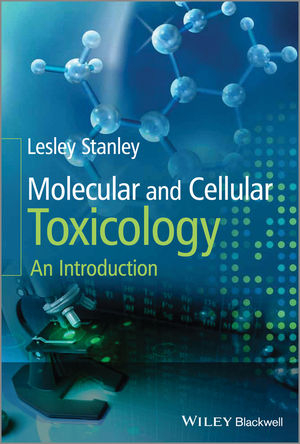
Molecular and Cellular Toxicology (eBook)
John Wiley & Sons (Verlag)
978-1-118-52601-9 (ISBN)
Toxicology is the study of the adverse effects of chemical, physical, or biological agents on people, animals, and the environment. Toxicologists are trained to investigate, interpret, and communicate the nature of those effects.
Over the last ten years the subject of toxicology has changed dramatically, moving from a discipline which was once firmly wedded to traditional methods to one which is keen to embrace the innovative techniques emerging from the developing fields of cell culture and molecular biology. There is an acute need for this to be reflected in a paradigm shift which takes advantage of the opportunities offered by modern developments in the life sciences, including new in vitro and in silico approaches, alternative whole organism (non-mammalian) models and the exploitation of ‘omics methods, high throughput screening (HTS) techniques and molecular imaging technologies.
This concise, accessible introduction to the field includes the very latest concepts and methodologies. It provides MSc, PhD and final year undergraduate students in pharmacy, biomedical and life sciences, as well as individuals starting out in the cosmetics, consumer products, pharmaceutical and testing industries, with everything they need to know to get to grips with the fast moving field of toxicology and the current approaches used in the risk assessment of drugs and chemicals.
Toxicology is the study of the adverse effects of chemical, physical, or biological agents on people, animals, and the environment. Toxicologists are trained to investigate, interpret, and communicate the nature of those effects. Over the last ten years the subject of toxicology has changed dramatically, moving from a discipline which was once firmly wedded to traditional methods to one which is keen to embrace the innovative techniques emerging from the developing fields of cell culture and molecular biology. There is an acute need for this to be reflected in a paradigm shift which takes advantage of the opportunities offered by modern developments in the life sciences, including new in vitro and in silico approaches, alternative whole organism (non-mammalian) models and the exploitation of omics methods, high throughput screening (HTS) techniques and molecular imaging technologies. This concise, accessible introduction to the field includes the very latest concepts and methodologies. It provides MSc, PhD and final year undergraduate students in pharmacy, biomedical and life sciences, as well as individuals starting out in the cosmetics, consumer products, pharmaceutical and testing industries, with everything they need to know to get to grips with the fast moving field of toxicology and the current approaches used in the risk assessment of drugs and chemicals.
Dr Lesley Stanley is a toxicologist with over 20 years experience in assessing the effects of chemicals on human health. Her fi rst degree was in Biochemistry from the University of Oxford and she obtained her PhD from the University of Edinburgh. Since May 2005 she has been a freelance consultant in Investigative Toxicology, while her previous experience includes three years as Head of Operations at CXR Biosciences Ltd, Dundee, and six years lecturing in Biomedical Science at De Montfort University, Leicester, as well as spells at the MRC Toxicology Unit and the National Institute of Environmental Health Sciences, North Carolina, USA. Dr Stanley was a member of the Committee on Toxicity from 2001- to 2007 and has been a member of the Hazardous Substances Advisory Committee (previously the Advisory Committee on Hazardous Substances) since 2007. She is also Deputy Chair of the Panel of the UK Register of Toxicologists.
"Overall, we consider that this book is a useful summary of current and emerging techniques in molecular toxicology." (BTS Newsletter, 1 March 2015)
Abbreviations
| 3Rs | replacement, refinement and reduction (of the use of animals in research) |
| 4-ABP | 4-aminobiphenyl |
| AAF | acetylaminofluorene |
| ADME | Absorption, Distribution, Metabolism and Excretion |
| AFB1 | aflatoxin B1 |
| AhR | arylhydrocarbon receptor |
| ALT | alanine aminotransferase |
| ASO | allele-specific oligonucleotide |
| ASPCR | allele-specific polymerase chain reaction |
| AST | aspartate aminotransferase |
| ATP | adenosine triphosphate |
| AUC | area under the plasma concentration–time curve |
| BAC | bacterial artificial chromosome |
| BBB | blood-brain barrier |
| BMD | benchmark dose |
| bp | base pair |
| BrdU | bromodeoxyuridine |
| CAR | constitutive androstane receptor |
| cdk | cyclin-dependent kinase |
| cDNA | copy DNA |
| CEBS | Chemical Effects on Biological Systems |
| ChIP | chromatin immunoprecipitation |
| CHO | Chinese hamster ovary |
| CIN | cervical intraepithelial neoplasia |
| CITCO | 6-(4-chlorophenyl)-imidazo[2,1-b]thiazole-5-carbaldehyde |
| CLINT | intrinsic clearance |
| CMAX | maximum (plasma) concentration |
| CNS | central nervous system |
| COMET | Consortium for Metabonomic Toxicology |
| CPMP | European Committee for Proprietary Medical Products |
| CYP | cytochrome P450 |
| DDI | drug–drug interaction |
| DEHP | diethylhexylphthalate |
| DEN | diethylnitrosamine |
| DILI | drug-induced liver injury |
| DMBA | 7,12-dimethylbenz(a)anthrancene |
| DMN | dimethylnitrosamine |
| DMSO | dimethyl sulphoxide |
| EC50 | concentration giving 50% of maximal effect |
| ECHA | European Chemical Agency |
| ECVAM | European Centre for the Validation of Alternative Methods |
| EFSA | European Food Safety Authority |
| EMA | European Medicines Agency |
| ENU | ethylnitrosourea |
| EPA | US Environmental Protection Agency |
| ESC | embryonic stem cell |
| EST | embryonic stem cell test |
| EU | European Union |
| FABP | fatty acid binding protein |
| FDA | US Food and Drug Administration |
| floxed | flanked with loxP sites |
| GC | gas chromatography |
| GFP | green fluorescent protein |
| γGT | gamma glutamyl transpeptidase |
| GI | gastrointestinal |
| GLP | Good Laboratory Practice |
| GSH | glutathione |
| GST | glutathione S-transferase |
| GTP | guanosine triphosphate |
| GWAS | genome-wide association study |
| HCC | hepatocellular carcinoma |
| hERG | human ether-a-go-go related gene |
| HO-1 | haem oxygenase 1 |
| HPRT | hypoxanthine phosphoribosyltransferase |
| HRNTM | Hepatic Reductase NullTM |
| HTS | high throughput screening |
| i.p. | intraperitoneal |
| i.v. | intravenous |
| IC50 | concentration giving 50% inhibition |
| ICH | International Conference on Harmonisation of Technical Requirements for Registration of Pharmaceuticals for Human Use |
| ILSI | International Life Sciences Institute |
| iPSC | induced pluripotent stem cell |
| IVIVE | in vitro–in vivo extrapolation |
| kb | kilobase |
| kD | kilo Dalton |
| KEGG | Kyoto Encyclopedia of Genes and Genomes |
| KM | Michaelis constant |
| KOW | octanol-water partition coefficient |
| LC | liquid chromatography |
| LC-MS/MS | liquid chromatography-tandem mass spectrometry |
| LD50 | dose giving 50% lethality |
| LDH | lactate dehydrogenase |
| LOAEL | lowest observed adverse effect level |
| LPS | lipopolysaccharide |
| MALDI | matrix-assisted laser desorption ionisation |
| MAPK | mitogen-activated protein kinase |
| MDCK | Madin-Darby canine kidney |
| MDR | multidrug resistance protein |
| MHLW | Japanese Ministry of Health, Labour and Welfare |
| MHRA | Medicines and Healthcare Products Regulatory Agency |
| MIAME | Minimum Information About a Microarray Experiment |
| MIAPE | Minimum Information About a Proteomics Experiment |
| MNU | methylnitrosourea |
| MOE | margin of exposure |
| mRNA | messenger RNA |
| MRP | multi-drug resistance-associated protein |
| MS | mass spectrometry |
| MTD | maximum tolerated dose |
| NADPH | nicotinamide adenine dinucleotide phosphate |
| NAT | N-acetyltransferase |
| NHS | UK National Health Service |
| NIEHS | US National Institute of Environmental Health Sciences |
| NIH | US National Institutes of Health |
| NMR | nuclear magnetic resonance |
| NOAEL | no observed adverse effect level |
| NTP | US National Toxicology Programme |
| OECD | Organisation for Economic Co-operation and Development |
| p.o. | perioral |
| PAH | polycyclic aromatic hydrocarbon |
| PAMPA | Passive Artificial Membrane Permeability Assay |
| Papp | apparent permeability |
| PB | phenobarbital |
| PBBK | physiologically based biokinetic |
| PBPK | physiologically based pharmacokinetic |
| PBTK | physiologically based toxicokinetic |
| PCN | pregnenlonone 16α-carbonitrile |
| PCR | polymerase chain reaction |
| PhIP | 2-amino-1-methyl-6-phenylimidazo-[4,5-b]pyridine |
| pKa | acid dissociation constant |
| PPARα | peroxisome proliferater activated receptor α |
| PPD | p-phenylene diamine |
| PXR | pregnane X-receptor |
| QA | quality assurance |
| QC | quality control |
| QSAR | quantitative structure–activity relationship |
| QSPR | quantitative structure–permeability relationship |
| RFLP | restriction... |
| Erscheint lt. Verlag | 2.4.2014 |
|---|---|
| Sprache | englisch |
| Themenwelt | Medizin / Pharmazie ► Gesundheitsfachberufe |
| Studium ► 2. Studienabschnitt (Klinik) ► Pharmakologie / Toxikologie | |
| Naturwissenschaften ► Biologie ► Biochemie | |
| Naturwissenschaften ► Biologie ► Mikrobiologie / Immunologie | |
| Technik | |
| Schlagworte | Acute • advantage • APPROACHES • Biowissenschaften • Cell & Molecular Biology • Chemie • Chemistry • Discipline • firmly • Last • Life Sciences • Medical Science • Medizin • Methods • Molekularbiologie • moving • Need • New • nonmammalian models • Oldfashioned • Omics • once • Opportunities • organism • paradigm • Pharmacology & Pharmaceutical Medicine • Pharmakologie u. Pharmazeutische Medizin • Shift • silico • Subject • ten years • Toxicology • Toxikologie • Traditional • Vitro • whole • Zellbiologie • Zell- u. Molekularbiologie |
| ISBN-10 | 1-118-52601-5 / 1118526015 |
| ISBN-13 | 978-1-118-52601-9 / 9781118526019 |
| Informationen gemäß Produktsicherheitsverordnung (GPSR) | |
| Haben Sie eine Frage zum Produkt? |
 EPUB (Adobe DRM)
Kopierschutz: Adobe-DRM
Adobe-DRM ist ein Kopierschutz, der das eBook vor Mißbrauch schützen soll. Dabei wird das eBook bereits beim Download auf Ihre persönliche Adobe-ID autorisiert. Lesen können Sie das eBook dann nur auf den Geräten, welche ebenfalls auf Ihre Adobe-ID registriert sind.
Details zum Adobe-DRM
Dateiformat: EPUB (Electronic Publication)
EPUB ist ein offener Standard für eBooks und eignet sich besonders zur Darstellung von Belletristik und Sachbüchern. Der Fließtext wird dynamisch an die Display- und Schriftgröße angepasst. Auch für mobile Lesegeräte ist EPUB daher gut geeignet.
Systemvoraussetzungen:
PC/Mac: Mit einem PC oder Mac können Sie dieses eBook lesen. Sie benötigen eine
eReader: Dieses eBook kann mit (fast) allen eBook-Readern gelesen werden. Mit dem amazon-Kindle ist es aber nicht kompatibel.
Smartphone/Tablet: Egal ob Apple oder Android, dieses eBook können Sie lesen. Sie benötigen eine
Geräteliste und zusätzliche Hinweise
Buying eBooks from abroad
For tax law reasons we can sell eBooks just within Germany and Switzerland. Regrettably we cannot fulfill eBook-orders from other countries.
aus dem Bereich