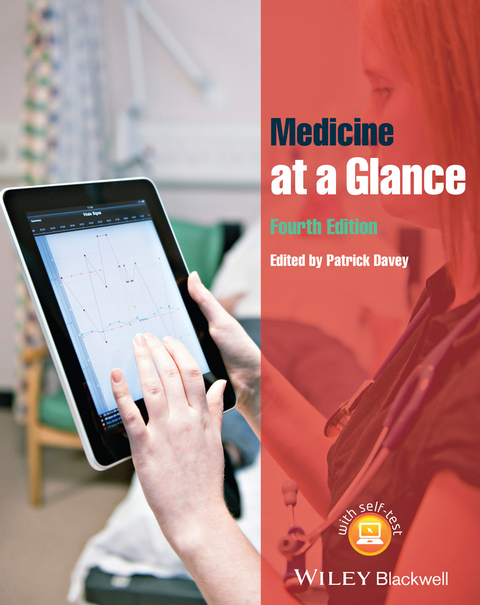
Medicine at a Glance (eBook)
John Wiley & Sons (Verlag)
978-1-118-28667-8 (ISBN)
This fourth edition of Medicine at a Glance, the leading title in the best-selling at a Glance series, provides an unparalleled overview of the study of medicine, closely following the core medical curriculum.
Ideal for medical students, Foundation programme doctors and those training in the allied health professions, Medicine at a Glance presents vital information on clinical presentations, diseases, and treatments in every major medical specialty, from cardiology to dermatology.
Medicine at a Glance:
• Has been fully revised to reflect essential clinical and curriculum updates.
• Contains brand new material in key areas such as imaging, women's health, communication and data interpretation.
• Features a brand new, clearer text design, in the trusted at a Glance double-page spread style, in full-colour throughout.
• Is the ideal, practical companion to clinical attachments, available in a range of digital formats for on-the-go study and revision.
• Includes a companion website at www.ataglanceseries.com/medicine featuring interactive Multiple Choice Questions (MCQs), interactive flashcards with show/hide labels, and tables of normal values
This title is also available as a mobile App from MedHand Mobile Libraries. Buy it now from iTunes, Google Play or the MedHand Store.
Patrick Davey is Consultant Cardiologist at Northampton General Hospital, and Honorary Senior Lecturer, Department of Cardiovascular Medicine, John Radcliffe Hospital, Oxford
Patrick Davey is Consultant Cardiologist at Northampton General Hospital, and Honorary Senior Lecturer, Department of Cardiovascular Medicine, John Radcliffe Hospital, Oxford
Cover 1
Normal values 3
Title page 5
Copyright page 6
Contents 7
Preface to third edition 14
Preface to fourth edition 15
Contributors 16
Acknowledgements 18
Abbreviations 20
How to use your revision guide 25
About the companion website 29
Part 1: Introduction 30
1: How to be a medical student 32
Good doctors 32
Hippocratic oath and the modern perspective 33
Health-care systems 33
How to learn 33
How to behave on the wards 33
2: Patient confidentiality 34
Consent to disclosure of confidential information (see Chapter 3) 35
Handling patient’s medical records and data 35
Breaches of patient confidentiality 35
Unacceptable breaches of patient confidentiality 35
Situations where there is a legal obligation to breach patient confidentiality 35
Situations where the medical professional may but is not obliged to breach patient confidentiality 35
3: Consent 36
Mental Capacity Act 2005 37
Consent and minors (< 18 years old)
4: Relationship with the patient 38
Sequence of the consultation 39
Privacy 39
Language 39
Relatives, friends and chaperones 39
Some guidelines for the use of chaperones 39
Hand washing and hospital-acquired infection 39
5: History of presenting complaint 40
Let the patient talk 40
More specific questioning 40
Premorbid functional status 41
Patients’ understanding of their illness 41
Focus on the main problems 41
Summarize your findings 41
6: Past medical history, drugs and allergies 42
Past medical history 42
Drug history 43
Allergies 43
Smoking 43
Alcohol 43
7: Family and social history 44
Family history 44
Social history 44
Travel history 44
8: Functional enquiry 45
9: Principles of examination 46
Inspect 46
Palpate 46
Percuss 46
Auscultate 46
10: Basic clinical skills 47
Clinical assessment of the patient 47
Taking the history 48
The physical examination 48
Examination of systems 48
Rapid neurological and musculoskeletal examination 49
Presenting the case 49
Making the diagnosis 49
What is diagnosis? 49
Why can diagnosis be difficult? 49
How do we go about making a diagnosis? 50
Working towards diagnosis 50
Reasoning about diagnosis 51
Coordinating diagnosis with the safe care of the patient 51
Avoiding mistakes in diagnosis 51
11: Is the patient ill? 52
Assessment of ill patients 53
General findings 53
Consciousness 53
12: The critically ill patient 54
Recognition of the critically ill patient 54
Examination of the critically ill patient 54
Airway 55
Breathing 55
Circulation 55
Disability 55
Exposure 55
Examination of critically ill patients’ charts 55
Admission to intensive care 55
Treatment of the critically sick patient 55
Part 2: Clinical presentations at a glance 56
Cardiovascular disease 58
13: Chest pain 58
Diagnostic assessment of acute chest pain 59
Typical myocardial ischaemic pain (cardiac pain) 59
Angina 59
Myocardial infarction 59
Aortic dissection 60
Pleuritic pain 60
Musculoskeletal chest pain 61
Gastro-oesophageal pain 61
Gall bladder disease 61
14: Oedema 62
15: Palpitations 64
16: The painful leg 65
17: Heart murmurs 66
18: Shock 68
Respiratory disease 70
19: Breathlessness, cough and haemoptysis 70
Breathlessness 71
Heart failure 71
Airway disease 71
Respiratory tract infections 71
Pulmonary embolus 71
Pneumothorax 71
Lung parenchymal disease 71
Obesity 71
Physical deconditioning 71
Rarer causes of breathlessness 71
Psychological causes for breathlessness 71
Classification of severity of breathlessness 71
Physical examination 72
Investigations 72
Treatment 72
Cough 72
Key points 72
Epidemiology 73
Differential diagnosis 73
Investigations 73
Haemoptysis 73
Causes 73
Clinical approach 73
Routine investigations 73
Management 73
20: Wheeze (stridor) 74
21: Pleural effusion 75
22: Pneumothorax 76
Gastroenterology 78
23: Unintentional weight loss 78
24: Constipation and change in bowel habit 80
Chronic constipation 81
Overall approach 81
Clinical features 81
Examination and investigations 81
Management 81
Surgery 81
Change in bowel habit in older patients 81
Examination 81
Management 81
25: Diarrhoea: acute and chronic 82
Acute diarrhoea 82
Overall approach 82
Clinical features (see Figure 25.1) 83
History 83
Examination 83
Investigations 83
Management 83
Chronic diarrhoea 83
Overall approach 83
Clinical features 83
History 83
Examination 83
Investigations 83
Management 83
26: Vomiting and intestinal obstruction 84
Intestinal obstruction 84
Overall approach 84
Clinical features 85
History 85
Examination 85
Investigations 85
Management 85
Initial management 85
Chronic vomiting 85
Overall approach 85
History 85
Examination 85
Investigations 85
Management 85
27: Haematemesis and melaena 86
28: Rectal bleeding 90
Acute lower GI haemorrhage 90
Differential diagnosis (see Table 28.1) 90
Clinical features 91
History 91
Examination 91
Investigations 91
Management 91
Chronic rectal bleeding 91
Overall approach 91
Differential diagnosis 91
History 91
Examination 91
Investigations 91
Management 91
29: Dysphagia 92
Neuromuscular dysphagia 93
Clinical features 93
Examination 93
Prognosis 93
30: Abdominal pain and dyspepsia 94
Abdominal pain 94
History 94
Examination 95
Investigations 95
Management 95
Dyspepsia 95
History and examination 95
Investigations 95
Management 95
31: Jaundice 96
Introduction 96
Aetiology 96
Differential diagnosis 96
Clinical features and history 97
Examination 97
Investigations 97
Management 97
32: Abdominal mass 98
33: Ascites 99
Renal medicine 100
34: Polyuria and oliguria 100
Polyuria 100
Oliguria in the hospital setting 101
Investigations and management 101
Urinary retention 101
35: Dysuria, frequency and urgency 102
Acute pyelonephritis 102
Acute cystitis 102
Urethritis 102
Investigations 102
36: Haematuria 103
Endocrinology 104
37: Sweating, flushing and thyroid swellings 104
Sweating 105
Differential diagnosis 105
Investigations 105
Management 105
Flushing 105
Investigations 105
Management 105
Thyroid swellings 105
Specific thyroid cancers 106
38: Obesity 107
39: Hirsutism and infertility 110
Hirsutism 110
Infertility 111
Management 111
40: Erectile dysfunction and gynaecomastia 112
Erectile dysfunction 112
Diagnosis 113
Treatment 113
Gynaecomastia 113
Infectious disease 114
41: Principles of infection 114
The host 114
Infection and disease 114
Non-specific defences 114
Microorganisms 115
Disease production 115
Potential clinical consequences of infection 115
Acute consequences 115
Chronic consequences 115
Autoimmune phenomena 115
Treatment of infection 115
Prevention of infection 115
42: Diagnosis of infection 116
Full blood count 116
CRP and ESR 116
Liver function tests 116
Microscopy 117
Fixed stained preparations 117
Culture 117
Serology 117
Histology 117
Molecular methods 117
Imaging 117
43: Fever and the assessment of the patient with presumed infection 118
Fever 118
Hyperthermia 118
Pathogenesis of fever 118
Assessment of the patient 119
History 119
Symptoms 119
Exposure to pathogens 119
Drug history 119
Past medical history 119
Family history 119
Examination and investigations 119
Very rare causes of hyperthermia 119
44: Fever and infections in hospital patients 120
Nosocomial fever 121
Common infectious causes 121
Common non-infectious causes 121
Clinical assessment 121
Specific nosocomial infections 121
Bacteraemia and line-related infection 121
Fever in the neutropenic patient 121
45: Fever of unknown origin 123
Classic fever of unknown origin 124
Infections 124
Neoplasms 124
Connective tissue diseases 124
Miscellaneous 124
Approach to diagnosis 124
Investigations 124
Routine 124
Specific 125
Diagnostic trials of therapy 125
46: Fever and rash 126
Diffuse erythema 126
Vesiculo-bullous rashes 127
Petechial–purpuric rashes 127
Maculopapular rashes 127
Viral infections 127
Rickettsial infections 127
Mycoplasma and chlamydial infections 127
Bacterial infections/spirochaetal 127
Nodular lesions 127
Other rashes/lesions of importance 127
Unusual rashes in tropical disease 127
47: Fever in HIV-infected patients 128
48: Fever in the returned traveller 130
49: Vaginal discharge and urethritis 132
Vaginal discharge 132
Infectious causes 132
Pathogenesis 132
Clinical features 133
Investigations 133
Management 133
Urethritis in men 133
Definition and aetiology 133
Clinical features 133
Complications 133
Examination and diagnosis 133
Investigations 133
Management 133
Urethritis in women 133
Management 133
Haematology 134
50: Anaemia 134
51: Clinical approach to lymphadenopathy and splenomegaly 136
Lymphadenopathy 136
History and examination 137
Investigations 137
Splenomegaly 137
Investigations 137
Complications 137
52: The patient with abnormal bleeding or bruising 138
53: Leukopenia 139
Neutropenia 139
Consequences of neutropenia 139
Treatment 139
Lymphopenia 139
Oncology 140
54: Oncological emergencies 140
Superior vena caval obstruction 140
Aetiology 140
Clinical features 140
Investigations 140
Management and prognosis 141
Malignant spinal cord compression 141
Pathophysiology, aetiology and clinical features 141
Symptoms and signs of spinal cord compression 141
Investigations 141
Management 141
Prognosis 141
Neurology 142
55: Introduction to neurological diagnosis 1 142
Six steps to neurological diagnosis 142
Lesion localization 143
Cerebral hemispheres 143
Cerebellum 143
Brainstem 143
56: Introduction to neurological diagnosis 2 144
Eye movements 145
Spinal cord 145
Nerve roots 145
Lesion localization in peripheral nerve and muscle 145
57: Introduction to neurological diagnosis 3: neuroepidemiology 146
58: Common neurological symptoms 147
Difficulty walking 147
Patterns of gait disturbance 147
Differential diagnosis of ataxia 148
Dizziness 148
Peripheral causes of vertigo 149
Central causes of vertigo 149
Mixed causes of vertigo 149
59: Weakness 150
Weakness of all four limbs 151
Cerebral hemispheres 151
Brainstem 151
Spinal cord 151
Nerve roots 151
Polyneuropathy 151
Muscle disease 151
Weakness of one limb 152
Cortical lesions 152
Motor neuron disease 152
Spinal cord lesions 152
Plexopathy 152
Involvement of multiple large motor nerves (mononeuritis multiplex) 152
Isolated mononeuropathy 152
Weakness of one side of the body 152
Contralateral cerebral hemisphere 152
Brainstem 152
Spinal cord 152
Weakness of both lower limbs (paraparesis) 152
Weakness of both upper limbs 152
60: Disturbance of vision: a neurological perspective 153
Visual loss 154
Monocular visual loss 154
Binocular visual loss 154
Typical clinical presentations of ‘neurological’ causes of visual loss 154
Brief monocular or binocular visual loss 154
Sudden painless loss of vision in one eye 154
Rapid progressive monocular visual loss 154
Progressive night blindness 154
Bitemporal quadrantic or hemianopia 154
Homonymous hemianopia 154
Visual neglect and visual hallucinations 154
Migraine 154
Double vision 154
Cranial nerve palsies 154
Internuclear ophthalmoplegia 155
Brainstem lesions 155
Cerebellar disease 155
Myasthenia gravis 155
Mitochondrial myopathies 155
Thyroid disease 155
Pupils 155
Large 155
Small 155
61: Sudden painless loss of vision 156
Vascular occlusion 157
Retinal vein occlusion 157
Retinal artery occlusion 157
Non-arteritic anterior or posterior ischaemic optic neuropathy 157
Cerebrovascular accident 157
Acephalgic migraine 157
Vitreous haemorrhage 157
Retinal detachment 157
62: Tremor and other involuntary movements 158
Common causes of tremor 158
Essential tremor 158
Cerebellar disease 158
Parkinsonism 158
Dystonic tremor 158
Drugs and toxins 158
Metabolic 159
Other abnormal movements 159
Myoclonus 159
Dystonias 159
Chorea 159
Dyskinesias 159
Tics 159
63: Headache and facial pain 160
Classification of primary headache 161
Migraine 161
Tension-type headache 161
Chronic daily headache 161
Cluster headache 161
Indomethacin-responsive headaches 161
Facial pain 161
Other causes of headache 161
64: Episodic alterations in awareness and consciousness 162
Cardiovascular causes of loss of consciousness 163
Terminology 164
Neurological causes of loss of consciousness 164
Transient loss of consciousness 165
Prognosis in syncope 165
Other causes of altered consciousness 165
Ophthalmology 166
65: The red eye 166
Is this conjunctivitis? 166
Infective conjunctivitis 166
Dry eye 167
Allergic conjunctivitis 167
Could it be episcleritis? 167
Can I recognize iritis? 167
Could the cornea be affected? 167
Is it possible the red eye could be scleritis? 167
Does the remote possibility of acute angle closure need to be considered? 167
Rheumatology 168
66: Introduction to rheumatological disease 168
Bone pain 171
Differential diagnosis 171
Muscle pain 171
Differential diagnosis 171
Management 171
67: Low back pain and other regional pain syndromes 172
Low back pain 173
Aetiology and nomenclature 173
Symptoms 173
Natural history of low back pain 173
Clinical approach 173
Examination 173
Management (see Figure 67.1) 173
Regional pain syndromes 173
Differential diagnosis 173
History 174
Principles of management 174
Prognosis and outcome 174
Dermatology 176
68: Introduction to dermatology 176
69: Pruritus and rashes 178
Pruritus 178
History 178
Examination and treatment 178
Rashes 179
Erythemas 179
Urticarial lesions 179
Red scaly patches 179
Erythroderma 179
Blistering 179
Vasculitis 179
Flushing (see Chapter 37) 179
Pustules 179
70: Hair and nail disorders 180
Hirsutes and hypertrichosis 180
Alopecia 180
Nail disorders 180
71: Leg ulcers 182
72: Photodermatoses 183
Women’s health 184
73: Pelvic pain 184
Acute pelvic pain 185
Gynaecological causes 185
Non-gynaecological causes 185
Chronic pelvic pain 185
Gynaecological causes 185
Non-gynaecological causes 185
74: Urinary incontinence 186
Other acute medical emergencies 188
75: Attempted suicide by drug poisoning 188
Some specific commonly ingested poisons 189
Paracetamol 189
Tricyclic antidepressants 189
Opiates 189
Salicylates 189
Benzodiazepines 189
Alcohol 189
76: Anaphylaxis 190
77: Allergic reactions 192
Inhalant allergy 192
Food allergy 192
Angioedema 192
Urticaria 193
Investigation of allergic disease 193
78: Cardiac and respiratory arrest 194
Causes of cardiac and respiratory arrest 194
Cardiac arrest 194
Electromechanical dissociation 194
Respiratory arrest 194
Cardiopulmonary resuscitation 194
Key principles underlying CPR 194
Basic life support 194
Advanced life support 195
79: Delirium 196
80: Coma 199
Part 3: Diseases and treatments at a glance 202
Cardiovascular disease 205
81: Hypertension 205
Malignant or accelerated hypertension 207
Treatment 207
82: Hyperlipidaemia 208
Secondary hyperlipidaemias 209
Genetic hyperlipidaemias 209
Lipids in atherosclerosis 209
Lipid lowering and risk factor modification 210
Multiple risk factor modification 210
83: Acute coronary syndromes 211
Acute STEMI and acute coronary syndromes 213
Immediate treatment of ACS 213
Immediate treatment of suspected ACS 213
Risk stratification of ACSs 213
Coronary angiography 214
Invasive cardiac assessment beyond coronary angiography 214
Percutaneous coronary intervention 215
84: ST segment elevation myocardial infarction 216
85: Chronic coronary syndromes 220
86: Aortic dissection 224
87: Heart failure 226
88: Aortic valve disease 230
Aortic stenosis 230
Symptoms 230
Signs 231
Investigations 231
Treatment 231
Aortic regurgitation 231
Symptoms 231
Signs 231
Investigations 231
Treatment 231
Aortic valve replacement 231
89: Mitral valve disease 232
Mitral stenosis 232
Symptoms 232
Signs 232
Investigations 233
Treatment 233
Differential diagnosis 233
Mitral prolapse 233
Mitral regurgitation 233
Symptoms 233
Signs 233
Investigations 233
Treatment 233
90: Cardiomyopathies 234
Dilated cardiomyopathy 234
Hypertrophic cardiomyopathy 234
Restrictive cardiomyopathy 234
91: Pericardial disease 235
Acute pericarditis 235
Pericardial effusion 235
Clinical features and treatment of cardiac tamponade 235
Constrictive pericarditis 235
92: Pulmonary embolism 236
Chronic thromboembolic disease 237
Thrombophilia 237
93: Cardiac infections 238
Infective endocarditis 238
Aetiology and pathogenesis 238
Clinical features 239
Investigations 239
Treatment and prognosis 239
Antibiotic prophylaxis to prevent infective endocarditis 239
Myocarditis 239
Treatment and prognosis 239
Pericarditis 239
Rheumatic fever 239
94: Tachyarrhythmias 240
Supraventricular tachyarrhythmias 240
AV-reciprocating tachycardias (paroxysmal supraventricular tachyarrhythmias) 240
Accessory pathways, pre-excitation and WPW syndrome 241
Atrial fibrillation (see Figure 94.2 below) 241
Pathophysiology 241
Classification 241
ECG diagnosis 241
Clinical features 241
Aetiology 242
Treatment 242
Atrial flutter 243
Pathophysiology 243
ECG diagnosis 243
Clinical features 243
Treatment 243
Ventricular tachycardias (see Figure 94.2 above) 243
Pathogenesis 243
ECG diagnosis 243
Clinical features 243
Treatment 243
Prevention of future episodes 244
Ventricular fibrillation 245
95: Bradyarrhythmias 246
96: Congenital heart disease 248
Ventricular septal defect 249
Atrial septal defect 249
Patent ductus arteriosus 249
Eisenmenger’s syndrome 249
Coarctation of the aorta 249
Complex congenital heart disease 249
Fallot’s tetralogy 249
Ebstein’s anomaly 249
Transposition of the great arteries 249
Respiratory disease 250
97: Lung function tests 250
98: Sleep apnoea 251
Obstructive sleep apnoea 251
Aetiology 251
Clinical features 251
Investigations 251
Treatment and prognosis 251
99: Respiratory failure 252
100: Arterial blood gas analysis 254
Blood gas values 254
Acid–base homeostasis 255
A practical approach to blood gas interpretation 255
101: Chest X-ray anatomy 256
Chest anatomy seen on posteroanterior view 257
Important anatomical landmarks and structures on a normal chest X-ray 257
Airways and lungs 257
Mediastinum 257
Heart 257
Hila 257
Hemidiaphragms 257
Costophrenic and cardiophrenic angles 257
Bones and soft tissues 257
102: Basic chest X-ray interpretation 258
103: Chest X-ray cases 1 260
Cardiomegaly 261
Pulmonary oedema 261
Pleural effusion 261
Prosthetic heart valves 261
Pleural plaques 261
104: Chest X-ray cases 2 262
Pneumothorax 263
Haemothorax 263
Lobar collapse 263
Tubes, lines and prostheses 263
105: Non-invasive ventilation 264
106: Mechanical ventilation 266
107: Lower respiratory tract infection: pneumonia 268
Community-acquired pneumonia 268
Epidemiology and pathophysiology 268
Clinical features 269
Investigations 269
Management and prognosis 269
Hospital-acquired pneumonia 269
Epidemiology and aetiopathogenesis 269
Clinical features and investigations 269
Management 269
Lung abscess 270
Clinical features 270
Investigations 270
Management and prognosis 270
Pneumonia in the immunocompromised 270
Definition and epidemiology 270
Pathophysiology 270
Clinical features and investigations 270
Management and prognosis 270
108: Upper respiratory tract infection 271
109: Asthma 272
110: Chronic obstructive pulmonary disease 275
111: Bronchiectasis 278
112: Cystic fibrosis 280
113: Sarcoidosis and other granulomatous lung diseases 282
Sarcoidosis 282
Definition 282
Epidemiology 282
Pathophysiology 282
Clinical features 283
Investigations 283
Management 283
Prognosis 283
Beryllium disease 283
Histiocytosis X (Langerhans’ cell histiocytosis) 283
Epidemiology 283
Pathophysiology and investigation 283
Clinical features 283
Management 283
114: Extrinsic allergic alveolitis (hypersensitivity pneumonitis) 284
115: Pulmonary fibrosis 286
116: Pulmonary eosinophilia and vasculitis 288
Pulmonary eosinophilia 288
Epidemiology and prognosis 289
Vasculitis without eosinophilia 289
Wegener’s granulomatosis 289
General features 289
Upper airways 289
Lower airways 289
Renal disease 289
Other features 289
Diagnosis 289
Treatment and prognosis 289
Other immunologically mediated disease of the lung 289
117: Fungi and the lung 290
Common fungal lung infections 290
Aspergillosis 290
Asthma 290
Allergic bronchopulmonary aspergillosis 291
Aspergillus sinusitis 291
Allergic alveolitis caused by Aspergillus spp. 291
Aspergilloma 291
Aspergillus pneumonia 291
Other fungal lung infections 291
Histoplasmosis 291
Candida spp. 291
Cryptococcosis 291
118: Industrial lung disease 292
Dust inhalation diseases 292
Asbestosis 292
Epidemiology 292
Pathology 292
Clinical features 292
Investigations 292
Management 293
Other asbestos-related diseases: mesothelioma 293
Clinical features 293
Investigations 293
Management 293
Prognosis 293
Pleural plaques, pleural thickening and pleural effusion 293
Coal worker’s pneumoconiosis 293
Definition, epidemiology and aetiopathogenesis 293
Management 293
Silicosis 293
119: Lung disease caused by drugs 294
120: BOOP and ARDS 295
Bronchiolitis obliterans organizing pneumonia 295
Epidemiology 295
Pathophysiology 295
Clinical features 295
Investigations 295
Management 295
Acute respiratory distress syndrome 295
121: Primary tumours of the lung 296
Gastroenterology 298
122: Food poisoning and gastrointestinal infections 298
Acute gastroenteritis 298
Clinical features 298
Investigations 298
Management and prognosis 298
Chronic infections 298
Giardiasis 298
Tuberculosis 298
Amoebiasis 298
123: Reflux 299
Barrett’s oesophagus 299
124: Peptic ulcer disease 300
Duodenal ulcer 300
Clinical features 300
Investigations 300
Gastric ulcer 300
Clinical features and investigations 300
Management and prognosis 300
125: Diverticular disease 301
126: Iron deficiency 302
127: Abnormal liver function tests 304
128: Inflammatory bowel disease 306
Ulcerative colitis 306
Pathophysiology and clinical features 306
Investigations 307
Management 307
Crohn’s disease 307
Clinical features 307
Investigations 307
Management and prognosis 307
129: Malabsorption 308
Diseases causing malabsorption 309
Coeliac disease 309
Clinical features 309
Investigations 309
Management and prognosis 309
Other causes of malabsorption 309
130: Pancreatitis and pancreatic cancer 310
Acute pancreatitis 310
Clinical features 310
Management and prognosis 310
Complications 311
Chronic pancreatitis 311
Clinical features 311
Investigations 311
Management and prognosis 311
Pancreatic cancer 311
Clinical features 311
Investigations 311
Management and prognosis 311
131: Gallstone disease 312
132: Inflammatory liver disease: viral and immune 313
Viral hepatitis 314
Hepatitis A virus (HAV) 314
Hepatitis B virus (HBV) 314
Hepatitis C virus (HCV) 314
Autoimmune hepatitis 315
Primary biliary cirrhosis 316
Clinical features 316
Investigations 316
Management and prognosis 316
Primary sclerosing cholangitis 316
Clinical features 316
Investigations 316
Management and prognosis 316
133: Acute and chronic liver disease 317
Acute hepatitis 318
Investigations 318
Management and prognosis 318
Fulminant liver failure 318
Clinical features 318
Investigations 318
Management and prognosis 318
Chronic liver disease 318
Pathophysiology and clinical features 318
Problems caused by reduced liver cell mass 318
Problems caused by portal hypertension 318
Investigations 319
Management 319
134: Metabolic liver disease (including alcohol) 320
Alcoholic liver disease 320
Incidence 320
Pathophysiology 320
Clinical features 321
Investigations 321
Management and prognosis 321
Haemochromatosis 321
Incidence 321
Pathophysiology 321
Clinical features 321
Investigations 321
Management and prognosis 321
Wilson’s disease 321
Investigations 321
Management and prognosis 321
135: Upper gastrointestinal cancer 322
Oesophageal carcinoma 323
Incidence 323
Pathophysiology 323
Clinical features 323
Investigations 323
Management and prognosis 323
Gastric carcinoma 323
Incidence 323
Pathophysiology 323
Clinical features 323
Investigations 323
Management and prognosis 323
136: Colorectal cancer 324
137: Imaging in gastrointestinal disease 326
138: Functional gastrointestinal disorders 327
139: Nutrition 328
Identification of malnutrition in hospital patients 328
General (protein-calorie malnutrition) 328
Specific (vitamin and mineral deficiencies) 328
Nutritional support 328
Indications 328
Forms of nutritional support 328
Therapeutic diets 328
Renal medicine 330
140: Renal physiology and function tests 330
141: Hypokalaemia and hyperkalaemia 332
Hypokalaemia 332
Common causes 332
Clinical features 332
Management 333
Hyperkalaemia 333
Common causes 333
Clinical features 333
Management 333
142: Hyponatraemia and hypernatraemia 334
Hyponatraemia 335
Common causes 335
Management 335
Syndrome of inappropriate ADH secretion 335
Hypernatraemia 335
Common causes 335
Management 335
143: Disorders of acid–base balance 336
Metabolic acidosis 336
Metabolic alkalosis 336
Respiratory acidosis 337
Respiratory alkalosis 337
Mixed acid–base disorders 337
144: Urinary calculi 338
145: Nephrotic and nephritic syndromes 340
Proteinuria and the nephrotic syndrome 340
The nephrotic syndrome 340
Causes 341
Complications 341
Treatment 341
The nephritic syndrome 341
Treatment 341
146: Glomerulonephritis 342
Acute glomerulonephritis 342
Renal histology 343
Chronic glomerulonephritis 343
Management 343
147: Renal involvement in systemic disease 344
Diabetes mellitus 344
Myeloma 345
Amyloidosis 345
Haemolytic uraemic syndrome 345
Renovascular disease 345
Renal vasculitis 345
Wegener’s granulomatosis 345
Microscopic polyangiitis 346
Goodpasture’s syndrome 346
Polyarteritis nodosa 346
Systemic lupus erythematosus 346
Henoch–Schönlein purpura 347
Scleroderma 347
Cryoglobulinaemia 347
148: Hereditary renal disorders 348
Autosomal dominant polycystic kidney disease 348
Investigations 348
Simple cysts 349
Other inherited disorders affecting the kidney 349
Alport’s syndrome 349
Medullary sponge kidney 349
Tuberous sclerosis 349
Von Hippel–Lindau syndrome 349
Anderson–Fabry disease 349
149: Tubulointerstitial disease 350
Acute interstitial nephritis 350
Cholesterol emboli 351
Chronic interstitial nephritis and chronic pyelonephritis 351
Isolated/specific tubular defects 351
Investigations and treatment 351
Reflux nephropathy 351
Investigations 351
Treatment 351
Other congenital malformations of the urinary tract 351
150: Acute renal failure 352
151: Chronic renal failure and the dialysis patient 354
152: The renal transplant recipient 356
153: Drugs and renal failure 358
Effect of renal impairment on excretion 358
Effect of renal impairment on drug action 358
Effect of drug on the kidneys 358
154: Benign prostatic hypertrophy 359
155: Urinary tract infection 360
Endocrinology 362
156: Diabetes mellitus 362
157: Complications of diabetes 364
Microvascular complications 364
Eye disease (retinopathy) 364
Nephropathy 365
Neuropathy 365
Macrovascular complications 365
Foot disease 365
Prevention of complications 365
Hypoglycaemia 365
Clinical features and treatment 365
Investigations 365
158: Diabetic emergencies 366
Diabetic ketoacidosis 366
Hyperosmolar non-ketotic coma 366
Lactic acidosis 366
159: Hyperprolactinaemia and acromegaly 367
Hyperprolactinaemia 367
Investigations 367
Management of prolactinomas 367
Acromegaly 367
Investigations and management 367
160: Hypothyroidism 368
Myxoedema coma 369
Congenital hypothyroidism 369
161: Hyperthyroidism 370
162: Calcium metabolism 372
Acute hypercalcaemia 372
Aetiology 372
Causes 373
Management 373
Hypocalcaemia 373
Aetiology 373
Treatment 373
163: Adrenal disease 374
Adrenal failure 374
Clinical features of Addison’s disease 375
Investigations 375
Management 375
Hyperaldosteronism 375
Phaeochromocytoma 375
Investigations, management and prognosis 375
Cushing’s syndrome 375
Investigations 375
Management and prognosis 375
164: Miscellaneous endocrine disorders 376
Diseases of the pituitary gland 377
Pituitary tumours 377
Management 377
Diabetes insipidus 377
Treatment 377
Syndrome of inappropriate ADH secretion 377
Multiple endocrine neoplasia 377
165: Hypogonadism 378
Male hypogonadism 378
Primary male hypogonadism 378
Secondary male hypogonadism 379
Management 379
Female hypogonadism 379
Primary female hypogonadism 379
Secondary female hypogonadism 379
Management 379
Menstrual failure (amenorrhoea) 379
Infectious disease 380
166: Bacteraemia and septic shock 380
167: Common viral infections in adults 382
Epstein–Barr virus 382
Diagnosis and treatment 382
Herpes simplex virus 383
Treatment 383
Immunocompromised hosts 383
Varicella-zoster virus 383
Immunocompromised hosts 383
Diagnosis and management 383
Infection during pregnancy 383
Cytomegalovirus 383
168: HIV infection and AIDS 384
Common opportunistic infections 385
169: Common fungal infections 386
Candida species 386
Mucocutaneous candidiasis 387
Invasive candidiasis 387
Treatment 387
Antifungal prophylaxis 387
Aspergillus species 387
Clinical patterns of invasive disease 387
Treatment 387
Cryptococcal disease 387
Treatment 387
170: Specific bacterial infections 388
Listeriosis 388
Diagnosis and treatment 388
Brucellosis 388
Tetanus 389
Clinical features 389
Diagnosis and management 389
Lyme disease 389
Diagnosis and treatment 389
Syphilis 389
Diagnosis 389
Management 389
171: Malaria 390
172: Tuberculosis 392
173: Tropical infectious diseases 394
Typhoid 394
Clinical features 394
Diagnosis 394
Treatment 394
Dengue 395
Clinical features (3–8-day incubation) 395
Diagnosis and treatment 395
Schistosomiasis 395
Diagnosis and treatment 395
Tick typhus 395
Diagnosis and treatment 395
Leptospirosis 395
Clinical features 395
Diagnosis and treatment 395
Haemorrhagic fevers 395
Diagnosis and treatment 395
174: Diseases predisposing to infection 396
Diseases predisposing to infections with common bacterial pathogens 396
Structural factors predisposing to infection with common bacterial pathogens 397
Miscellaneous conditions 397
Diseases predisposing to infection with unusual pathogens 397
Complement defects 397
Neutrophil defects 397
Antibody deficiencies 397
Defects in cell-mediated immunity 397
175: Immunological deficiency syndromes 398
Antibody deficiency syndromes 399
Primary antibody deficiency 399
Secondary antibody deficiency 400
Investigations 400
Management and prognosis 400
T-cell deficiencies 400
Severe combined immunodeficiency 400
Investigations 400
Management of severe combined and T-cell disorders 400
Neutrophil disorders 400
Investigations 401
Management 401
Complement deficiency 401
Investigations 401
Management 401
Haematology 402
176: Haematinic deficiency anaemias 402
Iron deficiency 402
Causes 402
Clinical features 402
Diagnosis 402
Management 403
Vitamin B12 deficiency 403
Pernicious anaemia 403
Pathophysiology 403
Clinical features 403
Diagnosis 403
Treatment and prognosis 403
Folate deficiency 403
Diagnosis 403
Treatment 403
Hormonal and cytokine causes of anaemia 403
177: Haemolytic anaemia 404
General laboratory abnormalities in haemolysis 405
Hereditary haemolytic anaemias 405
Hereditary spherocytosis 405
Red cell enzyme deficiency 405
Acquired haemolytic anaemias 405
Thrombotic thrombocytopenic purpura 405
Haemolytic uraemic syndrome 406
Cardiac haemolysis 406
Autoimmune haemolytic anaemia 406
178: Thalassaemia and sickle cell disease 408
Thalassaemia 409
Thalassaemia trait 409
Thalassaemia major 409
Thalassaemia intermedia 409
Sickle cell disease 409
Treatment 409
Other haemoglobin variants 409
179: Bone marrow failure 410
Acquired aplastic anaemia 411
Epidemiology 411
Aetiology 411
Clinical features 411
Diagnosis 411
Treatment and prognosis 411
Paroxysmal nocturnal haemoglobinuria 411
Congenital aplastic anaemia 411
180: Acute leukaemia 412
181: Chronic leukaemia 414
Chronic lymphocytic leukaemia 414
Pathophysiology 414
Symptoms and signs 414
Investigations 415
Immunology 415
Prognostic markers 415
Treatment 415
Chronic myeloid leukaemia 415
Epidemiology 415
Pathophysiology 415
Clinical features 415
Investigations 415
Treatment and prognosis 415
182: Lymphoma 416
Non-Hodgkin’s lymphoma 416
Low-grade NHL 417
High-grade NHL 417
Hodgkin’s lymphoma 417
Types and staging 417
Treatment and prognosis 417
183: Myeloproliferative disorders 418
Myelofibrosis 418
Polycythaemia rubra vera 419
Epidemiology and pathophysiology 419
Clinical features 419
Investigations 419
Treatment and prognosis 419
Essential thrombocythaemia 419
Epidemiology, aetiology and pathogenesis 419
Clinical features 419
Investigations 419
Treatment and prognosis 419
184: Myeloma 420
Monoclonal gammopathy of uncertain significance 420
185: Myelodysplasia 421
186: The blood in systemic disease 422
Anaemia of chronic disease 423
Anaemia of acute disease 423
Leukoerythroblastic anaemia 423
Polycythaemia 423
Leukocytosis 423
Thrombocytosis 423
187: Platelet disorders 426
Physiology of haemostasis 426
Platelet disorders 426
Thrombocytopenia 427
Immune thrombocytopenic purpura 427
Thrombotic thrombocytopenic purpura 427
Disseminated intravascular coagulation 427
Bone marrow infiltration 427
Post-transfusion purpura 427
Heparin-induced thrombocytopenia 427
Haemolytic uraemic syndrome 427
Qualitative platelet defects 427
188: Disorders of coagulation 428
In vitro tests of clotting 429
In vivo coagulation 429
Inherited disorders of coagulation 429
Haemophilia A 429
Haemophilia B 429
von Willebrand’s disease 429
Acquired disorders of coagulation 429
Disseminated intravascular coagulation 429
Liver disease 429
Vitamin K deficiency 429
189: Anticoagulation and antiplatelet drugs 430
Antiplatelet agents 430
Anticoagulants 431
190: Thrombophilia 432
Inherited thrombophilia 432
Factor V Leiden 433
The prothrombin G20210A mutation 433
Investigation of inherited thrombophilia 433
Acquired thrombophilia 433
Oncology 434
191: Aetiology of cancer 434
192: Diagnostic strategies and basic principles of cancer management 436
Important diagnostic strategies 436
Principles of surgical oncology 437
Basic principles of radiotherapy 437
Basic principles of chemotherapy 437
Side effects of chemotherapy 437
Other therapies 437
Basic principles of hormonal therapy 437
193: Cancer screening and early detection 438
Principles of screening 438
Breast cancer 438
Colorectal cancer 439
Prostate cancer 439
Cervical cancer 439
The future for screening 439
Education and awareness 439
194: Breast cancer 440
Locally advanced breast cancer 441
Metastatic breast cancer 441
195: Prostate cancer 442
Metastatic prostate cancer 443
196: Cancer with an unknown primary 444
Neoplasms of unknown primary site 444
Poorly differentiated malignancy 444
Adenocarcinoma of unknown primary 444
Squamous carcinoma 445
Poorly differentiated carcinoma 445
Neuroendocrine carcinoma 445
General approach to management 445
197: Paraneoplastic syndromes and hormone-producing cancers 446
Anaemia 446
Cachexia 446
Syndrome of inappropriate ADH secretion 446
Hypercalcaemia 447
Cushing’s syndrome 447
Hypoglycaemia 447
Neurological paraneoplastic syndromes 447
Dermatological paraneoplastic syndromes 447
Rare syndromes 447
198: Palliative care 448
Pain 448
Assessment 448
Treatment of pain 448
The terminal phase of illness 449
Neurology 450
199: Head computed tomography cases 450
Intracranial haemorrhage 451
Extradural haematoma 451
Subdural haematoma 451
Subarachnoid haemorrhage 451
Intracerebral haemorrhage 451
Cerebral infarction 451
Intracranial tumours 451
200: Head magnetic resonance imaging cases 452
Intracranial haemorrhage 453
Cerebral infarction and diffusion-weighted MRI 453
Intracranial tumours 453
201: Stroke 454
Key features 454
Time course of strokes 454
Anatomy of strokes 455
Anatomy of stroke ‘syndromes’ 455
Summary of causes of hemiplegia (see Chapter 59) 455
Risk factors for stroke 455
‘Young stroke’ 455
202: Management of stroke 456
203: Other vascular disorders of the brain 458
Subarachnoid haemorrhage 458
Clinical features and diagnosis 458
Treatment 458
Prognosis 458
Subdural haemorrhage 458
Venous sinus thrombosis 459
Demographics 459
Clinical features 459
Aetiology 459
Diagnosis 459
Treatment 459
204: Dementias 460
Alzheimer’s disease 461
Frontotemporal dementia 461
Vascular dementia 461
Dementia with Lewy bodies 461
Prion diseases 461
Cognitive impairment in younger patients 461
205: Epilepsy 462
206: Multiple sclerosis 464
Neuromyelitis optica 465
207: Infections of the central nervous system 466
Meningitis 466
Encephalitis 467
Cerebral abscess 467
Prion diseases 467
Parasitic diseases 467
Neurological consequences of HIV disease 467
208: Tumours and the nervous system 468
Neoplasia and the CNS 468
Specific tumours 469
Malignant meningitis 469
Paraneoplastic disorders 469
Neurocutaneous syndromes 469
209: Spinal cord disease 470
Acute spinal cord compression 470
Progressive spastic paraparesis 471
Transverse myelitis 471
Anterior spinal artery thrombosis 471
Disc prolapse 471
Syringomyelia 471
Spinal shock 471
210: Neuromuscular disease 472
The motor unit 472
Motor neuron disease 472
Clinical features 472
Diagnosis 473
Poliomyelitis 473
Myasthenia gravis 473
Inflammatory myopathies 473
Muscular dystrophies 473
Myotonic dystrophy 473
Metabolic myopathies 473
211: Peripheral neuropathy 474
Clinical approach 474
Neuropathy classification 474
Investigation of peripheral nerve disease 475
Polyneuropathies 475
Inherited 475
Metabolic derangement 475
Toxic and drug induced 475
Inflammatory/immune polyneuropathy 475
Common mononeuropathies 475
Rarer mononeuropathies 475
Mononeuritis multiplex 475
212: Movement disorders 476
Parkinsonism 476
Diagnosis 476
Treatment and prognosis 477
Drug-induced parkinsonism 477
Vascular parkinsonism 477
Neurodegenerative akinetic–rigid syndromes mimicking Parkinson’s disease 477
Dystonia 477
Huntington’s disease 477
Drug-induced movement disorders 477
Movement disorders in young people 477
Movement disorders relating to infection 477
Gilles de la Tourette’s syndrome 477
Dopa-responsive dystonia 477
Rheumatology 478
213: Osteoarthritis 478
214: Gout and pseudogout 480
Gout 481
Epidemiology 481
Pathogenesis of hyperuricaemia 481
Clinical features 481
Differential diagnosis 481
Investigations 481
Management 481
Pseudogout 481
215: Arthritis associated with infectious agents 482
Septic arthritis 483
Pathogenesis and aetiology 483
Clinical features 483
Organisms responsible for septic arthritis 483
Management 483
Arthritis as a feature of systemic infection 483
216: Metabolic bone disease 484
Osteoporosis 484
Clinical features 484
Diagnosis 484
Prevention and management 485
Pharmacological therapy 485
Steroid therapy and osteoporosis 485
Osteomalacia/rickets 485
Clinical features and investigations 485
Treatment 485
Parathyroid and renal bone disease 485
217: Other bone disease 486
Paget’s disease 486
Epidemiology 486
Clinical features 487
Investigations 487
Management 487
Osteonecrosis (avascular necrosis) 487
Aetiology and pathogenesis 487
Clinical features 487
Management 487
Osteomyelitis 487
Underlying conditions and responsible organisms 487
Clinical features 487
Diagnosis and treatment 487
218: Rheumatoid arthritis 488
219: Seronegative spondyloarthropathies 492
Ankylosing spondylitis 493
Investigations 493
Management 493
Psoriatic arthritis 494
Clinical patterns of psoriasis-associated arthritis 494
Clinical management of psoriasis-associated arthritis 495
Reactive arthritis 495
Management 495
Enteropathic arthritis 495
220: Vasculitis 496
221: Systemic lupus erythematosus 499
222: Inflammatory muscle disease and selected forms of vasculitis 502
Myositis 502
Polymyositis and dermatomyositis 502
Clinical features and classification 502
Investigations 503
Management and outcome 503
Polymyalgia rheumatica 503
Clinical and investigative features 503
Management 503
Giant cell arteritis (temporal arteritis) 503
Takayasu’s arteritis 503
Kawasaki arteritis 503
Dermatology 504
223: Eczema and urticaria 504
Atopic dermatitis 504
Clinical features 505
Management and prognosis 505
Other types of endogenous eczema 505
Contact dermatitis 505
Prevention of hand eczema 505
Urticaria 506
Epidemiology, aetiology and pathogenesis 506
Investigations and management 506
Urticarial vasculitis 506
Hereditary angioedema 506
224: Psoriasis 507
Reactive arthritis 507
225: Acne, rosacea and hidradenitis 508
Acne vulgaris 508
Aetiology and pathogenesis 508
Clinical features 508
Investigations 508
Management and prognosis 508
Rosacea 508
Hidradenitis suppurativa 508
226: Disorders of skin pigmentation 509
Hyperpigmentation 509
Hypopigmentation 509
Vitiligo 509
Clinical features 509
Management and prognosis 509
227: Blistering diseases 510
Congenital blistering diseases 511
Toxic epidermal necrolysis: Lyell’s syndrome 511
Bullous pemphigoid 511
Pemphigus vulgaris 511
Dermatitis herpetiformis 511
228: Skin infections and infestations 512
Staphylococci 512
Streptococci 513
Herpes skin infections 513
Herpes simplex 513
Herpes zoster (varicella) virus 513
Warts 513
Mollusca 513
Fungal infections 513
Parasitosis 513
Mycobacteria and the skin 514
229: The skin and systemic disease 515
Raynaud’s phenomenon 515
Human immunodeficiency virus 516
Drug eruptions 516
Vasculitis 516
Skin markers of internal malignancy 517
Systemic sclerosis 517
230: Skin tumours 518
Premalignant disease 518
Malignant disease 519
Lymphoma 519
231: Orogenital disease 520
Oral disorders 520
Vulval disorders 521
Penile disorders 521
Genital ulceration 521
Aetiology 521
Investigations 521
Treatment 521
Orogenital syndromes 521
Women’s health 522
232: Endometriosis and adenomyosis 522
Endometriosis 523
Symptoms and signs 523
Diagnosis 523
Classification 523
Management 523
Adenomyosis 523
233: Polycystic ovarian syndrome 524
234: Hypertensive disorders of pregnancy 526
235: Cardiovascular disease in pregnancy 528
Maternal heart disease in pregnancy 528
Incidence 528
Aetiology 528
Prognosis 529
Management 529
Thromboembolic disease in pregnancy 529
Incidence 529
Aetiology 529
Treatment 529
Prophylaxis 529
236: Other medical and surgical conditions in pregnancy 530
Neurological diseases in pregnancy 530
Headache 530
Seizure disorders 530
Neurological emergencies in pregnancy 530
Status epilepticus 530
Disorders of consciousness 530
Psychiatric disorders in pregnancy 530
Postpartum depression 530
Postpartum psychosis 531
Pulmonary disease in pregnancy 531
Asthma 531
Amniotic fluid embolism 531
Pulmonary oedema 531
Renal disease in pregnancy 531
Asymptomatic bacteriuria 531
Chronic renal failure 531
Autoimmune diseases in pregnancy 531
Systemic lupus erythematosus 531
Maternal anti-Ro and anti-La antibodies 531
Immune (idiopathic) thrombocytopenic purpura 531
Rheumatoid arthritis 531
Surgical conditions in pregnancy 531
Appendicitis 531
Miscellaneous 534
237: Fluid replacement therapy 532
Assessment of hypovolaemia 533
Fluid challenge 533
Management of severely hypovolaemic patients 533
Which fluid should be chosen? 533
Hyperchloraemic acidosis 533
238: Illness in elderly people 534
239: Chronic tiredness and other medically unexplained symptoms 536
Chronic fatigue 536
Management and prognosis 536
Medically unexplained symptoms 537
Somatization disorder 537
Chronic fatigue syndrome 537
240: Psychiatric disorders 538
Common psychological illnesses seen in medical practice 538
Anxiety disorders 538
Abnormal illness behaviour 539
Somatization disorders 539
Conversion reactions 539
Schizophrenia 539
Affective (mood) disorders 539
Depression 539
Mania 539
Personality disorders 539
Substance misuse 539
241: Substance misuse 540
Specific substances 541
Opiates 541
Hallucinogens 541
Stimulants 541
Cannabis 541
Sedatives and hypnotics 541
Others 541
242: Alcohol misuse 542
243: Drug toxicity (adverse drug reactions) 544
Predictable side effects 544
Interference with normal physiological function: drugs used in normal doses 544
Interference with normal physiological function: drugs used in high concentrations (or when excretion is impaired) 545
Diseases enhancing drug side effects 545
Electrolyte abnormalities increasing the likelihood of drug toxicity 545
Age increasing the side effects of drugs 545
Sex increasing the possibility of side effects 545
Increased tissue action of the drug 545
Increased tissue action due to renal failure 545
Toxicity arising from predictable drug–drug interactions 545
Toxicity arising from other predictable mechanisms 546
Immune reactions 546
Unpredictable and other mechanisms giving rise to toxicity 546
Diagnosis 547
Management 547
Index 549
| Erscheint lt. Verlag | 20.3.2014 |
|---|---|
| Reihe/Serie | At a Glance | At a Glance |
| Sprache | englisch |
| Themenwelt | Medizin / Pharmazie ► Medizinische Fachgebiete ► Innere Medizin |
| Medizin / Pharmazie ► Studium | |
| Schlagworte | Allgemeine u. Innere Medizin • allied health • bestselling • Clinical • core medical curriculum • doctors • Edition • Foundation • General & Internal Medicine • glance • Ideal • Medical • medical education • Medical Science • Medicine • Medizin • Medizinstudium • Overview • Presentations • presents • professions • Programme • series • students • Study • title • unparalleled |
| ISBN-10 | 1-118-28667-7 / 1118286677 |
| ISBN-13 | 978-1-118-28667-8 / 9781118286678 |
| Informationen gemäß Produktsicherheitsverordnung (GPSR) | |
| Haben Sie eine Frage zum Produkt? |
 PDF (Adobe DRM)
Kopierschutz: Adobe-DRM
Adobe-DRM ist ein Kopierschutz, der das eBook vor Mißbrauch schützen soll. Dabei wird das eBook bereits beim Download auf Ihre persönliche Adobe-ID autorisiert. Lesen können Sie das eBook dann nur auf den Geräten, welche ebenfalls auf Ihre Adobe-ID registriert sind.
Details zum Adobe-DRM
Dateiformat: PDF (Portable Document Format)
Mit einem festen Seitenlayout eignet sich die PDF besonders für Fachbücher mit Spalten, Tabellen und Abbildungen. Eine PDF kann auf fast allen Geräten angezeigt werden, ist aber für kleine Displays (Smartphone, eReader) nur eingeschränkt geeignet.
Systemvoraussetzungen:
PC/Mac: Mit einem PC oder Mac können Sie dieses eBook lesen. Sie benötigen eine
eReader: Dieses eBook kann mit (fast) allen eBook-Readern gelesen werden. Mit dem amazon-Kindle ist es aber nicht kompatibel.
Smartphone/Tablet: Egal ob Apple oder Android, dieses eBook können Sie lesen. Sie benötigen eine
Geräteliste und zusätzliche Hinweise
Buying eBooks from abroad
For tax law reasons we can sell eBooks just within Germany and Switzerland. Regrettably we cannot fulfill eBook-orders from other countries.
aus dem Bereich