


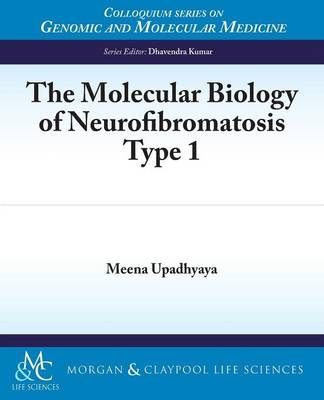
The Molecular Biology of Neurofibromatosis Type 1
Seiten
2014
Morgan and Claypool Life Sciences (Verlag)
978-1-61504-644-7 (ISBN)
Morgan and Claypool Life Sciences (Verlag)
978-1-61504-644-7 (ISBN)
Neurofibromatosis type 1 (NF1) is a common autosomal dominantly inherited, tumour predisposition syndrome affecting 1/3,000-4,000 individuals worldwide. This book provides an overview of the genetic and clinical aspects of NF1 and its role in both NF1-associated and sporadic tumour development. It emphasizes recent developments in this field and some promising on-going clinical trials.
Neurofibromatosis type 1 (NF1) is a common autosomal dominantly inherited, tumour predisposition syndrome affecting 1/3,000-4,000 individuals worldwide. This inherited disorder results from the mutational inactivation of the NF1 gene on human chromosome 17. The NF1 gene contains 61 exons that give rise to 12kb mRNA encoding neurofibromin. The 327kDa (2,818 amino acid) neurofibromin protein is expressed in most tissues and has a number of alternative isoforms. Neurofibromin is a tumour suppressor protein and down-regulates cellular Ras. Increased active Ras-GTP levels also stimulate the important PI3K/AKT/mTOR signalling pathway that protects cells from apoptosis.
The major clinical featues of NF1 include multiple café-au-lait macules, skinfold freckles, iris Lisch nodules, and neurofibromas. The diagnostic criteria for clinical diagnosis have been well established. However, there are a small number of cases in which the diagnosis is not certain. The germline mutation rate for the NF1 gene is 10-fold higher than that observed for most other inherited diseases. Using a combination of different techniques, almost 95% of germline mutations can be detected. To date, only two firm genotype phenotype correlations have been reported. NF1 phenotype exhibits large variations within a family, evidence for modifying loci regulating the expression of an NF1 gene is beginning to emerge. We also are gaining knowledge on the molecular mechanisms associated with the development of different types of tumours. It is encouraging that the results of recent laboratory and clinical research are finally being translated into clinical trials. With the availability of high-throughput technologies, sophisticated animal models, and multi-centre clinical trials, the future for NF1 sufferers is looking optimistic.
This book aims to provide an overview of the genetic and clinical aspects of NF1 and its role in both NF1-associated and sporadic tumour development. It emphasizes the recent developments in this field and some of the promising on-going clinical trials.
Neurofibromatosis type 1 (NF1) is a common autosomal dominantly inherited, tumour predisposition syndrome affecting 1/3,000-4,000 individuals worldwide. This inherited disorder results from the mutational inactivation of the NF1 gene on human chromosome 17. The NF1 gene contains 61 exons that give rise to 12kb mRNA encoding neurofibromin. The 327kDa (2,818 amino acid) neurofibromin protein is expressed in most tissues and has a number of alternative isoforms. Neurofibromin is a tumour suppressor protein and down-regulates cellular Ras. Increased active Ras-GTP levels also stimulate the important PI3K/AKT/mTOR signalling pathway that protects cells from apoptosis.
The major clinical featues of NF1 include multiple café-au-lait macules, skinfold freckles, iris Lisch nodules, and neurofibromas. The diagnostic criteria for clinical diagnosis have been well established. However, there are a small number of cases in which the diagnosis is not certain. The germline mutation rate for the NF1 gene is 10-fold higher than that observed for most other inherited diseases. Using a combination of different techniques, almost 95% of germline mutations can be detected. To date, only two firm genotype phenotype correlations have been reported. NF1 phenotype exhibits large variations within a family, evidence for modifying loci regulating the expression of an NF1 gene is beginning to emerge. We also are gaining knowledge on the molecular mechanisms associated with the development of different types of tumours. It is encouraging that the results of recent laboratory and clinical research are finally being translated into clinical trials. With the availability of high-throughput technologies, sophisticated animal models, and multi-centre clinical trials, the future for NF1 sufferers is looking optimistic.
This book aims to provide an overview of the genetic and clinical aspects of NF1 and its role in both NF1-associated and sporadic tumour development. It emphasizes the recent developments in this field and some of the promising on-going clinical trials.
Institute of Medical Genetics, Cardiff University School of Medicine, UK
Abbreviations
Introduction to NF1
NF1-Associated Tumours
Animal Models, Preclinican and Clinical Trials
Summary and Conclusion
References
Titles of Related Interest
Series of Related Interest
| Erscheint lt. Verlag | 1.4.2014 |
|---|---|
| Reihe/Serie | Colloquium Series on Genomic and Molecular Medicine |
| Verlagsort | San Rafael, CA |
| Sprache | englisch |
| Maße | 191 x 235 mm |
| Gewicht | 333 g |
| Themenwelt | Informatik ► Theorie / Studium ► Künstliche Intelligenz / Robotik |
| Medizin / Pharmazie ► Medizinische Fachgebiete ► Onkologie | |
| Naturwissenschaften ► Biologie ► Genetik / Molekularbiologie | |
| ISBN-10 | 1-61504-644-5 / 1615046445 |
| ISBN-13 | 978-1-61504-644-7 / 9781615046447 |
| Zustand | Neuware |
| Informationen gemäß Produktsicherheitsverordnung (GPSR) | |
| Haben Sie eine Frage zum Produkt? |
Mehr entdecken
aus dem Bereich



aus dem Bereich
Eine praxisorientierte Einführung
Buch | Softcover (2025)
Springer Vieweg (Verlag)
CHF 53,15
Künstliche Intelligenz, Macht und das größte Dilemma des 21. …
Buch | Softcover (2025)
C.H.Beck (Verlag)
CHF 25,20
Buch | Softcover (2025)
Reclam, Philipp (Verlag)
CHF 11,20


