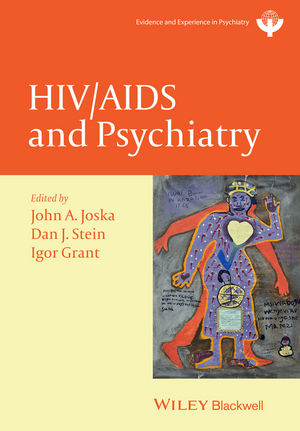
HIV and Psychiatry (eBook)
John Wiley & Sons (Verlag)
978-1-118-33952-7 (ISBN)
Editors
John A. Joska
Department of Psychiatry and Mental Health, University of Cape Town
Dan J. Stein
Department of Psychiatry and Mental Health, University of Cape Town
Igor Grant
Department of Psychiatry, University of California, San Diego
Mental health and HIV/AIDS are closely interlinked. Mental disorders, including substance-use disorders, are associated with increased risk of HIV infection and affect adherence to and efficacy of antiretroviral treatments. Conversely, HIV infection can increase risk for neuropsychiatric complications including stress, mood, and neurocognitive disorders.
This book provides clinicians with a comprehensive evidenced-based and practical approach to the management of patients with HIV infection and co-morbid mental disorders. It provides up-to-date and clear overviews of current clinical issues, as well as the relevant basic science. Information and data from studies of different HIV groups (eg men who have sex with men) make the text relevant to a broad spectrum of clinicians, including those working with low socioeconomic status groups in high income countries and those working in the developing world.
The book uses the popular format of the World Psychiatric Association’s Evidence and Experience series. Review chapters summarize the evidence on the epidemiology, pathogenesis and clinical aspects of mental disorders in HIV,and interventions (both psychotherapy and psychopharmacology including drug-drug interactions). These are complemented by commentaries addressing particular facets of each topic and providing insight gained from clinical experience.
Psychiatrists, psychologists and all mental health staff working with HIV-infected patients will find this book of great benefit.
John A. Joska is a Head of the Division of Neuropsychiatry in the Department of Psychiatry and Mental Health at the University of Cape Town. He is the Director of the UCT HIV Mental Health Research Unit, and the Western Cape Provincial Programme Manager for HIV Psychiatry. His interests are in HIV and Mental Health, particularly mechanisms of HIV-associated neurocognitive disorders, mental health services, and general neuropsychiatry. John completed both under- and post-graduate training at UCT. Following completion of his fellowship in psychiatry in 2002, he obtained the Mmed (psychiatry) in 2006, and his PhD in the Neurocognitive Disorders of HIV in 2011. John has been involved in several innovative research projects, including the development of assertive community outreach programmes in the Province, and the development of a smartphone application to assist primary health care providers to assess for the presence of dementia. His group was recently funded to conduct a randomized controlled trial of lithium in HIV-associated dementia. He is excited by the opportunities and challenges provided by working in Cape Town, South Africa.
Dan J Stein is Professor and Chair of the Dept of Psychiatry and Mental Health at the University of Cape Town, Director of the Medical Research Council (MRC) Unit on Anxiety Disorders, and Visiting Professor of Psychiatry at Mt. Sinai Medical School in New York. He is interested in the psychobiology and management of the anxiety, obsessive-compulsive and related, and traumatic and stress disorders. He has also mentored work in other areas that are of particular relevance to South Africa and Africa, including neuroHIV/AIDS and substance use disorders.
Dan did his undergraduate and medical degrees at the University of Cape Town, and his doctorate (in the area of clinical neuroscience) at the University of Stellenbosch. He trained in psychiatry, and completed a post-doctoral fellowship (in the area of psychopharmacology) at Columbia University in New York. His training also includes a doctorate in philosophy. He is inspired by the way in which psychiatry integrates science and humanism, and contributes to addressing some of the big questions posed by life.
Dan's work ranges from basic neuroscience, through clinical investigations and trials, and on to epidemiological and cross-cultural studies. He is enthusiastic about the possibility of clinical practice and scientific research that integrates theoretical concepts and empirical data across these different levels. Having worked for many years in South Africa, he is also enthusiastic about establishing integrative approaches to services, training, and research in the context of a low and-middle-income country.
Mental health and HIV/AIDS are closely interlinked. Mental disorders, including substance-use disorders, are associated with increased risk of HIV infection and affect adherence to and efficacy of antiretroviral treatments. Conversely, HIV infection can increase risk for neuropsychiatric complications including stress, mood, and neurocognitive disorders. This book provides clinicians with a comprehensive evidenced-based and practical approach to the management of patients with HIV infection and co-morbid mental disorders. It provides up-to-date and clear overviews of current clinical issues, as well as the relevant basic science. Information and data from studies of different HIV groups (eg men who have sex with men) make the text relevant to a broad spectrum of clinicians, including those working with low socioeconomic status groups in high income countries and those working in the developing world. The book uses the popular format of the World Psychiatric Association s Evidence and Experience series. Review chapters summarize the evidence on the epidemiology, pathogenesis and clinical aspects of mental disorders in HIV,and interventions (both psychotherapy and psychopharmacology including drug-drug interactions). These are complemented by commentaries addressing particular facets of each topic and providing insight gained from clinical experience. Psychiatrists, psychologists and all mental health staff working with HIV-infected patients will find this book of great benefit.
John A. Joska is a Head of the Division of Neuropsychiatry in the Department of Psychiatry and Mental Health at the University of Cape Town. He is the Director of the UCT HIV Mental Health Research Unit, and the Western Cape Provincial Programme Manager for HIV Psychiatry. His interests are in HIV and Mental Health, particularly mechanisms of HIV-associated neurocognitive disorders, mental health services, and general neuropsychiatry. John completed both under- and post-graduate training at UCT. Following completion of his fellowship in psychiatry in 2002, he obtained the Mmed (psychiatry) in 2006, and his PhD in the Neurocognitive Disorders of HIV in 2011. John has been involved in several innovative research projects, including the development of assertive community outreach programmes in the Province, and the development of a smartphone application to assist primary health care providers to assess for the presence of dementia. His group was recently funded to conduct a randomized controlled trial of lithium in HIV-associated dementia. He is excited by the opportunities and challenges provided by working in Cape Town, South Africa. Dan J Stein is Professor and Chair of the Dept of Psychiatry and Mental Health at the University of Cape Town, Director of the Medical Research Council (MRC) Unit on Anxiety Disorders, and Visiting Professor of Psychiatry at Mt. Sinai Medical School in New York. He is interested in the psychobiology and management of the anxiety, obsessive-compulsive and related, and traumatic and stress disorders. He has also mentored work in other areas that are of particular relevance to South Africa and Africa, including neuroHIV/AIDS and substance use disorders. Dan did his undergraduate and medical degrees at the University of Cape Town, and his doctorate (in the area of clinical neuroscience) at the University of Stellenbosch. He trained in psychiatry, and completed a post-doctoral fellowship (in the area of psychopharmacology) at Columbia University in New York. His training also includes a doctorate in philosophy. He is inspired by the way in which psychiatry integrates science and humanism, and contributes to addressing some of the big questions posed by life. Dan's work ranges from basic neuroscience, through clinical investigations and trials, and on to epidemiological and cross-cultural studies. He is enthusiastic about the possibility of clinical practice and scientific research that integrates theoretical concepts and empirical data across these different levels. Having worked for many years in South Africa, he is also enthusiastic about establishing integrative approaches to services, training, and research in the context of a low and-middle-income country.
List of Contributors ix
Preface xv
1 Epidemiology of Psychopathology in HIV 1
Milton L. Wainberg, Karen McKinnon, and Francine
Cournos
Commentaries
1.1 Epidemiology of Psychopathology in HIV: Neurocognitive
Disorders 34
Bryan Smith and Ned Sacktor
1.2 Depression and Anxiety Disorders in HIV/AIDS 40
Seggane Musisi
1.3 Substance Use Disorders and HIV: Evolving Syndemics 46
Sheri L. Towe and Christina S. Meade
1.4 Severe Mental Illness and HIV 55
Etheldreda Nakimuli-Mpungu
2 Pathogenesis of Mental Health Disorders in HIV 61
Gursharan Chana, Chad A. Bousman, and Ian P. Everall
Commentaries
2.1 Behavioural and Social Risk Factors for HIV 82
Landon Myer
2.2 Brain Imaging and Neuro-HIV 87
Christine Fennema-Notestine
2.3 Host Genetics in HIV-Associated Neurocognitive Disorders
93
Avindra Nath and Wenxue Li
2.4 Traumatic Stressors and the Psychoneuroimmunology of HIV/AIDS
99
Dan J. Stein, John A. Joska, and Kathleen J. Sikkema
3 Clinical Aspects of HIV-Related Neurocognitive Disorders
107
Nicholas W.S. Davies and Bruce J. Brew
Commentaries
3.1 Clinical Aspects of HIV-Related Neurocognitive Disorders
131
Robert Paul and Jodi Heaps
3.2 Differential Diagnosis in HIV-Associated Neurocognitive
Disorders 137
Gabriele Arendt
3.3 Psychiatric Disorders and HIV 143
Glenn Treisman
3.4 Optimizing the Effectiveness of HIV Treatment as Prevention
with Stimulant Users 149
Adam W. Carrico
4 Treatment of Psychiatric Disorders in HIV 157
Maria Ferrara, Ignacio P. Valero, David J. Moore, Adam F.
Knight, Nichole A. Duarte, and J. Hampton Atkinson
Commentaries
4.1 Combination Anti-Retroviral Treatment and NeuroHIV 194
Charles Venuto and Giovanni Schifitto
4.2 Psychopharmacology and Psychiatric Co-morbidity 199
Mark Halman
4.3 Intervention in HIV and Psychiatry: Behavioural and
Psychotherapeutic Approaches 205
Reuben N. Robbins and Robert H. Remien
5 Special Populations and Public Health Aspects 211
Francine Cournos, Karen McKinnon, Veronica Pinho, and Milton
Wainberg
Commentaries
5.1 Mental Health Services for HIV in Resource-Limited Settings
235
Crick Lund
5.2 Specifying the Mental Health Context for the Development of HIV
Prevention and Treatment Interventions for Men Who Have Sex with
Men 240
Jessica F. Magidson and Conall O'Cleirigh
5.3 Following the Special Populations Home: Children and Families
245
Lucie Cluver, Mark Boyes, Mark Orkin, Lorraine Sherr, and Malega
Kganakga
5.4 Gender Issues and the Burden of Disease in Women 256
Catherine Mathews and Naeemah Abrahams
Index 263
Chapter 1
Epidemiology of Psychopathology in HIV
Milton L. Wainberg1, Karen McKinnon1, and Francine Cournos2
1New York State Psychiatric Institute and College of Physicians and Surgeons, Columbia University, USA
2Mailman School of Public Health, Columbia University, USA
THE CO-MORBIDITY AND IMPACT OF PSYCHIATRIC DISORDERS IN HIV INFECTION
The HIV epidemic has been called ‘an unprecedented reversal of human health progress’ [1]. Psychiatric or mental disorders are common co-morbidities amongst people at risk for or infected by HIV, and the epidemic will not be adequately controlled, even with treatment as prevention, unless these co-occurring disorders are addressed. Consistent with the diagnostic approaches of both the Diagnostic and Statistical Manual of Mental Disorders DSM-V and International Classification of Diseases ICD-10 of the World Health Organization, we use the terms ‘mental disorders’ and ‘psychiatric disorders’ to include substance use diagnoses, other mental illnesses, and neurocognitive impairment.
Mental and substance use disorders are the leading cause of years lived with disability (YLDs) worldwide [2]. Effects of mental disorders are magnified by their propensity to increase the risk for communicable and non-communicable diseases and by their contribution to unintentional and intentional injury [3]. Further, health conditions such as diabetes, coronary artery disease and infection with HIV increase the risk for mental disorders, and co-morbidity complicates help-seeking, diagnosis, treatment and prognosis [3–6]. Mental disorders are associated with the acquisition and transmission of HIV and other sexually transmitted infections, reduced coping capacity at the time of HIV diagnosis, poor HIV-related disease prognosis, failure to access HIV care and treatment, erratic adherence to antiretroviral regimens, diminished quality of life, greater social burden, increased health-care costs and higher mortality [7–13].
The Treatment Gap of Mental Disorders in HIV Care
Addressing mental disorders as part of HIV care and treatment must be seen in the larger context of the mental health treatment gap – the proportion of persons who need but do not receive care. This gap is large for both severe and common mental disorders worldwide [3, 14], but is more pronounced in low- and middle-income countries (LMICs) and in low-resource areas of high-income countries [15, 16]. LMICs comprise more than 80% of the global population, yet hold less than 20% of the worldwide resources to treat mental disorders [17]. When treatment is provided, it frequently is below minimum acceptable standards and often lacks respect for human rights [18]. Even where psychiatric care has improved, people with mental disorders continue to be stigmatized [19–24] within multiple systems (e.g. education, housing, work-force, judicial, health and even mental health,) [25–32]. Affected people commonly internalize these negative stereotypes about what it means to have a mental illness, expecting discrimination and devaluing themselves [33], which can interfere with their the ability to choose their sexual partners and negotiate safer sexual behaviours [34]. Antiretroviral treatment scale-up to stem the HIV epidemic is unlikely to bring community viral load and new infections to zero if addressing mental disorders is left out of the plan.
The Epidemiology of Mental Disorders in HIV Infection
Understanding the epidemiology of mental disorders amongst people living with HIV and AIDS (PLWHA) can help better define priorities and needed resources to reduce the incidence, the prevalence and the burden of HIV disease on individuals with these disorders and on the communities in which they receive care. The majority of HIV-infected individuals will experience a diagnosable psychiatric disorder [35], with the proportion of psychiatric disorders amongst those living with HIV being nearly five times greater than in the general population [36]. Psychopathology can occur as a risk factor for HIV infection, coincidentally with HIV infection; as a psychological response to HIV infection and its complications, as a result of direct effect of HIV on the brain; as a consequence of HIV-related opportunistic diseases and as side effects of HIV-related treatments. Despite the impressive reduction of HIV-related morbidity and mortality where antiretroviral therapy (ART) is available, psychiatric and neuropsychiatric repercussions of HIV disease are expected to become more relevant in the coming years [8].
Most of the published epidemiology of mental disorders amongst PLWHA focuses on the distribution or point prevalence. Incidence, predictors, morbidity and course of disease data require longitudinal prospective studies which are rare. For all disorders discussed in this chapter, important caveats must be taken into consideration. First, accuracy of available prevalence estimates is unclear because most studies of psychiatric disorders amongst people with HIV used convenience samples, often of the historic risk groups, had small sample sizes, or were confined to specific geographical areas. Population-based estimates of psychiatric disorders amongst HIV-positive individuals are scarce. Second, comparisons between studies are complicated by variability of screening and diagnostic measures used by different studies. Further, even if gold standard measures were used, the lack of validation of measures across studies has not always occurred, complicating confidence in prevalence data [37]. Finally, in places where the increased availability of ART treatment allows PLWHA to live longer, the cumulative prevalence of chronic disorders such as mental disorders also may increase.
We begin with prevalent neurocognitive disorders defined by the presence of neuropsychiatric manifestations of HIV's direct effects on the central nervous system (CNS). We then discuss the most commonly seen psychiatric disorders amongst people with HIV: substance abuse or dependence; depression; anxiety (including post-traumatic stress disorder (PTSD); and psychosis. We also discuss significant psychiatric co-morbidities. We conclude with basic principles to guide treatment and prevention.
HIV-ASSOCIATED NEUROCOGNITIVE DISORDERS
Neuropathological and Clinical Aspects
HIV is a neurotropic virus that enters the CNS at the time of initial infection and persists there causing neurocognitive syndromes that can vary from subtle neuropsychological impairments to profoundly disabling cognitive and motor dysfunction known as HIV-associated dementia (HAD) [38, 39]. HAD confers an increased risk for early mortality, independent of medical predictors, and is more frequently seen in advanced stages of HIV disease but can occur even in individuals having medically asymptomatic HIV infection [10, 40]. In untreated HIV infection, symptoms are predominantly subcortical and include decreased attention and concentration, psychomotor slowing, reduced speed of information processing, executive dysfunction and, in more advanced cases, verbal memory impairment. However, this pattern of brain injury and the nomenclature used to describe it have evolved with new advances in detection and treatment. The use of ART has seen the neuropsychiatric complications of HIV evolve from a predominantly subcortical disorder to one that now prominently includes the cortex, with volumetric loss and ventricular enlargement [41]. Finally, increased life expectancy in HIV patients may add cerebrovascular or degenerative encephalitis to the clinical presentation of HIV neurocognitive disorders [10]. Although for the moment neurocognitive complications are usually mild and survival is not compromised [42, 43], they may negatively affect quality of life [43], independence in daily activities [44], employment [44], driving [44], or treatment adherence [44]. In addition, neuropsychiatric complications of HIV may be associated with increased risk behaviours and decreased adherence to medication [8, 45]. The clinical aspects of neurocognitive syndromes are discussed in more detail in chapter 3.
Research Classification of HAND
Since 2007, the term HIV-associated neurocognitive disorder (HAND) has been established to capture the wide spectrum of HIV-related neurocognitive deficits [46]. Depending on the severity of symptoms, HAND diagnostic research categories include asymptomatic neurocognitive impairment (ANI) without significant impact on day-to-day functioning, mild neurocognitive disorder (MND) with mild-to-moderate impairment, and debilitating HIV-associated dementia (HAD) [46]. The research diagnostic criteria of HAND require a comprehensive neuropsychological evaluation seldom available in most settings, including in high-income countries [47, 48]. Clinical assessment or brief screening tools are the norm although their validity is still being evaluated [49, 50].
HAND in the CART Era
The introduction of effective ART in the mid-1990s and the widespread use of primary prophylaxis against opportunistic infections have dramatically decreased the incidence of the most common HIV-related opportunistic diseases affecting the brain [51–54]. However, neurological complications of HIV infection still cause considerable morbidity and mortality, and greater than 50% of patients develop neurological disorders, even in the ART era [52, 54–56]. Conservative estimates from resource-rich countries estimate that the number of individuals of all ages living with HIV neurocognitive disorders will increase 5- to 10-fold by 2030 [57].
Prior to effective ART, HAD prevalence estimates were approximately 15–20% in AIDS cases [58, 59], whereas...
| Erscheint lt. Verlag | 26.2.2014 |
|---|---|
| Reihe/Serie | WPA Series in Evidence & Experience in Psychiatry |
| WPA Series in Evidence and Experience in Psychiatry | WPA Series in Evidence and Experience in Psychiatry |
| Sprache | englisch |
| Themenwelt | Medizin / Pharmazie ► Medizinische Fachgebiete ► Psychiatrie / Psychotherapie |
| Studium ► Querschnittsbereiche ► Infektiologie / Immunologie | |
| Schlagworte | antiretroviral • California • Cape • Clinical psychology • closely • complications • Diego • Grant • HIV • HIV Infection • Igor • Including • increased • Infection • infectious disease • Infektionskrankheiten • joska • Klinische Psychologie • Medical Science • Medizin • neuropsychiatric • Psychiatrie • Psychiatry • Psychologie • Psychology • Risk • Stress • Town • Treatments • University |
| ISBN-10 | 1-118-33952-5 / 1118339525 |
| ISBN-13 | 978-1-118-33952-7 / 9781118339527 |
| Informationen gemäß Produktsicherheitsverordnung (GPSR) | |
| Haben Sie eine Frage zum Produkt? |
 EPUB (Adobe DRM)
Kopierschutz: Adobe-DRM
Adobe-DRM ist ein Kopierschutz, der das eBook vor Mißbrauch schützen soll. Dabei wird das eBook bereits beim Download auf Ihre persönliche Adobe-ID autorisiert. Lesen können Sie das eBook dann nur auf den Geräten, welche ebenfalls auf Ihre Adobe-ID registriert sind.
Details zum Adobe-DRM
Dateiformat: EPUB (Electronic Publication)
EPUB ist ein offener Standard für eBooks und eignet sich besonders zur Darstellung von Belletristik und Sachbüchern. Der Fließtext wird dynamisch an die Display- und Schriftgröße angepasst. Auch für mobile Lesegeräte ist EPUB daher gut geeignet.
Systemvoraussetzungen:
PC/Mac: Mit einem PC oder Mac können Sie dieses eBook lesen. Sie benötigen eine
eReader: Dieses eBook kann mit (fast) allen eBook-Readern gelesen werden. Mit dem amazon-Kindle ist es aber nicht kompatibel.
Smartphone/Tablet: Egal ob Apple oder Android, dieses eBook können Sie lesen. Sie benötigen eine
Geräteliste und zusätzliche Hinweise
Buying eBooks from abroad
For tax law reasons we can sell eBooks just within Germany and Switzerland. Regrettably we cannot fulfill eBook-orders from other countries.
aus dem Bereich