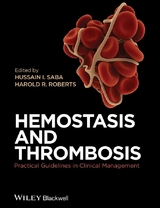
Hemostasis and Thrombosis (eBook)
John Wiley & Sons (Verlag)
978-1-118-83341-4 (ISBN)
Dr Hussain Saba, James A. Haley Veterans Hospital, H. Lee Moffitt Cancer Center and Research Institute, University of South Florida College of Medicine, Tampa, Florida, USA. Dr Harold Roberts, School of Medicine, Division of Hematology Oncology, Carolina Cardiovascular Biology Center, University of North Carolina, Chapel Hill, North Carolina, USA.
Contributors vii
Preface x
Acknowledgments xi
1 Theories of Blood Coagulation: Basic Concepts and Recent Updates 1
Dougald M. Monroe and Maureane Hoffman
2 Vascular Endothelium, Influence on Hemostasis: Past and Present 14
Hussain I. Saba and Sabiha R. Saba
3 Coagulation Testing: Basic and Advanced Clinical Laboratory Tests 30
Nils Egberg and Margareta Blombäck
4 Factor VIII Deficiency or Hemophilia A: Clinical Bleeding and Management 45
Pier Mannuccio Mannucci and Massimo Franchini
5 Factor IX Deficiency or Hemophilia B: Clinical Manifestations and Management 57
Raj S. Kasthuri, Harold R. Roberts, and Paul E. Monahan
6 Factor XI Deficiency or Hemophilia C 71
Charles E. Bane, Anne T. Neff, and David Gailani
7 Factor VIII and IX Inhibitors in Hemophilia 82
Meera Chitlur and Jeanne Lusher
8 Treatment Options for Acquired Hemophilia 93
Anjali Sharathkumar and David Green
9 Factor XII Deficiency or Hageman Factor Deficiency 112
Evi X. Stavrou and Alvin H. Schmaier
10 Inherited Combined Factor Deficiency States 127
Asma Latif and Louis Aledort
11 Acute and Chronic Immune Thrombocytopenia: Biology, Diagnosis, and Management 137
Samir Dalia and Benjamin Djulbegovic
12 Disseminated Intravascular Coagulation: Diagnosis and Management 151
Stephanie J. Davis and Craig M. Kessler
13 Mechanisms of Fibrinolysis and Basic Principles of Management 169
John W. Weisel and Rustem I. Litvinov
14 Post-thrombotic Syndrome 186
Jean-Philippe Galanaud and Susan R. Kahn
15 Von Willebrand Disease: Clinical Aspects and Practical Management 197
Francesco Rodeghiero, Alberto Tosetto, and Giancarlo Castaman
16 Platelets in Hemostasis: Inherited and Acquired Qualitative Disorders 209
Noman Ashraf and Hussain I. Saba
17 Contributions of Platelet Polyphosphate to Hemostasis and Thrombosis 236
James H. Morrissey
18 Thrombotic Microangiopathy: Biology, Diagnosis, and Management 246
Samir Dalia and Hussain I. Saba
19 Hemostasis and Aging 259
Lodovico Balducci
20 Hemostatic Problems in Chronic and Acute Liver Disease 271
Ton Lisman and Robert J. Porte
21 Cancer and Thrombosis 284
Erica A. Peterson and Agnes Y. Y. Lee
22 An Update on Low-Molecular-Weight Heparins 296
Jawed Fareed, Debra Hoppensteadt, and Walter P. Jeske
Index 315
"This new handbook will cover all aspects of the practical
mangement of commonly encountered thrombotic and bleeding
disorders, with emphasis on clinical diagnosis, treatment and
day-to-day management. It will distil the most clinically relevant
material from the literature for all those working in the field of
haemostasis and thrombosis." (Kingbook73's Medical
Ebook and Video Collection, 20 September 2014)
CHAPTER 2
Vascular Endothelium, Influence on Hemostasis: Past and Present
Hussain I. Saba1 and Sabiha R. Saba2
1 Hematology/Hemophilia/Hemostasis & Thrombosis Center, USF College of Medicine, Tampa, FL, USA
2 Department of Pathology and Cell Biology, USF College of Medicine, Tampa, FL, USA
Introduction
William Harvey was the first scientist to offer a new radical concept of blood circulation, in the year 1628 [1]. It led to immediate controversy in the medical community at that time, as it contradicted the usually unquestioned teaching of the Greek philosopher, Galen, regarding the theory and concept of blood movement. Galen's theory was based on the ideas that blood was formed in the liver, absorbed by the body, and flowed through the septum of the heart (dividing walls). Although Harvey's contradicting concept was based upon human and animal experiments, his findings were ridiculed and not well accepted. Later in the year 1661, Marcello Malpighi published his discovery of capillaries which then gave unwavering, factual evidence to support Harvey's concept of blood and circulation [2]. By the year 1800, Von Recklinghausen established that blood vessels were not merely a tunnel-like membrane structure similar in shape of cellophane tube, but had primary and important function of maintaining the vascular permeability [3]. Heidenhain (1891) introduced the concept that endothelium possessed an active secretory system [4]. In 1959, Gowans described the interaction between lymphocytes and endothelium at postcapillary venules. By 1959, electron microscopic studies by Palade [5] and the physical studies by Gowans [6] led to the current concept that endothelium is a dynamic heterogeneous disseminated organ which possesses vital secretory, metabolic, and immunologic activities.
In adult human subjects, the total endothelial surface consists of approximately 1–6 × 10¹³ cells, weighing about 1 kg and covering an area of approximately 4–7 × 10³ square meters. Endothelial cells line the blood vessel of every inner human organ, are responsible for regulation of the flow of nutrients, and possess diverse biologically active molecules such as hormones, growth factors, coagulant and anticoagulant proteins, lipid transporting particles (LDL), and metabolites such as nitrous oxide. Protective and receptive endothelium also governs cell and cell matrix interaction. Endothelial cells that make up the lining of the inner surface of blood vessels wall are called vascular endothelial cells. These cells line the entire circulatory system from the heart to the smallest capillaries, and have very distinct and unique functions that are of importance to the vascular biology. Their functions include fluid filtration, such as that seen in the glomeri of the kidney. They maintain vascular tone and are, therefore, involved in the maintenance of blood pressure. The cells are also involved in mediation of hemostatic responses and trafficking of the neutrophil in and out of the lumen of the blood vessel to the tissue space. Endothelial cells are involved in many aspects of vascular biology. These are biologically of paramount importance. Their role has included the development of early and late stages of atherosclerosis. One of the very important functions of endothelial cells is their role in the maintenance of a non-thrombogenic surface apparently due to the presence of heparan sulfate, which works as a cofactor for activating antithrombin, a protease that inactivates several factors in the clotting cascades.
Function of endothelial cells
Endothelial cells are involved in many aspects of vascular biology, and play a role in the development of atherosclerosis. They also function as a selective barrier between blood cells and surrounding tissue, controlling the passage of material and the transit of white cells in and out of the bloodstream. Excessive and prolonged increase in the permeability of the endothelial cells monolayer such as that seen in cases of chronic inflammatory process may lead to accumulation of inflammatory fluid in the tissue space. Endothelial cells are involved in maintaining a nonthrombogenic and thromboresistant surface. This physiologic activity inhibits platelets and other cells from sticking to endothelium and is related to the presence of heparan sulfate on the endothelial surface, which works as a cofactor for activating antithrombin, a protease that inactivates several factors responsible for activating the clotting cascades. Vascular endothelium, because of its strategic location interfering between tissue and blood, is in an ideal situation to modulate and influence functions of various organs. Endothelial cell function includes transport of nutrients and solutes across the endothelium, maintenance of vascular tone and maintenance of the thromboresistant surface, and the activation and inactivation of various vasoactive hormones. Under normal conditions the endothelial cells provide a nonthrombogenic surface which does not allow platelets and other blood cells to adhere and to stick to the surface of endothelium. This nonthrombogenic nature of endothelium is unique for the flow of the blood as well as for the flow of blood cells.
The mechanism of the thromboresistance of endothelium has not been fully understood but is considered to be related to the interaction of anticoagulant, fibrinolytic, and antiplatelet factors. The endothelium confers strong defense mechanisms against these insults by expressing a series of molecules. With successful culture of the endothelial cells, a myriad of molecules have been identified and characterized. The accepted view at this stage is that the main function of endothelial cells is to produce vasoprotective and thromboresistant molecules. Some molecules are constitutively expressed, while others are produced and respond to stimuli. Some are expressed on the interior endothelial surface and others are released. Molecules physiologically important in suppressing platelet activation and platelet vessel wall interaction include prostacyclin (PGI2), nitric oxide (NO), and ecto-adenosine diphosphatase (ADPase). Molecules involved in controlling coagulation include the surface-expressed thrombomodulin (a heparin-like molecule), von Willebrand factor (VWF), protein S, and tissue factor pathway inhibitor (TFPI). Endothelial cells synthesize and secrete tissue plasminogen activator (TPA) and urokinase-type plasminogen activator to promote fibrinolysis. To control TPA activity, the endothelium produces plasminogen activator inhibitor-1 (PAI-1), which serves to neutralize the TPA activity.
Antiplatelet factors
Prostacyclin
Prostacyclin (PGI2) is a multifunctional molecule it is an important inhibitor of platelet activation, aggregation, and secretion [7–10]. It induces vascular smooth muscle relaxation and blocks monocyte endothelial cell interaction. It also reduces lipid accumulation in smooth muscles. Its platelet inhibitory activity is mediated via guanosine nucleotide-binding receptor with subsequent activation of adenylate cyclase and elevation of platelet adenosine monophosphate (cAMP).
cAMP levels will result in inhibition of platelet activation. Its actions on other cells are thought to be mediated by a similar receptor-mediated signal transduction pathway. Prostacyclin is primarily synthesized by vascular endothelial cells and smooth muscle cells. Its synthesis is catalyzed by a series of enzymes. When stimulated by diverse physiologic agonists including thrombin, histamine, and bradykinin, endothelial cell cytosolic phospholipase (PLA-2) is activated. Activated PLA-2 catalyzes the liberation of arachidonic acid (AA) primarily from phosphatidylcholine. The released free AA serves as a substrate for prostaglandin H synthase (PGHS), also known as cyclooxygenase.
PGHS is a bifunctional enzyme with two distinct enzymatic activities. Cyclooxygenase catalyzes the oxygenation of AA from prostaglandin to prostaglandin G2 (PGG2) and peroxidase catalyzes the reduction of PGG2 to prostaglandin H2 (PGH2). PGH2 is a common precursor for the synthesis of prostaglandin, prostacyclin, and thromboxane. In endothelial cells, PGH2 is primarily converted to PGI2 by the specific enzyme PGI2 synthase. PGI2 synthesis is regulated at each enzymatic step. The exact regulatory mechanisms are not entirely clear, but it is generally believed that PGHS is the key step due to autoactivation of this enzyme during catalysis. Several studies have shown that PGI2 synthesis by arterial segments of cultured endothelial cell stimulated with thrombin or histamine has a short duration of activity of 15–30 minutes. Overexpression of PGHS type 1 in an endothelial cell line by retrovirus-mediated transfer of the human PGHS-1 gene is accompanied by a 10- to 100-fold increase in PGI2 synthesis. Two isoforms of PGHS have been identified in human endothelial cells. PGHS-1 is constitutively expressed and its synthesis may be augmented by shear stress, cytokines, and mitogenic factors. PGHS is thought to be primarily responsible for synthesizing the vasoprotective PGI2 under physiologic conditions. Endothelial cells possess type 2 PGHS (PGHS-2) which is expressed in smaller quantities in resting cells but is highly inducible by mitogenic factors and cytokines. The inducible PGHS-2 is present on both inflammatory and neoplastic cells. This PGHS isoform has been considered to be primarily involved in cell inflammation and cell proliferation. However, there is suggestive evidence that PGHS-2 may play an important role in producing vasoprotective PGI2 when the endothelium is under severe stress and cellular PGHS-1 levels are depleted because of autoactivation. Human PGHS-1 and...
| Erscheint lt. Verlag | 3.2.2014 |
|---|---|
| Sprache | englisch |
| Themenwelt | Medizinische Fachgebiete ► Innere Medizin ► Hämatologie |
| Schlagworte | Center • Clinical • College • Department • Director • Division • Emeritus • Hämostase • Hämostase • Hematology • Hemostasis • hussain • institute tampa • Malignant • MD • Medical Science • Medicine • Medizin • moffitt cancer • Practical • Professor • Thrombose • Thrombose u. Hämostase • Thrombose u. Hämostase • thrombosis • Thrombosis & Hemostasis • USF |
| ISBN-10 | 1-118-83341-4 / 1118833414 |
| ISBN-13 | 978-1-118-83341-4 / 9781118833414 |
| Informationen gemäß Produktsicherheitsverordnung (GPSR) | |
| Haben Sie eine Frage zum Produkt? |
 PDF (Adobe DRM)
Größe: 3,8 MB
Kopierschutz: Adobe-DRM
Adobe-DRM ist ein Kopierschutz, der das eBook vor Mißbrauch schützen soll. Dabei wird das eBook bereits beim Download auf Ihre persönliche Adobe-ID autorisiert. Lesen können Sie das eBook dann nur auf den Geräten, welche ebenfalls auf Ihre Adobe-ID registriert sind.
Details zum Adobe-DRM
Dateiformat: PDF (Portable Document Format)
Mit einem festen Seitenlayout eignet sich die PDF besonders für Fachbücher mit Spalten, Tabellen und Abbildungen. Eine PDF kann auf fast allen Geräten angezeigt werden, ist aber für kleine Displays (Smartphone, eReader) nur eingeschränkt geeignet.
Systemvoraussetzungen:
PC/Mac: Mit einem PC oder Mac können Sie dieses eBook lesen. Sie benötigen eine
eReader: Dieses eBook kann mit (fast) allen eBook-Readern gelesen werden. Mit dem amazon-Kindle ist es aber nicht kompatibel.
Smartphone/Tablet: Egal ob Apple oder Android, dieses eBook können Sie lesen. Sie benötigen eine
Geräteliste und zusätzliche Hinweise
Zusätzliches Feature: Online Lesen
Dieses eBook können Sie zusätzlich zum Download auch online im Webbrowser lesen.
Buying eBooks from abroad
For tax law reasons we can sell eBooks just within Germany and Switzerland. Regrettably we cannot fulfill eBook-orders from other countries.
 EPUB (Adobe DRM)
Kopierschutz: Adobe-DRM
Adobe-DRM ist ein Kopierschutz, der das eBook vor Mißbrauch schützen soll. Dabei wird das eBook bereits beim Download auf Ihre persönliche Adobe-ID autorisiert. Lesen können Sie das eBook dann nur auf den Geräten, welche ebenfalls auf Ihre Adobe-ID registriert sind.
Details zum Adobe-DRM
Dateiformat: EPUB (Electronic Publication)
EPUB ist ein offener Standard für eBooks und eignet sich besonders zur Darstellung von Belletristik und Sachbüchern. Der Fließtext wird dynamisch an die Display- und Schriftgröße angepasst. Auch für mobile Lesegeräte ist EPUB daher gut geeignet.
Systemvoraussetzungen:
PC/Mac: Mit einem PC oder Mac können Sie dieses eBook lesen. Sie benötigen eine
eReader: Dieses eBook kann mit (fast) allen eBook-Readern gelesen werden. Mit dem amazon-Kindle ist es aber nicht kompatibel.
Smartphone/Tablet: Egal ob Apple oder Android, dieses eBook können Sie lesen. Sie benötigen eine
Geräteliste und zusätzliche Hinweise
Buying eBooks from abroad
For tax law reasons we can sell eBooks just within Germany and Switzerland. Regrettably we cannot fulfill eBook-orders from other countries.
aus dem Bereich