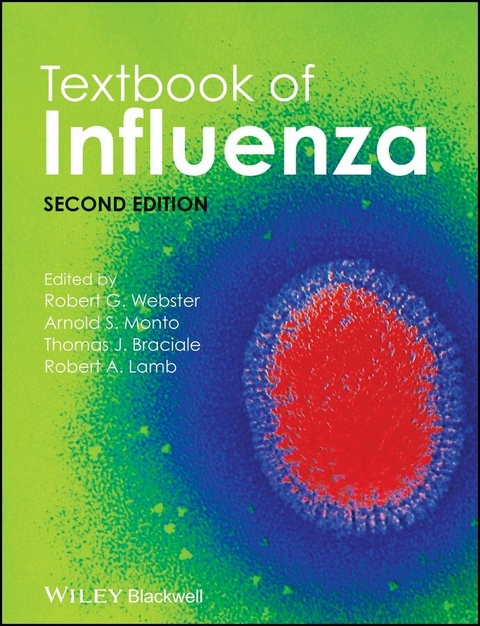
Textbook of Influenza (eBook)
John Wiley & Sons (Verlag)
978-1-118-63683-1 (ISBN)
The Textbook of Influenza is a comprehensive resource covering all aspects of influenza, from the genetic and molecular biology of the virus through to clinical aspects of the disease and the latest drug developments and treatments. This new edition has been completely revised and reflects the integration of disciplines concerning the emergence, evolution, pathogenesis and control of influenza viruses in the field of human and veterinary public health.
Textbook of Influenza examines the lessons learnt from the latest pandemic and provides the current state of knowledge for many yet unresolved issues related to virus origin, spread, pathogenesis and disease severity to better prepare for future pandemics. It covers the background to recent advances in influenza genomics and reverse genetics which have allowed the identification of virus virulence factors and the analysis and reconstruction of influenza viruses such as the 1918 Spanish flu strain.
This new edition is divided into eight key sections, containing chapters co-written by international experts from both the clinical and scientific communities, covering:
• Influenza Perspectives
• Structure and Replication
• Evolution and Ecology
• Epidemiology and Surveillance
• Immunology
• Vaccines and Vaccine Development
• Clinical Aspects and Antivirals
• Public Health
Textbook of Influenza is for all those working in the area of influenza including clinical and basic scientists, immunologists, molecular and structural virologists, public health officials and global pandemic control planners.
Edited by:
Robert G. Webster, Division of Virology, Department of Infectious Diseases, St Jude Children's Research Hospital, Memphis
Arnold S. Monto, School of Public Health, University of Michigan, Ann Arbor, Michigan
Thomas J. Braciale, University of Virginia School of Medicine, Charlottesville, Virginia
Robert A. Lamb, Howard Hughes Medical Institute, Department of Molecular Biosciences, Northwestern University, Evanston, Illinois
Edited by: Robert G. Webster, Division of Virology, Department of Infectious Diseases, St Jude Children's Research Hospital, Memphis Arnold S. Monto, School of Public Health, University of Michigan, Ann Arbor, Michigan Thomas J. Braciale, University of Virginia School of Medicine, Charlottesville, Virginia Robert A. Lamb, Howard Hughes Medical Institute, Department of Molecular Biosciences, Northwestern University, Evanston, Illinois
List of contributors, ix
Foreword to the second edition, xiv
Preface to the second edition, xvi
Acknowledgments, xvii
PART 1 Influenza: Perspective
1 Human influenza: One health, one world, 3
Daniel B. Jernigan and Nancy J. Cox
2 Influenza pandemics: History and lessons learned, 20
Arnold S. Monto and Robert G. Webster
PART 2 Structure and replication
3 Structure, disassembly, assembly, and budding of influenzaviruses, 37
Debiprosad Nayak, Sakar Shivakoti, Rilwan A. Balogun, GwendolynLee, and Z. Hong Zhou
4 The virus genome and its replication, 57
Robert M. Krug and Ervin Fodor
5 Influenza glycoproteins: Hemagglutinin and neuraminidase,67
Rupert J. Russell, Steven J. Gamblin, and John J. Skehel
6 Proton channels of influenza A and B viruses, 101
Chunlong Ma, Lawrence H. Pinto, and Robert A. Lamb
7 The NS1 protein: A master regulator of host and viralfunctions, 114
Robert M. Krug and Adolfo García-Sastre
8 Structure and function of the influenza virus replicationmachinery and PB1-F2, 133
Andrew Mehle and Jonathan A McCullers
9 The genome and its manipulation: Recovery of the 1918 virusand vaccine virus generation, 146
Gabriele Neumann and Yoshihiro Kawaoka
10 Pathogenesis, 157
Hans Dieter Klenk, Wolfgang Garten, and MikhailMatrosovich
PART 3 Evolution and ecology of influenza viruses
11 Ecology and evolution of influenza viruses in wild anddomestic birds, 175
Ron A.M. Fouchier and Yi Guan
12 Influenza in swine, 190
Richard Webby and Juergen Richt
13 Equine/Canine/Feline/Seal influenza, 203
Thomas M. Chambers, Edward J. Dubovi, and Ruben O. Donis
14 Emergence and Evolution of the 1918, 1957, 1968, and 2009pandemic virus strains, 218
Taia T. Wang and Peter Palese
PART 4 Epidemiology and surveillance
15 Influenza surveillance and laboratory diagnosis, 231
Maria Zambon
16 Epidemiology of influenza, 250
Marc-Alain Widdowson and Arnold S. Monto
PART 5 Immunology of influenza
17 Innate immunity, 269
Akiko Iwasaki and Malik Peiris
18 Antibody-mediated immunity, 283
Nicole Baumgarth,Michael C. Carroll, and SantiagoGonzalez
19 Cell-mediated immunity, 298
Stephen J. Turner, Peter C. Doherty, and Anne Kelso
PART 6 Vaccines and vaccine development
20 Immunogenicity, efficacy of inactivated/live virus seasonaland pandemic vaccines, 313
Wendy A. Keitel, Kathleen M. Neuzil, and John Treanor
21 New approaches to vaccination, 327
Chih-Jen Wei, Damian C. Ekiert, Gary J. Nabel, and Ian A.Wilson
22 Control of influenza in animals, 337
Ilaria Capua and Dennis J. Alexander
23 Influenza vaccine production, 352
Klaus Stöhr
PART 7 Clinical aspects and antivirals
24 Human influenza: Pathogenesis, clinical features, andmanagement, 373
Frederick G. Hayden and Menno D. de Jong
25 Antivirals: Targets and use, 392
Michael G. Ison and Alan Hay
26 The control of influenza and cost-effectiveness ofinterventions, 419
Carolyn B. Bridges, Samuel K. Peasah, and Martin I.Meltzer
27 Applications of quantitative modeling to influenza virustransmission dynamics, antigenic and genetic evolution, andmolecular structure, 434
Marc Lipsitch and Derek Smith
28 Pandemic preparedness and response, 453
Jonathan S. Nguyen-Van-Tam and Joseph Bresee
29 Influenza: The future, 470
Thomas J. Braciale
PART 8 The outbreak of H7N9
30 Appendix, 479
Thomas J. Bracial
List of Contributors
Dennis J. Alexander, OBE, PhD, FSB, FRCPath, DSc
Formerly Head, Virology Department
Animal Health and Veterinary Laboratories
Weybridge, Addlestone, Surrey, UK
Rilwan A. Balogun
Microbiology, Immunology and Molecular Genetics
David Geffen School of Medicine
University of California, Los Angeles; and
California NanoSystems Institute (CNSI)
Los Angeles, CA, USA
Nicole Baumgarth, DVM, PhD
Professor, Center for Comparative Medicine and
Department of Pathology, Microbiology and
Immunology, University of California
Davis, CA, USA
Thomas J. Braciale, MD, PhD
Director, Beirne B. Carter Center for Immunology
Research, Beirne B. Carter Professor in Immunology
Professor of Pathology and Microbiology, Immunology, and Cancer Biology
University of Virginia School of Medicine
Charlottesville, VA, USA
Joseph Bresee, MD
Chief, Epidemiology and Prevention Branch
Influenza Division
Centers for Disease Control and Prevention
Atlanta, GA, USA
Carolyn B. Bridges, MD, FACP
CAPT USPHS, Associate Director for Adult
Immunizations, Immunization Services Division
National Center for Immunizations and Respiratory Diseases
Centers for Disease Control and Prevention
Atlanta, GA, USA
Ilaria Capua, DVM, PhD
Director, OIE/FAO Reference Laboratory for Avian
Influenza and Newcastle Disease
OIE Collaborating Center for Diseases
at the Human-Animal Interface
Istituto Zooprofilattico Sperimentale delle Venezie
Padua, Italy
Michael C. Carroll, PhD
Professor, Department of Pediatrics
Harvard Medical School; and
Program in Cellular and Molecular Medicine
Children's Hospital, Boston, MA, USA
Thomas M. Chambers, PhD
Professor, Gluck Equine Research Center
Department of Veterinary Science
University of Kentucky
Lexington, KY, USA
Nancy J. Cox, PhD
Director, Influenza Division
National Center for Immunization and Respiratory Diseases
Centers for Disease Control and Prevention
Atlanta, GA, USA
Menno D. de Jong, MD, PhD
Professor in Clinical Virology
Head of Department of Medical Microbiology
Academic Medical Center
University of Amsterdam, Amsterdam
The Netherlands
Peter C. Doherty, PhD, FRS
Department of Microbiology and Immunology
The University of Melbourne, Melbourne, VIC, Australia; and
Department of Immunology
St Jude Children's Research Hospital
Memphis, TN, USA
Ruben O. Donis, DVM, PhD
Centers for Disease Control and Prevention
Atlanta, GA, USA
Edward J. Dubovi, PhD
Director, Virology Section
Animal Health Diagnostic Center
College of Veterinary Medicine
Cornell University
Ithaca, NY, USA
Damian C. Ekiert, PhD
Department of Integrative Structural and
Computational Biology
The Scripps Research Institute
La Jolla, CA, USA
Ervin Fodor, DPhil
Professor of Virology
Sir William Dunn School of Pathology
University of Oxford, Oxford, UK
Ron A. M. Fouchier, PhD
Professor in Molecular Virology
Department of Viroscience
Erasmus MC Rotterdam, The Netherlands
Steven J. Gamblin, PhD, FRS, FMedSci
MRC, National Institute for Medical Research
London, UK
Adolfo García-Sastre, PhD
Professor, Department of Microbiology
Fishberg Professor, Department of Medicine
Division of Infectious Diseases; and
Director Global Health and Emerging Pathogens Institute
Icahn School of Medicine at Mount Sinai
New York, NY, USA
Wolfgang Garten, PhD
Professor, Institut für Virologie
Philipps-Universität Marburg
Marburg, Germany
Santiago Gonzalez, PhD
Institute for Research in Biomedicine
Bellinzona, Switzerland
Yi Guan, PhD, MD
Director, State Key Laboratory of Emerging
Infectious Diseases
The University of Hong Kong; and
Professor, Centre of Influenza Research
and School of Public Health
Li Ka Shing Faculty of Medicine
The University of Hong Kong
Hong Kong SAR, China
Alan J. Hay, PhD
Virology Division, MRC National Institute
for Medical Research, London, UK
Frederick G. Hayden, MD
Professor of Medicine
Stuart S. Richardson Professor of Clinical Virology
University of Virginia School of Medicine
Charlottesville, VA, USA
Michael G. Ison, MD, MS, FIDSA
Associate Professor of Medicine and Surgery
Divisions of Infectious Diseases and Organ
Transplantation, Northwestern University
Feinberg School of Medicine
Chicago, IL, USA
Akiko Iwasaki, PhD
Professor, Department of Immunobiology
Howard Hughes Medical Institute
Yale University School of Medicine
New Haven, CT, USA
Daniel B. Jernigan, MD, MPH
Deputy Director, Influenza Division, National
Center for Immunization and Respiratory Diseases
Centers for Disease Control and Prevention
Atlanta, GA, USA
Yoshihiro Kawaoka, DVM, PhD
Professor of Virology, Influenza Research Institute
Department of Pathobiological Sciences
School of Veterinary Medicine
University of Wisconsin-Madison, Madison WI, USA; and
Department of Special Pathogens
International Research Center for Infectious Diseases
Institute of Medical Science
University of Tokyo; and
Division of Virology
Department of Microbiology and Immunology
Institute of Medical Science
University of Tokyo; and
ERATO Infection-Induced Host Responses Project
Saitama, Japan
Wendy A. Keitel, MD
Kyle and Josephine Morrow Chair in Molecular
Virology and Microbiology; and
Professor, Molecular Virology and Microbiology
and Medicine, Baylor College of Medicine
Houston, TX, USA
Anne Kelso, PhD
Director, WHO Collaborating Centre for
Reference and Research on Influenza
North Melbourne, VIC, Australia
Hans-Dieter Klenk, MD
Professor Emeritus, Institut für Virologie
Philipps-Universität Marburg
Marburg, Germany
Robert M. Krug, PhD
Professor and Chair
Department of Molecular Genetics and Microbiology
Fellow, Mr. and Mrs. Corbin J. Robertson
Sr. Regents Chair in Molecular Biology
Institute for Cellular and Molecular Biology
University of Texas at Austin
Austin, TX, USA
Robert A. Lamb, PhD, ScD
John Evans Professor of Molecular and Cellular
Biology, Howard Hughes Medical Institute
Department of Molecular Biosciences
Northwestern University
Evanston, IL, USA
Gwendolyn Lee
Microbiology, Immunology and Molecular Genetics
David Geffen School of Medicine
University of California, Los Angeles; and
California NanoSystems Institute (CNSI)
Los Angeles, CA, USA
Marc Lipsitch, DPhil
Professor of Epidemiology
Center for Communicable Disease Dynamics
Harvard School of Public Health
Boston, MA, USA
Chunlong Ma, PhD
Research Associate, Department of Neurobiology
Department of Molecular Biosciences
Northwestern University, Evanston, IL, USA
Mikhail Matrosovich, PhD
Group Leader, Institut für Virologie
Philipps-Universität Marburg
Marburg, Germany
Jonathan A. McCullers, MD
Dunavant Professor and Chair
Department of Pediatrics
University of Tennessee Health Sciences Center; and
Pediatrician-in-Chief
Le Bonheur Children's Hospital, Memphis; and
Member, Department of Infectious Diseases
St. Jude Children's Research Hospital
Memphis, TN, USA
Andrew Mehle, PhD
Assistant Professor
Department of Medical Microbiology and Immunology
University of Wisconsin Madison
Madison, WI, USA
Martin I. Meltzer, MS, PhD
Senior Health Economist and
Distinguished Consultant
Lead, Health...
| Erscheint lt. Verlag | 6.1.2014 |
|---|---|
| Sprache | englisch |
| Themenwelt | Medizin / Pharmazie ► Allgemeines / Lexika |
| Medizinische Fachgebiete ► Innere Medizin ► Pneumologie | |
| Studium ► Querschnittsbereiche ► Infektiologie / Immunologie | |
| Schlagworte | Aspects • Clinical • comprehensive resource • Control • disciplines • Disease • Edition • Emergence • Field • Genetic • Grippe • Health • infectious disease • Infektionskrankheiten • Influenza • Integration • Latest • latest drug • Medical Science • Medizin • molecular • New • Public • State • Textbook • Virus • Viruses |
| ISBN-10 | 1-118-63683-X / 111863683X |
| ISBN-13 | 978-1-118-63683-1 / 9781118636831 |
| Informationen gemäß Produktsicherheitsverordnung (GPSR) | |
| Haben Sie eine Frage zum Produkt? |
 EPUB (Adobe DRM)
Kopierschutz: Adobe-DRM
Adobe-DRM ist ein Kopierschutz, der das eBook vor Mißbrauch schützen soll. Dabei wird das eBook bereits beim Download auf Ihre persönliche Adobe-ID autorisiert. Lesen können Sie das eBook dann nur auf den Geräten, welche ebenfalls auf Ihre Adobe-ID registriert sind.
Details zum Adobe-DRM
Dateiformat: EPUB (Electronic Publication)
EPUB ist ein offener Standard für eBooks und eignet sich besonders zur Darstellung von Belletristik und Sachbüchern. Der Fließtext wird dynamisch an die Display- und Schriftgröße angepasst. Auch für mobile Lesegeräte ist EPUB daher gut geeignet.
Systemvoraussetzungen:
PC/Mac: Mit einem PC oder Mac können Sie dieses eBook lesen. Sie benötigen eine
eReader: Dieses eBook kann mit (fast) allen eBook-Readern gelesen werden. Mit dem amazon-Kindle ist es aber nicht kompatibel.
Smartphone/Tablet: Egal ob Apple oder Android, dieses eBook können Sie lesen. Sie benötigen eine
Geräteliste und zusätzliche Hinweise
Buying eBooks from abroad
For tax law reasons we can sell eBooks just within Germany and Switzerland. Regrettably we cannot fulfill eBook-orders from other countries.
aus dem Bereich