Mentorship in Academic Medicine (eBook)
John Wiley & Sons (Verlag)
978-1-118-44603-4 (ISBN)

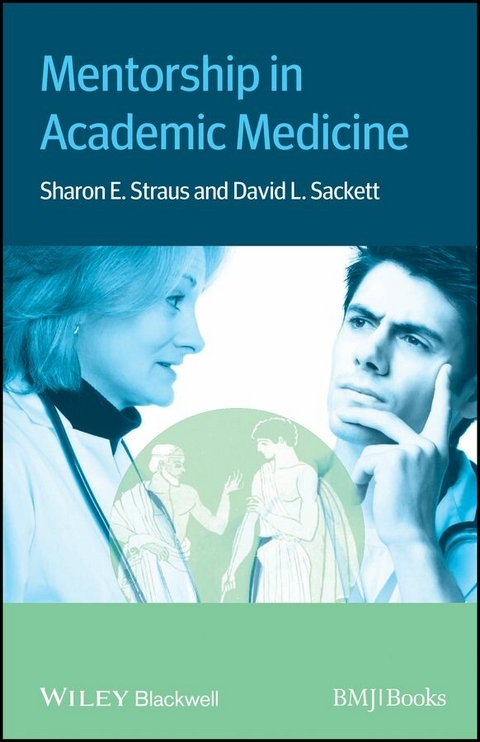
Mentorship in Academic Medicine is an evidence-based guide for establishing and maintaining successful mentoring relationships for both mentors and mentees,
Drawing upon the existing evidence-base on academic mentoring in medicine and the health sciences, it applies a case-stimulus learning approach to the common challenges and opportunities in mentorship in academic medicine, Each chapter begins with cases that take the reader into the evidence around specific issues in mentorship and provides actionable messages and recommendations for both correcting and preventing the problems presented in the cases,
Accompanying the text is an interactive, online learning resource on mentorship, This e-tool provides updated resources for mentors and mentees, including video clips and podcasts with effective mentors who share their mentorship tips and strategies for effective mentorship, It also provides updated departmental and institutional strategies for establishing, running, and evaluating effective mentoring programs,
Mentorship in Academic Medicine provides useful strategies and tactics for overcoming the common problems and flaws in mentoring programs and fostering productive and successful mentoring relationships and is a valuable guide for both mentors and mentees,
Sharon Straus, Li Ka Shing Knowledge Institute, St, Michael's Hospital and Department of Medicine, University of Toronto, Ontario, Canada
David Sackett, Clinical Epidemiology and Biostatistics, McMaster University, Hamilton, Ontario, Canada
Mentorship in Academic Medicine is an evidence-based guide for establishing and maintaining successful mentoring relationships for both mentors and mentees. Drawing upon the existing evidence-base on academic mentoring in medicine and the health sciences, it applies a case-stimulus learning approach to the common challenges and opportunities in mentorship in academic medicine. Each chapter begins with cases that take the reader into the evidence around specific issues in mentorship and provides actionable messages and recommendations for both correcting and preventing the problems presented in the cases. Accompanying the text is an interactive, online learning resource on mentorship. This e-tool provides updated resources for mentors and mentees, including video clips and podcasts with effective mentors who share their mentorship tips and strategies for effective mentorship. It also provides updated departmental and institutional strategies for establishing, running, and evaluating effective mentoring programs. Mentorship in Academic Medicine provides useful strategies and tactics for overcoming the common problems and flaws in mentoring programs and fostering productive and successful mentoring relationships and is a valuable guide for both mentors and mentees.
Sharon Straus, Li Ka Shing Knowledge Institute, St. Michael's Hospital and Department of Medicine, University of Toronto, Ontario, Canada David Sackett, Clinical Epidemiology and Biostatistics, McMaster University, Hamilton, Ontario, Canada
Acknowledgements vii
Introduction ix
Chapter 1: What is the evidence for mentorship? 1
Chapter 2: What are the characteristics and behaviors of
effective mentors and mentees? 11
Chapter 3: How can you initiate mentorship? 25
Chapter 4.1: Some effective mentoring strategies and tactics
35
Part 1: Mentorship meetings, priority setting, and
time-management 35
Chapter 4.2: Some effective mentoring strategies and tactics
50
Part 2: Protecting mentees from
''dys-opportunities'' 50
Chapter 4.3: Some effective mentoring strategies and tactics
72
Part 3: Mentoring for knowledge generation 72
Chapter 4.4: Some effective mentoring strategies and tactics
87
Part 4: Mentoring for knowledge dissemination 87
Chapter 4.5: Some effective mentoring strategies and tactics
99
Part 5: Mentoring for promotion, protection, and job prospects
99
Chapter 5: How can you assess, diagnose, and treat mentorship
that is in trouble? 110
Chapter 6: How can you initiate and maintain a mentorship
progam? 119
Chapter 7: How can you evaluate the impact of a mentorship
program? 133
Chapter 8: How can you scale up and sustain a mentorship
program? 148
Index 153
Chapter 1
What is the evidence for mentorship?
Your first step in this task is to gather the evidence; specifically, what's the case for mentorship?
In this chapter, we'll set the stage for our mentorship discussion providing the definitions and terminology that we'll use throughout this book. In particular, we'll outline the scope for our discussion, including what mentorship is and isn't, and help you to provide the “case for mentorship” based on the relevant evidence. We invite you to join us in this dialogue via the website (www.mentorshipacademicmedicine.com) that accompanies this book; we'd love to hear about how you define mentorship and how you would meet the challenge we posed in the above scenario!1
What is mentorship?
The concept of mentorship can be traced to Greek methodology. Odysseus placed his much older friend Mentor in charge of his palace and of his son Telemachus when he left for the Trojan War. Interestingly, Athena disguised herself as Mentor on several occasions to provide guidance to Telemachus. It was from this story that the term “mentor” was taken and began being used to mean a trusted, senior advisor who provides guidance to a more junior person.
Moving along to more recent times, there are many definitions of mentorship, including those from business [1] and psychology literature [2], but our focus in this book is on academic medicine, including clinicians who work in universities and academic health science centres. So, for our discussion, we'll use the definition commonly cited in academic medical literature:
A process whereby an experienced, highly regarded, empathetic person (the mentor) guides another (usually younger or more junior) individual (the mentee2) in the development and re-examination of their own ideas, learning, and personal and professional development. The mentor, who often (but not necessarily) works in the same organization or field as the mentee, achieves this by listening or talking in confidence to the mentee [3].
One element that we think is missing from this definition is that mentorship is about an exchange between the mentor and mentee and provides benefits to both parties; we'll explore these benefits later in this chapter.
Berk and colleagues have further elucidated the concept of mentorship to specify that it can range from an informal, short-term relationship to a formal, long-term relationship [4]. Informal mentoring is a relationship between individuals that develops without organizational interventions and is the natural “coming together” of a mentor and mentee. For example, a resident may identify a staff physician with whom they worked on a clinical rotation and developed a good rapport; this interaction may lead to a series of conversations that ultimately results in a mentoring relationship. Formal mentoring is initiated (in some places, mandated!) by an outside party or organization, as when a department chair not only requires that each new recruit has a mentor but makes sure that they get one.
A common source of confusion in the mentorship literature is that the term “mentor” is often used interchangeably with the term “role model” or “coach.” We maintain that these are very different concepts. “Role modeling” is a “passive, observational learning model in which an individual attempts to emulate observed, desirable behaviours and qualities” [5]. Indeed, there may be no personal relationship with the role model, and they are often oblivious of their role! Of course, a mentor can and often does serve as a role model, but that's just one, passive facet of their function. Similarly, mentoring goes far beyond “coaching” a junior colleague on the performance of specific tasks and skills [6]. This latter function is often the complete extent of an aspiring academic clinician's interactions with their research supervisor or department chair. We found an interesting analogy (for anyone who has seen Star Wars) that nicely highlights this difference: “Yoda is a coach, teaching Luke how to use the Force, and Obi-Wan Kenobi is a mentor, showing him what it means to be a Jedi knight” [7].
Who are the targets for mentorship?
Much of the literature on mentorship focuses on targeting junior or new faculty members [8–10]. However, faculty at any stage in their career can benefit from it.3 A large qualitative study (moderate-quality evidence) of clinician researchers across two universities documented that senior (or established) faculty often feel that they are neglected and should have equitable access to mentors [11]. We also found a descriptive study of a mentorship program developed in a Department of Pediatrics at an academic medical centre that targeted mentorship activities not only to junior, but to mid-career and senior faculty [12]. Their survey of mid-career (associate professor level) department members found that respondents commonly wanted mentoring around the requirements and timelines for promotion, about how to redefine their careers, and how to network effectively (they were less interested in advice from mentors on how to transition to administrative positions) [12]. Senior faculty wanted mentoring around how to transition towards part-time opportunities and retirement, and on financial and succession planning. These results highlight that as a mentee's career progresses and evolves to take on different responsibilities or change career paths, different sorts of mentoring may be required. For example, a mentee's emerging interest in administration or education may require mentoring skills beyond those of their earlier clinician–scientist mentor.
In academic medicine, clinicians can have different career paths including those of a scientist, educator, or administrator, and having this career flexibility is one of the privileges and pleasures of academic medicine. Interestingly, surveys and qualitative literature (moderate-quality evidence) suggest that clinician investigators are both more likely to seek mentorship and more comfortable asking for it than are clinician educators [8–10]. This difference may be because clinician investigators have completed research training, are already used to having research supervisors, and are “primed” to seek the greater benefits of mentors. These studies also suggest that clinician educators are more likely to have difficulty with promotion than clinician scientists, raising the possibility of a causal relationship [8–10]. Throughout this book, we will identify differences in mentorship issues for each of these career paths whenever we find them in the literature.
What is the impact of mentorship?
Mentorship claims to develop and maintain faculty who are productive, satisfied, collegial, and socially responsible. However, not only are there no randomized trials of mentorship; we doubt we will ever see one, since it would be both methodologically and ethically challenging to randomize clinicians to either receive a mentor or be denied access to one.4 Accordingly, we based this section on the results from three systematic reviews of the literature [8–10], updated by more recent literature searches to the first week of March 2012. Studies of any design were eligible for inclusion, but the final selection was restricted to English-language reports targeting academic medical faculty.
Much of the evidence base is summarized in a quantitative systematic review that explored the impact of mentoring on career choices and academic advancement [8]....
| Erscheint lt. Verlag | 27.9.2013 |
|---|---|
| Sprache | englisch |
| Themenwelt | Medizin / Pharmazie ► Allgemeines / Lexika |
| Medizin / Pharmazie ► Pflege | |
| Medizin / Pharmazie ► Studium | |
| Schlagworte | academic • Approach • around • begins • casestimulus • Common • Establishing • evidencebase • evidencebased • Evidence-based Health Care • Evidenzbasierte Forschung im Gesundheitswesen • Guide • Issues • Krankenpflege • learning • Medical Professional Development • Medical Science • Medicine • Medizin • Mentors • Mentorship • nursing • Opportunities • Perspektiven in medizinischen Berufen • Reader • relationships • Sciences |
| ISBN-10 | 1-118-44603-8 / 1118446038 |
| ISBN-13 | 978-1-118-44603-4 / 9781118446034 |
| Informationen gemäß Produktsicherheitsverordnung (GPSR) | |
| Haben Sie eine Frage zum Produkt? |
 EPUB (Adobe DRM)
Größe: 1,6 MB
Kopierschutz: Adobe-DRM
Adobe-DRM ist ein Kopierschutz, der das eBook vor Mißbrauch schützen soll. Dabei wird das eBook bereits beim Download auf Ihre persönliche Adobe-ID autorisiert. Lesen können Sie das eBook dann nur auf den Geräten, welche ebenfalls auf Ihre Adobe-ID registriert sind.
Details zum Adobe-DRM
Dateiformat: EPUB (Electronic Publication)
EPUB ist ein offener Standard für eBooks und eignet sich besonders zur Darstellung von Belletristik und Sachbüchern. Der Fließtext wird dynamisch an die Display- und Schriftgröße angepasst. Auch für mobile Lesegeräte ist EPUB daher gut geeignet.
Systemvoraussetzungen:
PC/Mac: Mit einem PC oder Mac können Sie dieses eBook lesen. Sie benötigen eine
eReader: Dieses eBook kann mit (fast) allen eBook-Readern gelesen werden. Mit dem amazon-Kindle ist es aber nicht kompatibel.
Smartphone/Tablet: Egal ob Apple oder Android, dieses eBook können Sie lesen. Sie benötigen eine
Geräteliste und zusätzliche Hinweise
Zusätzliches Feature: Online Lesen
Dieses eBook können Sie zusätzlich zum Download auch online im Webbrowser lesen.
Buying eBooks from abroad
For tax law reasons we can sell eBooks just within Germany and Switzerland. Regrettably we cannot fulfill eBook-orders from other countries.
 PDF (Adobe DRM)
Kopierschutz: Adobe-DRM
Adobe-DRM ist ein Kopierschutz, der das eBook vor Mißbrauch schützen soll. Dabei wird das eBook bereits beim Download auf Ihre persönliche Adobe-ID autorisiert. Lesen können Sie das eBook dann nur auf den Geräten, welche ebenfalls auf Ihre Adobe-ID registriert sind.
Details zum Adobe-DRM
Dateiformat: PDF (Portable Document Format)
Mit einem festen Seitenlayout eignet sich die PDF besonders für Fachbücher mit Spalten, Tabellen und Abbildungen. Eine PDF kann auf fast allen Geräten angezeigt werden, ist aber für kleine Displays (Smartphone, eReader) nur eingeschränkt geeignet.
Systemvoraussetzungen:
PC/Mac: Mit einem PC oder Mac können Sie dieses eBook lesen. Sie benötigen eine
eReader: Dieses eBook kann mit (fast) allen eBook-Readern gelesen werden. Mit dem amazon-Kindle ist es aber nicht kompatibel.
Smartphone/Tablet: Egal ob Apple oder Android, dieses eBook können Sie lesen. Sie benötigen eine
Geräteliste und zusätzliche Hinweise
Buying eBooks from abroad
For tax law reasons we can sell eBooks just within Germany and Switzerland. Regrettably we cannot fulfill eBook-orders from other countries.
aus dem Bereich