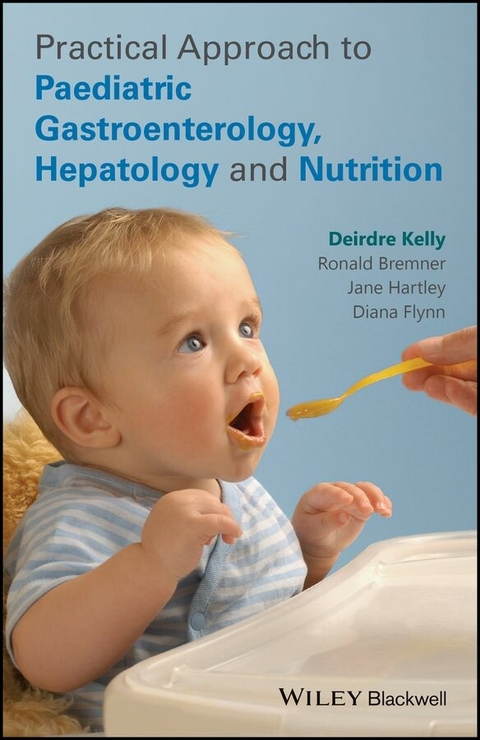
Practical Approach to Paediatric Gastroenterology, Hepatology and Nutrition (eBook)
John Wiley & Sons (Verlag)
978-1-118-77882-1 (ISBN)
Practical, handy and succinct, this full colour pocketbook provides clear-cut clinical guidance to the main symptoms that infants and children commonly present with in both primary and secondary care.
Clearly divided into specific sections covering the GI tract, liver and nutrition, Professor Kelly and her team discuss how best to investigate and manage specific clinical problems such as vomiting, abdominal pain, acute diarrhoea, constipation and jaundice using a highly clinical problem-orientated approach.
They cover the management of important clinical problems such as chronic liver disease, ascites, malnutrition, obesity, coeliac disease and inflammatory bowel disease, and provide advice on nutritional problems in premature infants and children including weaning and food aversion.
Key points, potential pitfalls, and management algorithms allow for rapid-reference, and link with the latest evidence, guidelines and protocols from ESPGHAN and NASPGHAN providing coverage of the major professional society recommendations for clinical practice.
Brought to you by the experts, Practical Approach to Gastroenterology, Hepatology and Nutrition is the perfect accompaniment for trainees in gastroenterology, hepatology and pediatrics, as well as nutritionists, GI nurses and GPs.
Practical, handy and succinct, this full colour pocketbook provides clear-cut clinical guidance to the main symptoms that infants and children commonly present with in both primary and secondary care. Clearly divided into specific sections covering the GI tract, liver and nutrition, Professor Kelly and her team discuss how best to investigate and manage specific clinical problems such as vomiting, abdominal pain, acute diarrhoea, constipation and jaundice using a highly clinical problem-orientated approach. They cover the management of important clinical problems such as chronic liver disease, ascites, malnutrition, obesity, coeliac disease and inflammatory bowel disease, and provide advice on nutritional problems in premature infants and children including weaning and food aversion. Key points, potential pitfalls, and management algorithms allow for rapid-reference, and link with the latest evidence, guidelines and protocols from ESPGHAN and NASPGHAN providing coverage of the major professional society recommendations for clinical practice. Brought to you by the experts, Practical Approach to Gastroenterology, Hepatology and Nutrition is the perfect accompaniment for trainees in gastroenterology, hepatology and pediatrics, as well as nutritionists, GI nurses and GPs.
Deirdre Kelly, Professor of Paediatric Hepatology, Liver Unit, Birmingham Children's Hospital, NHS Trust, Birmingham, UK Prof Kelly is one of the world's leading pediatric hepatologists, and was responsible for?helping create the?Paediatric Liver Unit at Birmingham Children's Hospital, a leading national and international institution?for children with liver disease and?undergoing liver transplantation. She runs an active research programme focussing on viral hepatitis in children, molecular genetics of inherited liver disease, and quality/outcome of life following liver/intestinal transplantation. She's?a former President of the European Society of Paediatric Gastroenterology, Hepatology and Nutrition (ESPGHAN),?the British Society for Paediatric Gastroenterology, Hepatology and Nutrition and the International Paediatric Transplant Association. She has been on the?editorial boards of the Journal of Liver Transplantation and Surgery, Pediatric Transplantation?and Alimentary Pharmacology & Therapeutics, and has had?250?papers published, as well as?7 books and 26 book chapters. She is editor of Diseases of the Liver & Biliary System in Children. Jane Hartley, Consultant Paediatric Hepatologist, Birmingham Children's Hospital, UK. Ronald Bremner, DM MB ChB BSc (MedSci) MRCPCH, Consultant Paediatric Gastroenterologist, Birmingham Children's Hospital, UK. Diana Flynn, Consultant Paediatrician, NHS Glasgow & Clyde, UK.
Preface, vii
Acknowledgements, viii
Part I Gastroenterology, 1
1 The infant with abdominal pain, 3
2 The child with abdominal pain, 6
3 The infant with vomiting, 15
4 The child with vomiting, 21
5 Difficulty swallowing, 24
6 Abdominal distension, 29
7 The infant with acute diarrhoea, 32
8 The child with acute diarrhoea, 35
9 The infant with chronic diarrhoea, 40
10 The child with chronic diarrhoea, 47
11 Gastrointestinal bleeding, 61
12 Food-associated symptoms, 67
13 Abdominal mass, 76
14 The infant with constipation, 79
15 The child with constipation, 83
16 Perianal pain, 90
Part II Hepatology, 93
17 The infant with jaundice, 95
18 The acutely unwell infant, 108
19 The infant with splenomegaly, 118
20 The infant with a hepatic cause for abdominal distension, 121
21 The older child with jaundice, 128
22 The older child who is acutely unwell, 134
23 The older child with hepatic causes of abdominal distension, 138
24 Chronic liver disease: itching, 141
25 Chronic liver disease: ascites, 145
26 Chronic liver disease: haematemesis or meleana, 148
27 Children with incidental abnormal liver biochemistry, 150
28 The child with cystic fibrosis, 152
29 The child with liver disease following chemotherapy, 155
30 The management of a child with acute liver failure, 158
31 Indications for liver transplant, 164
32 Complications following liver transplant, 166
Part III Nutrition, 171
33 Nutritional monitoring, 173
34 Nutrition in the normal infant: breast-feeding, 176
35 Nutrition in the normal infant: infant formulae, 180
36 Nutrition in premature infants, 183
37 Problems with weaning, 186
38 The infant or child with poor feeding, 188
39 Food aversion, 192
40 Ingestion of non-food items (pica), 194
41 Nutrition in neurodisability, 198
42 Malnutrition, 201
43 Obesity, 209
44 Intestinal failure, 213
45 Parenteral nutrition: initiating and monitoring, 225
46 Parenteral nutrition: complications, 230
47 Parenteral nutrition: weaning, 237
48 Home parenteral nutrition, 239
49 Enteral tube feeding, 241
50 Nutrition in cystic fibrosis, 247
Index, 249
CHAPTER 2
The child with abdominal pain
Abdominal pain is common in school-aged children and is rarely organic.
History
- Duration and location [right upper quadrant pain in hepatitis, Gilbert's syndrome and non-alcoholic steatohepatitis (NASH)]
- Associated symptoms: vomiting, dyspepsia, diarrhoea, fever, groin pain, urinary symptoms
- Blood in stool
- Vaginal discharge
- Foreign travel
- Gynaecological and sexual history
- Family history: inflammatory bowel disease, coeliac disease, migraine, irritable bowel syndrome, gallstones, pancreatitis
Investigations
- Urinalysis: haematuria in renal stones, pyuria in urinary tract infection
- Urine microscopy, culture, sensitivities
- Blood tests: blood glucose, FBC, renal function, liver function, inflammatory markers, amylase, cholesterol, triglycerides
- Other blood tests if indicated, e.g. paracetamol levels, thyroid function tests
- Stool samples if diarrhoea: microscopy, culture, sensitivity, ova, cysts, parasites
- Abdominal imaging:
- Abdominal X-ray, e.g. if looking for obstruction
- Chest X-ray, e.g. for pneumonia or air under the diaphragm
- Ultrasound scan of the abdomen, kidneys, pelvis (females) and testes (males)
- CT scan may also be appropriate, especially if there is a mass, trauma, jaundice or pancreatitis
- Endoscopy: will depend upon preliminary findings and history; in the absence of any abnormality on blood screen and imaging, negative endoscopy is very likely
Causes
Well child
- Functional bowel disease: recurrent abdominal pain of childhood, abdominal migraine
- Lactose intolerance: worse with dairy products (ice cream and chocolate are high lactose)
- Gastro-oesophageal reflux ± oesophagitis: dyspepsia, epigastric pain, regurgitation
- Constipation: hard, infrequent stools, soiling
- Renal pelvic/ureteric obstruction: intermittent colicky loin pain
- Coeliac disease: variable association with iron deficiency, diarrhoea, oral ampthous ulceration
- Food allergy (see Chapter 12)
- NASH: associated with obesity and metabolic syndrome
Febrile child
- Gastroenteritis (bacterial or viral)
- Mesenteric adenitis
- Urinary tract infection (lower abdominal pain, loin pain – suggests pyleonephritis)
- Pneumonia
- Inflammatory bowel disease
- Liver abscess
The ill child
- Diabetic ketoacidosis: check urine for glucose, blood gases
- Mesenteric lymphadenitis: fever, often with associated tonsillitis or pharyngitis
- Peptic ulcer disease: sharp epigastric pain after meals
- Hepatitis: raised liver transaminases ± jaundice; see Chapter 21
- Pancreatitis: high amylase, bilirubin and transaminases may be raised
- Ultrasound: biliary dilatation may be seen in acute pancreatitis
- DNA: PRSS1 mutations in familial pancreatitis, raised serum amylase and lipase
- Sickle cell anaemia/crisis: blood film shows sickle cells
- Henoch–Schönlein purpura: characteristic vasculitic rash, haematuria or proteinuria
- Acute adrenal failure: hyponatraemia ± hyperkalaemia, check for inappropriate urinary sodium losses
Surgical causes
- Appendicitis: low-grade fever, central then right iliac fossa pain, unable to stand (psoas irritation), beware of atypical symptoms
- Bowel obstruction, e.g. intussusception, volvulus: bilious vomiting, abdominal distension, tenderness
- Trauma, e.g. haematoma, pancreatitis, liver trauma: may present several days after the event. Low haemoglobin, CT scan will identify liver laceration/pancreatic transection or liver abscesses
- Incarcerated hernia: groin or scrotal swelling/discolouration/pain
- Peritonitis: rigid abdomen or distension with tenderness
- Liver abscess: ultrasound – abscess(es) in liver, raised white cell count, blood culture or aspirate from the abscess may grow pathogen (most commonly Streptococcus or Klebsiella)
- Gallstones/cholecystitis: sickle cell on blood film, raised bilirubin if obstruction, abnormal transaminases, high amylase if the ampulla of Vater is affected, cholesterol or triglycerides may be high, ultrasound – acoustic shadow (Figure 2.1), biliary dilatation if the gallstone is causing obstruction
- Testicular torsion: scrotal swelling, tenderness, discolouration
- Ureteric calculi: colicky pain, macro- or micro-scopic haematuria
Figure 2.1 Ultrasound scan appearance of gallstones with acoustic shadows. The gallbladder wall (marked with crosses) is irregular and thick, consistent with chronic cholecystitis.
Gynaecological causes
- Dysmenorrhoea or endometriosis: prior and/or during menstrual bleed
- Mittelschmerz: mid-cycle colicky pain
- Pelvic inflammatory disease: fever variable
Obstetric causes
- Ectopic pregnancy: sudden onset with shock or peritonism
- Ovarian cyst rupture/torsion
- Miscarriage/abortion/retained foetal products
Drugs/toxins
- Paracetamol overdose
- Iron overdose
- Venoms: spider bite, scorpion sting
- Soap ingestion
- Erythromycin
Referred pain
- Usually musculoskeletal: examine for scoliosis, joint tenderness
Rare causes
- Angioneurotic oedema: episodic, rash or facial/lip swelling – allergy/immunology referral
- Familial Mediterranean fever or systemic lupus erythematosis: episodic fever and raised inflammatory markers with extra-intestinal symptoms – rheumatology referral
- Acute intermittent porphyria: episodic, send urine for porphyrins during an attack
- Peptic ulcer disease – often associated with Helicobacter pylori infection
- No evidence of an inflammatory, anatomical, metabolic or neoplastic process
- Symptoms: at least once a week for at least 2 months before diagnosis
- Persistent or recurrent pain or discomfort above the umbilicus
- Not relieved by defecation or associated with the onset of a change in stool frequency or stool form
Abdominal discomfort or pain associated with two or more of the following at least 25% of the time:
- Improved with defecation
- Onset associated with a change in frequency of stool
- Onset associated with a change in form (appearance) of stool
- Episodic or continuous abdominal pain
- Insufficient criteria for other functional gastrointestinal disorders
- Must include: functional abdominal pain at least 25% of the time and either some loss of daily functioning or additional somatic symptoms such as headache, limb pain or difficulty in sleeping
Criteria:
- Two or more times in the preceding 12 months
- Paroxysmal episodes of intense peri-umbilical pain lasting >1 hour
- Intervening periods of usual health lasting weeks to months
- Pain interferes with normal activities
- Pain is associated with two or more of the following:
- Anorexia
- Nausea
- Vomiting
- Headache
- Photophobia
- Pallor
- Unintentional weight loss
- Growth failure or slowing
- Unexplained fever
- Chronic severe diarrhoea or significant vomiting
- Gastrointestinal bleeding
- Family history of inflammatory bowel disease
- Persistent chronic right iliac fossa or right upper quadrant pain
- Recurrent pancreatitis: consider hereditary pancreatitis or lipidaemia
Associated with:
- Haemolysis
- Prematurity
- Cystic fibrosis
- Down's syndrome
- Bone marrow and cardiac transplantation
- Childhood cancer
- Spinal surgery/injury
- Hepatobiliary trauma
- Selective IgA deficiency
- Dystrophia myotonica
- Chronic intestinal pseudo-obstruction
- Cholestatic liver disease (especially progressive familial intrahepatic cholestasis)
- Congenital anomalies
There is a bimodal incidence with initial peaks in infancy and adolescence; more common in females.
- In infancy: poor feeding, vomiting and jaundice
- In older children: right upper quadrant or epigastric pain, nausea, vomiting and obstructive jaundice
- Stones cast acoustic shadow on ultrasound and a thick-walled gallbladder (see Figure 2.1)
- Infants: gallstones may resolve
- Older children: resolution is unlikely
- Surgery is only required if symptomatic or there is bile duct dilatation
- Laparoscopic...
| Erscheint lt. Verlag | 2.12.2013 |
|---|---|
| Sprache | englisch |
| Themenwelt | Medizin / Pharmazie ► Allgemeines / Lexika |
| Medizin / Pharmazie ► Gesundheitsfachberufe ► Diätassistenz / Ernährungsberatung | |
| Medizinische Fachgebiete ► Innere Medizin ► Gastroenterologie | |
| Medizinische Fachgebiete ► Innere Medizin ► Hepatologie | |
| Medizin / Pharmazie ► Medizinische Fachgebiete ► Pädiatrie | |
| Schlagworte | Approach • Best • Chronic • Clinical • Clinical Nutrition • Colour • commonly • full • Gastroenterologie • Gastroenterologie u. Hepatologie • Gastroenterology & Hepatology • Gesundheits- u. Sozialwesen • GI • Health & Social Care • highly • important • Klinische Ernährung • Klinische Ernährung • Main • Manage • Management • Medical Science • Medizin • Pädiatrie • Pädiatrie • Pediatrics • pocketbook • present • problemorientated • Problems • Professor • provides clearcut • sections • specific • Symptoms • Team • tract |
| ISBN-10 | 1-118-77882-0 / 1118778820 |
| ISBN-13 | 978-1-118-77882-1 / 9781118778821 |
| Informationen gemäß Produktsicherheitsverordnung (GPSR) | |
| Haben Sie eine Frage zum Produkt? |
 PDF (Adobe DRM)
Größe: 10,3 MB
Kopierschutz: Adobe-DRM
Adobe-DRM ist ein Kopierschutz, der das eBook vor Mißbrauch schützen soll. Dabei wird das eBook bereits beim Download auf Ihre persönliche Adobe-ID autorisiert. Lesen können Sie das eBook dann nur auf den Geräten, welche ebenfalls auf Ihre Adobe-ID registriert sind.
Details zum Adobe-DRM
Dateiformat: PDF (Portable Document Format)
Mit einem festen Seitenlayout eignet sich die PDF besonders für Fachbücher mit Spalten, Tabellen und Abbildungen. Eine PDF kann auf fast allen Geräten angezeigt werden, ist aber für kleine Displays (Smartphone, eReader) nur eingeschränkt geeignet.
Systemvoraussetzungen:
PC/Mac: Mit einem PC oder Mac können Sie dieses eBook lesen. Sie benötigen eine
eReader: Dieses eBook kann mit (fast) allen eBook-Readern gelesen werden. Mit dem amazon-Kindle ist es aber nicht kompatibel.
Smartphone/Tablet: Egal ob Apple oder Android, dieses eBook können Sie lesen. Sie benötigen eine
Geräteliste und zusätzliche Hinweise
Buying eBooks from abroad
For tax law reasons we can sell eBooks just within Germany and Switzerland. Regrettably we cannot fulfill eBook-orders from other countries.
 EPUB (Adobe DRM)
Kopierschutz: Adobe-DRM
Adobe-DRM ist ein Kopierschutz, der das eBook vor Mißbrauch schützen soll. Dabei wird das eBook bereits beim Download auf Ihre persönliche Adobe-ID autorisiert. Lesen können Sie das eBook dann nur auf den Geräten, welche ebenfalls auf Ihre Adobe-ID registriert sind.
Details zum Adobe-DRM
Dateiformat: EPUB (Electronic Publication)
EPUB ist ein offener Standard für eBooks und eignet sich besonders zur Darstellung von Belletristik und Sachbüchern. Der Fließtext wird dynamisch an die Display- und Schriftgröße angepasst. Auch für mobile Lesegeräte ist EPUB daher gut geeignet.
Systemvoraussetzungen:
PC/Mac: Mit einem PC oder Mac können Sie dieses eBook lesen. Sie benötigen eine
eReader: Dieses eBook kann mit (fast) allen eBook-Readern gelesen werden. Mit dem amazon-Kindle ist es aber nicht kompatibel.
Smartphone/Tablet: Egal ob Apple oder Android, dieses eBook können Sie lesen. Sie benötigen eine
Geräteliste und zusätzliche Hinweise
Buying eBooks from abroad
For tax law reasons we can sell eBooks just within Germany and Switzerland. Regrettably we cannot fulfill eBook-orders from other countries.
aus dem Bereich