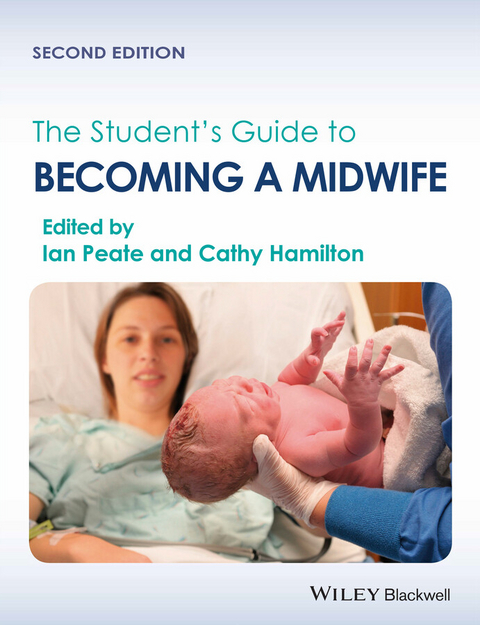
The Student's Guide to Becoming a Midwife (eBook)
John Wiley & Sons (Verlag)
978-1-118-41094-3 (ISBN)
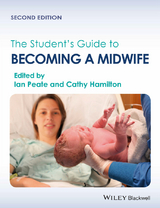
The Student’s Guide to Becoming a Midwife is essential reading for all student midwives.
Now updated to include the latest 2012 NMC Midwifery Rules and Standards and a brand new chapter on the midwife and public health, this comprehensive resource provides a wide range of need-to-know information for student midwives, including:
- Effective communication and documentation
- Confidentiality
- Interdisciplinary working
- The fundamentals of antenatal, intrapartum, and postnatal care
- Assessment and examination of the new-born baby
- Medicines
- Public health
- Clinical decision-making
- Evidence-based practice
With case studies, words of wisdom from current midwives and a range of activities and self-test questions throughout – making it easy to learn and understand key concepts – The Student’s Guide to Becoming a Midwife is the ideal companion for students throughout their course.
Ian Peate is Visiting Professor University of West London, London, UK, and Editor in Chief of the British Journal of Nursing.
Cathy Hamilton is a Midwifery Lecturer at the University of Hertfordshire, Hertfordshire, UK, and a Supervisor of Midwives.
About the editors Professor Ian Peate is Visiting Professor, University of West London, and Editor-in-Chief of the British Journal of Nursing. Cathy Hamilton is Senior Lecturer of Midwifery at the University of Hertfordshire and Supervisor of Midwives at West Herts Hospitals NHS Trust.
contributors iv
Preface to the Second Edition vii
Acknowledgements ix
Introduction 1
1 Effective Communication 8
2 Effective Documentation 26
3 Confidentiality 41
4 The Aims of Antenatal Care 57
5 Programmes of Care During Childbirth 72
6 Interprofessional Working: Seamless Working within Maternity Care 88
7 Intrapartum Care 102
8 Effective Emergency Care 131
9 Initial Assessment and Examination of the Newborn Baby 156
10 Effective Postnatal Care 172
11 Medication and the Midwife 198
12 The Midwife and Public Health 214
13 Regulating the Midwifery Profession 230
14 The Impact of Cultural Issues on the Practice of Midwifery 249
15 Legislation and the Midwife 261
16 Decision Making 277
17 Health, Safety and Environmental Issues 293
18 Evidence-Based Practice 312
19 Statutory Supervision of Midwives 329
20 Clinical Governance:A Framework for Improving Quality in Maternity Care 345
Answers to Quiz Questions 365
Glossary 374
Index 381
"Overall, The Student's Guide to Becoming a
Midwifeis an excellent all-round book to accompany any midwifery
student throughout their training. . . I would recommend it to
students in direct entry and shortened programmes of study as well
as any practitioners returning to practice or wishing to update
their study skills." (British Journal of
Midwifery, 1 April 2014)
1
Effective Communication
Tandy Deane-Gray
Introduction
This chapter will highlight the unique abilities of babies to communicate from birth, and how their optimal development relies on contingent responses, which are part of the parent–infant attachment process. These qualities in interpersonal skills are fundamental to building relationships, and the lessons from infancy influence our adult ability to communicate. Thus, by enhancing early relationships between parents and babies, midwives can reapply these principles in everyday communication. The common errors that inhibit midwifery communication will be outlined and skills of listening and empathy will be analysed.
Midwives are in a unique position to observe how humans learn to communicate. When time is taken to observe infants, it can be noticed that babies are ‘pre-programmed’ to interact with adults (Stern 1998). This is due to their preference for the sound, sight and movement of adults to other comparable stimuli and they are especially attracted to their mother. This interaction is probably a biological instinct, as humans depend on mother and other adults to care for them to ensure survival.
The work of MacFarlane (1977) clearly highlighted the ability of babies, and dispelled many myths around infants, such as the idea that babies cannot see. Not only can they see (and focus well at about 30 cm) but they like to look at contrast and contours found in the human face. They turn to sound, particularly the mother’s voice; they will turn to the smell of their own mother’s breast pad in preference to another. So they develop recognition of their mother very quickly through their senses, and communicate their needs through behaviours (RCM 1999). As adults, we also communicate through voice and behaviours.
The behaviours of a human baby are social and communicative; they mimic adults, most noticeably by facial changes. So if you smile, open your mouth wide or stick out your tongue, the baby will watch carefully and then copy (Murray & Andrews 2010), which is quite remarkable when you consider how they know that they even have a mouth. Indeed, this mimicking can be observed in the first hour after birth. This response to adults demonstrates babies turn taking in their non-verbal responses and vocalisations, provided the adult is sensitive to them (Brazelton et al. 1974).
Being sensitive to interaction in this dance of communication requires that the other is responding to that baby (or indeed an adult) and does not ignore or overwhelm with intrusive responses. The critical aspects of building relationships is engagement but its absence gives the message of indifference, which indicates lack of importance, and possibly feeling unwanted by the other or even a feeling of non-existence (McFarlane 2012). This indifference can readily be recognised when a mother is suffering with postnatal depression (RCM 2012). ‘Insensitive mothers’ may be overintrusive in communicating with their baby, and base their responses on their own needs and wishes, or general ideas about infants’ needs. The same dynamic is easily replicated by midwives when they have an agenda which differs from the client’s needs, for example during a booking history.
Care taking and our sensitivity to infants are normally based on how we were cared for as infants. If we formed a good enough attachment to our parents and they were in tune with our needs, if they were ‘baby centred’, then we become secure adults (Steele 2002) and naturally become ‘woman centred’ in midwifery care. Sensitivity also comes from our attitudes and behaviours. Thus, every time babies are changed in a loving way or sympathetically responded to when lonely, tired, hungry or frightened, they take in the experience of being loved in the quality of care received. For a baby, physical discomfort is the same as mental discomfort and vice versa (Stern 1998).
The key aspects of early parenting and building a sensitive relationship are described clearly in the RCM’s Maternal Emotional Wellbeing and Infant Development (RCM 2012). It is the parental attunement to the needs of the infant (which midwives have a role in fostering) that leads to loved individuals who do not become antisocial adults. Through our early relationships and communication from conception to 3 years of life, Sinclair (2007) suggests that we develop our emotional brain and our capacity for forming relationships. Fundamentally, human beings at any age respond and feel understood when an attuned warm, positive and sensitive other interacts with them. As a professional responding as a sensitive mother would, you too can communicate in this way with clients in your care, which can enhance how you build relationships and improve communication.
Sensitive responsiveness is one of the key constructs of attachment theory (Bowlby 1980, RCM 2012). The early infant–mother relationship has far-reaching consequences for the developing child’s later social and mental health. It is the underpinning theory in national agendas and frameworks interventions (e.g. DfES 2006, DH 2004, 2009, RCM 2012, Sinclair 2007), recommended for effective practice in the promotion of family health and parenting skills, which are now a priority politically and professionally.
The concept of sensitive responsiveness includes the ability to accurately perceive and respond to infant signals, with contingent responses because the person is able to see things from the baby’s point of view. These key concepts (in italics below), that mothers who are sensitively responsive seem to demonstrate, are fundamental to all our interactive relationships.
- An observer who listens and sees their strengths and helps them with their difficulties.
- Warm and responsive interactions with caretakers. The mother’s task is to respond empathically – to mind read. The baby has no control or bad intent; they learn that they can self-regulate through maternal containment. They then learn to self-soothe, for example, by sucking.
- Structure and routine, flexible,and age appropriate, that give boundaries. Providing psychological and physical holding; holding also relieves anxiety the baby feels ‘held together’.
- Maintains interest by providing things to look at and do through play and touch, but in tune, e.g. recognises that a yawn means ‘leave me to sleep’.
- Vocalisation reinforced by response-dialogue. Hearing and being heard – responds to familiar parent voice, giving a sense of security. Babies need to hear talking in order to develop speech (DfES 2006, DH 2004, Paavola 2006, Ponsford 2006, RCM 2012).
Sensitive responsiveness can be facilitated, and when mothers’ sensitivity and responsiveness are enhanced, this results in dramatic increases in secure attachments with fussy infants (Steele 2002).
Our infant–parent attachment patterns are largely acquired, rather than determined by genetic or biological make-up (Steele 2002), so with support we can all improve our ability to relate to others. For midwives, this means relating to clients and colleagues but also facilitating parent–infant relationships. This can be done by praising the sensitivity you observe in the parents, and helping them see and understand their baby. Using the questions in Box 1.1 with parents might enable them to realise that they can understand their baby. The RCM’s Maternal Emotional Wellbeing and Infant Development (RCM 2012) also has many suggestions to develop your skills in this area.
- Ask them to tell you about their baby.
- What does he/she like?
- What does he/she like to hear, look at, feel and smell in particular?
- How does he/she get your attention?
- How does he/she tell you he/she is content?
- What does he/she like when going to sleep? What do you notice about sleep? Or crying?
The basic methods of improving relationships are those that mothers ideally use with their infants. This is primarily non-verbal so it is not surprising that over 65% of our communication is non-verbal (Pease & Pease 2006), observing bodily and facial cues, and being in touch with what the person might be feeling. This is truly listening and being with another person, and because we are listening and empathising, we...
| Erscheint lt. Verlag | 11.11.2013 |
|---|---|
| Sprache | englisch |
| Themenwelt | Medizin / Pharmazie ► Gesundheitsfachberufe ► Hebamme / Entbindungspfleger |
| Medizin / Pharmazie ► Pflege | |
| Schlagworte | Antenatal • Brand • Communication • confidentiality • documentation • Essential • fundamentals • Guide • Health • Hebamme • Hebammenpraxis • Information • Krankenpflege • Latest • midwife • Midwifery • midwives • needtoknow • New • NMC • nursing • Range • resource • Student • students • wide |
| ISBN-10 | 1-118-41094-7 / 1118410947 |
| ISBN-13 | 978-1-118-41094-3 / 9781118410943 |
| Informationen gemäß Produktsicherheitsverordnung (GPSR) | |
| Haben Sie eine Frage zum Produkt? |
 EPUB (Adobe DRM)
Kopierschutz: Adobe-DRM
Adobe-DRM ist ein Kopierschutz, der das eBook vor Mißbrauch schützen soll. Dabei wird das eBook bereits beim Download auf Ihre persönliche Adobe-ID autorisiert. Lesen können Sie das eBook dann nur auf den Geräten, welche ebenfalls auf Ihre Adobe-ID registriert sind.
Details zum Adobe-DRM
Dateiformat: EPUB (Electronic Publication)
EPUB ist ein offener Standard für eBooks und eignet sich besonders zur Darstellung von Belletristik und Sachbüchern. Der Fließtext wird dynamisch an die Display- und Schriftgröße angepasst. Auch für mobile Lesegeräte ist EPUB daher gut geeignet.
Systemvoraussetzungen:
PC/Mac: Mit einem PC oder Mac können Sie dieses eBook lesen. Sie benötigen eine
eReader: Dieses eBook kann mit (fast) allen eBook-Readern gelesen werden. Mit dem amazon-Kindle ist es aber nicht kompatibel.
Smartphone/Tablet: Egal ob Apple oder Android, dieses eBook können Sie lesen. Sie benötigen eine
Geräteliste und zusätzliche Hinweise
Buying eBooks from abroad
For tax law reasons we can sell eBooks just within Germany and Switzerland. Regrettably we cannot fulfill eBook-orders from other countries.
aus dem Bereich