Psychiatry (eBook)
John Wiley & Sons (Verlag)
978-1-118-37822-9 (ISBN)
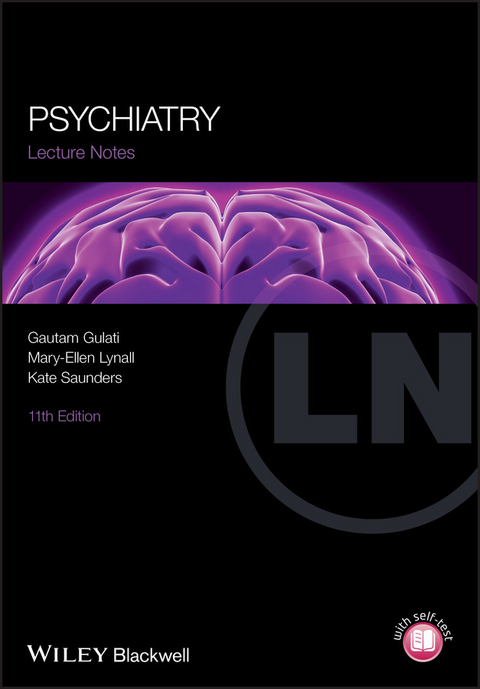
Lecture Notes: Psychiatry provides a concise and accessible introduction to the fundamentals of Psychiatry, presenting the principles of Psychiatric examination followed by systematic coverage of the major psychiatric disorders, as well as covering management and treatment options.
This eleventh edition has been revised to include recent developments in history-taking, psychotropic drugs and case presentations, as well as covering the practical elements of patient guidance and care.
Key features include:
• Clearly presented tables, figures and end-of-chapter 'Key point' summaries to aid revision
• An emphasis on core management skills needed by Junior Doctors in both psychiatric and general hospital settings
• Quick reference guides to help structure patient assessments on-the-go
• MCQs and case studies in line with medical school and professional level psychiatry exams
For those embarking on study or refreshing their knowledge of psychiatry, Lecture Notes: Psychiatry provides a step-by-step guide to both its wider and patient-centred practice.
Gautam Gulati is Honorary Senior Clinical Lecturer in Forensic Psychiatry, University of Oxford, and Consultant Forensic Psychiatrist, Oxford Health NHS Foundation Trust
Mary-Ellen Lynall is a Graduate-entry medical student, Magdalen College, University of Oxford, and Retained Lecturer in Neuroscience, Somerville College, University of Oxford
Kate Saunders is at the University of Oxford, Department of Psychiatry, Warneford Hospital
Lecture Notes: Psychiatry provides a concise and accessible introduction to the fundamentals of Psychiatry, presenting the principles of Psychiatric examination followed by systematic coverage of the major psychiatric disorders, as well as covering management and treatment options. This eleventh edition has been revised to include recent developments in history-taking, psychotropic drugs and case presentations, as well as covering the practical elements of patient guidance and care. Key features include: Clearly presented tables, figures and end-of-chapter Key point summaries to aid revision An emphasis on core management skills needed by Junior Doctors in both psychiatric and general hospital settings Quick reference guides to help structure patient assessments on-the-go MCQs and case studies in line with medical school and professional level psychiatry exams For those embarking on study or refreshing their knowledge of psychiatry, Lecture Notes: Psychiatry provides a step-by-step guide to both its wider and patient-centred practice.
Gautam Gulati is Honorary Senior Clinical Lecturer in Forensic Psychiatry, University of Oxford, and Consultant Forensic Psychiatrist, Oxford Health NHS Foundation Trust Mary-Ellen Lynall is a Graduate-entry medical student, Magdalen College, University of Oxford, and Retained Lecturer in Neuroscience, Somerville College, University of Oxford Kate Saunders is at the University of Oxford, Department of Psychiatry, Warneford Hospital
Psychiatry Lecture Notes 3
Contents 7
Foreword 8
Preface 9
Acknowledgements 10
Quick guides 11
History-taking checklist 11
Mental State Examination checklist 12
Structure of a psychiatric case presentation 13
1 Getting started 15
What is psychiatry? 15
Where is psychiatry going? 15
Why study psychiatry? 16
Useful knowledge 16
Useful skills 16
Useful attitudes 16
How to start psychiatry 17
The psychiatric interview 17
Psychiatric assessment 17
Diagnostic categories 17
Psychiatric classification 18
After the assessment: summarizing and communicating the information 18
2 The basic psychiatric assessment 19
Approaching a psychiatric assessment 19
What is the mental state examination (MSE)? 20
Components of the basic psychiatric assessment 20
When is a physical examination necessary? 27
Basic investigations 28
FURTHER READING 28
3 Diagnosis-specific assessments 29
When to use this chapter 29
How to assess cognitive function 29
What do you need to find out? 30
When do you need to assess cognition? 30
Cognitive impairment: history and MSE 30
How to assess psychosis 31
What do you need to find out? 32
When do you need to assess for psychosis? 32
Psychosis: history 32
Psychosis: MSE 32
How to assess depression 35
What do you need to find out? 35
When do you need to assess for depression? 35
Depression: history 36
Depression: MSE 36
How to assess mania 37
What do you need to find out? 37
When do you need to assess for mania? 38
Mania: history 38
Mania: MSE 38
How to assess anxiety and stress-related disorders 39
What do you need to find out? 39
When do you need to assess for anxiety disorders? 40
Anxiety: history and MSE 40
How to assess somatic symptoms and somatoform disorders 41
What do you need to find out? 41
When do you need to assess for a somatoform disorder? 42
Somatoform disorders: history and MSE 42
How to assess eating disorders 43
What do you need to find out? 43
When do you need to assess for an eating disorder? 43
Eating disorders: history 43
How to assess sleep 44
When do you need to assess sleep? (Box 3.13) 44
Sleep history 44
Further assessment 45
How to assess alcohol and other substance misuse 45
What do you need to find out? 45
When do you need to assess for substance misuse? 45
Assessment of alcohol misuse 46
Use of other substances 47
How to assess an unresponsive patient 47
What do you need to find out? 47
The unresponsive patient: history and MSE (Box 3.15) 48
FURTHER READING 49
4 Risk: harm, self-harm and suicide 50
Risk in psychiatry 50
Risk assessment 50
Formulation of risk 51
Risk management 51
Suicide and self-harm 52
Definitions 52
Self-harm 52
Suicide 53
Assessment of suicide risk 53
Assessment following SH 53
Management after SH 53
Risks to others 55
Assessment of risk to others 55
Management of risk to others 55
FURTHER READING 55
5 Completing and communicating the assessment 57
How to use this chapter 57
Diagnosis 57
Aetiology (see Chapter 6) 58
Management 58
Prognosis 60
Summarizing and communicating cases 60
Written and oral case summaries 61
Problem lists 62
Letters between psychiatrists and GPs 63
6 What causes mental health problems? 65
Thinking about aetiology inpsychiatry 65
Epidemiology 65
Sociology 66
Psychological factors 67
Biological models 69
FURTHER READING 72
7 Treatment 73
Drug treatments 73
Principles and practice of prescribing 73
Antidepressants 75
Mood stabilizers 78
Anxiolytics 80
Antipsychotics 80
Anticholinergics 83
Drugs for dementia 83
Drugs for substance dependence 84
Prescribing in specific groups 84
Other biological treatments 85
Electroconvulsive therapy (ECT) 85
Psychosurgery 85
Psychological treatments (the psychotherapies) 86
Factors common to all psychotherapies 86
Simple forms of psychotherapy 86
The major types of specific psychotherapy 87
Other psychotherapies 89
Social treatments 90
Acute social interventions 90
Social interventions during psychiatric care 90
The wider social environment 90
FURTHER READING 91
8 Psychiatric services and specialties 92
Organization of psychiatric services 92
Trends in service delivery and organization 92
Psychiatric specialties 95
General adult psychiatry 95
Psychiatry of old age (psychogeriatrics) 96
Child and adolescent psychiatry 96
Liaison psychiatry (psychological medicine) 97
Substance abuse psychiatry 97
Forensic psychiatry 98
Learning (intellectual) disability psychiatry 98
Groups with special psychiatric needs 99
The homeless 99
Ethnic minorities 99
People with psychiatric comorbidity (multiple psychiatric diagnoses) 99
Healthcare workers 99
Prisoners 99
FURTHER READING 100
9 Mood disorders 102
Depressive disorder 102
Dysthymia 103
Psychotic depression 103
Atypical depression 103
Reactive and endogenous depression 103
Mixed anxiety and depressive disorder 103
Epidemiology of depressive disorder (Table 9.1) 103
Management of depressive disorders 104
Drug treatment 104
Psychological treatment 105
Non-response to first-line treatment 106
Psychiatric referral for depression 106
Prevention of relapse 106
Prognosis 106
Bipolar disorder 107
Hypomania 107
Mania 107
Mixed affective states 107
Cyclothymia 107
Management of bipolar disorder 108
Treatment of mania and mixed episodes 108
Treatment of depressive episodes 109
Prevention of relapse 109
Organic mood disorders 109
Other aspects of mood disorders 110
Puerperal (postpartum) disorders 110
Premenstrual syndrome 110
Other psychiatric issues specific to women 110
Grief 111
Normal grief 111
Abnormal (pathological) grief 111
Grief and depression 111
FURTHER READING 112
10 Neurotic, stress-related and somatoform disorders 113
General characteristics of neurosis 113
Neurotic symptoms and syndromes 113
Stress-related and somatoform disorders 114
Diagnosing neuroses 114
Epidemiology of neurosis 114
Management of neurosis 114
Prognosis of neurosis 115
Aetiology of neurosis 115
The specific disorders 115
Anxiety disorders 115
Obsessive-compulsive disorder (OCD) 117
Dissociative and conversion disorders 118
Neurasthenia (chronic fatigue syndrome, or CFS) 118
Depersonalization-derealization syndrome 119
Stress-related disorders 119
Somatoform disorders 120
Functional somatic syndromes and their relationship to somatoform disorders 122
Factitious disorders and malingering 123
FURTHER READING 123
11 Eating, sleep and sexual disorders 125
Eating disorders 125
Anorexia nervosa 126
Bulimia nervosa 128
Sleep disorders 129
Insomnia 129
Excessive daytime sleepiness 130
Parasomnias 130
Sexual problems 130
Sexual dysfunction 130
Other sexual disorders 132
FURTHER READING 133
12 Schizophrenia 134
Clinical features 134
Clinical features of acute schizophrenia 134
Clinical subtypes of schizophrenia 135
Clinical features of chronic schizophrenia 135
Cognitive impairment in schizophrenia 136
Differential diagnosis 136
Acute schizophrenia 136
Chronic schizophrenia 137
Investigations 137
Management 137
Management of acute schizophrenia 137
Early intervention 137
Management of chronic schizophrenia 138
Modes of treatment 138
Prognosis 140
Epidemiology 140
Aetiology 141
Genetic factors 141
Environmental factors 142
The brain in schizophrenia 142
Psychological and social theories 143
The neurodevelopmental model 143
Disorders related to schizophrenia 144
Schizoaffective disorder 144
Delusional disorders (paranoid psychoses) 145
Schizotypal disorder 146
FURTHER READING 146
13 Dementia, delirium and neuropsychiatry 148
Dementia 148
Clinical features of dementia 148
Differential diagnosis of dementia 149
The causes of dementia 150
Assessment of dementia 150
Management of dementia 153
Prognosis of dementia 153
Alzheimer’s disease 153
Vascular dementia 155
Dementia with Lewy bodies (DLB) 155
Parkinson’s disease dementia 156
Frontotemporal lobar degeneration (FTLD) 156
Huntington’s disease 156
Normal pressure hydrocephalus 156
Prion disease 156
Alcohol-induced dementia 157
Delirium 157
Clinical features of delirium 157
Aetiology of delirium 157
Management of delirium 158
Prognosis of delirium 158
Other organic disorders 159
Organic psychiatric disorders 159
Amnesic syndrome 159
Epilepsy 160
Head injury 161
Other medical disorders associated with psychiatric disorders 161
FURTHER READING 162
14 Substance misuse 164
General issues 164
Types of substance misuse 164
Assessment of substance misuse 165
Management of substance misuse 165
Aetiology of substance misuse 165
Alcohol 165
Definitions and epidemiology of alcohol (mis)use 165
Clinical features of alcohol misuse 166
Management of alcohol problems 167
Cannabis 169
Epidemiology and pharmacology 169
Adverse health effects 170
Treatment 170
Opioids 170
Epidemiology and pharmacology 170
Adverse health and social effects 170
Clinical features 171
Management 171
Stimulants 172
Amphetamines 172
Cocaine 172
3,4-Methylenedioxymethamphetamine (MDMA, ecstasy) 172
Hallucinogens 173
Lysergic acid diethylamide (LSD) 173
Other substances 173
Phencyclidine 173
Solvents 173
Anabolic steroids 173
Benzodiazepines 173
Nicotine and caffeine 173
‘Legal highs’ 174
FURTHER READING 174
15 Personality disorders 175
Personality and personality disorder 175
Personality disorder and psychiatric disorder 176
Key aspects of personality disorder 176
Diagnosis 176
Classification 176
Epidemiology 178
Aetiology 178
Specific personality disorders 178
Cluster A personality disorders (‘eccentric’) 178
Cluster B personality disorders (‘dramatic’) 178
Cluster C personality disorder (‘anxious’) 179
Management 180
Prognosis 180
Problems with the concept of personality disorder 180
FURTHER READING 181
16 Childhood disorders 182
Principles of child psychiatry 182
Interviewing children 182
Classification 182
Epidemiology 182
Aetiology 183
Management 183
Prognosis 184
Emotional disorders 184
Anxiety disorders 185
Somatoform disorder 185
Other emotional disorders 185
School refusal 186
Mood disorders 186
Behavioural disorders 187
Conduct disorder 187
Attention deficit hyperactivity disorder (ADHD) 188
Developmental disorders 189
Pervasive developmental disorders 189
Specific developmental disorders 190
Other conditions 191
Enuresis 191
Encopresis 191
Tics 191
Selective mutism 192
Sleep disorders 192
Psychoses in childhood and adolescence 192
Special groups 192
Toddlers 192
Teenagers 192
Children in institutions 193
Children with physical illness 193
Children with psychiatrically ill parents 193
Abused children 193
Refugee children 194
FURTHER READING 194
17 Learning disability (mental retardation) 195
Principles 195
Definition and key features 195
Clinical features 195
Assessment of learning disability 195
Psychiatric aspects of learning disability 196
Management 197
Specific conditions associated with learning disability 198
Chromosomal abnormalities 198
Single gene disorders 200
Environmental factors 201
FURTHER READING 201
18 Psychiatry in other settings 203
Epidemiology of psychiatric disorder in different settings 203
In the population 203
General practice 203
A& E departments
Medical and surgical out-patient clinics 204
Medical and surgical wards 205
Psychiatric and medical comorbidity 205
Presentations of psychiatric disorder in a medical setting 205
Presentation with somatic symptoms 205
Presentation with a medical management problem 207
Psychiatric disorder presenting as an apparent worsening of a medical disease 207
Management of psychiatric disorder in medicine 207
Recognition 207
Treatment 208
Referral to specialist psychiatric services 208
FURTHER READING 208
19 Mental health and the law 210
Common law and capacity 210
Mental Capacity Act (2005) and the assessment of capacity 210
Mental Health Act (1983, amended 2007) 211
Other aspects of the law and psychiatry 214
FURTHER READING 214
Self-assessment answers 215
Appendix 1 ICD-10 classification of psychiatric disorders 219
Appendix 2 Keeping up to date and evidence-based 220
Index 221
| Erscheint lt. Verlag | 14.10.2013 |
|---|---|
| Reihe/Serie | Lecture Notes |
| Lecture Notes | Lecture Notes |
| Sprache | englisch |
| Themenwelt | Medizin / Pharmazie ► Gesundheitsfachberufe |
| Medizin / Pharmazie ► Medizinische Fachgebiete ► Psychiatrie / Psychotherapie | |
| Schlagworte | accessible • Areas • Basic science • Clinical • COM • concise • Core • Curriculum • doctors • Examination • fundamentals • Information • Introduction • introductions • Junior • Lecture • Major • Medical • medical education • Medical Science • Medizin • Medizinstudium • Psychiatric • Psychiatrie • Psychiatry • series • undergraduate |
| ISBN-10 | 1-118-37822-9 / 1118378229 |
| ISBN-13 | 978-1-118-37822-9 / 9781118378229 |
| Informationen gemäß Produktsicherheitsverordnung (GPSR) | |
| Haben Sie eine Frage zum Produkt? |
 PDF (Adobe DRM)
Kopierschutz: Adobe-DRM
Adobe-DRM ist ein Kopierschutz, der das eBook vor Mißbrauch schützen soll. Dabei wird das eBook bereits beim Download auf Ihre persönliche Adobe-ID autorisiert. Lesen können Sie das eBook dann nur auf den Geräten, welche ebenfalls auf Ihre Adobe-ID registriert sind.
Details zum Adobe-DRM
Dateiformat: PDF (Portable Document Format)
Mit einem festen Seitenlayout eignet sich die PDF besonders für Fachbücher mit Spalten, Tabellen und Abbildungen. Eine PDF kann auf fast allen Geräten angezeigt werden, ist aber für kleine Displays (Smartphone, eReader) nur eingeschränkt geeignet.
Systemvoraussetzungen:
PC/Mac: Mit einem PC oder Mac können Sie dieses eBook lesen. Sie benötigen eine
eReader: Dieses eBook kann mit (fast) allen eBook-Readern gelesen werden. Mit dem amazon-Kindle ist es aber nicht kompatibel.
Smartphone/Tablet: Egal ob Apple oder Android, dieses eBook können Sie lesen. Sie benötigen eine
Geräteliste und zusätzliche Hinweise
Buying eBooks from abroad
For tax law reasons we can sell eBooks just within Germany and Switzerland. Regrettably we cannot fulfill eBook-orders from other countries.
aus dem Bereich