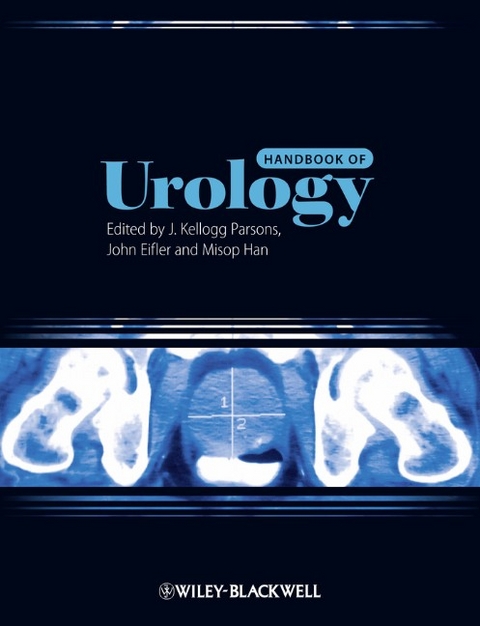
Handbook of Urology (eBook)
Are you a urologist, trainee, or medical student managing patients with conditions like BPH, urinary stones or priapism?
Do you require a rapid-reference guide to clinical management?
If so, this full colour, practical handbook is the ideal resource, providing rapid-access information on the clinical management of all major urologic disorders and problems likely to be encountered daily.
With a strong emphasis on user-friendliness and point-of-care accessibility, sections are divided according to the major areas of urology, with each chapter containing the following features:
• case histories
• multiple choice questions
• key points box
• key weblinks box
• common errors in diagnosis/treatment boxes
An experienced contributor team outlines the skills required to provide appropriate assessment and management of patients; in particular identifying the correct diagnostic and management options for each disorder, and how to perform basic urological procedures safely and effectively. Information corresponds to relevant American Urological Association (AUA) and European Association of Urology (EAU) guidelines for clinical management.
Perfect for quick browsing prior to performing a consultation, preparing for ward rounds, or when brushing up for the Boards, Handbook of Urology is the ideal quick-stop manual for urologists of all levels involved in day to day management of patients.
Are you a urologist, trainee, or medical student managing patients with conditions like BPH, urinary stones or priapism? Do you require a rapid-reference guide to clinical management? If so, this full colour, practical handbook is the ideal resource, providing rapid-access information on the clinical management of all major urologic disorders and problems likely to be encountered daily. With a strong emphasis on user-friendliness and point-of-care accessibility, sections are divided according to the major areas of urology, with each chapter containing the following features: case histories multiple choice questions key points box key weblinks box common errors in diagnosis/treatment boxes An experienced contributor team outlines the skills required to provide appropriate assessment and management of patients; in particular identifying the correct diagnostic and management options for each disorder, and how to perform basic urological procedures safely and effectively. Information corresponds to relevant American Urological Association (AUA) and European Association of Urology (EAU) guidelines for clinical management. Perfect for quick browsing prior to performing a consultation, preparing for ward rounds, or when brushing up for the Boards, Handbook of Urology is the ideal quick-stop manual for urologists of all levels involved in day to day management of patients.
Edited by J. Kellogg Parsons, MD, MHS, FACS, Moores Comprehensive Cancer Center, UC San Diego Health System, La Jolla, CA, USA John B. Eifler, MD, James Buchanan Brady Urological Institute, The Johns Hopkins School of Medicine, Baltimore, MD, USA Misop Han, MD, MS, James Buchanan Brady Urological Institute, The Johns Hopkins School of Medicine, Baltimore, MD, USA
Contributors, viii
Preface to the First Edition, x
Section 1 Infections
1 Infections of the urinary tract, 3
Mark W. Ball
2 Antimicrobial Prophylaxis for Urologic Procedures, 12
Jeffrey K. Mullins
Section 2 Urinary lithiasis
3 Nephrolithiasis: Etiology, Stone Composition, Medical Management, and Prevention, 23
Robert M. Turner II and Michelle Jo Semins
4 Nephrolithiasis: Evaluation and Surgical Treatment, 32
Bishoy A. Gayed and Michelle Jo Semins
Section 3 Reproductive and Sexual Function 5 Male infertility, 43
Ahmed Magheli
6 Erectile dysfunction and Peyronie's disease, 55
Jeffrey K. Mullins
Section 4 Emergency Urology 7 Genitourinary trauma, 67
Adam Kern
8 Testicular torsion and trauma, 75.
Adam Kern
9 Acute gross hematuria: etiology and management, 82
Kenneth Tseng
10 Priapism, 88
Debasish Sundi and Trinity J. Bivalacqua
11 Urinary fistulae, 96
Adam Kern
12 Urethral stricture disease, 103
Debasish Sundi and Arthur L. Burnett
Section 5 Urine storage and emptying 13 Neurourology, 111
Ifeanyichukwu Anusionwu
14 Urogynecology, 116
Ifeanyichukwu Anusionwu
15 Interstitial cystitis and chronic pelvic pain, 123
Ifeanyichukwu Anusionwu
Section 6 Oncology
16 Prostate Cancer Screening and Diagnosis, 129
John B. Eifler
17 Prostate Cancer: Localized, 139
Stacy Loeb
18 Prostate cancer: treatment of metastatic disease, 149
John B. Eifler
19 Benign Prostatic Hyperplasia, 157
John B. Eifler
20 Bladder cancer: superficial, 166
Ashley E. Ross and Trinity J. Bivalacqua
21 Invasive Bladder Cancer and Urinary Diversion, 173
Ashley E. Ross and Trinity J. Bivalacqua
22 Penile and urethral cancer, 180
Nicholas C. Field, Matthew Eric Hyndman
23 Ureteral and renal pelvic tumors, 189
Elias Hyams and Brian Matlaga
24 Angiomyolipoma, oncocytoma and retroperitoneal fibrosis, 199
Phillip M. Pierorazio
25 Malignant Renal parenchymal tumors, 208
Phillip M. Pierorazio
26 Adrenal Disorders, 217
Jeffrey K. Mullins
27 Testicular tumors, 228
Varun Sharma and Markus Margreiter
Section 7 Congenital and Acquired Disease
28 Obstructing Congenital Anomalies of the Urinary Tract, 239
Kristina D. Suson
29 Developmental Abnormalities of the Genitalia: Disorders of Sexual Differentiation, Hypospadias, and Cryptorchidism, 247
Eric Z. Massanyi
30 Pediatric Urinary Infections, Vesicoureteral Reflux, and Voiding Dysfunction, 254
Eric Z. Massanyi
31 Pediatric Genitourinary Oncology, 261
Eric Z. Massanyi
32 The Exstrophy-Epispadias Complex, 268
Kristina D. Suson
33 Bladder Augmentation, bladder neck reconstruction and continent diversions in children, 276
Angela D Gupta
34 End Stage Renal Disease and Transplantation, 280
Angela D Gupta
Addendum
Uropharmacology, 285
John B. Eifler
Index, 289
Color plate section can be found facing page 166
1
Infections of the urinary tract
Mark W. Ball
The James Buchanan Brady Urological Institute and Department of Urology, The Johns Hopkins School of Medicine, Baltimore, MD, USA
- Urinary tract infections (UTIs) are commonly diagnosed maladies and account for a significant number of healthcare visits and dollars.
- Infections of the bladder include uncomplicated cystitis, complicated cystitis, pyocystis, and emphysematous cystitis.
- Infections of the kidney include pyelonephritis, emphysematous pyelonephritis, xanthogranulomatous pyelonephritis, infected hydronephrosis, renal abscess and perinephric abscess.
- Infections of the genitalia and reproductive organs include orchitis, epididymitis, prostatitis, and Fournier gangrene.
Nomenclature
Urinary tract infection (UTI) refers to bacterial invasion of the urothelium causing an inflammatory response. When the site of infection is known, it is more informative to name the site of infection; in other words, cystitis should be used for bladder infection and pyelonephritis for kidney injection, rather than using the generic UTI. Bacteriuria, on the other hand, refers to the presence of bacteria in the urine, which may be either asymptomatic or associated with infection. Pyuria refers to the presence of white blood cells (WBCs) in the urine, which can occur in the setting of either infection or other inflammatory states (nephrolithiasis, malignancy, or foreign body).
Epidemiology
UTI is the most common bacterial infection, responsible for at least 7 million office visits and 100,000 hospitalizations per year. Most infections are diagnosed based on clinical symptoms and a suggestive urinalysis (UA). This algorithm, however, misses 20% of patients who will have positive urine cultures and causes unnecessary treatment of 50% of patients who will not go on to have a positive urine culture. The bacteria that most often cause UTIs are enteric in origin, with Escherichia coli being the most common [1].
Pathogenesis and basic science
Infection of the urinary tract occurs as a complex interaction of both bacterial virulence factors and impaired host defense. Routes of entry into the genitourinary (GU) tract are (in order of frequency) ascending infection via the urethra, direct hematogenous spread, and lymphatic spread.
Bacterial virulence factors increase the infectivity of a bacterial inoculum. The ability of bacteria to adhere to vaginal and urothelial epithelial cells is necessary for an infection to develop. Type 1 pili are expressed by E. coli and adhere to uroplakins on umbrella cells of the bladder epithelium. Studies have shown that inoculation of the urinary tract with type 1 piliated organisms results in increased colonization with those organisms. P pili are bacterial adhesins that bind glycolipid receptors in the kidney. The P stands for pyelonephritis, designated because of the high percentage of pyelonephrogenic E. coli that express these pili. Bacteria may downregulate the expression of pili once infection is established since pili increase phagocytosis of the organisms. The ability of bacteria to regulate the expression of their pili is known as phase variation.
Host defense factors decrease the likelihood of infection. Colonization of the vaginal introitus, urethra, and periurethral skin by non-uropathogenic bacteria provide a mechanical barrier to colonization. Normal voiding also washes away colonizing uropathogenic bacteria. There is genetic variation in the receptivity of epithelial cells to bacterial adhesion. There may be an association between adherence and a protective effect of the HLA-A3 allele. Complicating factors that increase infection risk are due to obstruction, anatomic abnormality, and epithelial cell receptivity. Obstruction or urinary stasis can increase host susceptibility to UTIs. Calculus disease, vesicoureteral reflux, benign prostatic hypertrophy, and neurogenic bladder all increase the susceptibility of the host to UTIs [1].
Interpreting the urinalysis
While urine culture is the gold standard for diagnosing UTIs, it is a test that takes 1–2 days to provide results and potentially longer for antibacterial sensitivity analysis. UA is more expeditious and can support the diagnosis made by history and physical. A UA often consists of two parts: a dipped UA and a microscopic UA. The dipped component tests for pH and the presence of leukocyte esterase (LE), nitrates, and blood. The microscopic component identifies red and white blood cells, red and white blood cells casts, granular casts, bacteria, and yeast.
- Pyuria: >5 WBC/hpf
- Leukocyte esterase (LE): an enzyme released by white blood cells. Positive LE correlates with pyuria
- Nitrite: Urine contains nitrates from protein catabolism. Gram-negative bacteria are able to reduce nitrate to nitrite creating a positive result. One notable exception is pseudomonas which although gram-negative, is associated with negative nitrite on UA.
A UA suggestive of infection typically has positive LE, pyuria, microscopic hematuria, and bacteria. Nitrite is present with gram-negative infection. The presence of epithelial cells can indicate contamination with vaginal flora and should prompt repeat midstream collected urine after adequate cleaning [1].
Bladder infections
Cystitis
Cystitis, or infection of the bladder, may be classified as uncomplicated or complicated. Factors that make cystitis complicated are infections in a male, the elderly, children, diabetics, the immunosuppressed, in the presence of anatomic abnormality, during pregnancy, after recent instrumentation, in the presence of a urinary catheter, and after recent antimicrobials or hospitalization. The typical presentation of cystitis includes symptoms of dysuria, frequency, urgency, ±suprapubic pain, and ±hematuria. Notably, constitutional symptoms including fever and chills are usually absent. This history is crucial in making diagnosis since as many as 50–90% of patients presenting with these symptoms will have cystitis. The diagnosis is supported by urinalysis findings of pyuria, bacteriuria, and the presence of nitrite and LE [1].
Treatment of uncomplicated UTI is dependent on availability, allergy, and local resistance patterns. The Infectious Diseases Society of America (IDSA) guidelines recommend the following agents as first line: Nitrofurantoin macrocrystals 100 mg bid × 5 days, trimethoprim–sulfamethoxazole 160/800 mg bid × 3 days, or fosfomycin 3 g single dose. Second-line agents include fluoroquinolones or beta-lactams. Knowledge of institutional and community antibiograms should influence prescriber patterns [2].
Cystitis is considered complicated when it occurs in a compromised urinary tract. Treatment regimens are generally the same as for complicated UTI, but the duration is 7–14 days. Nitrofurantoin should not be used in complicated UTI as it has poor tissue penetration. Additionally, modifiable factors such as removal of foreign bodies including stones and indwelling urinary catheters should be considered if clinically indicated. Indwelling catheters in place for over 2 weeks associated with UTI should be changed [3, 4].
Asymptomatic bacteriuria
Asymptomatic bacteriuria is defined as bacteria in the urine in the absence of clinical signs of infection. It is more common in women than men, but increases in prevalence in both sexes with age. Patients with indwelling catheters, bladder reconstruction using bowel, and patients with neurogenic bladders almost always have bacteriuria. Asymptomatic bacteriuria should not be screened for nor treated with a few important exceptions. Pregnant women and patients undergoing urologic procedures should be screened and treated [5].
Recurrent UTI
Unresolved UTI refers to an infection that has not responded to antimicrobial therapy. This commonly occurs because of resistant bacteria or can occur in the case of other unrealized complicating factors (see section Cystitis).
Recurrent UTI is an infection that occurs after resolution of a previous infection. These infections may represent either reinfection or bacterial persistence. Reinfection designates a new event in which the same or different organism enters the urinary tract, or bacterial persistence. Persistence, on the other hand, is when the same bacteria reappear from a nidus such as infected stone or hardware. Reinfection is responsible for 80% of recurrent UTIs [1].
Pyocystis
Pyocystis is a condition in which purulent material is retained in the bladder. Typically, the bladder is defunctionalized as a result of urinary diversion or hemodialysis. Presenting symptoms include purulent discharge, fever, or...
| Erscheint lt. Verlag | 11.9.2013 |
|---|---|
| Sprache | englisch |
| Themenwelt | Medizin / Pharmazie ► Medizinische Fachgebiete ► Urologie |
| Schlagworte | Accessibility • BPH • Clinical • Conditions • daily • encountered • full colour • Guide • Handbook • Ideal • Information • Major • Management • Medical Science • Medizin • patients • Practical • rapidaccess • rapidreference • resource • strong • Student • urologic • Urologie • urologist • Urology • userfriendliness |
| ISBN-13 | 9781118713730 / 9781118713730 |
| Informationen gemäß Produktsicherheitsverordnung (GPSR) | |
| Haben Sie eine Frage zum Produkt? |
 PDF (Adobe DRM)
Größe: 7,7 MB
Kopierschutz: Adobe-DRM
Adobe-DRM ist ein Kopierschutz, der das eBook vor Mißbrauch schützen soll. Dabei wird das eBook bereits beim Download auf Ihre persönliche Adobe-ID autorisiert. Lesen können Sie das eBook dann nur auf den Geräten, welche ebenfalls auf Ihre Adobe-ID registriert sind.
Details zum Adobe-DRM
Dateiformat: PDF (Portable Document Format)
Mit einem festen Seitenlayout eignet sich die PDF besonders für Fachbücher mit Spalten, Tabellen und Abbildungen. Eine PDF kann auf fast allen Geräten angezeigt werden, ist aber für kleine Displays (Smartphone, eReader) nur eingeschränkt geeignet.
Systemvoraussetzungen:
PC/Mac: Mit einem PC oder Mac können Sie dieses eBook lesen. Sie benötigen eine
eReader: Dieses eBook kann mit (fast) allen eBook-Readern gelesen werden. Mit dem amazon-Kindle ist es aber nicht kompatibel.
Smartphone/Tablet: Egal ob Apple oder Android, dieses eBook können Sie lesen. Sie benötigen eine
Geräteliste und zusätzliche Hinweise
Zusätzliches Feature: Online Lesen
Dieses eBook können Sie zusätzlich zum Download auch online im Webbrowser lesen.
Buying eBooks from abroad
For tax law reasons we can sell eBooks just within Germany and Switzerland. Regrettably we cannot fulfill eBook-orders from other countries.
 EPUB (Adobe DRM)
Kopierschutz: Adobe-DRM
Adobe-DRM ist ein Kopierschutz, der das eBook vor Mißbrauch schützen soll. Dabei wird das eBook bereits beim Download auf Ihre persönliche Adobe-ID autorisiert. Lesen können Sie das eBook dann nur auf den Geräten, welche ebenfalls auf Ihre Adobe-ID registriert sind.
Details zum Adobe-DRM
Dateiformat: EPUB (Electronic Publication)
EPUB ist ein offener Standard für eBooks und eignet sich besonders zur Darstellung von Belletristik und Sachbüchern. Der Fließtext wird dynamisch an die Display- und Schriftgröße angepasst. Auch für mobile Lesegeräte ist EPUB daher gut geeignet.
Systemvoraussetzungen:
PC/Mac: Mit einem PC oder Mac können Sie dieses eBook lesen. Sie benötigen eine
eReader: Dieses eBook kann mit (fast) allen eBook-Readern gelesen werden. Mit dem amazon-Kindle ist es aber nicht kompatibel.
Smartphone/Tablet: Egal ob Apple oder Android, dieses eBook können Sie lesen. Sie benötigen eine
Geräteliste und zusätzliche Hinweise
Buying eBooks from abroad
For tax law reasons we can sell eBooks just within Germany and Switzerland. Regrettably we cannot fulfill eBook-orders from other countries.
aus dem Bereich