Forensic CBT (eBook)
John Wiley & Sons (Verlag)
978-1-118-58989-2 (ISBN)
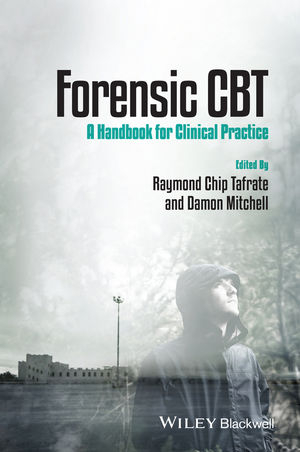
Forensic CBT: A Handbook for Clinical Practice is an edited collection that represents the first authoritative resource on the utilization of CBT strategies and techniques for offender clients.
- Features contributions from leaders of the major schools of CBT on the treatment of antisocial personality patterns as well as anger, interpersonal violence, substance abuse, and sexual aggression
- Addresses modified CBT approaches for female, juvenile, and culturally diverse forensic populations
- Covers emerging areas of forensic practices, including the integration of motivational interviewing and strength-based approaches
- Includes an assortment of worksheets, handouts, and exercises for practitioners to use with their clients
Raymond Chip Tafrate is a licensed psychologist and Professor and Chairperson of the Criminology and Criminal Justice Department at Central Connecticut State University. His most recent books are Anger Management for Everyone (2009) and Understanding Anger Disorders (2006).
Damon Mitchell is a licensed psychologist and Associate Professor in the Department of Criminology and Criminal Justice at Central Connecticut State University. His research has been published in a variety of psychology and criminal justice journals including International Journal of Offender Therapy and Comparative Criminology, Journal of Criminal Justice, Federal Probation, Journal of Sex Research, and the Journal of Interpersonal Violence.
Forensic CBT: A Handbook for Clinical Practice is an edited collection that represents the first authoritative resource on the utilization of CBT strategies and techniques for offender clients. Features contributions from leaders of the major schools of CBT on the treatment of antisocial personality patterns as well as anger, interpersonal violence, substance abuse, and sexual aggression Addresses modified CBT approaches for female, juvenile, and culturally diverse forensic populations Covers emerging areas of forensic practices, including the integration of motivational interviewing and strength-based approaches Includes an assortment of worksheets, handouts, and exercises for practitioners to use with their clients
Raymond Chip Tafrate is a licensed psychologist and Professor and Chairperson of the Criminology and Criminal Justice Department at Central Connecticut State University. His most recent books are Anger Management for Everyone (2009) and Understanding Anger Disorders (2006). Damon Mitchell is a licensed psychologist and Professor in the Department of Criminology and Criminal Justice at Central Connecticut State University. His research has been published in a variety of psychology and criminal justice journals including the International Journal of Offender Therapy and Comparative Criminology, Journal of Criminal Justice, and the Journal of Interpersonal Violence.
"I very much enjoyed reading this book; it contains excellent chapters, and demonstrates the advances that have been made in recent years in the understanding and treatment of offenders. There is no doubt that this book will be of immense interest and use to practitioners. The book is very informative of what is currently available for treating offenders and includes user friendly forms, worksheets, and examples of case histories, which will aid the practitioner. The book offers hope to practitioners who have to deal with challenging offenders, most of whom lack motivation to change. In short, I found reading this book fascinating and inspirational."
--Journal of Forensic and Legal Medicine, 2014
"This book should be considered a must read for anyone who works anywhere in the corrections system, (local, state, and/or federal). Whether you are working with pretrial incarcerated offenders in a jail, convicted offenders in a prison, probation, parole, half-way house and/or community supervision, this book will offer you numerous practical worksheets and handouts and a set of new tools that will make you more effective and successful with the people in your care and supervision."
--Gustavo R. Grodnitzky, Psychologist and Consultant, Amazon.com
Forensic CBT offers hope in its tone and content and inspiration... and describes advances in recent years in understanding and treatment of offenders... this superb collection strikes the right balance between scholarship and practical application... The book is a must-have. Whether you want to learn, teach, bring yourself up to date, reinvigorate your strategies and techniques, or just add new levels of understanding, this book should be in your library.
--John Gannon, Ph.D., International Association for Correctional and Forensic Psychology
Forensic CBT: A Handbook for Clinical Practice is a
superb collection that will be of immense value to practitioners
who work with this challenging group of people. Leading
contributors from the CBT approaches have written excellent
chapters that will be immediately helpful, striking just the right
balance between scholarship and practical application. There is an
awareness of the specific challenges in working with offenders---
distrust, lack of motivation, history of problems, lack of social
support, stigmatization---and, importantly, how to overcome
them. I highly recommend this important volume to anyone
working in the forensic area.
--Professor Robert L. Leahy, Director, American Institute
for Cognitive Therapy, NYC.
This handbook is long overdue as it fills a glaring void in
forensic and correctional treatment. With its application of CBT to
an array of offenders and their conditions, it elucidates the
"forgotten R" (responsivity) in the RNR model of
effective correctional intervention.
--Dr Stephen Wormith, University of Saskatchewan,
Canada
Incisive, comprehensive, scholarly, and practical - Tafrate and
Mitchell's Forensic CBT is an impressive body of work, with
contributions from leaders in the field integrating innovations in
applied research and clinical practice for cognitive behavioral
approaches with forensic clientele.
--Professor Mark Olver, University of
Saskatchewan, Canada
About the Editors and Contributors
Jai Amrod, PhD, is a licensed psychologist who, for more than 25 years, has provided therapy for inmates incarcerated by the Missouri Department of Corrections. His therapeutic work has involved functional contextual and compassion interventions, with a primary focus on Acceptance and Commitment Therapy. His current writing interests include barriers that professionals face that stymie therapeutic change, and critical cinema and ambiguity.
Arnoud Arntz, PhD, is professor of Clinical Psychology and Experimental Psychopathology at the University of Maastricht, The Netherlands. His main research interests lie in the fields of anxiety and personality disorders, both applied and fundamental. Professor Arntz is scientific director of the Research Center of Experimental Psychopathology of Maastricht University and of the Dutch-Flemish Graduate Research School for PhD training. He also practices as a psychotherapist at the Community Mental Health Center of Maastricht, where he mainly treats patients with personality disorders. Together with Marcel van den Hout, he is editor of the Journal of Behavior Therapy and Experimental Psychiatry.
David P. Bernstein, PhD, is Professor of Forensic Psychotherapy, an endowed chair sponsored by Maastricht University and Forensic Psychiatric Center “de Rooyse Wissel.” He received his doctoral degree in Clinical Psychology from New York University in 1990, and joined the faculty of Maastricht University in 2004, where he serves as Chair of the Forensic Psychology Section. His main research areas are personality disorders, psychological trauma, and forensic issues. He is an internationally known expert on Schema Therapy, an integrative therapy for personality disorders. His current research focuses on developing more effective treatments for forensic patients with personality disorders.
F. Michler Bishop, PhD, CAS, is Director of Alcohol and Substance Abuse Services at the Albert Ellis Institute in New York City, and author of Managing Addictions: Cognitive, Emotive and Behavioral Techniques. He advocates for an integrative, goal-focused approach to the treatment of addictions, incorporating a variety of evidence-based treatment options. As one of the founders of SMART Recovery®, he was instrumental in the development of its Four-Point Program. He has conducted numerous workshops on CBT, REBT and SMART Recovery in the United States and internationally.
James Bonta, PhD, received his PhD in Clinical Psychology in 1979 and began his career as a psychologist at a maximum security remand centre. In 1990, he joined Public Safety Canada, where he is currently Director of Corrections Research. He is a Fellow of the Canadian Psychological Association and recipient of the Criminal Justice Section’s Career Contribution Award for 2009. His interests are in the areas of risk assessment and offender rehabilitation. He coauthored with the late D. A. Andrews The Psychology of Criminal Conduct (now in its 5th edition). He is also a coauthor of the various Level of Service risk/need instruments that have been translated into six languages and used by correctional systems throughout the world.
Alison M. Byers, PsyD, received her BA from Georgetown University, a Master’s Degree in Criminology from Cambridge University, England, and her doctorate in Clinical Psychology from Long Island University’s CW Post. Alison trained as a family therapist at Philadelphia Child Guidance Center. She is a consultant with Diversified Search, Inc., in Philadelphia. Her areas of expertise include juvenile rehabilitation, family violence, and trauma.
Christmas Covell, PhD, received her doctorate in clinical psychology from the University of Nebraska-Lincoln, specializing in forensic psychology. Her work has focused on performance of psycho-legal evaluations, as well as treatment of individuals with sexual behavior problems across a variety of institutional and community settings. Dr Covell is a licensed psychologist in private practice, and presently provides forensic evaluation, clinical consultation, and treatment services in the state of Washington.
Cory A. Crane, PhD, completed graduate training in clinical psychology at Purdue University and a predoctoral internship in clinical psychology at the Yale University School of Medicine in the Forensic Drug Diversion program, a branch of the Division of Substance Abuse. He is currently an NIAAA postdoctoral fellow with the Research Institute on Addictions, University at Buffalo, SUNY. His primary research interests focus on the influence of cognitive moderators on the relationship between acute alcohol intoxication and event-level occurrences of interpersonal violence.
Andrew Day, MSc, DClinPsy, is Professor in Forensic Psychology and Director of the Forensic Psychology Centre at Deakin University. He has a clinical background, previously working as a clinical and forensic psychologist in both the United Kingdom and Australia and is particularly interested in the application of psychological thought and practice to the correctional setting. Professor Day is a member of the Australian Psychological Society’s Colleges of Clinical and Forensic Psychology. His current research interests center around the development of therapeutic regimes within prison settings, effective practice with offenders from Aboriginal and Torres Strait Islander cultural backgrounds in Australia, and the role that anger plays in aggressive and violent behavior.
Raymond DiGiuseppe, PhD , is a Professor and Chair of the Psychology Department at St John’s University in New York City and Director of Professional Training at the Albert Ellis Institute. He is past-president (2006–07) of the Association for Behavioral and Cognitive Therapies, and President-Elect of the Division of Psychotherapy of the American Psychological Association. He serves as Co-Editor of the Journal of Rational-Emotive & Cognitive Behavior Therapies . Dr DiGiuseppe has contributed to the scientific literature with six books, more than 120 chapters and articles, and hundreds of conference presentations. He has studied anger problems and coauthored the Anger Disorders Scale and the Anger Regulation and Expression Scale .
Christopher I. Eckhardt, PhD, is an associate professor of psychological sciences at Purdue University, West Lafayette, Indiana. He completed his BA at the University of Michigan and received his PhD in Clinical Psychology from Hofstra University. His research program is supported by federal and foundation funding and examines the affective and social information-processing correlates of interpersonal violence, the effects of alcohol use on these processes, and how risk factor research using I3 theory may inform cognitive-behavioral interventions for partner abusive men.
Eva Feindler, PhD, is a professor and the Director of the Long Island University doctoral program in Clinical Psychology. She received her undergraduate degree from Mount Holyoke College and her graduate degrees from West Virginia University. She has authored books (Adolescent Anger Control: Cognitive-Behavioral Strategies; Handbook of Adolescent Behavior Therapy; Assessment of Family Violence; Comparative Treatments of Anger Disorders), numerous articles on parent and child anger, its assessment and treatment, and has conducted professional workshops in the United States and internationally. She is featured on a training video (Research Press) which presents the components of Aggression Replacement Training. She was recently appointed as the co-chair of the Board of Directors for the International Center for Aggression Replacement Training.
Clare-Ann Fortune, PhD, PGDipClinPsyc, is a lecturer in Clinical Forensic Psychology in the School of Psychology, Victoria University of Wellington, New Zealand. Dr Fortune teaches in the Forensic Psychology and Clinical Psychology programs at Victoria University. Dr Fortune’s research interests focus on treatment access and outcomes for youth offenders. She has published papers on rehabilitation and young people who have engaged in sexually abusive behaviors. Dr Fortune has also worked as a Clinical Psychologist specializing in youth forensic mental health, substance use, risk and rehabilitation.
Arthur (Art) Freeman, PhD , is Professor of Psychology and Executive Program Director of the Clinical Psychology programs in the Department of Behavioral Medicine at Midwestern University, Downers Grove, Illinois, and Glendale, Arizona. He is a Diplomate and Distinguished Founding Fellow of the Academy of Cognitive Therapy, and was, for 13 years, the Founding Chair of the Department of Psychology at the Philadelphia College of Osteopathic Medicine. In addition to 100 plus book chapters, reviews, and journal articles, he has published over 75 professional books and serves on the editorial boards of several US and international journals. Dr Freeman is a past president of both the Association for Behavioral and Cognitive Therapies and the International Association for Cognitive Psychotherapy.
Frank L. Gardner, PhD, ABPP, is Professor and Director of the PsyD Program in School and Clinical Psychology at Kean University in Union, New Jersey. He earned his PhD in Clinical and School Psychology from Hofstra University, and is board certified in clinical psychology by the American Board of Professional Psychology. With over 30 years of experience as a practicing clinical psychologist,...
| Erscheint lt. Verlag | 16.9.2013 |
|---|---|
| Sprache | englisch |
| Themenwelt | Geisteswissenschaften ► Psychologie |
| Medizin / Pharmazie ► Medizinische Fachgebiete ► Psychiatrie / Psychotherapie | |
| Recht / Steuern ► Strafrecht | |
| Schlagworte | Cognitive behavioral therapy (CBT) • Criminology • Forensic Psychology • Forensische Psychologie • Kognitive Verhaltenstherapie • Kriminologie • Law • Offenders, criminal justice, correctional treatment, correctional counseling, probation, community supervision, cognitive therapy, cognitive restructuring, criminal thinking, schema therapy, acceptance and commitment therapy, antisocial personality • Psychologie • Psychology • Rechtswissenschaft |
| ISBN-10 | 1-118-58989-0 / 1118589890 |
| ISBN-13 | 978-1-118-58989-2 / 9781118589892 |
| Informationen gemäß Produktsicherheitsverordnung (GPSR) | |
| Haben Sie eine Frage zum Produkt? |
 PDF (Adobe DRM)
Größe: 4,8 MB
Kopierschutz: Adobe-DRM
Adobe-DRM ist ein Kopierschutz, der das eBook vor Mißbrauch schützen soll. Dabei wird das eBook bereits beim Download auf Ihre persönliche Adobe-ID autorisiert. Lesen können Sie das eBook dann nur auf den Geräten, welche ebenfalls auf Ihre Adobe-ID registriert sind.
Details zum Adobe-DRM
Dateiformat: PDF (Portable Document Format)
Mit einem festen Seitenlayout eignet sich die PDF besonders für Fachbücher mit Spalten, Tabellen und Abbildungen. Eine PDF kann auf fast allen Geräten angezeigt werden, ist aber für kleine Displays (Smartphone, eReader) nur eingeschränkt geeignet.
Systemvoraussetzungen:
PC/Mac: Mit einem PC oder Mac können Sie dieses eBook lesen. Sie benötigen eine
eReader: Dieses eBook kann mit (fast) allen eBook-Readern gelesen werden. Mit dem amazon-Kindle ist es aber nicht kompatibel.
Smartphone/Tablet: Egal ob Apple oder Android, dieses eBook können Sie lesen. Sie benötigen eine
Geräteliste und zusätzliche Hinweise
Zusätzliches Feature: Online Lesen
Dieses eBook können Sie zusätzlich zum Download auch online im Webbrowser lesen.
Buying eBooks from abroad
For tax law reasons we can sell eBooks just within Germany and Switzerland. Regrettably we cannot fulfill eBook-orders from other countries.
 EPUB (Adobe DRM)
Kopierschutz: Adobe-DRM
Adobe-DRM ist ein Kopierschutz, der das eBook vor Mißbrauch schützen soll. Dabei wird das eBook bereits beim Download auf Ihre persönliche Adobe-ID autorisiert. Lesen können Sie das eBook dann nur auf den Geräten, welche ebenfalls auf Ihre Adobe-ID registriert sind.
Details zum Adobe-DRM
Dateiformat: EPUB (Electronic Publication)
EPUB ist ein offener Standard für eBooks und eignet sich besonders zur Darstellung von Belletristik und Sachbüchern. Der Fließtext wird dynamisch an die Display- und Schriftgröße angepasst. Auch für mobile Lesegeräte ist EPUB daher gut geeignet.
Systemvoraussetzungen:
PC/Mac: Mit einem PC oder Mac können Sie dieses eBook lesen. Sie benötigen eine
eReader: Dieses eBook kann mit (fast) allen eBook-Readern gelesen werden. Mit dem amazon-Kindle ist es aber nicht kompatibel.
Smartphone/Tablet: Egal ob Apple oder Android, dieses eBook können Sie lesen. Sie benötigen eine
Geräteliste und zusätzliche Hinweise
Buying eBooks from abroad
For tax law reasons we can sell eBooks just within Germany and Switzerland. Regrettably we cannot fulfill eBook-orders from other countries.
aus dem Bereich