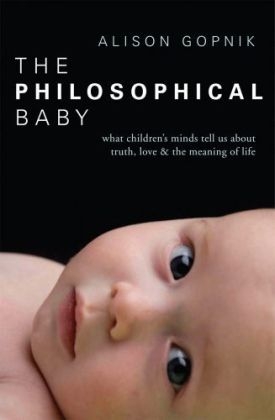
Philosophical Baby (eBook)
304 Seiten
Random House (Verlag)
9781446483640 (ISBN)
For most of us, having a baby is the most profound, intense, and fascinating experience of our lives. Now scientists and philosophers are starting to appreciate babies, too.
The last decade has witnessed a revolution in our understanding of infants and young children. Scientists used to believe that babies were irrational, and that their thinking and experience were limited. Recently, they have discovered that babies learn more, create more, care more, and experience more than we could ever have imagined. And there is good reason to believe that babies are actually cleverer, more thoughtful, and even more conscious than adults.
This new science holds answers to some of the deepest and oldest questions about what it means to be human. A new baby's captivated gaze at her mother's face lays the foundations for love and morality. A toddler's unstoppable explorations of his playpen hold the key to scientific discovery. A three-year-old's wild make-believe explains how we can imagine the future, write novels, and invent new technologies.
Alison Gopnik - a leading psychologist and philosopher, as well as a mother - explains the groundbreaking new psychological, neuroscientific, and philosophical developments in our understanding of very young children, transforming our understanding of how babies see the world, and in turn promoting a deeper appreciation for the role of parents.
,For most of us, having a baby is the most profound, intense, and fascinating experience of our lives. Now scientists and philosophers are starting to appreciate babies, too. The last decade has witnessed a revolution in our understanding of infants and young children. Scientists used to believe that babies were irrational, and that their thinking and experience were limited. Recently, they have discovered that babies learn more, create more, care more, and experience more than we could ever have imagined. And there is good reason to believe that babies are actually cleverer, more thoughtful, and even more conscious than adults.
This new science holds answers to some of the deepest and oldest questions about what it means to be human. A new baby's captivated gaze at her mother's face lays the foundations for love and morality. A toddler's unstoppable explorations of his playpen hold the key to scientific discovery. A three-year-old's wild make-believe explains how we can imagine the future, write novels, and invent new technologies. Alison Gopnik - a leading psychologist and philosopher, as well as a mother - explains the groundbreaking new psychological, neuroscientific, and philosophical developments in our understanding of very young children, transforming our understanding of how babies see the world, and in turn promoting a deeper appreciation for the role of parents.
For most of us, having a baby is the most profound, intense, and fascinating experience of our lives. Now scientists and philosophers are starting to appreciate babies, too. The last decade has witnessed a revolution in our understanding of infants and young children. Scientists used to believe that babies were irrational, and that their thinking and experience were limited. Recently, they have discovered that babies learn more, create more, care more, and experience more than we could ever have imagined. And there is good reason to believe that babies are actually cleverer, more thoughtful, and even more conscious than adults.This new science holds answers to some of the deepest and oldest questions about what it means to be human. A new baby's captivated gaze at her mother's face lays the foundations for love and morality. A toddler's unstoppable explorations of his playpen hold the key to scientific discovery. A three-year-old's wild make-believe explains how we can imagine the future, write novels, and invent new technologies. Alison Gopnik - a leading psychologist and philosopher, as well as a mother - explains the groundbreaking new psychological, neuroscientific, and philosophical developments in our understanding of very young children, transforming our understanding of how babies see the world, and in turn promoting a deeper appreciation for the role of parents.
| Erscheint lt. Verlag | 8.6.2011 |
|---|---|
| Sprache | englisch |
| Themenwelt | Geisteswissenschaften ► Psychologie ► Allgemeine Psychologie |
| Geisteswissenschaften ► Psychologie ► Entwicklungspsychologie | |
| Geisteswissenschaften ► Psychologie ► Verhaltenstherapie | |
| Medizin / Pharmazie ► Medizinische Fachgebiete ► Psychiatrie / Psychotherapie | |
| ISBN-13 | 9781446483640 / 9781446483640 |
| Informationen gemäß Produktsicherheitsverordnung (GPSR) | |
| Haben Sie eine Frage zum Produkt? |
 EPUB (Adobe DRM)
Kopierschutz: Adobe-DRM
Adobe-DRM ist ein Kopierschutz, der das eBook vor Mißbrauch schützen soll. Dabei wird das eBook bereits beim Download auf Ihre persönliche Adobe-ID autorisiert. Lesen können Sie das eBook dann nur auf den Geräten, welche ebenfalls auf Ihre Adobe-ID registriert sind.
Details zum Adobe-DRM
Dateiformat: EPUB (Electronic Publication)
EPUB ist ein offener Standard für eBooks und eignet sich besonders zur Darstellung von Belletristik und Sachbüchern. Der Fließtext wird dynamisch an die Display- und Schriftgröße angepasst. Auch für mobile Lesegeräte ist EPUB daher gut geeignet.
Systemvoraussetzungen:
PC/Mac: Mit einem PC oder Mac können Sie dieses eBook lesen. Sie benötigen eine
eReader: Dieses eBook kann mit (fast) allen eBook-Readern gelesen werden. Mit dem amazon-Kindle ist es aber nicht kompatibel.
Smartphone/Tablet: Egal ob Apple oder Android, dieses eBook können Sie lesen. Sie benötigen eine
Geräteliste und zusätzliche Hinweise
Buying eBooks from abroad
For tax law reasons we can sell eBooks just within Germany and Switzerland. Regrettably we cannot fulfill eBook-orders from other countries.
aus dem Bereich