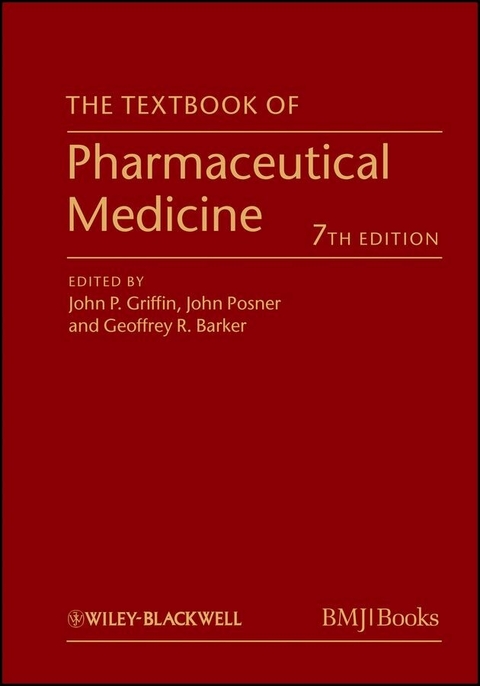
The Textbook of Pharmaceutical Medicine (eBook)
John Wiley & Sons (Verlag)
978-1-118-53234-8 (ISBN)
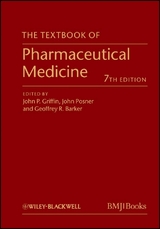
The Textbook of Pharmaceutical Medicine is the standard reference for everyone working and learning in pharmaceutical medicine. It is a comprehensive resource covering the processes and practices by which medicines are developed, tested and approved, and the recognised text for the Diploma in Pharmaceutical Medicine from the Faculty of Pharmaceutical Medicine.
This fully revised Seventh Edition, which includes two new Editors, encompasses current developments within pharmaceutical medicine with new chapters on biological therapeutics, pharmacovigilance, vaccines, drugs for cancer, drug development in paediatrics and neonatalogy, the clinical trials directive, life cycle management of medicines, counterfeit medicines and medical marketing. Also included for easy reference, and referred to throughout the text, are the Declaration of Helsinki, Guidelines and Documentation for Implementation of Clinical Trials, relevant European Directives and the Syllabus for Pharmaceutical Medicine.
Written by an international team of leading academics, medical directors and lawyers, The Textbook of Pharmaceutical Medicine, Seventh Edition meets the needs of both those working in pharmaceutical medicine and preparing for the Diploma in Pharmaceutical Medicine.
The text breaks down into three core sections:
Part I: Research and Development
Part II: Regulation
Part III: Healthcare marketplace
View Table of Contents in detail
John Griffin BSc, PhD, MBBS, FRCP, FRCPath, FFPM; Director, Asklepieion Consultancy Ltd; Visiting Professor, University of Surrey Postgraduate Medical School; Former Director, ABPI; Formerly Professional Head of the Medicines Division, DHSS, London.
John Posner BSc PhD MBBS FRCP FFPM; Independent Consultant in Pharmaceutical Medicine, John Posner Consulting, Beckenham, Kent, UK; Chairman of the Board of Examiners of the Faculty of Pharmaceutical Medicine of the Royal College of Physicians (UK).
Geoffrey R. Barker TD, BSc, MSc, FDSRCD, FRCS, FFPM; Adj. Professor Immunology, Duke University Medical Center, NC, USA; Executive and Limited Partner, Pappas Ventures, NC, USA; Consultant to EGeen (USA), Abingworth LLP (UK), Reuters; Insight Community of Experts; Trustee Member of the Board of the Faculty of Pharmaceutical Physicians of The Royal Colleges of Physicians UK.
The Textbook of Pharmaceutical Medicine is the standard reference for everyone working and learning in pharmaceutical medicine. It is a comprehensive resource covering the processes and practices by which medicines are developed, tested and approved, and the recognised text for the Diploma in Pharmaceutical Medicine from the Faculty of Pharmaceutical Medicine. This fully revised Seventh Edition, which includes two new Editors, encompasses current developments within pharmaceutical medicine with new chapters on biological therapeutics, pharmacovigilance, vaccines, drugs for cancer, drug development in paediatrics and neonatalogy, the clinical trials directive, life cycle management of medicines, counterfeit medicines and medical marketing. Also included for easy reference, and referred to throughout the text, are the Declaration of Helsinki, Guidelines and Documentation for Implementation of Clinical Trials, relevant European Directives and the Syllabus for Pharmaceutical Medicine. Written by an international team of leading academics, medical directors and lawyers, The Textbook of Pharmaceutical Medicine, Seventh Edition meets the needs of both those working in pharmaceutical medicine and preparing for the Diploma in Pharmaceutical Medicine. The text breaks down into three core sections: Part I: Research and DevelopmentPart II: RegulationPart III: Healthcare marketplaceView Table of Contents in detail
John Griffin BSc, PhD, MBBS, FRCP, FRCPath, FFPM; Director, Asklepieion Consultancy Ltd; Visiting Professor, University of Surrey Postgraduate Medical School; Former Director, ABPI; Formerly Professional Head of the Medicines Division, DHSS, London. John Posner BSc PhD MBBS FRCP FFPM; Independent Consultant in Pharmaceutical Medicine, John Posner Consulting, Beckenham, Kent, UK; Chairman of the Board of Examiners of the Faculty of Pharmaceutical Medicine of the Royal College of Physicians (UK). Geoffrey R. Barker TD, BSc, MSc, FDSRCD, FRCS, FFPM; Adj. Professor Immunology, Duke University Medical Center, NC, USA; Executive and Limited Partner, Pappas Ventures, NC, USA; Consultant to EGeen (USA), Abingworth LLP (UK), Reuters; Insight Community of Experts; Trustee Member of the Board of the Faculty of Pharmaceutical Physicians of The Royal Colleges of Physicians UK.
Cover 1
Title page 5
Copyright page 6
Contents 7
Contributors 9
The editors 12
Acknowledgements 15
List of abbreviations 16
Preface 21
Part I: Research and development 23
1: Discovery of new medicines 25
Introduction 25
Medicines marketed in the years 2008–2011 26
Impact of high throughput screening in drug discovery 31
Impact of combinatorial chemistry on drug discovery 31
Fragment-based design 32
Examples in drug discovery 33
Hepatitis C virus 33
HIV 34
Central nervous system therapeutic area 35
Alzheimer’s disease 36
Cardiovascular disease 38
Chronic obstructive pulmonary disease 39
Diabetes 39
Osteoporosis 40
Gastrointestinal diseases 41
Oligonucleotide-based therapeutics 42
Orphan diseases 43
Neglected tropical diseases 43
Recent drug discovery strategies to improve success 44
Natural products in drug discovery 44
Drug repositioning 44
The new role of academia in pharmaceuticals 45
Conclusions 46
References 46
2: Pharmaceutical development 54
Introduction 54
Role of analytical method development 54
Role of regulatory control 54
Drug delivery 54
Local or systemic delivery 54
Instant or extended release 55
Absorption enhancement 55
Product formulation types 55
Oral solids 56
Oral liquids 56
Sterile products 56
Pulmonary delivery 56
Other formulation types 56
Concluding remarks on formulation selection 57
Quality by Design 57
The concept of Quality by Design 57
Implementation of Quality by Design 57
Drug substance properties at the preclinical testing stage 58
Principles of pharmaceutical development 58
Oral solid dosage form development 59
Oral solid dosage components 59
Key oral solid dosage processes 59
Oral solid dosage manufacturing 60
Sterile products 60
Sterile product manufacturing 61
Sterile product design 62
Stability of parenterals 63
Conclusions 63
3: Preclinical safety testing 64
Introduction 64
The ‘omic’ technologies 66
The drug development process 68
Risk–benefit 69
Good Laboratory Practice 71
Preclinical safety pharmacology 71
Regulatory guidelines 72
General considerations 72
Experimental design 72
Safety pharmacology core battery 73
Single-dose studies 74
Repeat-dose studies 74
Maximum repeatable dose study to obtain information about the maximum tolerated dose 75
Definitive repeat-dose toxicity studies 75
Carcinogenicity studies 77
Route of administration 78
Dose selection 79
Group sizes 79
Conduct of study 79
Duration of study 79
Autopsy and microscopic examination 80
Evaluation of results 80
Reproductive toxicology 80
Aims of studies 80
Types of studies 81
Timing of studies 81
Juvenile toxicity studies 82
Evaluation and interpretation of data 82
Genotoxicity testing 83
Study design 84
Germ cell tests 86
Study interpretation 87
Irritation and sensitisation testing 87
Irritancy 87
Immunotoxicology 88
Special routes 90
Specialty areas 91
Scaling from animals to humans 95
Specific considerations for biologicals 95
Animal numbers, costs and ethics 98
References 100
4: Exploratory development 104
Introduction 104
Definitions 104
Objectives of exploratory development 105
Outcomes of exploratory development 106
Planning exploratory development 106
The need for a regulatory strategy 106
Devising the plan 106
Presentation of the plan 107
Requirements for administration of an NME to humans 108
Evidence of primary pharmacodynamic activity 108
Secondary pharmacodynamic activity and safety pharmacology 108
Pharmacokinetics and drug metabolism 109
Toxicology 109
Drug substance and pharmaceutical formulations 110
Preparation for the first administration to humans 111
Transfer from preclinical to clinical 111
Preparation of the Investigator’s Brochure 111
Aspects of the first protocol and ethics review 112
Request for clinical trial authorisation 112
Studies in healthy volunteers 113
What is a healthy (non-patient) volunteer? 113
Healthy volunteers or patients? 114
Source of healthy volunteers 115
Facilities and staff 115
Volunteer recruitment procedures 116
Good Clinical Practice 117
Adverse reactions in volunteer studies 117
Insurance and compensation 118
Objectives of first-in-human studies 118
Tolerability and safety 118
Pharmacokinetics 119
Pharmacodynamics 122
Design of the first-in-human study 124
Choice of dose range 124
Magnitude of dose increments 124
Should we dose to toxicity? 125
Number of doses for individual subjects 125
Use of placebo 126
Blinding 126
Parallel groups or crossover 126
Size of cohorts 127
Minimising risk 127
Minimal risk 127
Practical aspects of study design and conduct 128
Interim reviews 128
Higher risk new molecular entities 129
Subsequent studies in exploratory development 130
Effect of food ingestion 130
Repeat doses 130
Studies in the elderly 130
Drug interactions 131
Mass-balance studies 131
Surrogate endpoints for dose–response in patients 131
Outcomes of ED 132
References 133
5: Clinical pharmacokinetics 135
Introduction 135
Basic concepts 136
Overview of the fate of administered drug 136
Plasma concentration–time curve 136
Descriptive versus conceptual parameters 137
Predictions from pharmacokinetic parameters 141
Use of pharmacokinetic information to design dosage regimens 141
Bioavailability and bioequivalence 142
Bioavailability 142
Bioequivalence 143
Drug interactions 144
Selection of studies 144
Study design 145
Enzyme induction and inhibition 145
Protein binding 146
The elderly 146
Renal impairment 147
Liver disease 147
Disposition, rates and routes of elimination of radiolabelled drug 148
Pharmacokinetic–pharmacodynamic modelling 148
Population analysis 149
The rest of the typical clinical pharmacokinetics package 150
The ideal drug from the point of view of pharmacokinetics 151
Role of pharmacokinetic properties in determining a dosage regimen 151
Conclusions 152
References 152
6: Biological therapeutics 154
Introduction – the history of biologics development 154
Differences between ‘chemical’ and ‘biological’ molecules 156
Monoclonal antibody against a soluble ligand target 158
Monoclonal antibody against a cell surface target 159
Immunogenicity 160
First-in-human dose selection for a biologic 161
Conclusions 162
References 163
7: Objectives and design of clinical trials 165
History of the controlled clinical trial 165
Objectives of clinical trials in drug development 166
Design of controlled clinical trials 167
Controls: placebo and active comparators 167
Blinding 168
Primary and secondary endpoints 169
Surrogate and clinical endpoints 169
Parallel and crossover trials 171
Randomisation 172
Selection of dosage 172
Special populations 173
Analysis of controlled clinical trials 174
Hypothesis testing, power and p-values 174
Confidence intervals 174
Odds ratios, absolute and relative risk 175
Final word 175
References 175
Further reading 176
Control groups in clinical trials 176
Statistical aspects of study design and analysis 176
8: Conduct of clinical trials: Good Clinical Practice 177
Introduction 177
Good Clinical Practice 177
Declaration of Helsinki 177
ICH GCP 178
EU Clinical Trials Directive (2001/20/EC) and EU GCP Directive (2005/28/EC) 178
Preparation of documentation for the clinical trial 179
The trial master files 179
The IMP and its documents 186
Manufacture 186
Comparators 186
Presentation 187
Shipping and importation 187
Control and documentation of IMP 187
Running the clinical trial 189
Before the start of the trial 189
Technical considerations 190
During the trial 194
Data management 201
Preparation of the clinical report 204
General considerations 204
Quality management 205
Quality control and quality assurance 205
Fraud and misconduct 206
Conclusions 208
References 208
Further reading 210
Useful internet addresses 210
9: Medical statistics 211
Introduction 211
Probability 211
What is probability? 211
Inductive probability 212
Scales of measurement and clinical endpoints 213
Qualitative data 213
Quantitative data 213
Measurement and endpoints 213
Basic statistical principles 215
Descriptive statistics 216
Inferential statistics 219
Issues in design 222
Study aims and objectives 222
Explanatory/pragmatic trials 224
Choice of endpoint 226
Prevention of bias 228
Control groups 231
Active control groups 232
Choice of analysis 234
Sample size and power calculations 235
Meta-analysis and summaries 236
Uses of meta-analysis and their strengths and weaknesses 237
References 238
10: Development of medicines: full development 241
Introduction 241
Background 241
Senior management perspective 242
Taking products into later development phase 243
Clinical perspective 243
Regulatory perspective 244
Commercial perspective 244
Exit strategy 245
Preparing the plan 245
Structure of the plan 245
Therapeutic targets 246
Safety 248
The detailed clinical development plan 248
Number of patients 248
Number of studies 249
Patient categories 250
Coexisting medical conditions and concomitant drug interactions 250
Duration of treatment 251
Dose 251
Dosage form 251
Clinical trial supplies 251
Length of the programme 252
Data management 253
Cost 254
Technology 254
Executing the plan 254
Contract research organisations 254
Selection of sites 254
Prioritisation of trials 255
Quality management 255
Process improvement 255
Communication 255
Training 255
Acknowledgements 255
References 256
11: Pharmacovigilance 257
Introduction 257
Benefit and risk 257
The wider context 257
The pharmacovigilance process 258
Legislation and the regulatory authorities 258
Legislation 258
Regulatory authorities 258
Qualified Person for Pharmacovigilance 259
Harmonisation initiatives 260
CIOMS working groups and reports 260
Contribution of ICH to safety surveillance 260
World Health Organization 261
Safety governance 261
Safety Matrix Teams and Safety Governance Boards 261
Data Safety Monitoring Committees 261
Regulatory governance 262
Case handling, expedited and periodic reporting 262
Definitions 262
Collection and collation of adverse events and ADRs (pre-marketing and post-marketing) 263
Reporting of ADRs 263
Coding of adverse events 264
Collecting, analysing and reporting product quality complaints and associated adverse events 264
Other reports 264
Expedited individual case safety reports 265
Periodic reporting 265
Signal detection and signal evaluation 268
Definition of a signal 268
Principles of causality assessment and causality algorithms 268
Approaches to signal management 269
Methodologies for signal detection 269
Observational data 269
Benefit–risk evaluation 270
Context 270
Methodologies 270
Personalised medicines 271
Labelling and risk management planning 271
Labelling 271
Risk management planning 272
References 274
12: Vaccines 276
Vaccines: history, controversies and public health issues 276
Vaccine clinical trials 281
Vaccine immunogenicity 281
Vaccine efficacy 281
Vaccine effectiveness 282
Phase I clinical studies 282
Phase II clinical studies 283
Phase III clinical studies 284
Vaccine safety monitoring 285
Vaccinology ethics 287
Importance of vaccine manufacturing and supply 288
The future of vaccinology 288
Adjuvants 288
Novel routes of delivery and formulations 289
Therapeutic vaccines 290
References 291
13: Drugs for cancer 292
Introduction 292
History 292
Roles for systemic therapies 292
Cytotoxic drugs 293
Targeted therapies 293
Biology of cancer 294
Cancer as a genetic disease 294
Signalling in health and malignant disease 294
Rationally designed therapies 295
Ligands as a target 295
Targeting receptors 296
Pharmacogenetics, pharmacogenomics and patient selection for treatment 298
Lung cancer and EGFR mutations 298
BRCA1, BRCA2 mutation and PARP inhibition 299
Prediction of toxicity 299
Resistance mechanisms 299
BCR-ABL mutations and resistance to imatinib 299
Molecular markers of resistance to EGFR inhibition 300
Cancer drug discovery and preclinical development 301
Clinical trials in oncology 301
Phase I trials 301
Phase II trials 302
Phase III trials 303
Current issues in oncology clinical drug development 303
Improving the odds of success of phase III trials 303
Conclusions and future perspectives 305
References 305
14: Ethics of human experimentation 308
Introduction 308
Principles of ethical biomedical research 308
History 309
Informed consent 310
Competence 310
Necessary information 310
Adequate understanding 311
Considering the information 311
Making a decision 311
Lack of coercion, undue influence or inducement, or intimidation 311
Children in research 311
Adults unable to give consent 312
Who should seek consent? 312
Research Ethics Committees 312
Establishment of committees 312
Ethics 313
Finances 313
Documentation 314
Conduct of study 314
Assessment of risk 314
Conclusions 314
References 315
15: Drug development in paediatrics and neonatology 317
History and milestones of paediatric drug development 317
Regulatory milestones in paediatrics 317
Need for clinical drug studies in paediatrics 318
Developmental pharmacology – differences between adults, children and neonates and implications for research 319
Pharmacokinetics 319
Difficulties of performing clinical trials in children 320
Ethical considerations for paediatric clinical drug trials 320
Risk–benefit assessment 320
Consent and assent 322
International clinical trials 322
Trial design and methodology 322
Safety monitoring 323
Special populations 323
Regulatory requirements 323
The carrot and the stick 323
Paediatric investigation plan 323
Paediatric incentives 324
UK strategy document on medicines for children 324
Conclusions 325
References 325
16: Due diligence and the role of the pharmaceutical physician 328
Introduction 328
Role of the pharmaceutical physician 329
Scope of due diligence 330
Process of due diligence 330
Writing and assembling the due diligence report 332
Executive summary 332
Due diligence summary 332
Product assessment 333
Regulatory review 333
Commercial review 333
Pharmacogenomic data 334
Safety and risk assessment 334
Relevance of the product in the clinical setting 334
Product leaflet, labelling and literature review 334
Due diligence in private equity and life science transactions 334
Conclusions 335
Further reading 335
Additional background reading on specific therapy areas 336
Part II: Regulation 339
17: A history of drug regulation in the UK 341
Introduction 341
The thalidomide disaster and its immediate aftermath 345
Voluntary controls in the UK (1963–1971) 345
Committee on Safety of Drugs 346
Medicines Act 1968 347
Licensing Authority 348
The Medicines Division of the DHSS 348
The Medicines Commission 348
Committee on Safety of Medicines 349
Committee on the Review of Medicines 350
Committee on Dental and Surgical Materials 350
Controls on the conduct of clinical trials in the UK 350
Processing applications for a product licence 351
Voluntary adverse reaction reporting system: Yellow Card scheme 352
Manufacturers’ licences and Good Manufacturing Practice 357
Principles and practice of GMP 357
Wholesale dealers’ licences 357
General safety measures 357
Scrutiny of functioning of the Medicines Division and the establishment of the Medicines Control Agency 358
Medicines and Healthcare products Regulatory Agency 359
House of Commons Health Select Committee Report March 2005 360
Commission on Human Medicines 361
How the Commission and expert advisory groups operate 362
Other expert advice 362
European dimensions 363
International dimensions 365
Conclusions 366
Update 367
References 367
Further reading 368
Other sources of information 368
18: The Clinical Trials Directive 369
Introduction 369
History of the Clinical Trials Directive 369
Scope and content of the clinical trials and GCP Directives 370
Clinical Trials Directive 370
Good Clinical Practice Directive 373
Protection of vulnerable subjects in clinical trials 373
Protecting vulnerable subjects 373
Minors as an example of vulnerable population 374
Consent and assent 374
Direct benefit for the group 374
Other precautions for minors 374
Clinical trials guidelines 375
Chapter I: application and application form 375
Chapter II: monitoring and pharmacovigilance 375
Chapter III: quality of the investigational medicinal product 375
Chapter IV: inspections 375
Chapter V: additional information 376
Chapter VI: legislation 376
EU databases 376
EudraCT 376
EU Clinical Trials Register 377
EudraVigilance Clinical Trials Module 377
Clinical trials and marketing authorisations 377
Inspections of clinical trials 378
Clinical Trials Facilitation Group 378
Voluntary Harmonised Procedure 379
Revision of the clinical trials legislation 380
References 380
19 Human medicinal products in the European Union: Regulations, Directives and structures 382
Introduction 382
Overview of the European Union 383
European pharmaceutical legislation 384
Early legislation and harmonisation before January 1995 384
Legislation from January 1995 to May 2004 386
Legislation following the 2001 Review 388
European Medicines Agency 391
European Medicines Agency Secretariat 391
Committees and other expert groups 392
Other groups hosted by EMA 399
International harmonisation 400
References 400
20: Human medicinal products in the European Union: Procedures 401
Applications for marketing authorisations 401
Overview of the pre-submission phase 402
Centralised applications 403
Evaluation of marketing authorisation applications at EMA 404
Special provisions for centrally approvable products 408
Compassionate use 409
Enforcement and penalties 410
Sunset clause 410
National applications 411
Applications through mutual recognition procedure 411
Applications through decentralised procedure 413
Special provisions for mutual recognition and decentralised procedures 414
Application for change in classification of supply 417
Application data for use without prescription 418
Product information 418
Data exclusivity 419
Other provisions relating to the legal status 419
Application for orphan medicine designation 419
Application for Paediatric Investigation Plan or waiver 420
Application for a Paediatric Investigation Plan 421
Applications for paediatric waivers 421
Applications for scientific advice and protocol assistance 422
Scientific advice and protocol assistance from CHMP 422
Parallel scientific advice from FDA and CHMP 424
Joint scientific advice with Health Technology Assessment Bodies and Payers 424
Application for registration of herbal medicinal products 424
Applications for clinical trials authorisation 425
Post-approval variations to marketing authorisations 426
Operational guidelines 428
Specific procedures 429
Recommendation on ‘unforeseen’ variations 430
European Union referrals to CHMP 430
Product literature, promotion and advertising 432
Summary of Product Characteristics 432
Package leaflet and labelling 432
Promotion and advertising 434
Pharmacovigilance 435
Periodic safety update reports 436
Risk management systems 436
Safety-related regulatory actions 436
Compliance with obligations for pharmacovigilance 437
Wholesale distribution, pricing and reimbursement 438
References 439
21: European regulation of medical devices 440
Introduction 440
Law on specific devices 441
Resolution of uncertainties 442
Competent authorities and notified bodies 443
What is a medical device? 443
The drug–device borderline 444
Drug–device combinations 444
Classification of devices 445
Conformity assessment procedures and CE marking 446
Registration 447
Harmonised standards 447
Custom-made devices 447
Systems and procedure packs 448
Reprocessing 448
Essential requirements 448
Information supplied by the manufacturer 449
Who is a manufacturer? 449
Manufacturers outside the EEA 450
‘Placing on the market’ and ‘putting into service’ 450
Clinical investigation 451
In vitro diagnostics 452
Advanced therapy medicinal products 453
Adverse event reporting: vigilance 454
General product safety Directive 454
Recall 455
Enforcement and sanctions 455
References 456
22: Paediatric regulation 457
Introduction 457
Case study 457
Paediatric population in the European Union 457
Special paediatric physiology 458
Long-term effects of medicines 459
Orphan diseases 459
New paediatric medicines Regulation 459
History of legislative initiative 459
Aims and objectives of the Regulation 460
Expert Advisory Committee: Paediatric Committee 461
Changes applying to industry 462
Paediatric investigation plans and waivers 462
New regulatory procedure: Paediatric use marketing authorization 464
Other tasks of the European Medicines Agency 464
Ethical aspects of studies in children 466
Ethics committees in the European Union 466
Summary and outlook 467
References 467
23: Technical requirements for registration of pharmaceuticals for human use: The ICH process 469
Introduction 469
ICH organisation (1990–2003) 469
Members 469
Steering Committee 469
Expert Working Groups 469
The ICH process 470
ICH meetings and conferences 470
Status of ICH harmonisation initiatives 471
Common Technical Document 471
ICH 5 Meeting Report 471
Common Technical Document 471
Implementation of the CTD 472
The CTD post-ICH 5 473
Organisation of the CTD 473
Benefits for authorities and applicants 473
Hurdles for harmonisation of the content of Module 3 473
Other problems facing regulatory agencies and the pharmaceutical industry 474
Impact on non-ICH countries 475
Developments: Brussels, February 2002 475
Developments: Washington, September 2002 475
ICH 6: November 2003, Osaka 476
ICH organisation (2003–2007) 477
ICH organisation: (2007–2011) and press releases 477
Revised ICH Terms of Reference 481
Conclusions to date 481
References 482
24: The regulation of drug products by the US Food and Drug Administration 483
Introduction 483
Regulatory framework 483
Federal regulatory requirements 483
State regulatory requirements 484
Product liability 484
FDA history 484
Historical overview of drug regulation statutes 485
Vaccine Act of 1813 485
Import Drug Act of 1848 485
Biological Products Act of 1902 486
Federal Food and Drugs Act of 1906 486
Federal Food, Drug, and Cosmetic Act of 1938 486
Insulin and Antibiotics Amendments 486
Durham–Humphrey Amendment of 1951 486
Drug Amendments of 1962 487
Controlled Substances Act of 1970 487
Poison Prevention Packaging Act of 1970 487
Drug Listing Act of 1972 487
Orphan Drug Act of 1983 487
Drug Price Competition and Patent Term Restoration Act of 1984 487
Drug Export Amendments Act of 1986 488
Prescription Drug Marketing Act of 1987 488
Generic Drug Enforcement Act of 1992 488
Prescription Drug User Fee Act of 1992 489
FDA Export Reform and Enhancement Act of 1996 489
Food and Drug Administration Modernization Act of 1997 489
Medicine Equity and Drug Safety Act of 2000 491
Best Pharmaceuticals for Children Act 491
Public Health Security and Bioterrorism Preparedness and Response Act of 2002 492
Pediatric Research Equity Act of 2003 492
Pandemic and All-Hazards Preparedness Act of 2006 492
Food and Drug Administration Amendments Act of 2007 492
Biologics Price Competition and Innovation Act of 2009 493
Physician Payment Sunshine Act of 2010 493
Food and Drug Administration Safety and Innovation Act of 2012 493
Other pharmaceutical products 496
Animal drugs 496
Medical devices 496
Two classes of drug products 496
Regulation of non-prescription drugs 497
Adulteration and misbranding 497
IND/NDA system 497
OTC Drug Review 497
Tamper-resistant packaging 498
Non-prescription drug labelling 498
Non-prescription drug advertising 498
Industry self-regulation 499
Regulation of prescription drugs 499
Historical overview 499
Regulatory categories of prescription drugs 501
Applications integrity (fraud) policy 509
Labelling and advertising 510
Good Manufacturing Practice 511
Pharmacy compounding 512
Distribution controls 512
Orphan drugs 513
Physician prescribing 513
Patient freedom of choice 514
Costs and benefits of the IND/NDA system 514
Biological drugs 515
Biologics licence application 515
Biologics Review 516
Enforcement 516
Formal enforcement authority 516
Informal compliance authority 518
Enforcement statistics 518
Conclusions 518
References 519
25: The US FDA in the drug development, evaluation and approval process 523
Introduction 523
Background 523
Evolution of the FDA’s regulation of drugs and biologics 524
Phases of drug development 529
Working with the FDA 529
Investigational new drug application 530
General considerations 530
IND submission and review 531
IND meetings (see 21 CFR 312.47) 532
End of phase II meeting and special protocol assessments 532
IND amendments 532
IND annual reports 533
IND issues for drugs that treat serious or life-threatening conditions 533
New drug application (NDA or BLA) 534
General considerations 534
Pre-NDA meeting 535
NDA submission 535
NDA classification 535
Monitoring the review of the NDA 535
FDA actions 536
Post-approval reporting 536
Post-approval labelling changes 537
Conclusions 538
References 538
Further reading 539
26: Future prospects of the pharmaceutical industry and its regulation in the USA 540
Introduction 540
Wider aspects of the evolution of the FDA and the pharmaceutical industry from 1962 to 2012 541
Changing economic environment affecting the pharmaceutical industry 541
Economic consequences of this changing environment on the pharmaceutical industry 547
Changing public attitudes in the USA toward the pharmaceutical industry 548
Changing public perceptions of drug safety and FDA responses 549
Summary of changing environment and impact on industry 551
Improvements needed for the future 551
Reform the NDA by extending the option of provisional approval 552
Protect, and if necessary enhance, economic incentives for drug development 554
Other opportunities for improving drug discovery and development – the FDA’s skills 555
Conclusions 556
References 557
27: Regulatory and clinical trial systems in Japan 559
Introduction 559
Governing law 559
Pharmaceutical Affairs Law 559
The Japanese regulatory system 561
Roadmap to launch 561
National Health Insurance drug pricing 568
Conditions on advertising 568
Post-marketing surveillance 568
Clinical trial systems 569
Clinical trial environment 569
Regulatory requirements relating to clinical trials 572
Introduction of key roles and responsibilities 572
Clinical trial costs 573
Conclusions 574
References 574
Further reading 575
28: The regulation of therapeutic products in Australia 576
Introduction 576
History of prescription medicine regulation 578
Quality, safety and efficacy 578
Availability to the community 581
National Medicines Policy 582
Fees and charges for regulatory assessment 583
Marketing applications for prescription medicines 583
TGA registration 583
Applications for registration 583
Categories of application for registration 584
Evaluation time-frames 584
Confidentiality of submissions 585
Data protection 585
Orphan Drug Program 586
Priority evaluations 586
Good Manufacturing Practice 587
The evaluation process 587
Submission of new data 588
Advisory Committee on Prescription Medicines 588
Post-ACPM and the delegate’s decision 589
Australian Public Assessment Report 589
Appeals against marketing application decisions 590
Product information 590
Paediatric indications 591
Consumer medicine information (CMI) 591
Post-marketing pharmacovigilance 591
Products of gene technology 592
Products manufactured or tested using human embryos or human embryonic stem cells 592
Recalls 592
Counterfeit goods and tampering 593
Trans-Tasman Mutual Recognition arrangement 593
Listing on the pharmaceutical benefits scheme – the ‘fourth hurdle’ 593
The PBAC process 594
Appeals against recommendations on PBS listing applications 595
Trade agreements 595
PBS reforms 596
Pricing of products on the PBS 596
Brand premiums 597
Special patient contribution arrangements 597
Reference pricing and therapeutic group premiums 597
Memorandum of Understanding 2010 598
Health Technology Assessment Review 2009 598
Time-frames for PBS listing 599
Access to medicines not registered or listed on the ARTG 599
Clinical trials 599
Presentation 604
Standard for the Uniform Scheduling of Medicines and Poisons 604
Labels and packaging 604
Country of origin 605
Advertising 605
Transparency 606
Horvath Review 606
TGA blueprint for reform 606
Patents 606
Non-prescription medicines and complementary medicines 607
Medical devices 607
References 608
Part III: Health care marketplace 609
29: An Introduction to life cycle management of medicines 611
Introduction 611
The life cycle management team and the importance of value 612
Life cycle strategies 614
Second generation or reformulation of products 614
Fixed-dose combinations 615
Indication expansion 615
Generic investment 616
Prescription to over-the-counter products 616
Divestiture 617
Conclusions 617
References 617
30: Availability of medicines online and counterfeit medicines 619
Introduction 619
Definitions of counterfeit, illegally diverted, falsified and substandard drugs 619
History 621
Scale of the problem 622
Three study cases 624
Counterfeiting in developing countries 624
Counterfeiting in developed countries 625
Counterfeiting and the internet 625
Actions undertaken to counteract counterfeit drugs 627
Raising public awareness as an anticounterfeiting strategy 627
Establishing a legislative framework as an anticounterfeiting strategy 627
Technology as an anticounterfeiting strategy 628
References 629
31: The supply of unlicensed medicines for individual patient use 632
Introduction 632
EU law 633
Directive 2001/83/EC – supply of unlicensed products to meet special needs 633
Volume 9A 633
Directive 2001/83/EC – supply of products specially prepared by pharmacists 634
Regulation (EC) No 726/2004 – compassionate use schemes 634
UK law 635
UK law prior to 1 January 1995 635
UK law from 1995 onwards 636
Scope of exemptions 637
Products manufactured outside the UK 639
Position in other Member States 640
Particular issues relating to supply of unlicensed medicines 640
Advertising 640
Quantity 641
Health care professional’s specification 641
Special needs and cost 641
Special needs and differences between authorised products and available unauthorised products 642
Controlled drugs 643
Patients ordering products over the internet 643
Labelling 643
Charging for supply 643
Manufacture of, and wholesale dealing in, unlicensed medicines 644
Unlicensed medicines for children 644
NHS health care standards 645
Clinical trials 645
Early access proposals in the UK 645
Product liability issues 646
Health care professionals 646
Manufacturers and suppliers 648
Hospitals 648
Professional guidance 648
Doctors 648
Pharmacists 650
Attitude of the protection societies 650
Review of the regulatory framework by the MHRA 651
Conclusions 652
References 652
32: Legal and ethical issues relating to medicinal products 654
Introduction 654
Chronology of production, development and marketing 654
Development 654
Conditional marketing authorisations 659
Paediatric Use Regulation 659
Contractual arrangements in clinical research 660
The legal background 660
General contractual principles 660
Background to the standard clinical trial contract 661
Issues the parties should consider when negotiating a clinical trial agreement 661
Post-authorisation – controls and protection of investment 664
Regulatory controls 664
Protecting investment 669
References 674
33 Medical marketing 675
Introduction 675
Pharmaceutical market 676
Strategic planning 678
Customers 679
Market research and market intelligence 682
Promotion 684
Medical information 685
Brands 686
Patients 686
Franchises 687
Patent expiry and generics 688
Demonstrating the benefits of medicine 688
National Institute for Health and Clinical Excellence 689
Conclusions 690
References 691
34: Information and promotion 692
Introduction 692
Legislation, controls and codes and their enforcement 693
Legal controls 693
The Medicines Regulations 693
Other relevant legislation 694
Vetting 694
Monitoring of published advertising material 694
Handling of complaints 695
Enforcement 695
Self-regulation 695
Marketing, advertising and promotion of prescription medicines 700
Methods of promotion 700
Information 705
Summary of product characteristics 706
Patient information leaflets and labelling 706
Medical information department 708
Promotional information 710
Procedural aspects relating to information and promotion 711
Editorial note 712
References 712
35: Economics of health care 714
Introduction 714
Economics of the National Health Service 714
Key principles of health economics: output, cost and efficiency 714
Health service costs 716
Measuring the value 716
Types of analysis 717
Measuring the benefits 719
Evaluating economic analyses 720
Interpreting cost-effectiveness ratios 722
Compulsory economic evaluation: the ultimate measure 723
Canada 723
The UK 725
Conclusions 726
References 727
36: Controls on NHS medicines prescribing and expenditure in the UK (a historical perspective) with some international comparisons 729
Introduction 729
NHS and Community Care Act 1990 731
Problem of the rising NHS medicines bill 731
Prescription charges for NHS medicines 731
Prescription costs as of 1 March 2013 732
Pharmaceutical Price Regulation Scheme 733
Annual financial returns 733
Profitability 733
Margin of tolerance 733
Profitability of companies with small capital base in UK 734
Export disincentive 734
Pricing of major new products 734
Promotional expenditure 734
Research and development expenditure 735
2004 revision of the PPRS 735
Assessment of the PPRS 735
Office of Fair Trading report on PPRS and its consequences 736
2009 Pharmaceutical Price Regulation Scheme 737
Value-based pricing and the future of PPRS 738
The Drug Tariff and reference pricing 739
Contract purchase of medicines from cheap sources 739
The MacGregor Committee 739
Generic substitution 740
Enforced price reductions 740
Limited or selected lists 740
Indicative prescribing scheme and GP fundholding 741
Development of primary care groups 741
Changing the legal status of medicines from prescription only to over-the-counter availability 742
Encouragement to prescribe generically 743
National Institute for Health and Clinical Excellence 743
European Transparency Directive 745
Supply of controlled drugs 745
British National Formulary 745
International comparisons 746
Conclusions and future steps within the UK NHS 747
The Health and Social Care Act 747
Further reading 748
References 748
37: Pharmaceutical medicine in the emerging markets 750
Introduction 750
What are ‘emerging markets’? 752
The pharmaceutical market 752
Epidemiology and disease burden 755
Changing patterns of pharmaceutical medicine 755
Intellectual property 756
Late clinical development 757
Regulations 760
Commercialisation of medicines 762
Development of medicines for the diseases of the developing world 763
The future: re-engineering R& D through emerging markets
Acknowledgement 765
References and further reading 765
38: Biosimilars 766
Introduction 766
Biosimilars in Europe 767
Background 767
The European Medicines Agency 767
Biosimilars in the USA 768
Biosimilars in other regions 769
Brazil 769
China 769
India 769
Japan 769
Korea 770
Mexico 770
The future 770
References 771
Appendix 1: Declaration of Helsinki 773
A. Introduction 773
B. Principles for all medical research 774
C. Additional principles for medical research combined with medical care 776
Appendix 2: Agreements and Guidelines for Implementation of Clinical Trials 777
2.1 Clinical trial agreement for pharmaceutical industry sponsored research in NHS Trusts 777
1 Definitions 777
2 Site Principal Investigator 778
3 Clinical Trial Governance 778
4 Obligations of the Parties 779
5 Liabilities and indemnity 780
6 Confidentiality 781
7 Publicity 782
8 Publication 782
9 Intellectual Property 782
10 Financial arrangements 783
11 Term 783
12 Early termination 783
13 Relationship between the Parties 784
14 Agreement and modification 784
15 Force majeure 784
16 Notices 784
17 Rights of Third Parties 784
18 Waiver 784
19 Dispute resolution 784
20 Governing law 785
2.2 ABPI form of Indemnity for Clinical Studies 786
2.3 ABPI Guideline on Advertising for Subjects for Clinical Trials 788
1 Essential Information for an Advertisement 788
2 Additional Permitted Content 788
3 Statements That Should Not Be Used 788
2.4 Guidelines for company-sponsored Safety Assessment of Marketed Medicines (SAMM) 789
Introduction 789
Scope of guidelines 789
1 Definition of Safety Assessment of Marketed Medicines 789
2 Scope and objectives of SAMM 789
3 Design of studies 790
Observational cohort studies 790
Case–control studies 790
Case–surveillance 790
Clinical trials 790
4 Conduct of studies 790
5 Liaison with regulatory authorities 791
6 Promotion of medicines 791
7 Doctor participation 791
8 Ethical issues 791
9 Procedure for complaints 791
10 Review of Guidelines 792
Appendix 3: Directive 2001/20/EC of the European Parliament and of the Council of 4 April 2001 793
The European Parliament and the Council of the European Union 793
Have adopted this directive 795
Article 1 795
Article 2 795
Article 3 797
Article 4 797
Article 5 798
Article 6 798
Article 7 799
Article 8 799
Article 9 799
Article 10 800
Article 11 800
Article 12 801
Article 13 801
Article 14 802
Article 15 802
Article 16 803
Article 17 803
Article 18 803
Article 19 803
Article 20 803
Article 21 804
Article 22 804
Article 23 804
Article 24 804
Appendix 4: PharmaTrain Syllabus 2010 805
1 Discovery of Medicines 805
2 Development of Medicines: Planning 805
3 Non-Clinical Testing 806
4 Pharmaceutical Development 806
5 Exploratory Development (Molecule to Proof-of-Concept) 806
6 Confirmatory Development: Strategies 806
7 Clinical Trials 807
8 Ethics and Legal Issues 807
9 Data Management and Statistics 807
10 Regulatory Affairs 808
11 Drug Safety, Pharmacovigilance and Pharmaco-epidemiology 808
12 Information, Promotion and Education 809
13 Economics of Health Care 809
14 Therapeutics 809
Index 810
"This comprehensive volume covers the processes by which
medicines are developed, tested and approved. The chapters are
written by leading academics, medical directors and legal experts
in the field of harmaceutical medicine and provide authorative and
in-depth information for both physicians working in and those who
are currently training in the pharmaceutical industry."
(British Journal of Clinical Pharmacology, 22 April
2014)
"This book is expected to be useful for pharmaceutical
physicians and for anyone interested in learning about the various
issues in drug discovery and development. In addition to many other
topics, the regulatory aspects of drug development in the U.S.,
Europe, and Japan are well covered . . . Nevertheless, this is an
admirable effort and the book deserves a place on the bookshelves
of pharmaceutical physicians. " (Doody's,
30 August 2013)
| Erscheint lt. Verlag | 20.3.2013 |
|---|---|
| Sprache | englisch |
| Themenwelt | Medizin / Pharmazie ► Gesundheitsfachberufe |
| Medizin / Pharmazie ► Medizinische Fachgebiete ► Pharmakologie / Pharmakotherapie | |
| Schlagworte | Abbreviations • contributors • Development • Editors • exploratory • full • grieve • Husar • List • lutpreclinical • Medical • Medical Science • Medicines • Medizin • Michael • P • Part • Peter • Pharmaceutical • Pharmacology & Pharmaceutical Medicine • pharmacovigilance • Pharmakologie u. Pharmazeutische Medizin • Pharmazeutische Medizin • Posner • ribeill • Safety • Statistics |
| ISBN-10 | 1-118-53234-1 / 1118532341 |
| ISBN-13 | 978-1-118-53234-8 / 9781118532348 |
| Informationen gemäß Produktsicherheitsverordnung (GPSR) | |
| Haben Sie eine Frage zum Produkt? |
 PDF (Adobe DRM)
Kopierschutz: Adobe-DRM
Adobe-DRM ist ein Kopierschutz, der das eBook vor Mißbrauch schützen soll. Dabei wird das eBook bereits beim Download auf Ihre persönliche Adobe-ID autorisiert. Lesen können Sie das eBook dann nur auf den Geräten, welche ebenfalls auf Ihre Adobe-ID registriert sind.
Details zum Adobe-DRM
Dateiformat: PDF (Portable Document Format)
Mit einem festen Seitenlayout eignet sich die PDF besonders für Fachbücher mit Spalten, Tabellen und Abbildungen. Eine PDF kann auf fast allen Geräten angezeigt werden, ist aber für kleine Displays (Smartphone, eReader) nur eingeschränkt geeignet.
Systemvoraussetzungen:
PC/Mac: Mit einem PC oder Mac können Sie dieses eBook lesen. Sie benötigen eine
eReader: Dieses eBook kann mit (fast) allen eBook-Readern gelesen werden. Mit dem amazon-Kindle ist es aber nicht kompatibel.
Smartphone/Tablet: Egal ob Apple oder Android, dieses eBook können Sie lesen. Sie benötigen eine
Geräteliste und zusätzliche Hinweise
Buying eBooks from abroad
For tax law reasons we can sell eBooks just within Germany and Switzerland. Regrettably we cannot fulfill eBook-orders from other countries.
aus dem Bereich