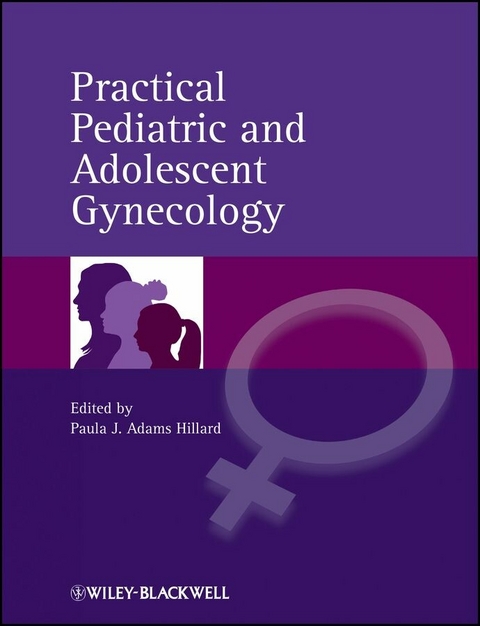
Practical Pediatric and Adolescent Gynecology (eBook)
John Wiley & Sons (Verlag)
978-1-118-53858-6 (ISBN)
Pediatric and Adolescent Gynecology
Edited by
Paula J Adams Hillard, MD, Department of Obstetrics and Gynecology, Stanford University School of Medicine, Stanford, CA, USA
The gynecologic needs of younger patients are variable and complex
Clinicians are often uncomfortable with the gynecologic concerns of young girls and developing women. How can I put the patient at ease? What are the rights of the patient and her parents? How do I ask the questions in a way that allows her to trust me so that I can better understand her medical and social situation?
In Pediatric and Adolescent Gynecology, Dr Hillard has designed a new textbook that puts the patient at the center. It follows the patient's life and her changing needs as she matures. An emphasis on effective, patient-friendly encounters is the prelude to a sensitive clinical approach to intimate, potentially awkward, clinical challenges. Short, practical chapters provide guidance on the issues rather than an academic treatise.
This 'in the office' guide to effective patient care is informed by evidence-based practice and backed by a wealth of practical features:
- Algorithms and guidelines to most effective approaches
- 'Tips and Tricks' boxes so you can improve you clinical outcomes
- 'Caution' warning boxes so you can avoid complications
- 'Science Revisited' boxes give a quick reminder of the basic science principles
Dr Hillard has assembled an expert group of authors to provide straightforward guidance to caring for and reassuring your younger patients and their parents. If you provide clinical care to girls and young women then Pediatric and Adolescent Gynecology is designed for you.
Titles of related interest
Contraception
Shoupe (ed); ISBN 978-1-4443-3351-0
Sexually Transmitted Diseases
Beigi (ed); ISBN: 978-0-470-65835-2
Disorders of Menstruation
Marshburn and Hurst (eds); ISBN 978-1-4443-3277-3
Edited by
Paula J Adams Hillard, MD, Department of Obstetrics and Gynecology, Stanford University School of Medicine, Stanford, CA, USA
Pediatric and Adolescent Gynecology Edited by Paula J Adams Hillard, MD, Department of Obstetrics and Gynecology, Stanford University School of Medicine, Stanford, CA, USA The gynecologic needs of younger patients are variable and complex Clinicians are often uncomfortable with the gynecologic concerns of young girls and developing women. How can I put the patient at ease? What are the rights of the patient and her parents? How do I ask the questions in a way that allows her to trust me so that I can better understand her medical and social situation? In Pediatric and Adolescent Gynecology, Dr Hillard has designed a new textbook that puts the patient at the center. It follows the patient s life and her changing needs as she matures. An emphasis on effective, patient-friendly encounters is the prelude to a sensitive clinical approach to intimate, potentially awkward, clinical challenges. Short, practical chapters provide guidance on the issues rather than an academic treatise. This in the office guide to effective patient care is informed by evidence-based practice and backed by a wealth of practical features: Algorithms and guidelines to most effective approaches Tips and Tricks boxes so you can improve you clinical outcomes Caution warning boxes so you can avoid complications Science Revisited boxes give a quick reminder of the basic science principles Dr Hillard has assembled an expert group of authors to provide straightforward guidance to caring for and reassuring your younger patients and their parents. If you provide clinical care to girls and young women then Pediatric and Adolescent Gynecology is designed for you. Titles of related interest Contraception Shoupe (ed); ISBN 978-1-4443-3351-0 Sexually Transmitted Diseases Beigi (ed); ISBN: 978-0-470-65835-2 Disorders of Menstruation Marshburn and Hurst (eds); ISBN 978-1-4443-3277-3
Edited by Paula J Adams Hillard, MD, Department of Obstetrics and Gynecology, Stanford University School of Medicine, Stanford, CA, USA
Cover 1
Title page 5
Copyright page 6
Contents 7
Preface 13
Contributors 15
SECTION 1: Prepubertal girls 25
Part 1 Introduction 27
1: Initial assessment 27
History 27
Physical exam 28
Further reading 29
Part 2 Prepubertal Girls: Symptoms and Signs 30
2: Ambiguous genitalia in the neonate and infant 30
Diagnosis 33
Discussion with the parents 35
Obtaining consultation 36
Further reading 36
3: Vaginal discharge and odor 38
Differential diagnosis 39
Nonspecific vulvovaginitis 39
Foreign body 39
Respiratory and enteric pathogens 39
Yeast 39
Sexually-transmitted infections 40
Ectopic ureter 40
Evaluation 40
Further reading 41
4: Vaginal bleeding 42
Differential diagnosis 42
Vulvovaginitis 42
Vaginal foreign objects 43
Dermatologic conditions 43
Accidental trauma 43
Disorders of the urinary tract 43
Tumors 44
Endocrine disorders 44
Exogenous estrogen exposure 44
Precocious puberty 44
Summary 45
Further reading 45
5: Ovarian masses 46
Masses detected antenatally 46
Masses detected neonatally 47
Masses detected in childhood 48
Management 48
Summary 52
Further reading 52
Part 3 Prepubertal Girls: Gynecologic Conditions 53
6: Labial adhesions 53
Evaluation 54
Management 56
Further reading 56
7: Pediatric vulvovaginitis 57
Diagnosis 57
Management 59
Specific causes 60
Recurrent vulvovaginitis 61
Follow-up 61
Further reading 61
8: Sexual abuse 62
Diagnosis 62
Management 66
Further reading 66
SECTION 2: Concerns in prepubertal girls and in adolescents 67
Part 1 External Genitalia 69
9: Normal hymen and hymenal variations 69
Congenital hymen anomalies 69
Imperforate hymen 69
Incomplete fenestration 70
Acquired anomalies 71
When to refer? 72
Further reading 72
Acknowledgements 72
10: Vulvar signs and symptoms 73
10.1 Overview of vulvar signs and symptoms 73
Prepubertal girls 74
Vulvar itching 74
Vaginal discharge 74
Vulvar rash 75
Lumps, bumps, and lesions 76
Vulvar pain 77
Pubertal and adolescent girls 77
Vulvar itching 77
Vulvar rash 78
Lumps, bumps, and lesions 78
Vulvar pain 79
Summary 80
Further reading 80
10.2 Vulvar ulcers and aphthosis 81
Diagnosis 81
Management 82
Further reading 83
10.3 Vulvar tumors, cysts, and masses 84
Diagnosis 84
Management 84
Epidermoid inclusion cyst 84
Fibroepithelial polyp 85
Folliculitis 85
Granular cell tumor 86
Hernia 86
Hemangiomas 86
Lipoma 86
Lymphangioma 86
Leiomyoma 86
Malignant neoplasia 86
Neurofibromas 86
Vestibular mucous cyst 86
Follow-up 87
When to refer and to whom 87
Further reading 87
10.4 Vulvar abscesses 88
Vulvar skin abscess 88
Bartholin’s abscess 89
Skene’s abscess 91
Pilonidal sinus abscess 91
Hidradenitis suppurativa 91
Further reading 92
11: Vulvar lichen sclerosus 93
Diagnosis 93
Management 94
Further reading 95
12: Accidental trauma 96
Diagnosis 96
Management 97
Follow-up 98
When to refer and to whom 99
Further reading 99
13: Female genital mutilation 100
Diagnosis 102
Management 103
Further reading 103
Part 2 Puberty 104
14: Normal puberty 104
The hypothalamic–pituitary–ovarian axis 104
The adrenal cortex and adrenarche 105
Timing and progression of puberty 105
Stages of puberty 106
Growth and puberty 109
Effects of puberty on the body 109
Puberty and adolescence 109
Further reading 110
Acknowledgements 110
15: Precocious puberty 111
Premature adrenarche 112
Premature thelarche 112
When should true precocious puberty be suspected? 112
Diagnosis 112
Management 113
Premature menarche 113
Further reading 114
16: Delayed puberty 115
Clinical presentation 116
Diagnosis 116
Initial laboratory testing 117
Hypergonadotropic hypogonadism 117
Hypogonadotropic hypogonadism 117
Eugonadotropic eugonadism 118
Management 118
Summary 119
Further reading 120
SECTION 3: Adolescent girls 121
Part 1 Adolescent Health 123
17: Initial assessment: consultation with an adolescent girl 123
Further reading 126
18: Confidentiality 127
Further resources for developing office policy 128
Conclusion 131
Further reading 131
Acknowledgment 131
19: Legal issues 132
Consent to treatment 132
Minor consent 133
Confidentiality 134
Laws 134
Funding programs 134
Allowable and required disclosures 135
Payment and insurance 135
Responsibility for payment 135
Insurance 136
Other funding 136
Payment and confidentiality 136
Conclusion 136
Further reading 137
20: Adolescent sexuality 138
Further reading 142
21: Adolescent preventive care for healthy teens 143
Confidentiality 143
Assessment priorities and challenges throughout the stages of adolescence 143
Social history 143
Examination and history 144
Screening recommendations 147
Vaccinations 147
Further reading 148
22: Weight 149
22.1 Overweight and obesity and gynecologic conditions 149
Impact on health 149
Gynecologic and obstetric associations 150
Clinical and diagnostic assessments 150
Menstrual disturbances 151
Polycystic ovary syndrome 151
Contraceptive conundrums 151
Pregnancy-related complications 151
Surgical considerations 152
Screening 152
Management 152
Dietary interventions/physical activity 153
Surgical interventions 153
Summary 154
Further reading 154
22.2 Eating disorders 155
Anorexia nervosa 155
Bulimia nervosa 157
Eating disorder not otherwise specified 157
Presenting signs and symptoms 157
Medical assessment 157
Management 159
Prognosis 160
Further reading 161
23: The female athlete 162
The breasts 162
Musculoskeletal injuries 162
The uterus 163
Nutrition and eating disorders 163
Conclusion 165
Further reading 165
Acknowledgements 165
24: Immunizations 166
Recommended vaccines 166
Systems issues 168
Provider recommendations 169
Summary 169
Further reading 169
25: Substance abuse: screening and brief intervention 170
Screening 170
Brief intervention 172
Adolescents who screen as “high risk” 172
Further reading 174
Acknowledgements 174
26: Suicidal ideation and self-harm: screening 175
Screening for risk 175
Further reading 177
27: Healthcare for lesbian, bisexual, and transgender adolescents 178
Health issues 178
Stress, victimization, and mental health 178
Sexual experiences and victimization 179
Family and intimate partner violence 180
Risk behaviors 180
Summary 180
Further reading 181
28: Developmental delay 182
Physical exam 183
Consent 183
Menstrual dysfunction and suppression 184
Sexuality, sexual education, and contraception 184
Further reading 186
29: Menstrual health 187
29.1 Tampons and menstrual hygiene products 187
Menstrual pads 187
Tampons 187
Menstrual cup 188
Padded panties and reusable menstrual pads 188
Sea sponges 188
Miniform 189
Further reading 189
29.2 Normal menses 190
Further reading 192
29.3 Menstrual suppression 193
Regimens 193
Indications 194
Side effects and concerns 195
Irregular bleeding 195
Bone health 196
Patient concerns 196
Conclusion 196
Further reading 197
30: The gynecologic exam 198
30.1 When and how to perform a gynecologic exam 198
Indications 198
Performance of the pelvic exam 199
Further reading 203
30.2 Cervical cytology screening 204
Summary 206
Further reading 206
31: Sexually-transmitted disease screening 207
Who should be screened? 207
What screening should be done and when? 207
Pregnancy 208
How to screen 208
Conclusion 210
Further reading 210
Part 2 Pregnancy Prevention and Options 211
32: Unintended pregnancy: options and counseling 211
The DECISION model 211
D: Determine the reason for the visit 212
E: Evaluate feelings 212
C: Confirm pregnancy results 212
I: Identify personal circumstances 213
S: Assess support 213
I: Address immediate concerns 213
O: Offer a timeline 214
N: Next steps 214
Further reading 215
33: Contraceptive counseling 216
33.1 Contraceptive counseling for healthy teens 216
Early adolescence (11–14 years of age) 216
Middle adolescence (15–17 years of age) 217
Late adolescence (18–21 years of age) 218
Directive and nondirective counseling 218
Further reading 220
Acknowledgements 220
33.2 Contraceptive counseling for teens with medical illness 221
Condoms and long-acting reversible contraceptives: the two ends of the contraceptive efficacy spectrum 221
Systemic lupus erythematosus 221
Anemias 224
HIV/AIDS 224
Seizures and migraines 225
Hypertension and cardiovascular disease 226
Diabetes and insulin resistance 226
Risk of venous thromboembolism 227
Depressive disorders 227
Conclusion 227
Further reading 228
34: Contraception 229
34.1 Barrier methods 229
Male condom 229
Female-controlled barrier contraception methods 231
Female condom 232
Diaphragm 232
Contraceptive sponge 232
Lea’s shield 232
FemCap 232
Further reading 233
34.2 Oral contraception 234
Good and poor candidates 234
Noncontraceptive benefits 235
Initial visit 235
Which pill? 235
When to start 236
Length of prescription 237
Follow-up visits 237
Management of problems 237
Birth control method switching 238
COC failure and potential exposure in early pregnancy 238
Further reading 240
34.3 Transdermal and vaginal combination methods 241
Prescribing 241
Method initiation 242
Management 242
Patch 242
Ring 243
Further reading 244
34.4 Intrauterine devices 246
Which IUD is preferable? 247
Insertion of the IUD 247
Follow-up 248
Other uses 249
Further reading 249
Acknowledgements 249
34.5 Progestin-only contraception 250
Progestin-only pills 250
Injectable contraception 250
Implantable contraception 252
Use of progestin-only methods in postpartum adolescents 253
Conclusion 253
Further reading 253
34.6 Emergency contraception 254
Emergency contraception options 254
Efficacy 255
Safety 256
Side effects 256
Access 256
Facilitating correct use 256
Cost 257
Follow-up 257
Conclusion 257
Further reading 257
Part 3 Adolescent Girls: Symptoms and Signs 258
35: Hirsutism 258
Diagnosis 258
Management 262
Cosmetic and physical measures 262
Hormonal treatments 262
When to refer and to whom 264
Further reading 264
36: The breast 265
36.1 Breast concerns 265
Abnormalities in development of the adolescent breast 265
Breast masses 266
Benign breast masses 266
Malignant masses 267
Other breast conditions 268
Further reading 269
36.2 Breast discharge 270
Nipple discharge 270
Galactorrhea 270
Further reading 272
37: Vaginal discharge 273
Physiologic vaginal discharge 273
Differential diagnosis and management 273
Vaginitis 273
Cervicitis 274
Pelvic inflammatory disease 276
Foreign body 276
Genital tract anomalies 276
Oncology 276
Fistula 276
Further reading 277
38: Pelvic masses 278
Diagnosis 278
Ovarian and tubal masses 279
Ectopic pregnancy 280
Obstructive anomalies of the reproductive tract 281
Tubo-ovarian abscess 282
Uterine masses 282
Gastrointestinal conditions 282
Urologic conditions 283
Further reading 283
39: Gynecologic pain 284
39.1 Pelvic and abdominal pain 284
Chronic pelvic and abdominal pain 284
Diagnosis 285
Acute pelvic and abdominal pain 287
Summary 289
Further reading 289
39.2 Myofascial (musculoskeletal) pain 290
Diagnosis 290
Management 291
Prognosis 292
Further reading 292
Acknowledgements 292
40: Amenorrhea 293
Eugonadal amenorrhea 293
Congenital anomalies 293
Androgen insensitivity and other XY disorders 294
Polycystic ovary syndrome 295
Congenital adrenal hyperplasia 295
Hypergonadotropic hypogonadal amenorrhea 295
Primary ovarian insufficiency 295
Hypogonadotropic hypogonadal amenorrhea 296
Pituitary disorders 296
Hypothalamic suppression 296
Evaluation 296
Summary 297
Further reading 298
41: Abnormal uterine bleeding 299
Evaluation 299
Differential diagnosis 300
Management 301
Acute bleeding 301
Chronic bleeding 303
Maintenance phase therapies 303
Special management considerations 304
Summary 304
Further reading 304
42: Premenstrual syndrome/premenstrual dysphoric disorder and mood disorders 305
Diagnosis 305
Management 306
Nonpharmacologic management 307
Pharmacological management 307
Follow-up 308
Further reading 308
Part 4 Adolescent Girls: Gynecologic Conditions 309
43: Vulvovaginal conditions 309
43.1 Yeast/candida 309
Diagnosis 309
Management 310
Uncomplicated vulvovaginal candidiasis 311
Complicated vulvovaginal candidiasis 311
Follow-up 312
Further reading 312
43.2 Bacterial vaginosis 313
Diagnosis 313
Management 315
Further reading 316
44: Sexually-transmitted diseases 317
44.1 Genital herpes 317
Diagnosis 317
Management 318
Psychological implications 320
Further reading 320
44.2 Human papillomavirus and condyloma 321
Diagnosis 323
Management 323
Follow-up 325
When to refer/to whom 325
Further reading 325
44.3 Chlamydia 326
Diagnosis 326
Management 328
Follow-up 328
When to refer/to whom 328
Prevention 329
Further reading 330
44.4 Gonorrhea 331
Diagnosis 331
Management 333
Follow-up 334
When to refer/to whom 334
Further reading 335
44.5 Trichomonas 336
Diagnosis 337
Management 337
Pregnancy 338
Further reading 338
44.6 HIV 339
Further reading 341
44.7 Other sexually-transmitted diseases 342
Syphilis 342
Diagnosis 342
Management 342
Granuloma inguinale 344
Management 344
Lymphogranuloma venereum 345
Diagnosis 345
Management 345
Molluscum contagiosum 345
Diagnosis 346
Management 346
Pubic lice (Pthirus pubis) 346
Management 347
Further reading 348
45: Dysmenorrhea 349
Evaluation 349
Management 350
Summary 353
Further reading 353
46: Congenital anomalies 354
Uterine anomalies 354
Symmetric uterine anomalies 355
Asymmetric uterine anomalies 355
Isolated anomalies of the uterine cervix 357
Vaginal agenesis 357
Transverse vaginal septum 360
Obstructed hemivagina, ipsilateral renal agenesis syndrome 361
Longitudinal vaginal septum 361
Fallopian tube anomalies 362
Conclusion 362
Further reading 362
47: Ectopic pregnancy 363
Evaluation 363
Management 364
Expectant management 364
Medical management 364
Surgical management 365
Further reading 365
48: The ovaries 366
48.1 Ovarian cysts 366
Asymptomatic mass 367
Acute onset of pelvic pain 368
Further reading 371
48.2 Ovarian germ cell tumors 372
Diagnosis 372
Management 373
Follow-up 374
Prognosis 374
Summary 374
Further reading 374
49: Endometriosis 375
Diagnosis 376
Management 376
Further reading 378
50: Polycystic ovary syndrome 379
Health consequences 379
Diagnosis 380
Management 382
Symptom-directed therapy 382
Insulin-sensitizing medications 383
Further reading 384
51: Pelvic inflammatory disease 385
Diagnosis 386
Management 386
Follow-up 387
Prevention 388
Further reading 389
Acknowledgement 389
52: Gonadal dysgenesis 390
Turner syndrome 391
Pure gonadal dysgenesis XX 392
Pure gonadal dysgenesis XY 393
Partial or mixed gonadal dysgenesis 393
Adolescence and gonadal dysgenesis 393
Summary 394
Further reading 394
53: Sexual assault and date rape 395
Further reading 398
Appendix 1: Essential information 399
Appendix 2: Useful web resources for adolescents, their parents/caregivers, and clinicians 413
For parents 413
General topics 413
Gynecology and reproductive health 413
Sex education 413
Obesity and eating disorders 413
For teens 413
General topics 413
Gynecology and reproductive health 413
Sexual health and sexuality 414
Contraception 414
Pregnancy 414
For kids 414
General topics 414
For clinicians 414
Policy statements and guidelines on contraception, abortion, LGBTQ, STDs, eating disorders 414
Index 415
| Erscheint lt. Verlag | 2.4.2013 |
|---|---|
| Sprache | englisch |
| Themenwelt | Medizin / Pharmazie ► Medizinische Fachgebiete ► Gynäkologie / Geburtshilfe |
| Medizin / Pharmazie ► Medizinische Fachgebiete ► Pädiatrie | |
| Schlagworte | Approach • Center • Clinical • Clinicians • Concerns • DR • Encounters • Gynäkologie • Gynäkologie u. Geburtshilfe • Gynäkologie • Gynäkologie u. Geburtshilfe • Gynecologic • hillard • matures • Medical Science • Medizin • New • Obstetrics & Gynecology • Patient • patients • patients life • Pediatric • Practical • puts • questions • rights • Textbook • Uncomfortable • Way • Young • younger |
| ISBN-10 | 1-118-53858-7 / 1118538587 |
| ISBN-13 | 978-1-118-53858-6 / 9781118538586 |
| Informationen gemäß Produktsicherheitsverordnung (GPSR) | |
| Haben Sie eine Frage zum Produkt? |
 PDF (Adobe DRM)
Kopierschutz: Adobe-DRM
Adobe-DRM ist ein Kopierschutz, der das eBook vor Mißbrauch schützen soll. Dabei wird das eBook bereits beim Download auf Ihre persönliche Adobe-ID autorisiert. Lesen können Sie das eBook dann nur auf den Geräten, welche ebenfalls auf Ihre Adobe-ID registriert sind.
Details zum Adobe-DRM
Dateiformat: PDF (Portable Document Format)
Mit einem festen Seitenlayout eignet sich die PDF besonders für Fachbücher mit Spalten, Tabellen und Abbildungen. Eine PDF kann auf fast allen Geräten angezeigt werden, ist aber für kleine Displays (Smartphone, eReader) nur eingeschränkt geeignet.
Systemvoraussetzungen:
PC/Mac: Mit einem PC oder Mac können Sie dieses eBook lesen. Sie benötigen eine
eReader: Dieses eBook kann mit (fast) allen eBook-Readern gelesen werden. Mit dem amazon-Kindle ist es aber nicht kompatibel.
Smartphone/Tablet: Egal ob Apple oder Android, dieses eBook können Sie lesen. Sie benötigen eine
Geräteliste und zusätzliche Hinweise
Buying eBooks from abroad
For tax law reasons we can sell eBooks just within Germany and Switzerland. Regrettably we cannot fulfill eBook-orders from other countries.
aus dem Bereich