Neurotrauma (eBook)
John Wiley & Sons (Verlag)
978-1-118-45526-5 (ISBN)
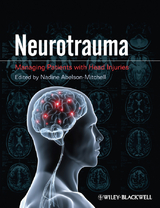
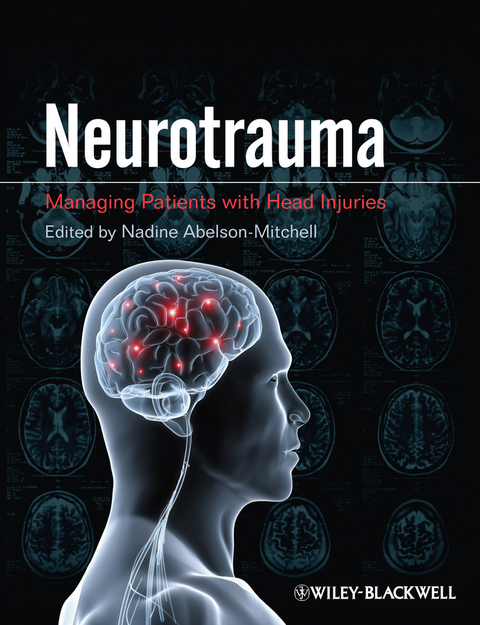
Neurotrauma: Managing Patients with Head Injuries is a comprehensive, holistic, evidence-based approach to the primary, secondary and tertiary care of a person with neurotrauma.
Using a patient-centred needs approach to enhance the quality of care of head injured patients, family and carers, this multidisciplinary book enables the reader to apply the knowledge, skills and attitudes learned to the practice of neurotrauma in all settings. It explores:
- Anatomy and physiology of the brain
- Pharmacology for neurotrauma patients
- Assessment of the patient with neurotrauma
- Management of neurotrauma in a range of settings including at the scene, in the emergency department, and at the hospital
- Neuro-rehabilitation
- Community care
- Nursing management of the patient
This practical resource includes activities, exercises, and ethical and legal considerations throughout, making it ideal reading for all staff working in neuroscience, emergency, critical and rehabilitation settings.
Dr Nadine Abelson-Mitchell is Senior Lecturer in the School of Nursing and Community Studies at the University of Plymouth. She is the partnership link for the neuroscience programme and is Appointed Honorary Nurse Consultant to Rowans Rehabilitation Unit, Plymouth teaching PCT.
Neurotrauma: Managing Patients with Head Injuries is a comprehensive, holistic, evidence-based approach to the primary, secondary and tertiary care of a person with neurotrauma. Using a patient-centred needs approach to enhance the quality of care of head injured patients, family and carers, this multidisciplinary book enables the reader to apply the knowledge, skills and attitudes learned to the practice of neurotrauma in all settings. It explores: Anatomy and physiology of the brain Pharmacology for neurotrauma patients Assessment of the patient with neurotrauma Management of neurotrauma in a range of settings including at the scene, in the emergency department, and at the hospital Neuro-rehabilitation Community care Nursing management of the patient This practical resource includes activities, exercises, and ethical and legal considerations throughout, making it ideal reading for all staff working in neuroscience, emergency, critical and rehabilitation settings.
Dr Nadine Abelson-Mitchell is Senior Lecturer in the School of Nursing and Community Studies at the University of Plymouth. She is the partnership link for the neuroscience programme and is Appointed Honorary Nurse Consultant to Rowans Rehabilitation Unit, Plymouth teaching PCT.
Cover 1
Title page 5
Copyright page 6
Contents 7
Preface 13
Dedication 14
Acknowledgements 15
Contributor Details 16
Abbreviations 20
List of Tables and Figures 22
Section 1: Foundations for practice 25
Introduction 25
Chapter 1: The Patient’s Journey 27
Introduction 27
Care pathways: Policies and Guidelines 28
Integrated Care Pathways 28
Chapter 2: Philosophy 30
Introduction 30
Conclusion 33
Chapter 3: The Needs Approach Model 35
Introduction 35
What Is a Need? 35
Structure of the Needs Approach Model 35
Use of the Model 36
Assessing the Patient’s Needs 36
Planning 37
Goal Setting 38
Implementation 38
Evaluation 38
Risk 38
The Miraculous Recovery 47
Nursing Diagnosis 50
What is a nursing diagnosis? 50
Establishing relevant nursing diagnoses 50
Conclusion 52
Chapter 4: The Patient Matters 55
The Patient 55
Family and Carers 55
Conclusion 61
Chapter 5: Multidisciplinary Management 62
Introduction 62
Staffing 63
The physician 63
The nurse 63
Speech and Language Therapy Services 64
Chapter 6: Physiotherapy 67
Introduction 67
Respiratory Care 67
Positioning 67
Musculoskeletal Integrity and Neuromuscular Status 68
Summary 68
Rehabilitation and Motor Control Theories 69
Posture and Seating 69
Conclusion 70
Chapter 7: Neuropsychology 71
Introduction 71
What Is Clinical Neuropsychology? 71
Who Is a Clinical Neuropsychologist? 71
What Is the Role of the Clinical Neuropsychologist in the Management of TBI? 71
Neuropsychological Functions 71
Attention and information processing 72
Memory and learning 72
Language 72
Verbal skills 72
Perceptual and constructional skills 72
Executive functions 72
Neurobehavioural changes 73
Emotional changes 73
The Patient’s Neuropsychological Journey 73
Post-traumatic amnesia (PTA) 73
After PTA 73
Long-term neuropsychological changes 74
Additional Factors Influencing Neuropsychological Functioning 74
Medication 74
Seizures 74
Insomnia 74
Emotional states 74
Other issues and Considerations 75
Cognition and mental capacity 75
Multidisciplinary team working 75
The family 75
Chapter 8: Social Considerations 76
The Role of the Social Worker 76
Social Issues 78
Personalisation and safeguarding: twin pillars of contemporary social support 78
Conclusion 80
Chapter 9: Occupational Therapy 81
Section 2: Pre-requisite Knowledge 85
Introduction 85
Chapter 10: Epidemiology 87
Introduction 87
Severity of Injury 87
Hospital Attendance 88
Incidence 88
Prevalence of Head Injury 88
Age Distribution 89
Gender Distribution 89
Race and Ethnicity 89
Mechanism of Injury 89
Seasonal Variation 90
Predisposition 90
Use of Alcohol 90
Head Injury Mortality 90
Conclusion 90
Chapter 11: Prevention of Head Injuries 92
Introduction 92
Recommendations 92
Road traffic Accidents (RTAs) 93
Alcohol consumption 93
Speed limits 93
Car design 94
Road design 94
Action regarding the use of prescription, over the counter and illicit drugs 94
Prevention of Sports Injuries 95
Care of Older People 95
Interpersonal Violence 95
Conclusion 96
Chapter 12: Applied Anatomy and Physiology 98
Introduction 98
The Nervous System 98
The Scalp 98
Blood supply to the scalp 98
Venous drainage 99
The Skull 99
Anterior aspect of the skull 99
Superior aspect of the skull 99
Sutures of the skull 100
Posterior aspect of the skull 100
Lateral aspect of the skull 100
Base of the skull 101
Anterior section 101
Middle section 102
Posterior section 104
The cranium 106
Structure of the Brain 108
The forebrain 108
Midbrain 114
Blood supply to the brain 118
Cerebrospinal fluid (CSF) 121
Intracranial pressure (ICP) 121
The motor pathways 123
The autonomic nervous system (ANS) 124
Additional Concepts Related to Neurophysiology 126
Neuroplasticity 126
What is neuroplasticity? 126
Neuroplasticity and learning 126
Acid-Base Balance 126
Introduction 126
Definition 126
Ways of maintaining acid-base balance 127
Summary 129
Conclusion 130
Chapter 13: Investigations 132
Chapter 14: Pharmacology for Neurotrauma Patients 150
Introduction 150
Special groups 150
Anaesthetic Agents 151
Analgesics 151
Diuretics 151
ANTI-EPILEPTIC Drugs 151
Anticoagulants 151
Anti-emetics 151
Laxatives 151
Conclusion 151
Chapter 15: Applied Microbiology 153
Introduction 153
Meningitis 153
Definition 153
Predisposing factors 153
Causes of meningitis 153
Pathophysiology 153
Clinical features of meningitis 154
Investigations 154
Treatment 154
Relevant nursing diagnoses 154
Complications 154
Prognosis/outcome 154
Encephalitis 154
Definition 154
Pathophysiology 155
Clinical features of encephalitis 155
Investigations 155
Treatment 155
Complications 155
Brain Abscess 155
Introduction 155
Definition 155
Classification 156
Causes of brain abscess 156
Pathophysiology 156
Clinical features of brain abscess 156
Investigations 156
Treatment 156
Complications 156
Prognosis/outcome 157
Conclusion 157
Section 3: Features of neurotrauma 159
Introduction 159
Chapter 16: Classification of Traumatic Brain Injury 161
Introduction 161
Primary and secondary brain injury 161
Primary injury 161
Secondary brain injury 161
Open and closed head injury 163
Open head injury 163
Closed head injury 163
Severity of injury 164
Conclusion 164
Chapter 17: Raised Intracranial Pressure 165
Introduction 165
Definition 165
Cause of increased intracranial pressure 165
Diagnosis 165
Supratentorial lesions 165
Infratentorial lesions 166
Investigations 166
Treatment 166
Management of the patient 166
Conclusion 167
Chapter 18: Assessment of the Patient with Neurotrauma 168
Introduction 168
General principles 168
Purpose of an assessment 168
Pre-requisites for effective assessment 169
Alcohol and assessment 169
The frequency of neurological assessment 169
Performing the assessment 169
Neurological observations 170
Assessing the level of consciousness 170
History 170
Examination 170
Convulsions, seizures and fits 174
Vital signs 175
Respiration 175
Blood pressure 175
Pulse rate 175
Haemodynamic status 176
Temperature 176
Recording the observations 176
Patient deterioration 176
Undertaking a comprehensive CNS examination 176
General assessment 176
General cerebral function 179
Specific cerebral functions 179
Recording the assessment 184
Conclusion 184
Section 4: Management of Neurotrauma 185
Introduction 185
Chapter 19: Management of Neurotrauma at the Scene 187
Introduction 187
Severe and Moderate Head Injury 187
Airway with Cervical Spine Protection 188
Breathing 188
Circulation 188
Disability 189
Exposure and Environment 189
‘Stop and stabilise’ versus ‘load and go’ 189
Where to take the patient? 189
Advanced warning for the hospital 189
The handover 190
Minor Head Injury 190
Chapter 20: Management of Neurotrauma on Transfer 192
Introduction 192
Airway with Cervical Spine Protection 192
Breathing 193
Circulation 193
Disability 193
Exposure 193
Other 193
Who should Accompany the Patient? 193
If a patient is being transferred to another hospital such as the regional neurosurgical unit 193
Chapter 21: Management of Neurotrauma in the Emergency Department 195
Introduction 195
Preparing for the Arrival of a Seriously Injured Patient 195
Severe and Moderate Head Injury 195
Primary survey 196
Secondary survey 197
Further monitoring 199
Definitive management of the severe head injury 199
Non-surgical management of severe head injury 199
Minor Head Injury 200
Intracranial haematoma 200
Admission 202
Discharge from the ED 202
Management of Patients Who Are Admitted for Observation 202
Social Aspects 203
Chapter 22: Hospital Management of Neurotrauma 206
Introduction 206
Initial Assessment of Trauma Patients 206
Patient stabilisation 206
Management in the Neuroscience Unit 208
Surgical treatment 208
Intensive Care Management 209
Airway and breathing 210
Circulation 210
Intracranial pressure control 212
Control of blood flow 212
Control of CSF 214
Control of brain swelling 214
Other aspects 215
Further Management and Prognosis 215
Chapter 23: Nursing the Patient with Neurotrauma 218
Introduction 218
Advocate 218
Essential Nursing Skills 219
Therapeutic Practice 219
Co-ordination 220
Clinical Governance 220
Advice/counselling 220
Political Awareness 220
Education 220
Research 220
Ethical Considerations 220
Rehabilitation Nursing 220
Activities 258
Chapter 24: Prognosis and Patient Outcome 259
Introduction 259
Factors Predicting Prognosis after Head Injury 260
Outcome Measures 260
Return to Work 261
Quality of Everyday Life 261
Conclusion 261
Chapter 25: Dying and Death 262
Introduction 262
The Family 263
Brain Death 263
Definition 263
Background 264
Assessment of brain death 264
Pre-requisites to confirming brain death 264
Conclusion 265
Activities 265
Section 5: Neurorehabilitation 267
Introduction 267
Chapter 26: Sequelae of Neurotrauma 269
Introduction 269
Additional Information about Some Sequelae 271
Cushing’s ulcer 271
Risk factors for stress ulcers 271
Post-concussion syndrome (PCS) 271
Post-traumatic hypopituitarism 271
Heterotopic ossification (Das-Gupta and Turner-Stokes ) 272
Sexual health 272
CONCLUSION 273
Chapter 27: Neurorehabilitation 274
Introduction 274
Definition of Rehabilitation 275
Levels of Rehabilitation 275
Settings for Rehabilitation 276
Rehabilitation Costs 276
Rehabilitation resources 276
Staffing for Rehabilitation 276
Nurse staffing 277
Standards of Rehabilitation Practice 278
Rehabilitation Criteria 278
The Rehabilitation Process 279
Goals of Rehabilitation 280
Concepts Underpinning Rehabilitation 280
Planning the Rehabilitation Programme Content 280
Scheduling the Programme 281
Community-Based Rehabilitation (CBR) 281
Developing a community-based rehabilitation programme 281
Purpose of CBR 281
Assessment 281
Goals 282
Planning 282
Recording 283
Evaluation 283
Conclusion 284
Chapter 28: Early Stimulation Programmes 287
Introduction 287
Definition of Early Stimulation Programme 287
Background 287
Objectives of Introducing an Early stimulation Programme (ESP) 287
Setting Up the ESP 288
Content of the ESP 288
Specific Techniques 289
How to Encourage the Involvement of Family or Friends 289
Chapter 29: Discharge Planning 290
Introduction 290
What is Discharge Planning? 290
Benefits of Discharge Planning 290
Discharge Planning Process 290
Criteria for Discharge Planning 291
Selecting the Discharge Destination 291
The Day of Discharge 291
Conclusion 291
Chapter 30: Living in the Community 294
Introduction 294
Integrating into the Community 294
Chapter 31: Legal Matters 295
Introduction 295
Compensation Claims Arising out of Head Injuries 295
Brain Injury and Medical Negligence 297
Head Injuries 297
Subarachnoid haemorrhage (SAH) 299
Hydrocephalus 299
Infection 299
Vegetative state and minimally conscious state 300
The Cost of Brain Injury 300
Chapter 32: Meeting Tomorrow’s Challenges 301
Conclusion 301
Section 6: Appendices 303
Appendix 1: Pre-Admission Assessment 305
Instructions 305
Pre-Admission Assessment 306
Family Information 306
Previous Health History 307
Current Health Status 307
Health Needs 310
Appendix 2: Discharge Report 317
Instructions 317
Section A 317
Section B 318
Section C 318
Section D 318
Activity Answers 323
Chapter 12 Answers 324
Anatomy and physiology quiz 324
Chapter 18 Answers 326
Activity 18.4 326
Chapter 20 Answers 327
Scenario 1 – John Smith 327
Scenario 2 – Judith Brown 327
Chapter 21 Answers 328
Activity 21.1 328
Activity 21.2 330
Additional Resources 333
Books 333
Helpful Websites 334
Further information for health professionals and the public 334
Glossary 339
References 341
Index 357
Supplemental Images 366
| Erscheint lt. Verlag | 25.2.2013 |
|---|---|
| Sprache | englisch |
| Themenwelt | Medizin / Pharmazie ► Gesundheitsfachberufe |
| Medizin / Pharmazie ► Medizinische Fachgebiete ► Notfallmedizin | |
| Medizin / Pharmazie ► Pflege ► Fachpflege | |
| Schlagworte | Acute, Critical & Emergency Care • applicable • Approach • attitudes • Care • Comprehensive • Head • Injuries • Intensiv- u. Notfallpflege • Kopfverletzung • Krankenpflege • Medical Science • Medizin • multidisciplinary book provides • Neurologie • Neurology • Neurotrauma • nursing • patientcentred • patients • People • pharmacology • Practice • quality • Secondary • Settings |
| ISBN-10 | 1-118-45526-6 / 1118455266 |
| ISBN-13 | 978-1-118-45526-5 / 9781118455265 |
| Informationen gemäß Produktsicherheitsverordnung (GPSR) | |
| Haben Sie eine Frage zum Produkt? |
 PDF (Adobe DRM)
Kopierschutz: Adobe-DRM
Adobe-DRM ist ein Kopierschutz, der das eBook vor Mißbrauch schützen soll. Dabei wird das eBook bereits beim Download auf Ihre persönliche Adobe-ID autorisiert. Lesen können Sie das eBook dann nur auf den Geräten, welche ebenfalls auf Ihre Adobe-ID registriert sind.
Details zum Adobe-DRM
Dateiformat: PDF (Portable Document Format)
Mit einem festen Seitenlayout eignet sich die PDF besonders für Fachbücher mit Spalten, Tabellen und Abbildungen. Eine PDF kann auf fast allen Geräten angezeigt werden, ist aber für kleine Displays (Smartphone, eReader) nur eingeschränkt geeignet.
Systemvoraussetzungen:
PC/Mac: Mit einem PC oder Mac können Sie dieses eBook lesen. Sie benötigen eine
eReader: Dieses eBook kann mit (fast) allen eBook-Readern gelesen werden. Mit dem amazon-Kindle ist es aber nicht kompatibel.
Smartphone/Tablet: Egal ob Apple oder Android, dieses eBook können Sie lesen. Sie benötigen eine
Geräteliste und zusätzliche Hinweise
Buying eBooks from abroad
For tax law reasons we can sell eBooks just within Germany and Switzerland. Regrettably we cannot fulfill eBook-orders from other countries.
aus dem Bereich