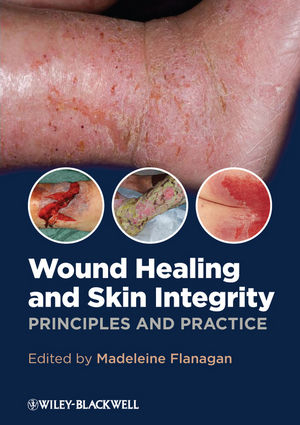
Wound Healing and Skin Integrity (eBook)
John Wiley & Sons (Verlag)
978-1-118-44202-9 (ISBN)

This comprehensive text integrates related aspects of wound management, skin integrity and dermatology into a convenient, one-stop resource. It explores the theories underpinning wound management and skin integrity by reviewing the supporting evidence and making practical recommendations for busy clinicians. Wound Healing and Skin Integrity discusses current and future trends in the management of wounds and maintenance of skin integrity in respect to international healthcare initiatives and summarises the principles of maintaining healthy skin to provide a practical guide that is accessible to clinicians regardless of professional background.
The title fulfils the inter-professional learning agenda and will be of interest to a wide range of clinicians, including doctors; wound management, dermatology and palliative care nurse specialists; community nurses; podiatrists; pharmacists; and anyone responsible for managing patients with impaired skin integrity.
Key features:
- A practical, accessible, evidence-based manual on wound care and skin integrity
- Integrates related aspects of skin integrity, wound management and dermatology previously found in separate texts into one comprehensive resource
- Written from a broad international perspective with contributions from key international opinion leaders from Australia, UK, Canada and Europe
- Promotes international practice development in relation to management of skin integrity and chronic wounds
- Full colour illustrations throughout
- Defines key terms, relates anatomy and physiology to clinical practice and provides a summary of easily accessible online learning resources
- Includes practical tips from expert practitioners, commonly presented clinical queries and discussion of professional issues related to skin integrity
Madeleine Flanagan is a Principal Lecturer in the School of Postgraduate Medicine at the University of Hertfordshire in the UK. She is Programme Leader for the MSc Skin Integrity Skills & Treatment and MSc Dermatology Skills & Treatment and has developed an international reputation for the provision of innovative, inter-professional education for practitioners with a special interest in skin integrity, wound management and dermatology.
This comprehensive text integrates related aspects of wound management, skin integrity and dermatology into a convenient, one-stop resource. It explores the theories underpinning wound management and skin integrity by reviewing the supporting evidence and making practical recommendations for busy clinicians. Wound Healing and Skin Integrity discusses current and future trends in the management of wounds and maintenance of skin integrity in respect to international healthcare initiatives and summarises the principles of maintaining healthy skin to provide a practical guide that is accessible to clinicians regardless of professional background. The title fulfils the inter-professional learning agenda and will be of interest to a wide range of clinicians, including doctors; wound management, dermatology and palliative care nurse specialists; community nurses; podiatrists; pharmacists; and anyone responsible for managing patients with impaired skin integrity. Key features: A practical, accessible, evidence-based manual on wound care and skin integrity Integrates related aspects of skin integrity, wound management and dermatology previously found in separate texts into one comprehensive resource Written from a broad international perspective with contributions from key international opinion leaders from Australia, UK, Canada and Europe Promotes international practice development in relation to management of skin integrity and chronic wounds Full colour illustrations throughout Defines key terms, relates anatomy and physiology to clinical practice and provides a summary of easily accessible online learning resources Includes practical tips from expert practitioners, commonly presented clinical queries and discussion of professional issues related to skin integrity
Madeleine Flanagan is a Principal Lecturer in the School of Postgraduate Medicine at the University of Hertfordshire in the UK. She is Programme Leader for the MSc Skin Integrity Skills & Treatment and MSc Dermatology Skills & Treatment and has developed an international reputation for the provision of innovative, inter-professional education for practitioners with a special interest in skin integrity, wound management and dermatology.
Wound Healing and Skin Integrity 3
Contents 7
List of Contributors 12
Preface 14
Acknowledgements 16
Section 1 Principles of Best Practice 17
1 Evidence and Clinical Decision-making 19
Introduction: what is effective clinical decision-making? 19
What is evidence-based health care? 20
Common misperceptions about evidence-based practice 21
How does evidence fit into clinical decision-making in clinical practice? 21
Challenges to changing practice 23
Factors influencing clinical judgement 24
Evidence-based practice: hierarchy of evidence 25
Systematic reviews 26
Randomised controlled trials 26
Evidence-informed decisions 27
Critical appraisal frameworks 27
Clinical guidelines 29
Summary 29
Useful resources 30
Canadian resources 30
European resources 30
International resource 30
Useful critical appraisal frameworks 30
Further reading 31
References 31
2 Maintaining Skin Integrity 34
Introduction 34
Skin integrity and barrier function 35
The epidermis as a physical barrier 35
The epidermis as a chemical barrier 38
The epidermis as an immunological barrier 38
Impaired skin barrier function in the clinical setting 39
Effect of age on skin barrier function 39
Effect of humidity and moisture on skin barrier function 41
Incontinence-associated dermatitis (IAD) 41
Management of vulnerable skin 43
Dry skin 44
Principles of emollient use 44
Irritant-associated dermatitis 45
Summary 46
Useful resources 46
Guidelines 46
Useful websites 46
References 46
3 Physiology of Wound Healing 49
Introduction 49
Types of wound healing 51
Primary closure 51
Secondary closure 51
Delayed primary closure 51
Wound chronicity 51
Normal wound healing 52
The role of wound exudate 53
Optimising healing: general factors 54
Optimising healing: local factors 55
Wound hypoxia 55
Bioburden 55
Wound pH 55
Wound temperature 56
Delayed wound healing 56
Tissue repair in chronic wounds 56
The inflammatory response 57
Proliferation of new tissue 59
Wound closure 61
Wound contraction 62
Scar maturation and collagen modulation 62
Abnormal scarring 63
Summary 64
Useful resources 64
References 64
4 Assessing Skin Integrity 68
Introduction 68
Assessing skin integrity 69
Listening: problem orientation and knowledge 69
Looking: problem clarification and knowledge construction 71
Touch: hands on fact finding 72
Smell: subconscious information gathering 73
Assessing wounds 74
Wound bed preparation 74
Data collection 76
Investigations 76
Wound measurement 77
Wound photography 78
Effective documentation 79
When to seek specialist help? 79
Summary 79
Useful resources 80
References 80
5 Principles of Wound Management 82
Introduction 82
Principles of wound management 83
Effective wound management 83
Controlling bacterial burden: wound cleansing 84
Temperature 84
Types of wound cleanser 84
Method of cleansing 85
Controlling bacterial burden: wound debridement 85
Autolytic debridement 85
Enzymatic debridement 85
Biosurgical debridement 86
Mechanical debridement 86
Sharp debridement 86
Conservative sharp debridement 86
Surgical debridement 86
Hydrosurgical debridement 87
Ultrasound (acoustic pressure wound therapy) 87
Regulating moisture balance 87
Wound dressings 88
Dressing selection 88
Types of wound dressings 89
Passive inert dressings 90
Passive inert absorbent dressings 90
Passive inert non-absorbent dressings 91
Interactive dressings 91
Non-absorbent interactive dressings 91
Polyurethane film dressings 91
Silicone/polyurethane wound contact materials 91
Absorbent interactive dressings 92
Alginate dressings 92
Hydrocolloid dressings 93
Hydrofibre dressings (gelling fibres) 93
Hydrogels 94
Protease modulating dressings 94
Polyurethane foam dressings 95
Antibacterial dressings 95
Cadexomer iodine dressings 95
Honey dressings 96
Silver dressings 96
Polyhexamethylene biguanide (PHMB) 97
Negative Pressure Wound Therapy 97
Summary 99
Useful resources 99
References 99
6 Wound Infection 103
Introduction 103
Bacterial invasion of the skin 104
Wound pathogens 104
Factors increasing the risk of wound infection 106
The significance of bacteria within wounds 106
Contamination 107
Colonisation 107
Infection 108
Significance of biofilms 108
Identifying wound infection 108
Clinical signs and symptoms 109
Microbiological assessment of wounds 109
Obtaining accurate wound cultures 109
Interpretation of results 111
Principles of managing infected wounds 111
Improving immune status 112
Reducing wound bioburden 113
Antimicrobial treatment 113
Symptom management 115
Summary 115
Useful resources 115
References 115
7 Psychological Impact of Skin Breakdown 118
Introduction 118
Psychological impact on the individual and society 119
Adaptation to chronic illness 119
Stress and skin disease 119
Depression 120
Adjustment to physical change/disfigurement 121
Coping strategies 121
Social support 122
Body image 122
Living with skin breakdown and chronic wounds: symptom management 123
Measuring impact of skin breakdown 124
Factors affecting treatment 125
Interventions 127
Clinical reflection 128
Summary 129
Useful resources 129
References 129
Section 2 Challenging Wounds 133
8 Pressure, Shear and Friction 135
Introduction 135
Prevalence and incidence 136
Pathophysiology 136
Pressure 137
Friction 137
Risk factors 138
Psychological impact 138
Current best practice 139
Prevention strategies 139
Pressure ulceration: assessment considerations 139
Classification of pressure ulcers 143
Risk assessment 143
Skin inspection 144
Nutritional screening and assessment 144
Treatment strategies: pressure ulcers 144
Skin care 144
Repositioning 145
Pressure-redistribution support surfaces 146
Management of infection 147
Wound dressings: special considerations 147
Education and support 148
Criteria for specialist referral 149
Summary 149
Useful resources 149
Clinical guidelines 149
Organisations 149
Further reading 149
References 149
9 Diabetic Foot Disease 152
Introduction 152
Aetiology 153
Psychological impact 155
Principles of diabetic foot ulcer management 156
Diabetic foot ulceration: assessment considerations 156
Assessment of vascular status 159
Assessment of wound infection 159
Management of diabetic foot ulcers 161
Vascular intervention 161
Foot surgery and amputation 162
Debridement 163
Infection in diabetic foot wounds 163
Osteomyelitis 164
Offloading – non-weight-bearing 164
Wound dressings: special considerations 165
Foot care 165
Education and support 166
Provision of specialist diabetic foot services 167
Criteria for specialist referral 167
Summary 167
Useful resources 167
References 168
10 Chronic Ulcers of the Lower Limb 171
Introduction 171
Epidemiology 171
Comorbidities and underlying pathologies 172
Rheumatoid arthritis and vasculitis 172
Venous leg ulceration 172
Factors that affect venous return 174
Increasing age 174
Deep vein thrombosis 174
Venous reflux 175
Oedema 175
Increased pelvic congestion 175
Muscle wasting 175
Immobility 175
Arterial ulceration 176
Mixed venous arterial ulcers 176
Rarer leg ulcer aetiologies 176
Tropical ulcers 176
Psychological impact 177
Principles of managing leg ulcers 177
Leg ulceration: assessment considerations 177
Skin assessment 178
Tissue grading 179
Vascular assessment for arterial disease 180
Limb circumference measurement 181
Pain assessment 181
Mobility assessment 181
Management of chronic oedema in leg ulcers 182
Compression therapy 182
Compression bandaging 183
Compression hosiery 183
Wound dressings: special considerations 184
Prevention of ulcer recurrence 185
Education and support 186
Provision of specialist services 186
Criteria for specialist referral 187
Summary 187
Useful resources 187
Clinical guidelines 187
Useful websites 188
Further reading 188
References 188
11 Lymphoedema 191
Introduction 191
Pathophysiology 192
Risk factors 194
Psychological impact 195
Current best practice 195
Prevention strategies: risk factor management 196
Skin 196
Lifestyle 196
Avoid limb constriction 196
Compression garments 196
Avoid extremes of temperature 196
Additional practices specific to lower extremity lymphoedema 196
Lymphoedema: assessment considerations 196
Limb volume assessment 198
Assessment of skin condition 198
Pain assessment 199
Nutrition (obesity assessment) 199
Functional assessment 199
Staging lymphoedema 200
Treatment strategies 200
Transition management 201
Long-term management 201
Manual lymphatic drainage 201
Exercise 201
Managing the skin in lymphoedema 201
Management of infection 202
Compression therapy 203
Multilayer lymphoedema bandaging 204
Bandaging techniques 204
Intermittent pneumatic compression 204
Compression stockings/garments 204
Other therapies 204
Surgical intervention 205
Pharmacological management 205
Education and support 205
Provision of specialist services 206
Criteria for specialist referral 206
Summary 206
Useful resources 206
Useful websites 207
References 207
12 Malignant Wounds 209
Introduction 209
Malignant wounds: aetiology 210
Psychological impact 211
Principles of palliative wound management 212
Malignant wounds: assessment considerations 212
Management of malignant wounds 214
Cancer therapy options 214
Pain 214
Malodour 215
Exudate 216
Itching and skin irritation 217
Infection 217
Bleeding 217
Radiation skin damage 218
Management of radiotherapy skin reactions 219
Wound dressings: special considerations 219
Education and support 220
Provision of specialist services 220
Criteria for specialist referral 220
Summary 221
Useful resources 221
References 221
13 Skin Integrity and Dermatology 224
Introduction 224
Prevalence and incidence of skin disease 225
Quality of life 225
Cost of skin diseases 225
What skin conditions are common? 225
Why is knowing about skin disease important? 226
Management principles 226
Assessment considerations 226
Patient examination: general considerations 227
Important common skin problems and their management 227
Long-term skin conditions 227
Acute skin conditions 231
Skin cancer and precancer 233
Provision of dermatology specialist services 236
Models of service delivery 236
Summary 237
Useful resources 238
Further reading 238
References 238
14 Surgical Wounds 240
Introduction 240
Classification of surgical wounds 240
Principles of surgical wound management 243
Surgical wounds: assessment considerations 243
Preoperative management 244
Intraoperative management 245
Postoperative management 246
Wound drainage 247
Wound closure 247
Wound dressings: special considerations 248
Surgical wound infection 248
Management of surgical scars 250
Common reconstructive surgical options 252
Education and support 253
Criteria for specialist referral 254
Summary 254
Useful resources 255
References 255
15 Neglected Wounds 258
Introduction 258
BODY PIERCINGS 258
Risk factors (post-piercing infection) 259
Factors delaying healing 259
Complications 259
Principles of wound management 259
Practical management 259
Practical tips 260
Healing rates 260
Criteria for specialist referral 260
Summary 261
Further reading 261
References 261
BULLOUS PEMPHIGOID 261
Risk factors 261
Differential diagnosis 261
Clinical features 261
Factors delaying healing 262
Complications 262
Principles of wound management 262
Practical management 262
Criteria for specialist referral 262
Summary 262
Further reading 263
References 263
CALCIPHYLAXIS 263
Risk factors 263
Differential diagnosis 263
Clinical features 263
Factors delaying healing 264
Complications 264
Principles of wound management 264
Practical management 264
Criteria for specialist referral 264
Summary 264
Further reading 265
References 265
FISTULAS 265
Risk factors 265
Diagnostic procedures 265
Clinical features 265
Factors delaying healing 265
Complications 265
Principles of wound management 266
Practical management 266
Criteria for specialist referral 266
Indications for surgical intervention 266
Summary 266
Further reading 267
References 267
NECROTISING FASCIITIS 267
Risk factors 267
Differential diagnosis 267
Clinical features 268
Local 268
Systemic 268
Factors delaying healing 268
Complications 268
Principles of wound management 268
Practical management 268
Criteria for specialist referral 269
Summary 269
Further reading 269
References 269
PYODERMA GANGRENOSUM 269
Risk factors 269
Differential diagnosis 270
Clinical features 270
Factors delaying healing 270
Complications 270
Principles of wound management 270
Practical management 270
Criteria for specialist referral 270
Summary 271
Further reading 271
References 271
SELF-INFLICTED WOUNDS (SELF-HARM) 271
Risk factors 271
Differential diagnosis 271
Factors delaying healing 271
Clinical features 271
Complications 272
Principles of wound management 272
Practical management 272
Criteria for specialist referral 273
Summary 273
Further reading 273
References 273
SKIN TEARS 273
Risk factors 273
Differential diagnosis 274
Factors delaying healing 274
Clinical features 274
Complications 274
Principles of wound management 274
Practical management 275
Criteria for specialist referral 275
Summary 275
Further reading 275
References 275
Section 3 Improving Skin Integrity Services 277
16 Reducing Wound Care Costs and Improving Quality: A Clinician’s Perspective 279
Introduction 279
Health economics: a clinician’s perspective 280
Barriers to best-practice wound care and prevention 281
The costs of wound care 282
Best-practice wound prevention and care programmes 283
Clinical results 284
Improved wound healing 286
Wound prevention 286
Reduced prevalence of chronic wounds 287
The impact of best-practice wound prevention and care on health economics 288
Cost-efficiencies and improved utilisation of clinical resources 288
Redesigning clinical care, business and information processes 290
Indirect economic benefits 290
Summary 291
Useful resources 291
Wound organisations 291
Journals 292
Educational resources 292
References 292
17 Dressings: The Healing Revolution 294
Introduction 294
Evolution of new wound dressing technologies 295
The healing revolution 296
Dressing evolution led by technology: an example 298
Patient-centred dressing evolution: an example 298
Advanced wound technologies 299
The future: wound care as a clinical specialty 300
Summary 303
Useful resources 303
References 303
Index 307
"Nurses at any stage of practice could benefit from this
book as it provides good evidence based data when considering
tissue viability and holistic assessment. Specialist nurses -
tissue viability, diabetes, lymphedema could benefit from this book
and is a vital resource to have in any clinical
setting." (Nursing Times, 25 June 2014)
"With its focus on practical information for practicing
physicians, this reference is easier to understand than most wound
healing books. The discussions of bacterial colonization, biofilms,
and wound healing processes gone awry are clear and most
helpful." (Doody's, 20 September 2013)
| Erscheint lt. Verlag | 19.2.2013 |
|---|---|
| Sprache | englisch |
| Themenwelt | Medizin / Pharmazie ► Gesundheitsfachberufe |
| Medizin / Pharmazie ► Medizinische Fachgebiete ► Notfallmedizin | |
| Medizin / Pharmazie ► Pflege | |
| Schlagworte | Clinical Specialities • Dermatologie • Dermatology • Diabetes • Krankenpflege • Medical Science • Medizin • nursing • Spezialaufgaben i. d. klinischen Krankenpflege • Wounds, wound care, wound management, chronic wounds, non healing wounds, problem wounds, complex wounds, skin integrity, skin care, skin problems, dermatology, tissue viability, evidence-based wound care, evidence-based skin care, evidence-based wound management, Flanagan, Madeleine Flanagan |
| ISBN-10 | 1-118-44202-4 / 1118442024 |
| ISBN-13 | 978-1-118-44202-9 / 9781118442029 |
| Informationen gemäß Produktsicherheitsverordnung (GPSR) | |
| Haben Sie eine Frage zum Produkt? |
 PDF (Adobe DRM)
Kopierschutz: Adobe-DRM
Adobe-DRM ist ein Kopierschutz, der das eBook vor Mißbrauch schützen soll. Dabei wird das eBook bereits beim Download auf Ihre persönliche Adobe-ID autorisiert. Lesen können Sie das eBook dann nur auf den Geräten, welche ebenfalls auf Ihre Adobe-ID registriert sind.
Details zum Adobe-DRM
Dateiformat: PDF (Portable Document Format)
Mit einem festen Seitenlayout eignet sich die PDF besonders für Fachbücher mit Spalten, Tabellen und Abbildungen. Eine PDF kann auf fast allen Geräten angezeigt werden, ist aber für kleine Displays (Smartphone, eReader) nur eingeschränkt geeignet.
Systemvoraussetzungen:
PC/Mac: Mit einem PC oder Mac können Sie dieses eBook lesen. Sie benötigen eine
eReader: Dieses eBook kann mit (fast) allen eBook-Readern gelesen werden. Mit dem amazon-Kindle ist es aber nicht kompatibel.
Smartphone/Tablet: Egal ob Apple oder Android, dieses eBook können Sie lesen. Sie benötigen eine
Geräteliste und zusätzliche Hinweise
Buying eBooks from abroad
For tax law reasons we can sell eBooks just within Germany and Switzerland. Regrettably we cannot fulfill eBook-orders from other countries.
aus dem Bereich