Treatment-Resistant Depression (eBook)
John Wiley & Sons (Verlag)
978-1-118-55673-3 (ISBN)
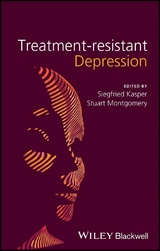
The first book devoted to a challenging disorder that affects millions of people around the world. Essential reading for all psychiatrists who manage these patients.
Professor Dr Kasper is Professor of Psychiatry and Chairman of the Department of General Psychiatry at the Medical University of Vienna, Austria. He is Honorary Professor at the University of Hong Kong, China. He concentrates on the biological bases of mental disorders and their possible treatment approaches. He has conducted studies in psychopathological as well as clinical areas. Dr Kasper is a frequent national and international speaker and is actively involved in research programmes studying depression, anxiety, psychosis, and dementia, authoring over 800 research reports and reviews. Dr Kasper serves on the editorial boards of numerous learned journals, including European Archives of Psychiatry and Neuroscience, European Psychiatry, and European Neuropsychopharmacology. He is Co-editor in-chief of the International Journal of Psychiatry in Clinical Practice.
Professor Montgomery was Professor of Psychiatry at Imperial College, University of London until his retirement in 1996 when he became Emeritus Professor of Psychiatry. He has great breadth of experience in the field of psychotropic medicine with seminal work in depression, anxiety disorders, suicide prevention and schizophrenia. He has published 26 books and more than 400 papers. Professor Montgomery is editor of International Clinical Psychopharmacology and was editor of European Neuropsychopharmacology for 20 years. He also serves on the editorial board of numerous scientific journals.
Treatment-resistant Depress Successful management of patients with treatment-resistant depression requires a thorough understanding of the biological basis for both the depression and its failure to respond to standard treatments. This book clearly and succinctly summarizes the latest scientific research and its applications in clinical practice. A first step is a clear definition of what constitutes treatment-resistant depression so that clinical trials and other studies are using common criteria, enabling comparison and meta-analysis of their outcomes. The opening chapter reviews definitions and predictors of treatment-resistant depression originating from different fields and discusses their usefulness in clinical practice and clinical research. The next chapter proposes a new definition, adapting terminology from medicine. Biological classification requires identification of genetic risk factors and gene variants have been identified as accounting for 50% of the variance in the clinical outcomes of antidepressant treatments. Chapter 3 describes several genes already associated with treatment-resistant depression and, while further work is needed to translate findings into clinical recommendations, suggests that genetic prediction of treatment resistance could become a widespread clinical reality within a few years. Most patients with treatment-resistant depression will be treated pharmacologically, so three chapters review the latest evidence for pharmacological best practice in switching strategies for antidepressants, the role of antipsychotics and augmentation strategies to complement lithium. There are two major alternatives to pharmacotherapy: neuromodulation and psychotherapy. The brain intervention chapter summarizes clinical research and experience with electroconvulsive therapy, transcranial magnetic stimulation, vagus nerve stimulation, deep brain stimulation and magnetic seizure therapy. The final chapter reviews the literature pertaining to the effectiveness of various forms of psychotherapy in patients who have not responded to antidepressant pharmacotherapy, explaining that patients who have not responded to one or two trials of antidepressant medication have a 30%-50% chance of responding to a focused psychotherapy. It proposes indications for psychotherapy in treatment-resistant depression and summarizes general therapeutic principles. Essential reading for all psychiatrists managing patients with this distressing disorder.
Professor Dr Kasper is Professor of Psychiatry and Chairman of the Department of General Psychiatry at the Medical University of Vienna, Austria. He is Honorary Professor at the University of Hong Kong, China. He concentrates on the biological bases of mental disorders and their possible treatment approaches. He has conducted studies in psychopathological as well as clinical areas. Dr Kasper is a frequent national and international speaker and is actively involved in research programmes studying depression, anxiety, psychosis, and dementia, authoring over 800 research reports and reviews. Dr Kasper serves on the editorial boards of numerous learned journals, including European Archives of Psychiatry and Neuroscience, European Psychiatry, and European Neuropsychopharmacology. He is Co-editor in-chief of the International Journal of Psychiatry in Clinical Practice. Professor Montgomery was Professor of Psychiatry at Imperial College, University of London until his retirement in 1996 when he became Emeritus Professor of Psychiatry. He has great breadth of experience in the field of psychotropic medicine with seminal work in depression, anxiety disorders, suicide prevention and schizophrenia. He has published 26 books and more than 400 papers. Professor Montgomery is editor of International Clinical Psychopharmacology and was editor of European Neuropsychopharmacology for 20 years. He also serves on the editorial board of numerous scientific journals.
List of Contributors vii
Foreword ix
1 Definitions and Predictors of Treatment-resistant Depression
1
Daniel Souery and William Pitchot
2 Treatment-resistant Depression: A Separate Disorder - A
New Approach 21
Hans-Jürgen Möller, Florian Seemüller, Rebecca
Schennach and Ramesh K. Gupta
3 Genetics of Treatment-resistant Depression 43
Chiara Fabbri, Stefano Porcelli and Alessandro Serretti
4 Is There a Role for Switching Antidepressants in
Treatment-resistant Depression? 91
Stuart Montgomery
5 The Role of Atypical Antipsychotics in Inadequateresponse and
Treatment-resistant Depression 107
Siegfried Kasper and Elena Akimova
6 Lithium, Thyroid Hormones and Further Augmentation Strategies
in Treatment-resistant Depression 129
Robert Haußmann and Michael Bauer
7 The Role of Nonpharmacological Interventions in
Treatment-resistant Depression 159
Thomas E. Schläpfer and Sarah Kayser
8 The Role of Psychotherapy in the Management of
Treatment-resistant Depression 183
Michael E. Thase
Index 209
"After all, this book is recommended for the young
psychiatrist, who wants to read an easy introduction to the
fascinating world of treatment of resistant
depression." (Acta Psychiatrica Scandinavica, 9
November 2013)
"This is a monograph, which could be of great interest to
psychiatrists managing patients with TRD. The chapters are written
clearly, and the references are comprehensive and
up-to-date." (Human Psychopharmacology: Clinical
& Experimental, 6 November 2013)
"The editors should be congratulated for accomplishing the
amazing feat of presenting so much information in such a compact
book. With an investment of just a few hours, readers can be
updated on a very complicated subject . . . The editors should be
commended on detailing a variety of treatment options, including
nonpharmacological options, which other books fail to
emphasize." (Doody's, 23 August 2013)
| Erscheint lt. Verlag | 6.2.2013 |
|---|---|
| Sprache | englisch |
| Themenwelt | Medizin / Pharmazie ► Medizinische Fachgebiete ► Neurologie |
| Medizin / Pharmazie ► Medizinische Fachgebiete ► Psychiatrie / Psychotherapie | |
| Schlagworte | Applications • Basis • biological • clear • Clinical • Definition • Depression • different fields • First • latest scientific • Medical Science • Medizin • outcomes • patients • Practice • Predictors • Psychiatrie • Psychiatry • Research • STEP • Studies • thorough • treatmentresistant |
| ISBN-10 | 1-118-55673-9 / 1118556739 |
| ISBN-13 | 978-1-118-55673-3 / 9781118556733 |
| Informationen gemäß Produktsicherheitsverordnung (GPSR) | |
| Haben Sie eine Frage zum Produkt? |
 PDF (Adobe DRM)
Größe: 4,3 MB
Kopierschutz: Adobe-DRM
Adobe-DRM ist ein Kopierschutz, der das eBook vor Mißbrauch schützen soll. Dabei wird das eBook bereits beim Download auf Ihre persönliche Adobe-ID autorisiert. Lesen können Sie das eBook dann nur auf den Geräten, welche ebenfalls auf Ihre Adobe-ID registriert sind.
Details zum Adobe-DRM
Dateiformat: PDF (Portable Document Format)
Mit einem festen Seitenlayout eignet sich die PDF besonders für Fachbücher mit Spalten, Tabellen und Abbildungen. Eine PDF kann auf fast allen Geräten angezeigt werden, ist aber für kleine Displays (Smartphone, eReader) nur eingeschränkt geeignet.
Systemvoraussetzungen:
PC/Mac: Mit einem PC oder Mac können Sie dieses eBook lesen. Sie benötigen eine
eReader: Dieses eBook kann mit (fast) allen eBook-Readern gelesen werden. Mit dem amazon-Kindle ist es aber nicht kompatibel.
Smartphone/Tablet: Egal ob Apple oder Android, dieses eBook können Sie lesen. Sie benötigen eine
Geräteliste und zusätzliche Hinweise
Buying eBooks from abroad
For tax law reasons we can sell eBooks just within Germany and Switzerland. Regrettably we cannot fulfill eBook-orders from other countries.
 EPUB (Adobe DRM)
Kopierschutz: Adobe-DRM
Adobe-DRM ist ein Kopierschutz, der das eBook vor Mißbrauch schützen soll. Dabei wird das eBook bereits beim Download auf Ihre persönliche Adobe-ID autorisiert. Lesen können Sie das eBook dann nur auf den Geräten, welche ebenfalls auf Ihre Adobe-ID registriert sind.
Details zum Adobe-DRM
Dateiformat: EPUB (Electronic Publication)
EPUB ist ein offener Standard für eBooks und eignet sich besonders zur Darstellung von Belletristik und Sachbüchern. Der Fließtext wird dynamisch an die Display- und Schriftgröße angepasst. Auch für mobile Lesegeräte ist EPUB daher gut geeignet.
Systemvoraussetzungen:
PC/Mac: Mit einem PC oder Mac können Sie dieses eBook lesen. Sie benötigen eine
eReader: Dieses eBook kann mit (fast) allen eBook-Readern gelesen werden. Mit dem amazon-Kindle ist es aber nicht kompatibel.
Smartphone/Tablet: Egal ob Apple oder Android, dieses eBook können Sie lesen. Sie benötigen eine
Geräteliste und zusätzliche Hinweise
Buying eBooks from abroad
For tax law reasons we can sell eBooks just within Germany and Switzerland. Regrettably we cannot fulfill eBook-orders from other countries.
aus dem Bereich