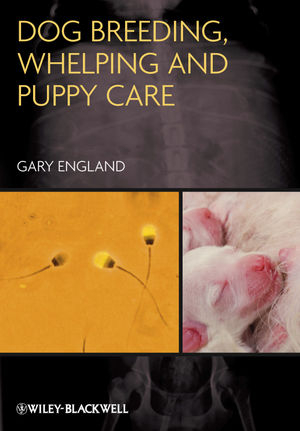
Dog Breeding, Whelping and Puppy Care (eBook)
John Wiley & Sons (Verlag)
978-1-118-41435-4 (ISBN)
A practical and up-to-date guide to canine reproduction for dog breeders, veterinary students and veterinary surgeons. Written in an easy-to-use style and presented in a practically useful format with clear illustrations. The information is supported by references from the author's published work and his wealth of clinical experience to form the important authoritative text in this field. A vital aid to those seeking an understanding of normal and abnormal reproduction as well as common reproductive techniques.
Gary England is a veterinarian specialising in animal reproduction who has worked in clinical practice and research of dog breeding for 25 years. He is Professor of Comparative Veterinary Reproduction at the University of Nottingham and has published more than 100 scientific articles and numerous book chapters and reviews in the area. He is Diplomate of the American College of Theriogenology and the European College of Animal Reproduction, as well as being an RCVS Recognised Specialist in Veterinary Reproduction. Drawing on his extensive research and clinical experience, this book represents his view of the subject area, and includes references to his own peer-reviewed publications demonstrating the impact of his contribution to the field.
A practical and up-to-date guide to canine reproduction for dog breeders, veterinary students and veterinary surgeons. Written in an easy-to-use style and presented in a practically useful format with clear illustrations. The information is supported by references from the author s published work and his wealth of clinical experience to form the important authoritative text in this field. A vital aid to those seeking an understanding of normal and abnormal reproduction as well as common reproductive techniques.
Gary England is a veterinarian specialising in animal reproduction who has worked in clinical practice and research of dog breeding for 25 years. He is Professor of Comparative Veterinary Reproduction at the University of Nottingham and has published more than 100 scientific articles and numerous book chapters and reviews in the area. He is Diplomate of the American College of Theriogenology and the European College of Animal Reproduction, as well as being an RCVS Recognised Specialist in Veterinary Reproduction. Drawing on his extensive research and clinical experience, this book represents his view of the subject area, and includes references to his own peer-reviewed publications demonstrating the impact of his contribution to the field.
Preface iv
Section 1: Breeding, Reproduction and Care of the Normal Animal 1
1 Care of the Juvenile, Genetics and Planning of Breeding 3
2 Anatomy of the Female 19
3 Physiology of the Female 28
4 Endocrinology of the Female 35
5 Clinical Examination of the Female 41
6 Anatomy of the Male 64
7 Physiology of the Male 69
8 Endocrinology of the Male 74
9 Normal Mating 77
10 Clinical Examination of the Male 83
11 Fertilization and the Optimal Breeding Time 109
12 Pregnancy and Lactation 120
13 Pregnancy Diagnosis 128
14 Normal Whelping 137
15 Care of Neonatal Puppies 148
Section 2: Abnormalities of Reproduction and the Perinatal Period 155
16 Abnormalities of the Female 157
17 Abnormalities of the Male 178
18 Intersex Animals 205
19 Abnormal Female Physiology and Endocrinology 209
20 Abnormal Male Physiology and Endocrinology 218
21 Abnormal Pregnancy 223
22 Abnormal Parturition and Problems After Whelping 232
23 Care of the Sick Neonate 246
24 Approach to Infertility Cases 254
Section 3: Control of Reproduction and Reproductive Technologies 265
25 Hormonal Contraception 267
26 Surgical Neutering 279
27 Pharmacological Control of Reproduction 287
28 Reproductive Biotechnology 315
Index 329
"All in all, the book would be a valuable addition for
those seeking further information about canine reproduction, rather
than a practical manual for veterinary surgeons, which may be found
in some of Dr England's other published work."
(Australian Veterinary Journal, 28 October 2013)
"I believe that the author has made a major contribution
to the veterinary literature with this book. It is a useful,
one-of-a-kind clinical handbook that is well worth the price and
should be on the shelf of any veterinarian, veterinary student, or
breeder who is involved or interested in the reproductive
management of dogs." (Journal of The American
Veterinary Medical Association, 15 March 2013)
"This is a valuable addition to any clinician's or
student's library, as it is a very detailed, easy-to-read
book covering the aspects of canine reproduction that a veterinary
surgeon is likely to come across in day-to-day general
practice." (Veterinary Practice News, 1
September 2013)
"Gary England is himself a veterinarian specializing in
animal reproduction and has worked with dogs for 25 years: his
clinical experience blends with his published works to make for an
important wide-ranging consideration of normal and abnormal
reproduction and techniques, and is a pick for any veterinary
collection." (Midwest Book Reviews, 1 May
2013)
"This is an excellent, easily read textbook, which is a
'must have' for veterinary students, where in many UK
veterinary schools the discipline of clinical reproduction has been
neglected in the undergraduate curriculum in recent years,
particularly compared with those in mainland Europe and the USA. It
will also be a useful addition to required reading for veterinary
nurses and, without doubt, serious dog breeders."
(Veterinary Record, 6 April 2013)
1
Care of the Juvenile, Genetics and Planning of Breeding
Puppies are most commonly weaned from their dam at approximately 6 weeks of age and will then be placed into a new home.
- the exact time of homing will depend upon the opinion of the breeder and the availability of a new home; early placement at 6 weeks has many advantages relating to behavioural development of the pup, but attention needs to be paid to health care and preventative treatments
- whilst pups may arrive in a new home ‘fully weaned’, there are substantial physiological changes in the gastrointestinal tract which are not complete until several months of age; these put the pup at risk of gastrointestinal upset following minor dietary change
1.1 BEHAVIOURAL DEVELOPMENT
- there are several important phases of behavioural development, including (1) the neonatal period, (2) the transitional period, and (3) the socialization period (Figure 1.1)
- on arrival at a new home, pups will have passed through the neonatal and transitional periods (these are discussed later in 15.2) and will be within the socialization period which is probably one of the most important phases of its life
Figure 1.1 Schematic representation of attraction and fear scores for pups demonstrating the ‘critical period’ in relation to the neonatal, transitional and socialization periods.
Socialization Period
- this period classically starts at 3–4 weeks of age and is complete at approximately 12 weeks
- during this time pups should be learning to live as part of the pack (or household)
- the period starts with a general acceptance by the pup that anything experienced is not harmful, therefore the pup will not be frightened by exposure to something new; in the wild exposure to new things at an early age would be regulated by the dam and therefore can be considered safe
- the period ends with the pup responding to new stimuli with a fear response; in the wild as the pup roams from the nest it is more likely to meet hostile situations and these things should first be treated as dangerous
- as the pup moves through the socialization period it starts to learn what is safe, what is dangerous and how to interact with others in the social hierarchy
- a ‘critical period’ between 5 and 7 weeks of age has been identified and this is the time when the pup should be exposed to as many stimuli as possible so that the pup will accept these as normal and will not be fearful of them
- for appropriate socialization of the pup into the human household it is imperative that the new owner recognizes the importance of the socialization period and provides a rich, stimulating and social environment:
- for appropriate socialization owners should:
1.2 HEALTH CARE
There is substantial alignment of the socialization period with the immune system of the pup; early in the socialization period the pup has acceptance of new stimuli (at this time the pup will have protective immunity from the dam’s colostrum) whilst later new stimuli are met with a fear response (maternally derived antibodies will be waning and the pup may not be protected).
- a variety of routine preventative health care measures should be implemented and due consideration should be given to dietary requirements
Dietary Requirements
- it initially appears complex to understand the dietary requirements of a developing pup, however much research has been undertaken and the use of commercially available preparations is scientifically sensible and safe in terms of nutrient requirement and bacterial contamination (many home-prepared diets do not meet the same standards for nutrients or bacteriological safety)
- the nutrient requirement will be based upon the size of the pup, the likely size at maturity (the expected growth rate) and the stage of development
- the volume of food to be fed relates to the density of the food and its nutritional value
- owners normally feed to an expected volume of food in the feeding bowl and forget that total weight of food fed is important
- overfeeding of pups is common and may result in increased tendency to obesity throughout life because of setting an expectation of a particular appetite as well as the nature of fatty tissue that is developed
- the balance between energy intake, protein and calcium is important and will differ between breeds and body size of the dog and varies at the different stages of development; it is important either to recognize the variable amounts required if feeding home-prepared diets or to use commercially available preparations appropriate for the stage of development (age) of the pup
- it is important to recognize that commercially available complete diets for pups should never be supplemented with additional minerals as this will result in dietary imbalance and can result in skeletal deformity
Vaccinations
- vaccination regimes are designed to stimulate the body to produce an immune reaction to particular organisms
- pups will have received some antibodies from their dam (these are called maternally derived antibodies)
- maternal antibodies are not permanent but generally persist in the pup until 6 or 8 weeks of age but this varies from one infectious disease to another
- if vaccination is performed when there are high levels of maternal antibodies it is possible that vaccination will not be as successful as expected and therefore the timing of vaccination is important
- vaccinations are normally given for distemper, infectious hepatitis, parvovirus, parainfluenza, leptospirosis and Bordetella
- most primary vaccination courses include two doses at approximately 10 and 12 weeks of age although an early vaccination may be given at 6 weeks in some cases
- a later last vaccine dose may be required for canine parvovirus (e.g. at 14 or 16 weeks) because maternal derived antibody persists in the pups
- local veterinary surgeons are best placed to advise on suitable regimes since the prevalence of disease varies from one location to another
Deworming
- many breeders will have either treated a bitch for endoparasites during pregnancy, and/or treated the pups when they were in the nest
- establishing what regimes have been followed can be important and this will influence which preventative treatments are given during puppy development
- treatment is required for many different forms of internal parasites
Roundworms
- Toxocara is a roundworm that is most commonly seen in young pups and may cause respiratory disease (because of larvae passing through the lungs) or gastrointestinal disease
- if bitches have been infected before pregnancy larvae may remain dormant but become re-activated in the last third of pregnancy and then pass to the pups; pups are born infected and may produce many eggs themselves within a few weeks of birth
- Toxocara is a potential zoonotic disease and regular de-worming is therefore imperative and should be combined with careful hygiene measures to ensure that human contamination with faecal material does not occur
- pups should be treated approximately every 4 weeks according to the instruction for the medicine supplied
Hookworms and Tapeworms
- Uncinaria and Ancyclostoma are hookworms which are not uncommon in hunt and greyhound kennels
- Taenia are tapeworms, of which the most commonly seen has the flea as an intermediate host; pups with fleas invariably harbour tapeworm and should be appropriately treated
- common treatments are given at the same time as treatment for roundworm
Heartworm
- Dirofilaria is common in warmer climates since it is transmitted by mosquito
- where the condition is endemic regular...
| Erscheint lt. Verlag | 18.10.2012 |
|---|---|
| Sprache | englisch |
| Themenwelt | Medizin / Pharmazie |
| Veterinärmedizin ► Kleintier | |
| Schlagworte | Breeding, dogs, fertility, mating, whelping, puppy care • Hundezucht • Veterinärmedizin • Veterinärmedizin / Hunde u. Katzen • Veterinärmedizin / Innere Medizin • Veterinärmedizin • Veterinärmedizin / Hunde u. Katzen • Veterinärmedizin / Innere Medizin • Veterinary Internal Medicine • Veterinary Medicine • Veterinary Medicine - Dogs & Cats |
| ISBN-10 | 1-118-41435-7 / 1118414357 |
| ISBN-13 | 978-1-118-41435-4 / 9781118414354 |
| Informationen gemäß Produktsicherheitsverordnung (GPSR) | |
| Haben Sie eine Frage zum Produkt? |
 EPUB (Adobe DRM)
Kopierschutz: Adobe-DRM
Adobe-DRM ist ein Kopierschutz, der das eBook vor Mißbrauch schützen soll. Dabei wird das eBook bereits beim Download auf Ihre persönliche Adobe-ID autorisiert. Lesen können Sie das eBook dann nur auf den Geräten, welche ebenfalls auf Ihre Adobe-ID registriert sind.
Details zum Adobe-DRM
Dateiformat: EPUB (Electronic Publication)
EPUB ist ein offener Standard für eBooks und eignet sich besonders zur Darstellung von Belletristik und Sachbüchern. Der Fließtext wird dynamisch an die Display- und Schriftgröße angepasst. Auch für mobile Lesegeräte ist EPUB daher gut geeignet.
Systemvoraussetzungen:
PC/Mac: Mit einem PC oder Mac können Sie dieses eBook lesen. Sie benötigen eine
eReader: Dieses eBook kann mit (fast) allen eBook-Readern gelesen werden. Mit dem amazon-Kindle ist es aber nicht kompatibel.
Smartphone/Tablet: Egal ob Apple oder Android, dieses eBook können Sie lesen. Sie benötigen eine
Geräteliste und zusätzliche Hinweise
Buying eBooks from abroad
For tax law reasons we can sell eBooks just within Germany and Switzerland. Regrettably we cannot fulfill eBook-orders from other countries.
aus dem Bereich